
A Foolproof and Irresponsible Strategy for Governing and Being Loved
The oldest political trick for governing and being loved: spend lavishly today and quietly leave the bill for whoever comes next to pay.
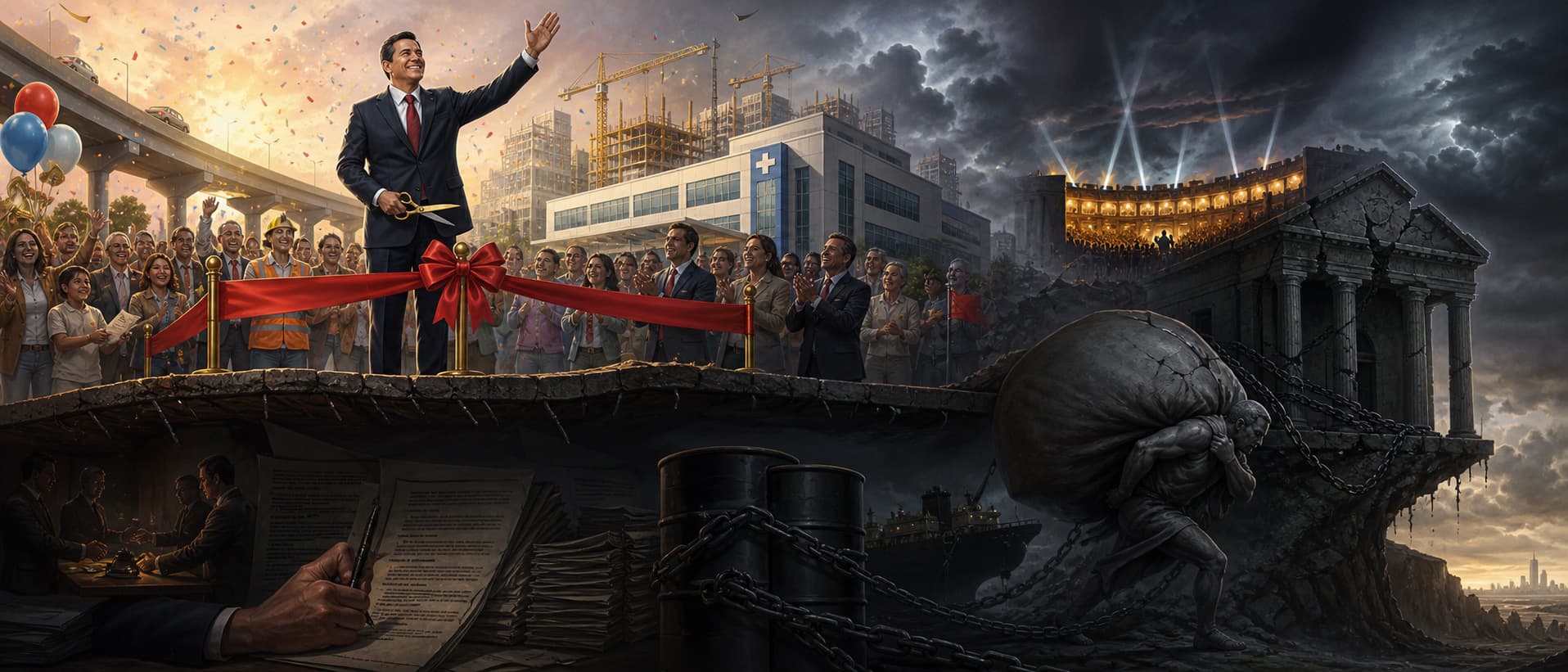
There's an almost foolproof strategy for governing and being loved: spend today and let someone else pay tomorrow.
It doesn't require transforming the economy, strengthening institutions, increasing productivity, or telling the country difficult truths. It's enough to master a formula as old as it is effective: turn the future into the present's petty cash.
In popular language, this strategy has a perfect phrase: "bread for today, hunger for tomorrow". For a time, the ruler distributes visible benefits: public works, subsidies, bonuses, credits, salaries, highways, hospitals, stadiums, housing, megaprojects. The population feels the country is moving forward. But behind that sense of abundance may hide a bill that isn't yet visible: debt, advance sales of resources, opaque contracts, deficits, future inflation, or public revenues already committed.
Politics discovered centuries ago that immediate benefits weigh more than future costs. In Rome, the poet Juvenal left an expression that has survived two thousand years: panem et circenses, "bread and circuses." The idea was simple: a population can be pacified with food, entertainment, and immediate benefits, while being distracted from deeper matters of government, freedom, or public responsibility.
Rome didn't have multilateral institutions, sovereign bonds, or oil advance sales, but it understood the political principle: power can buy social tranquility if it delivers something visible and postpones discussion about the cost. Over time, empires also learned other ways to hide the bill. When revenues weren't enough, they could debase the currency, increase taxes, or shift burdens toward the future. The form changes; the logic remains.
The modern ruler has more sophisticated tools. He can borrow from international organizations, issue bonds, commit oil revenues, sell natural resources in advance, or sign long-term contracts that give him immediate liquidity. Then he converts that money into public works, social spending, subsidies, or propaganda. The population sees cement, machinery, checks, inaugurations, and speeches. What they don't see as clearly are the due dates, the interest rates, the guarantees, the grace periods, and the clauses that will start to weigh when the ruler is already gone.
Therein lies the irresponsible genius of the mechanism: the political calendar and the financial calendar don't coincide.
A presidential term lasts four, five, or six years. A debt can last twenty or thirty. An advance sale of resources can commit several governments. A poorly conceived public work may require maintenance for decades. A subsidy created to win popularity can become politically impossible to dismantle. The president inaugurates; the successor pays. The first distributes; the second adjusts. The first appears generous; the second appears cruel.
History is full of examples.
Philip II of Spain ruled an immense, powerful, and very expensive empire. During his reign, Spain fought on several fronts and sustained enormous imperial ambitions. A historical study of his debt notes that Philip II accumulated obligations equivalent to about 60% of the national product and suspended payments four times during his reign. He was, in modern terms, one of the first great serial sovereign debtors.
The Spanish case wasn't a populist public works program in the current sense. But it does show something essential: rulers can finance present greatness with future obligations. Glory is lived in real time; the bill is distributed later among creditors, taxpayers, and successors.
France before the Revolution offers another lesson. During the eighteenth century, the French monarchy sought to maintain international prestige and compete with other European powers, but its fiscal means were limited. Britannica describes how France became involved in costly geopolitical disputes and how its foreign policy intersected with a financial crisis that weakened the ancien régime. In the long run, the inability to resolve the fiscal problem was one of the factors that prompted the convocation of the Estates-General in 1789, opening the door to the French Revolution.
Again, the same sequence: prestige is enjoyed first; crisis comes later.
In Latin America, economists Rudiger Dornbusch and Sebastián Edwards studied a modern version of this phenomenon under the name macroeconomic populism. They defined it as a policy that emphasizes growth and redistribution but underestimates the risks of inflation, fiscal deficit, external constraints, and the reaction of economic agents. They analyzed cases like Chile under Salvador Allende and Peru under Alan García, and warned that these programs usually end with high costs for the same groups they claimed to protect.
That point is important: fiscal irresponsibility doesn't always present itself as corruption or cynicism. Often it presents itself as social justice, development, sovereignty, or historical reparation. The problem isn't in wanting to improve people's lives. The problem is in pretending that money has no origin, that debt has no due date, and that future resources can be spent twice.
Greece is a contemporary case of how prosperity financed with debt can become a national straitjacket. Before the European crisis, the country accumulated high deficits and debt. The Council on Foreign Relations recalls that, upon entering the eurozone, Greece already had debt above 100% of GDP and a deficit above European limits; it also notes that the 2004 Olympic Games cost the State more than 9 billion euros and contributed to the increase in deficit and the debt-to-GDP ratio.
During the years of apparent abundance, spending seemed manageable. But when financing dried up, the other face arrived: bailouts, austerity, cuts, privatizations, unemployment, and loss of sovereign margin. The population that had lived under the illusion of a generous State ended up facing a State conditioned by its creditors.
Sri Lanka offers an even more concrete image: infrastructure, debt, and loss of control over strategic assets. The port of Hambantota was financed with Chinese loans and became an international symbol of poor planning, indebtedness, and geopolitical consequences. Britannica notes that the port was inaugurated in 2010 before being fully operational, that by 2014 there was already a public debt crisis with little return on investment, and that in 2017 Sri Lanka ended up handing over a controlling stake in the port to China Merchants Port Holdings for 99 years.
Not all debt is bad. Not all public works are irresponsible. Not all international credit is a trap. A serious State can borrow to build productive infrastructure, finance education, improve health, modernize energy, increase competitiveness, or face an emergency. The difference lies in the quality of spending, contract transparency, payment capacity, and the social or economic return on investment.
The problem appears when debt is used to buy political love.
A highway that connects production with markets can be an investment. A hospital without doctors, without medicine, and without a budget may be just scenery. A well-planned hydroelectric plant can transform an energy matrix. An oversized megaproject can become a monument to ego. A targeted social policy can reduce poverty. A permanent, generalized, and unfunded subsidy can bankrupt the State.
The crudest version of this strategy is the advance sale of natural resources. Today there are mechanisms known as resource-backed loans. The World Bank describes them as large government loans, usually for infrastructure, guaranteed with future revenues from natural resources. It also warns that these agreements are often opaque and that the lack of transparency hinders accountability.
Other studies on this type of financing explain that some agreements function as advance payments for future shipments of resources: the country receives money today and pays tomorrow by delivering oil, minerals, or other natural goods. In certain cases, rights over future production or specific revenue streams are even assigned.
Put simply: the government receives cash, but the country gives up part of its tomorrow.
The citizenry, meanwhile, sees the pleasant part of the process. They see works. They see bonuses. They see inaugurations. They see the ruler walking among crowds, cutting ribbons, promising dignity. What they don't see is that part of the future budget has already been committed. That a natural resource has already been sold. That a public company is already tied to a contract. That the next government will have less room to decide.
That's why this strategy is so electorally effective and so institutionally dangerous. The work has a plaque; the debt has annexes. The bonus is collected; the deficit accumulates. The bridge is photographed; the contract is hidden. The speech stirs emotion; the due date arrives in silence.
And when adjustment comes, a frequent political injustice occurs: the one who caused the problem remains in memory as the ruler who gave, while the one who tries to correct it remains as the ruler who took away.
The first says: "I built."
The second must say: "there's no way to pay."
The first distributes subsidies.
The second raises tariffs.
The first increases spending.
The second negotiates debt.
The first inaugurates.
The second closes, cuts, or refinances.
Fiscal irresponsibility works because it exploits a weakness of democracy: voters live in the present, but debts live in the future. And the future, by definition, doesn't vote yet.
The children who will pay the debt aren't in the polls. Future taxpayers don't march today. The natural resources that will be delivered tomorrow don't protest. Subsequent governments don't appear in the inauguration photo. That's why the irresponsible ruler can present himself as a visionary when, in reality, he's consuming in advance the decision-making capacity of those who will come after.
This practice doesn't belong exclusively to one ideology. It can dress itself as left-wing, right-wing, nationalist, developmentalist, revolutionary, or modernizing. It can use social, business, patriotic, or technocratic language. It can be financed with multilaterals, private banks, monetary emission, bilateral debt, oil advance sales, concessions, or special funds. The wrapping changes. The essence is the same: buying present legitimacy with future patrimony.
Governing responsibly requires exactly the opposite. It requires prioritizing. It requires saying no. It requires distinguishing investment from spending, useful works from political monuments, social protection from clientelism, healthy credit from national mortgage. It requires explaining that not every desire can become a budget item and that not every inauguration equals development.
A statesman builds capacities that survive his term. A demagogue builds applause that expires before the debt.
History has shown it again and again: Rome had its bread and circuses; empires financed greatness with credit; monarchies confused prestige with solvency; modern populisms confused redistribution with sustainability; and several recent countries have discovered that natural resources can also be spent before being extracted.
The foolproof and irresponsible strategy for governing and being loved consists of making the present seem generous and the future seem distant.
But the future always arrives.
And when it arrives, it no longer asks who was loved. It asks who left the bill.
The books · born from this blog
Atahualpa con su abrigo de pelo de murciélago
y otras 49 historias verdaderas que parecen mentira
Available on Amazon
Tocar madera
Pequeña historia de las supersticiones que el mundo no ha podido soltar
Available on Amazon
100 futuros
Cien escenarios del mundo que viene con la inteligencia artificial
Available on AmazonYou may also like

Tagua: the Vegetable Ivory That Buttoned Europe
Tagua, the seed of an Ecuadorian palm, mimicked ivory and buttoned the world's clothes for decades, until cheap plastic pushed it aside almost overnight.
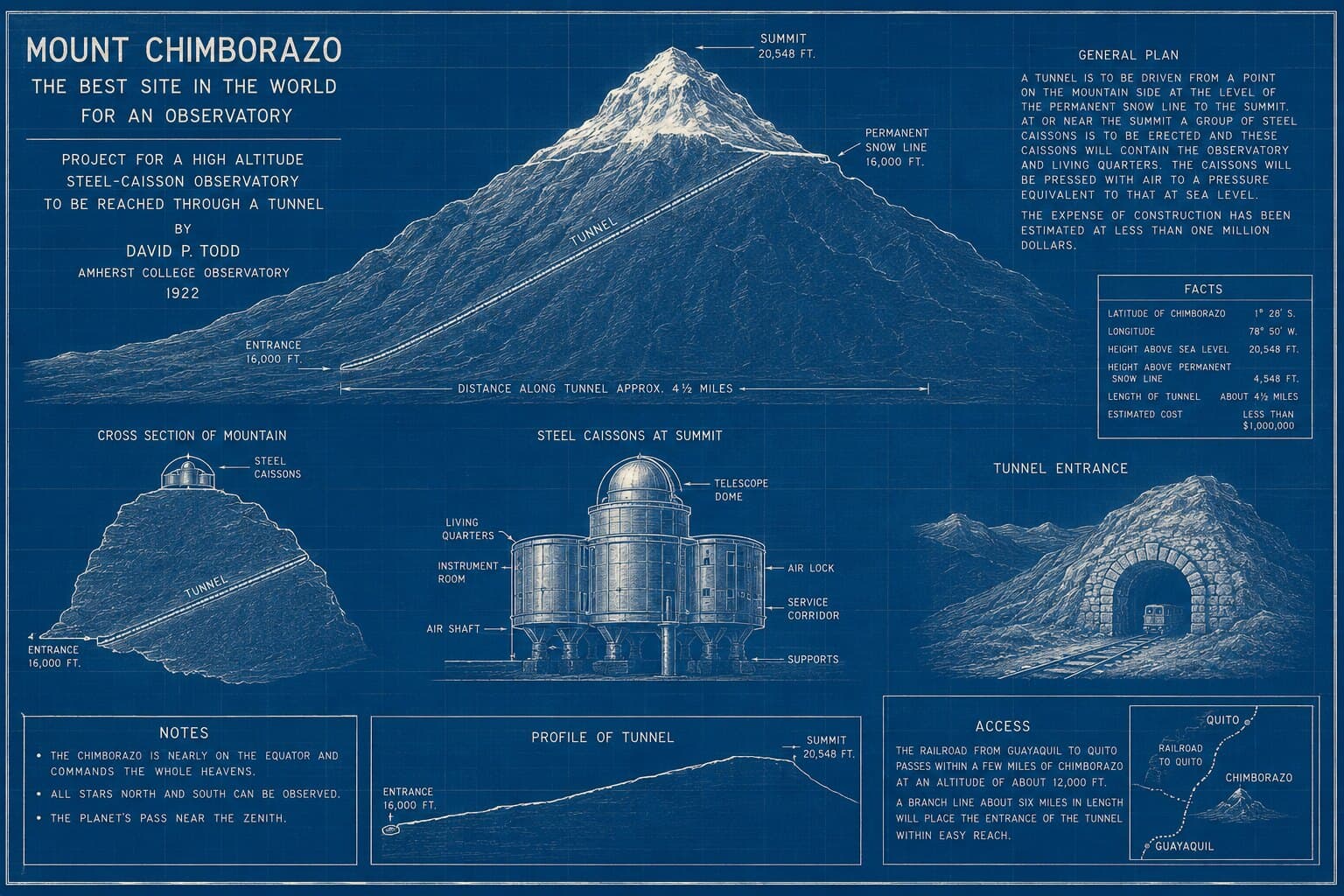
David Todd and his tunnel to the top of Chimborazo
In 1922 astronomer David P. Todd proposed boring a tunnel into Chimborazo all the way to the summit to build a pressurized steel observatory inside it.
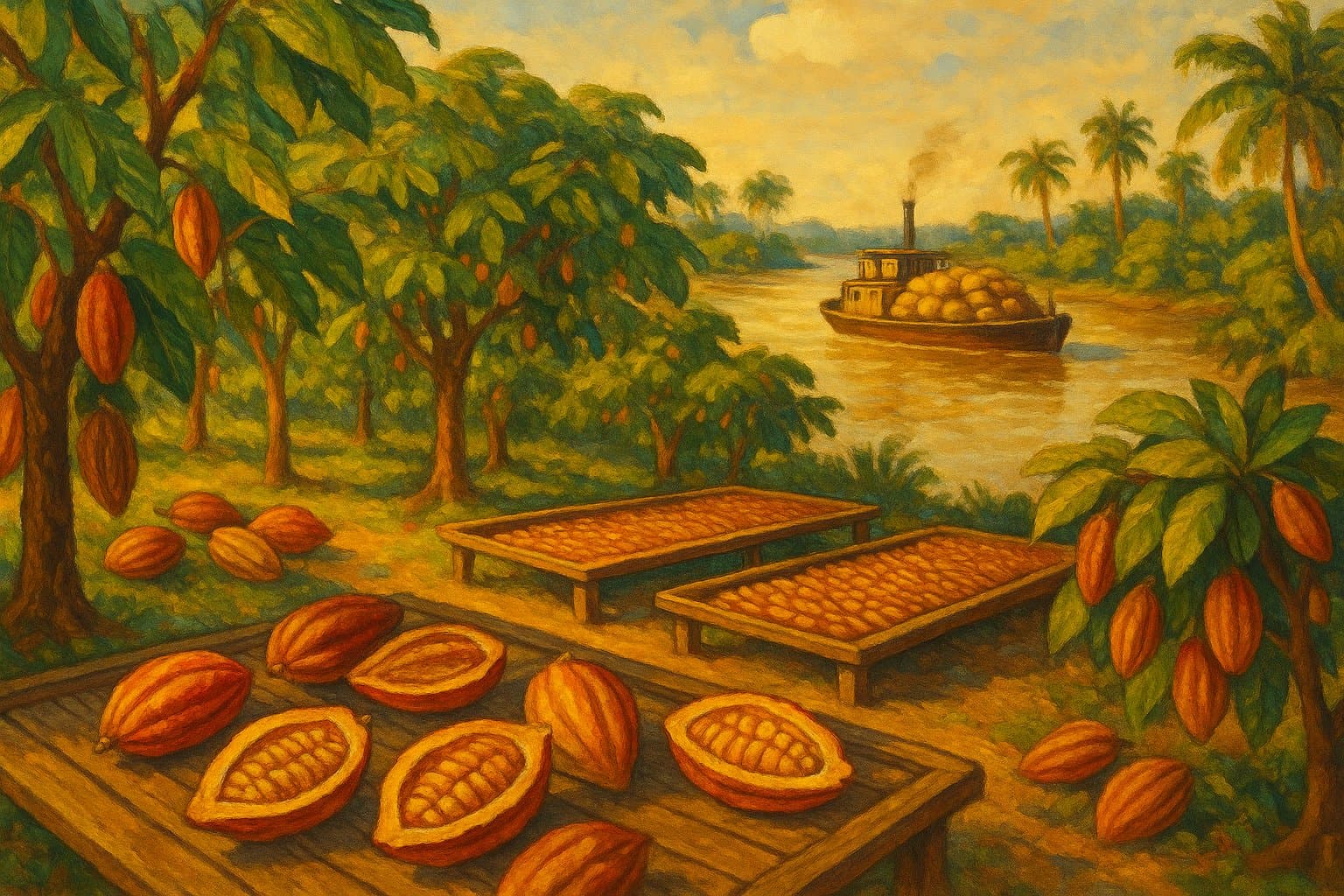
Ecuador's Cacao Boom: When the Golden Bean Ruled
Between 1880 and 1920 Ecuador was the world's top cacao exporter. The «golden bean» built fortunes in Guayaquil until a silent plague brought it all down.