
Who stole Einstein's brain and then walked it around in the trunk of his car?
When Einstein died he asked to be cremated and forgotten, but the pathologist stole his brain and drove it around in his trunk for decades.
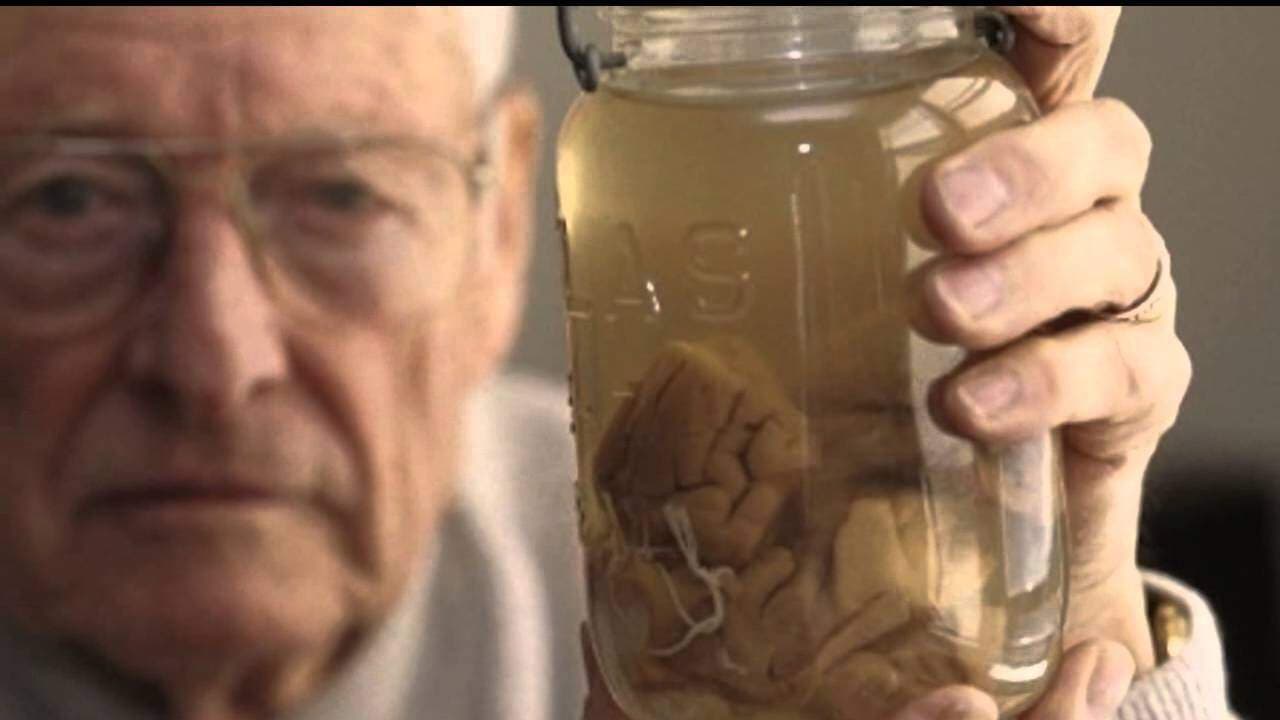
Albert Einstein was undoubtedly one of the best known characters of the 20th century. A certain veneration for his image of absolute genius and scientific messiah orbited him. It was an interesting era of worship of science back in the 1920s and 1930s. Einstein became a kind of oracle who was asked all series of questions, far beyond the scientific. They asked him about religion, the Jewish holocaust, his personal life, politics, practically everything, and he said more than once, what he wanted was time alone to think, without distractions.
Einstein was not very fond of this general admiration. He hated her. He hated being in everyone's “crosshairs”. But it was inevitable. When offered the presidency of the newborn nation of Israel, he rejected the proposal, saying he would not know how to run a country. All these kinds of petitions, exaltations, and distinctions overwhelmed him. He then made sure to explicitly state in his will that he did not want to be buried but cremated and have his ashes scattered, so that there would be no grave to visit. Specifically, he had commented while alive "I want to be cremated so that people will not worship my bones."
The day before his death, in April 1955, he had told a close friend "I have finished my work here." He was preparing to die. He wanted to go unnoticed, turn to ash and spread like an anonymous cloud of dust.
But the plans weren't going to go exactly as Einstein had calculated.
The day of Einstein's autopsy
On the day of the autopsy, two professionals, friends with each other, Dr. Harry Zimmerman and Dr. Thomas Harvey (who had been a student of the former), were talking about who would do the work. In the end the task fell to Harvey. He wanted the honor of working with the most admired character of the day, and Zimmerman thought it only fair to let his former student have that honor.
Harvey came face to face with Einstein, determined that the cause of his death was an abdominal aortic aneurysm; which they had already warned the Physicist in his lifetime could happen if he did not undergo an operation. But Einstein flatly refused to have surgery and decided that he did not want to extend his life.
During the autopsy, Harvey was in absolute concentration, living his moment, his moment with genius. He had been the person chosen among all humans to attend to an icon in history in his last corporeal process, before turning back to stardust. Even though there were a couple more people watching, there was no one to him except him and his inert visitor.
Harvey cut the pericardium and pulmonary artery, separated the trachea and esophagus; he had done hundreds of autopsies before, but this one in particular was taking time, he was spinning the matter, the peritoneal cavity was three-quarters full of blood clots. The cause of death was clear, but he went back to checking other cavities, curious, over and over again, not knowing why he was holding off on the situation. He had everything ready to write the report, but he wanted to spend more time with the genius. A little more. Without a doubt it was the most intimate moment possible for a human being, he had in front of him the very entrails of the character, an already defenseless, naked Einstein, surrendered to the power of Harvey. The pathologist was still absorbed.
He felt it was his duty to solve some mysteries. The questions were already a swarm of questions in his head. What had made Einstein different from other mortals? Where did his ability to solve science riddles lie? Where was the engine of that genius? Were the answers a couple of incisions away? Was the possibility of solving this mystery about to be cremated? He couldn't allow it. I couldn't help but find out!
Deftly working with his tools, he made an incision from the bottom of one ear to the other, behind the neck. It peeled off the skin and then went deep into the skull. There it was, the brain, the core, the engine, full of equations, theories, truths, galaxies, black holes. He had it in his hands, him and no one else.
The controversy over the theft of the brain
The day after the autopsy, when Einstein's family scattered the ashes into the Delaware River, they believed that they had indeed scattered all the ashes, fulfilling the deceased's wish. Not even the scientist's first-born son, Hans Albert, had suspected that someone was keeping his father's brain somewhere.
What is certain is that, somehow, someone commented on it. Surely Zimmerman, who knew about the "robbery", told someone else, and well, it was not a rumor with characteristics of going unnoticed, so it went viral immediately. From one moment to the next everyone was talking about someone having stolen a brain, the brain of none other than the most famous scientist in history.
It was not long until the rumor reached the directors of Princeton Hospital, where the autopsy was performed. It also reached the ears of Hans Albert, the son of Albert Einstein, who was immediately enraged when he saw that his father's last wish, to be reduced to an ashen and invincible appearance, had not been fulfilled. The hospital officials were shocked and Harvey was fired immediately. The press found out and it was rumored that Harvey would be charged with theft. Harvey had to be crafty. Instead of returning the brain, he explained to the press that it had not been a robbery but an act by science and that it was common in hospitals to keep organs from time to time, for scientific studies. Then he had to deal with the family. He contacted Hans Albert, promised that he would only use the brain for scientific purposes and implored him to let him keep it and somehow convinced him by swearing that he would send brain samples to important and renowned researchers for study.
The following months, Harvey dedicated himself to slicing the organ into thin slices, which he then put into glass containers of mayonnaise, which he consumed almost compulsively. Then he sent the samples to different institutes so that experts could do studies. He himself bore the expenses. He prepared hundreds of samples and kept a good part as well. He waited months and months, waiting for some of the scientists to respond with results, with the discovery of the holy grail of neurology, but no one did. His initial motivation turned to discouragement, then sadness, and finally he collapsed. He spent himself checking tissues under the microscope in his basement to see if he could find the answer on his own. He became sullen and gloomy. His obsession with sliced brain cost him his peace of mind and marriage. Their divorce was the straw that broke the camel's back and a kind of simile to those legends of curses that fall on the profaners of Pharahonic tombs. Harvey, he had desecrated something sacred.
From then on Harvey chose to hide. He walked away from everything and few knew of his whereabouts and the whereabouts of what was left of his brain.
The strangest road trip in America
For almost forty years, Albert Einstein's brain traveled with Harvey from move to move, inside two jars kept in a cider box, sometimes hidden under a beer cooler. Harvey roamed the country, changed jobs, lost his medical license in 1988 after failing a competency exam, and along the way the most famous brain in science ended up stored in the closet of an ordinary apartment, next to a Kansas highway.
The story resurfaced in 1997, and in the most improbable way. A young journalist, Michael Paterniti, convinced Harvey —by then over eighty— to drive across the United States to take the brain to California, to the home of Evelyn, Einstein's granddaughter. And so the three of them went, in a rented Buick: the old pathologist, the journalist, and Einstein traveling in pieces in the trunk, inside a Tupperware container. Out of that delirious trip came an endearing book, Driving Mr. Albert, which finally made Harvey what he had always wanted to be without knowing it: not the discoverer of the genius's secret, but the keeper of an impossible relic.
And what was so special about the brain?
It is worth answering the question that started the whole odyssey, because the answer is modest and fascinating at once. The samples Harvey did manage to distribute eventually reached serious researchers and yielded a few findings —always with the same caveat: it is a single brain, with no rigorous comparison group, and prudence is required.
In 1985, neuroscientist Marian Diamond of Berkeley reported that in certain areas Einstein's brain had an unusually high ratio of glial cells —the ones that nourish and support neurons— per neuron. In 1999, researcher Sandra Witelson published in the journal The Lancet the most cited finding: Einstein's inferior parietal lobes —regions associated with mathematical and spatial reasoning— were about 15% wider than normal, and partially missing a groove (the lateral sulcus), as if those areas had grown more closely knit and interconnected. Did that make him a genius, or did decades of thinking in geometry shape his brain? No one can say for certain: the chicken and egg of neuroscience. The engine Harvey searched for all his life never appeared as he had dreamed it, because almost certainly there is no single engine to find.
The return
In 1998, an elderly Harvey did the only thing left to do: he returned what he still kept of the brain to Princeton Hospital, from which it had departed forty-three years earlier. He closed the circle. He died in 2007, at ninety-four, remembered not for a discovery but for the strangest journey in the history of medicine.
Einstein wanted to vanish without leaving bones to worship. He almost succeeded: his ashes were scattered in the Delaware River and there is no grave to visit. But his brain, against all his wishes, became the very thing he most feared —a relic— and also something he might not have minded so much: proof that not even the most studied organ on the planet gives up its secrets easily. The genius, in the end, took the best part of the mystery with him.
References
- Marian C. Diamond, Arnold B. Scheibel, Greer M. Murphy Jr. and Thomas Harvey, “On the brain of a scientist: Albert Einstein,” Experimental Neurology, vol. 88, no. 1, 1985, pp. 198-204. doi.org
- Sandra F. Witelson, Debra L. Kigar and Thomas Harvey, “The exceptional brain of Albert Einstein,” The Lancet, vol. 353, no. 9170, 1999, pp. 2149-2153. doi.org
- Michael Paterniti, Driving Mr. Albert: A Trip Across America with Einstein's Brain, New York, The Dial Press, 2000.
Categories
The books · born from this blog
Atahualpa con su abrigo de pelo de murciélago
y otras 49 historias verdaderas que parecen mentira
Available on Amazon
Tocar madera
Pequeña historia de las supersticiones que el mundo no ha podido soltar
Available on Amazon
100 futuros
Cien escenarios del mundo que viene con la inteligencia artificial
Available on AmazonYou may also like
The oldest recorded voice: sound before Edison
In 1860, 17 years before Edison, a French typesetter recorded the oldest human voice we can hear today. This is how we finally heard the past.
The History of Zero: The Number We Took Ages to Accept
The history of zero: from a dot in an Indian manuscript to Brahmagupta's rules and the Florence ban. How we finally learned to write nothing down.
The Antikythera Mechanism: A 2,000-Year-Old Computer
The Antikythera mechanism is the oldest known analog computer: a bronze Greek machine, found in a shipwreck, that could predict eclipses 2,000 years ago.