
The Story of a Fruit That Was Rented
The pineapple was once so rare and prized that it crowned gala banquets as a status symbol, and was rented out rather than eaten. Here's its story.
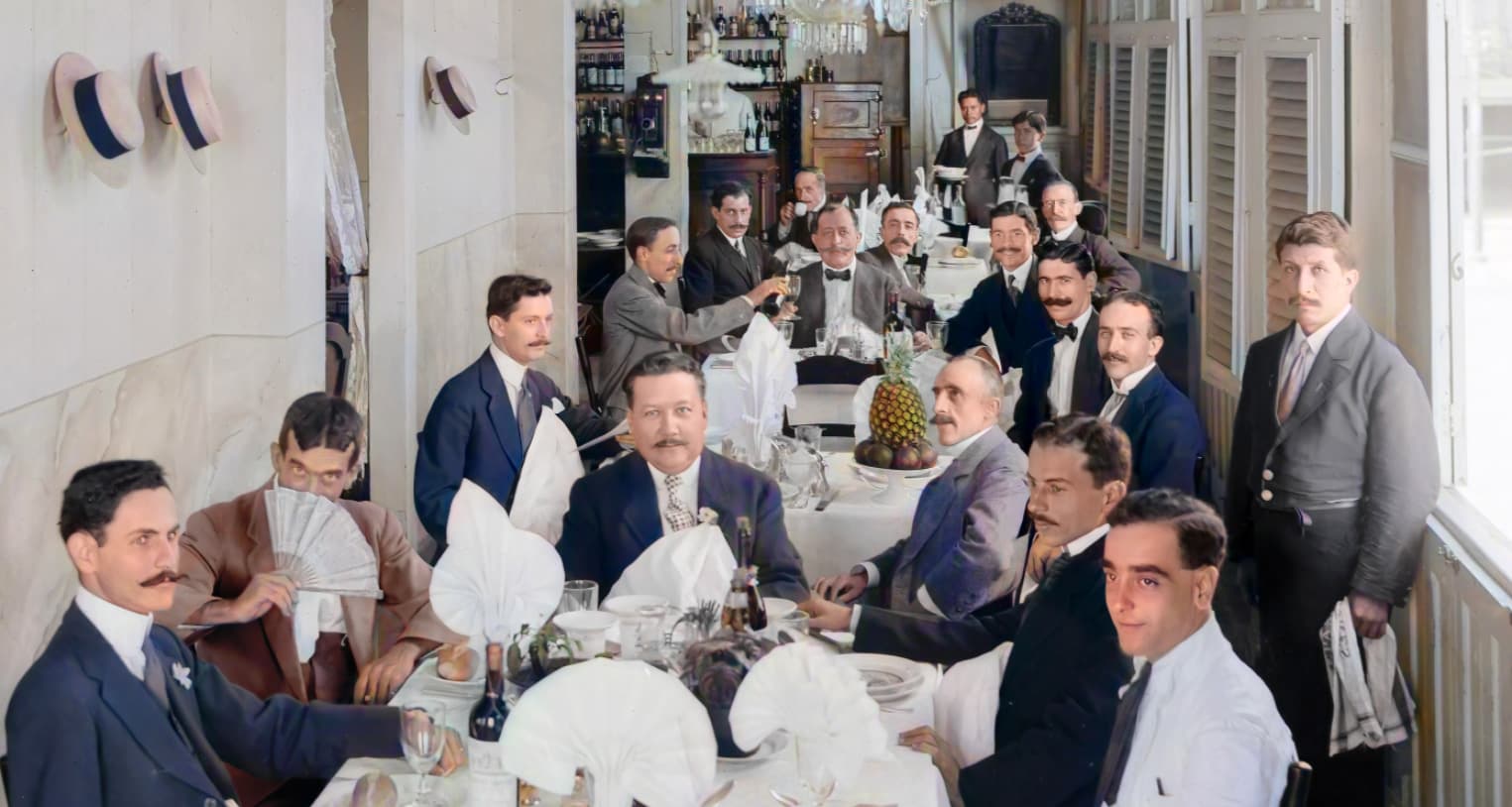
A few years ago, I was researching for the book Guayaquil, Historias a Color, reviewing photographs of Guayaquil from over a century ago, when I came across a scene at the Club Metropolitano (a club that no longer exists). The Guayaquil elite in full banquet mode, everyone immaculately dressed, tables adorned with impeccable tablecloths and napkins folded like a peacock's tail. Beyond them, in the center, there was something that didn't fit: instead of flowers or some elaborate arrangement, there was that pineapple, balancing on a plate, with its green plume on top.
An uncut pineapple?, I thought to myself. Just like that, a pineapple standing upright, unsliced? I painted it, as that was my job—colorizing the Guayaquil of "before" from black-and-white negatives.
I began to notice them in other photos from the same period. And there they were again: pineapples standing upright as centerpieces. Pineapples at gala tables. Pineapples that clearly weren't there to be eaten.
Something didn't quite add up. The pineapple is a common fruit. Why would they put it as decoration at various banquets of the era?
Christopher Columbus came across the pineapple in Guadeloupe in 1493, during his second voyage, and was the first to bring it to Europe. The fruit came from the Caribbean, and for Europeans it was an absolute rarity. Nothing like it existed in the "old continent": that texture, that sweetness, that crown of spiny leaves as if it were a fruit designed by someone with a vivid imagination.
The fascination was immediate.
But there was an enormous problem: transportation. Unlike other more resilient fruits, the pineapple didn't handle long sea voyages well. It ripened at sea, spoiled, decomposed. Of each shipment that departed from the Caribbean bound for Europe, only a few specimens arrived at port in acceptable condition. The rest ended up rotting.
Imagine the result: an exotic, delicious fruit… and incredibly rare.
The pineapple ended up becoming the most extravagant status symbol in 17th and 18th century Europe.
In 18th century England, a single pineapple could cost the equivalent of about eight thousand dollars today.
Those who could afford it—kings, aristocrats, the wealthy elite—didn't necessarily buy it to eat it. They bought it to display it. The pineapple became the quintessential centerpiece at banquets. It was a silent but powerful way of telling guests: look what I can afford.
Some even paraded them through the streets, tucked under their arm, simply so people would see them carrying it. Like today someone strolls with a designer handbag or arrives at a gathering in a sports car.
If the pineapple ended up too green or too ripe, it didn't matter. What mattered wasn't the fruit. It was the appearance. The pineapple passed from banquet to banquet, from event to event, until it decomposed.
The obsession reached such a point that it was immortalized in stone: if you look at the two towers of St Paul's Cathedral in London, there are pineapples carved at the top. Also on the obelisks of Lambeth Bridge. The pineapple literally became an architectural emblem of wealth.
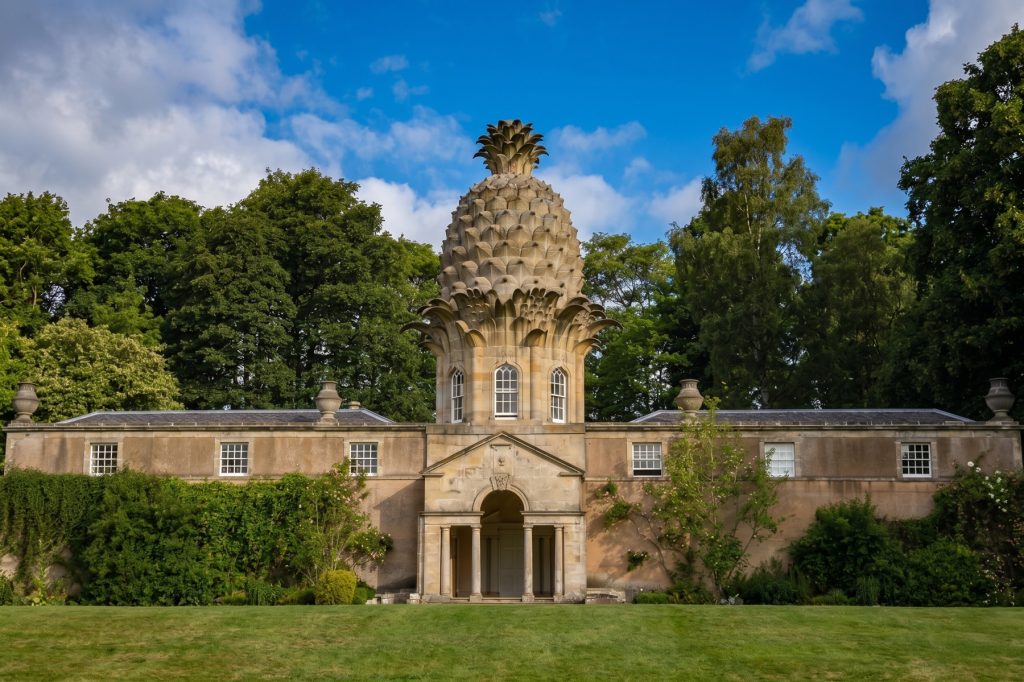
Today, one of the strangest buildings in Scotland is the famous Dunmore Pineapple, an extravagant 18th century construction commissioned by John Murray, Earl of Dunmore, within the park of the same name.
The rental business
In London, demand was so high and the price so prohibitive that not all aristocracy could afford to buy one. And then a business emerged that today seems ridiculous to us, but at the time made perfect sense: they rented pineapples.
Yes. If you were a Londoner with a certain purchasing power, but not enough to buy a whole pineapple, you could pay to rent it for an evening. Take it home, place it at the center of your table, dazzle your guests during the banquet, and return it to the merchant the next day. Who would probably rent it again to another customer, and another, and another... until the poor pineapple could take no more.
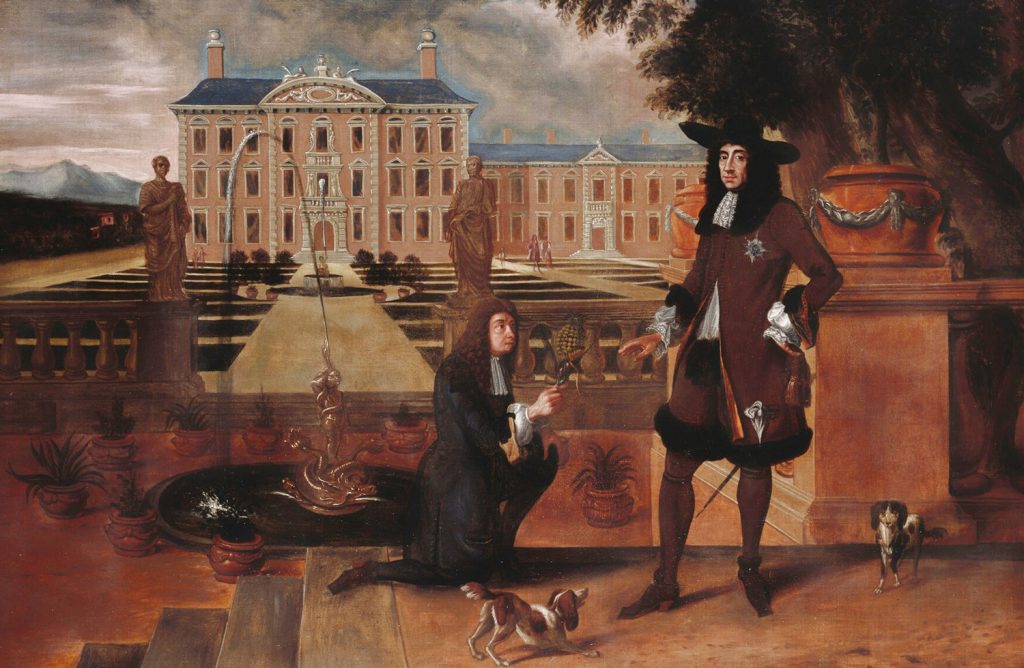
A single pineapple would thus travel, in its final days, through various tables and various different hosts. Each one displayed it as if it were their own. As if they could have paid for it.
How long did this last? Until the English managed to cultivate pineapples in their own greenhouses—the famous pineapple pits, systems heated with manure that maintained tropical warmth in the middle of the British winter—and, later, in their colonies. Supply increased. Transportation improved. Prices fell. The pineapple stopped being rare. It stopped being exotic. And, almost immediately, it stopped being a status symbol.
Today a pineapple costs less than a coffee. No one rents one to impress their guests. If you put it as a centerpiece, most likely someone will ask if you forgot to serve it.
What things are worth
There's an interesting reflection in this whole story, and it's that the value of things doesn't always have to do with what things are, but with how difficult they are to obtain. When something stops being rare, it loses that special aura. The same applies to pineapples, to fashions, to experiences, to technology, to almost everything around us.
What seems extraordinary today is trivial tomorrow. What is trivial today was once extraordinary.
And I return, of course, to those pineapples on the table at the Club Metropolitano. Now that photograph tells me something somewhat different. It wasn't simple decoration. It was the echo of an era when that fruit—that same fruit we buy today without thinking—spoke silently of status, of power, and of a host's effort to prove they belonged to the elite.
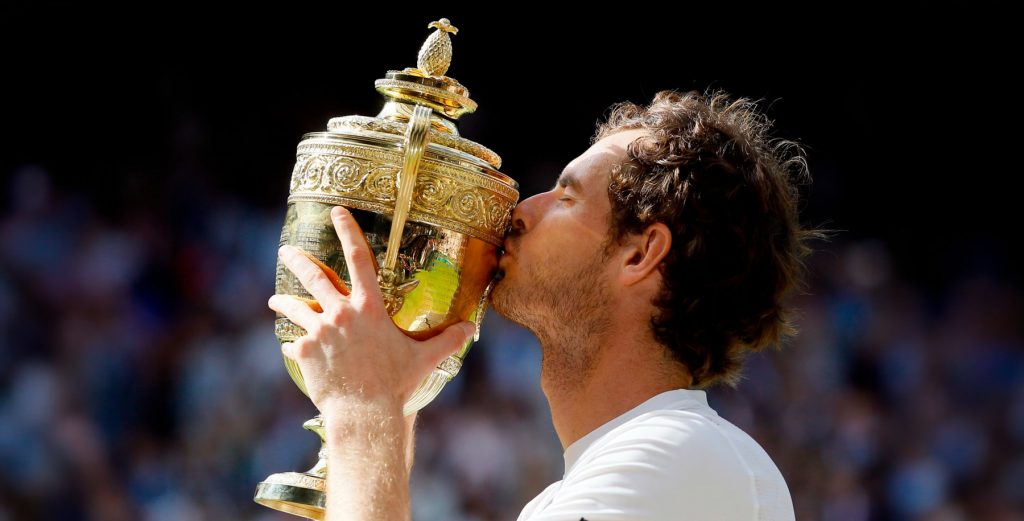
By the way, had you noticed that the Wimbledon trophy has a pineapple? Well, I hadn't noticed either until I finished researching for this article. 🙂
References
- Fran Beauman, The Pineapple: King of Fruits, London, Chatto & Windus, 2005. archive.org
- Historic Environment Scotland, "The Pineapple (Dunmore Park)", Inventory of Gardens and Designed Landscapes, ref. GDL00368: folly built in 1761 for the 4th Earl of Dunmore. portal.historicenvironment.scot
- St Paul's Cathedral, "The western towers, c. 1685–1710", official website of St Paul's Cathedral, London: the gilded copper pineapples, modelled by Francis Bird and cast by Jean Tijou, were completed in July 1708. stpauls.co.uk
Categories
The books · born from this blog
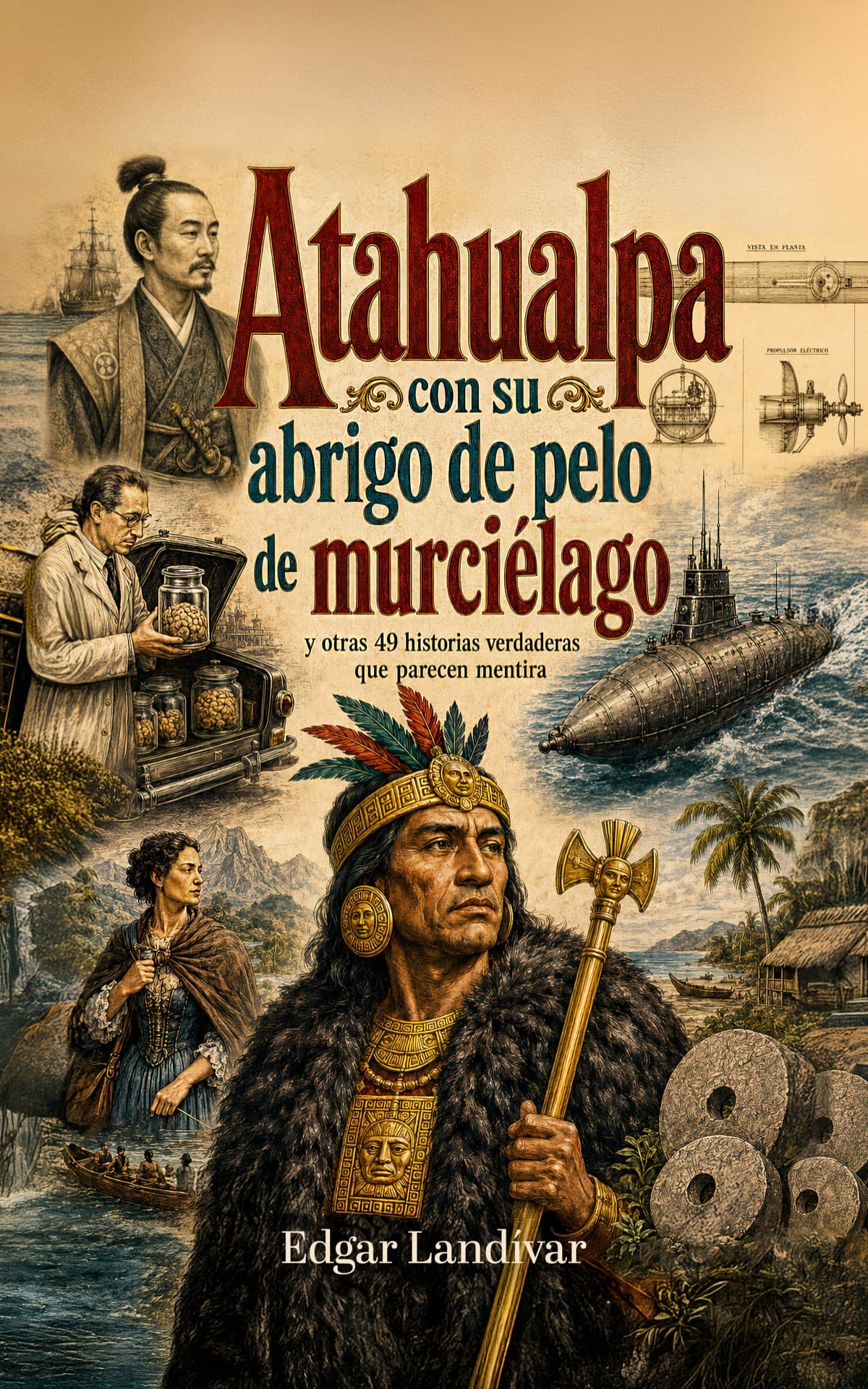
Atahualpa con su abrigo de pelo de murciélago
y otras 49 historias verdaderas que parecen mentira
Available on Amazon
Tocar madera
Pequeña historia de las supersticiones que el mundo no ha podido soltar
Available on Amazon
100 futuros
Cien escenarios del mundo que viene con la inteligencia artificial
Available on AmazonYou may also like
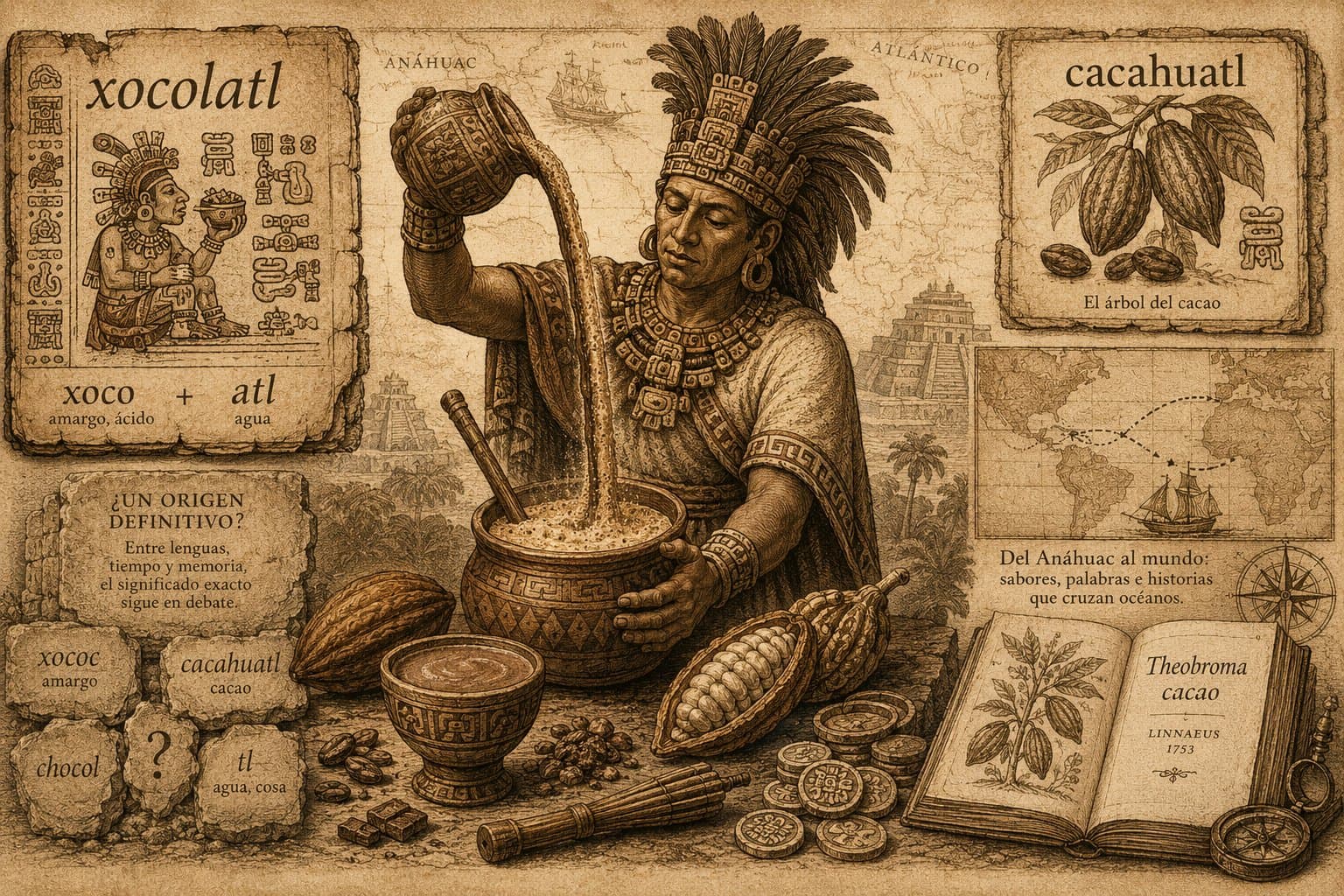
The Delicious Origin of the Word “Chocolate”
The word chocolate comes from Nahuatl, though its exact origin is still disputed between “bitter water,” “hot water” and a blend with Mayan.

Máchica and Pinol: The Ancestral Energy Bars of the Indigenous Americas. Recipe Included.
Máchica and pinol were the original energy bars, fueling Inca messengers and Aztec warriors long before modern snacks; recipe included.

The Invisible Giants and Their Shoulders of Concrete: The Story of Forgotten Brilliant Minds
Behind 20 famous inventions stand forgotten brilliant minds who nearly got the credit, the real giants on whose shoulders history's stars stood.