
The Baroness of Galápagos and the Floreana Mystery
In the 1930s, an Austrian baroness tried to rule over Floreana island in the Galápagos. Her disappearance remains an unsolved mystery to this day.
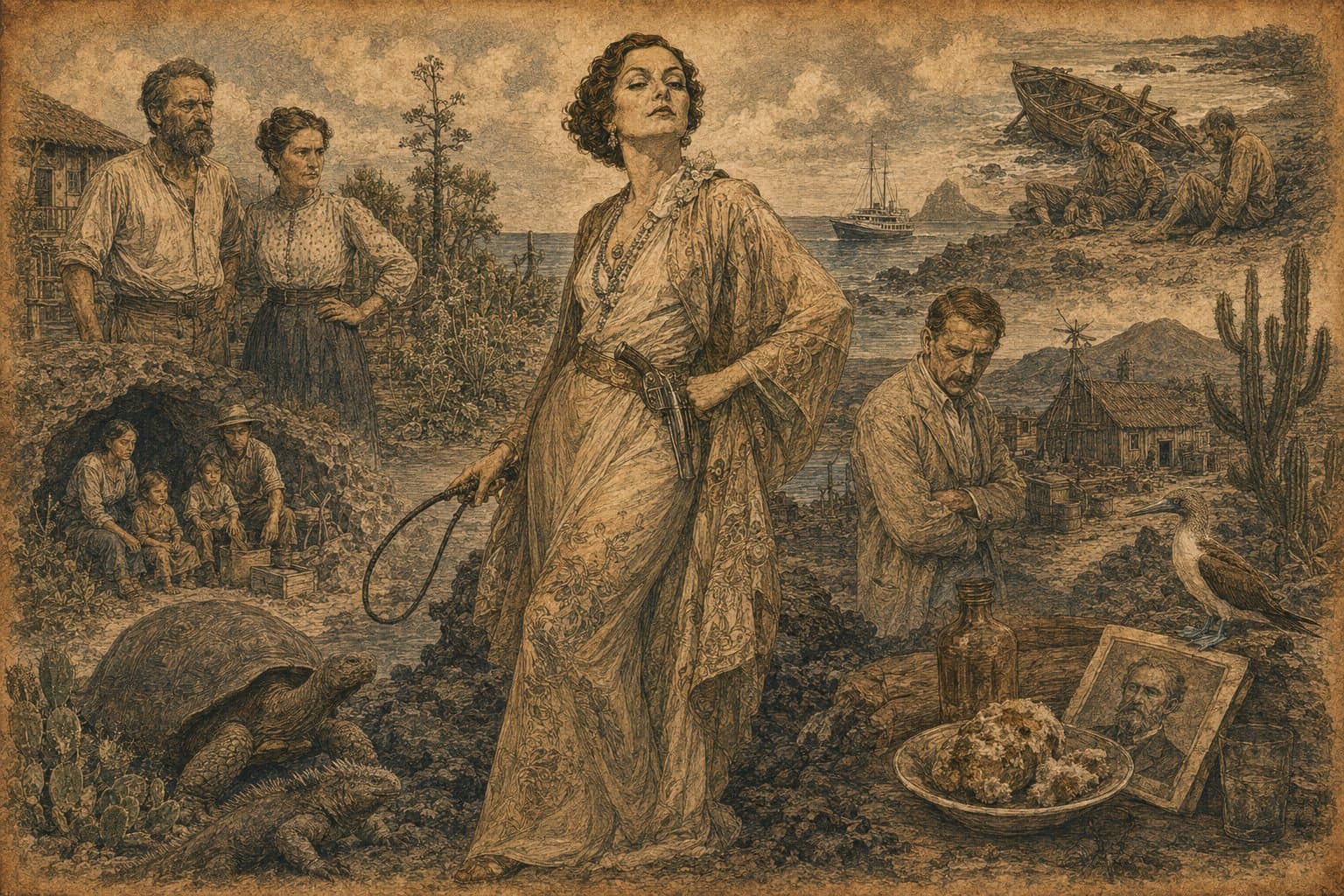
On Floreana, one of the smallest and most arid islands in the Galápagos archipelago, almost no one lived in the 1930s. Just a handful of Europeans who had fled the world to build their own paradise. What happened among them —disappearances, deaths and a baroness who proclaimed herself empress— is one of the great unsolved mysteries in the history of Ecuador, and it sounds so far-fetched that it is hard to believe it is true.
An Eden to escape the world
It all began in 1929, when the German physician Friedrich Ritter and his companion Dore Strauch left Berlin to settle on Floreana. Ritter was a Nietzschean dentist, a radical vegetarian convinced that civilization was rotten. He was so meticulous about his philosophy that, before leaving, he had all his teeth pulled and a set of stainless-steel dentures made, so he would never depend on a dentist on his deserted island.
The couple lived naked much of the time, grew their own vegetables and corresponded with newspapers around the world, which soon turned them into celebrities: the «Adam and Eve» of the Galápagos. That fame drew others. In 1932 the Wittmer family arrived —Heinz, his pregnant wife Margret and a son— in search of a simple life and clean air to cure the boy. They settled in some caves that, according to local legend, had sheltered pirates centuries earlier. For a while, the two German clans tolerated each other grudgingly.
The arrival of the «empress» of Floreana
And then, in late 1932, she landed: the Baroness Eloise Wagner de Bosquet, an Austrian, accompanied by two lovers —Robert Philippson and Rudolf Lorenz— and an Ecuadorian worker. The baroness had not come to hide from the world but to conquer it: she announced she would build a luxury hotel for millionaires, the «Hacienda Paraíso», and that Floreana would be her kingdom.
She walked around with a whip and a pistol, called herself «Empress of Floreana» and treated the other colonists as subjects. She intercepted the mail and supplies that passing ships left for everyone, kept the best for herself and handed out the rest as she pleased. She publicly humiliated Lorenz, the weakest of her lovers, whom she kept as little more than a servant. On a tiny island, with no law and no authority, where fresh water was scarce, that theatrical, despotic woman became a time bomb.
The summer of the disappearances
The tension exploded in March 1934, in the middle of a drought. One day, just like that, the baroness and her lover Philippson vanished. According to Margret Wittmer —the only witness who offered an explanation—, the baroness stopped by to say goodbye: some friends had arrived on a yacht and were taking her to Tahiti, leaving everything behind. They were never heard from again.
The problem is that no ship was recorded at the island during those days. The baroness left behind even her prized copy of The Picture of Dorian Gray and her most cherished belongings. And no one, in any Pacific port, ever saw her again. For almost everyone who knows the case, the baroness and Philippson did not sail off to Tahiti: they were murdered, and their bodies never appeared. The prime suspect was the humiliated Lorenz, who suddenly seemed relieved and in a hurry to leave.
The other deaths
The sinister part did not end there. Soon after, Lorenz paid a Norwegian fisherman to take him off Floreana. The boat never reached its destination. Months later, their sun-mummified bodies turned up on the beach of Marchena island, dehydrated: they had been stranded without water in one of the most inhospitable spots in the archipelago.
And in November 1934, Dr. Ritter —a militant vegetarian— died after eating spoiled chicken meat. He agonized as if poisoned while Dore Strauch, his companion, nursed him; she always hinted that his death had not been entirely natural either. Of the protagonists of this story, in less than a year, four were dead or missing. Only the Wittmers were left standing.
A mystery no one has solved
Margret Wittmer lived on Floreana until the year 2000, surrounded by children and grandchildren, and never changed a comma of her account. She and the other survivors took to their graves what really happened that summer. Did Lorenz kill the baroness? Were other hands involved? Was Ritter poisoned on purpose? There is no verdict, no confession, no bodies. Only versions that never quite fit together, as happens with the curse of Tutankhamun, where the numbers don't add up either.
The «Galápagos Affair» inspired books, documentaries and even the film The Galápagos Affair: Satan Came to Eden (2013), assembled from the colonists' own home movies. Today the Wittmers' descendants still welcome tourists to Floreana, that same island of black lava and giant tortoises which, like nearby Isla de la Plata and its still-hidden treasure, guards secrets the Pacific has no intention of giving back.
References
- Margret Wittmer, Floreana: A Woman's Pilgrimage to the Galapagos, 1959.
- Dore Strauch, Satan Came to Eden, Harper & Brothers, New York, 1936.
- John Treherne, The Galapagos Affair, Jonathan Cape, London, 1983.
- Dayna Goldfine and Dan Geller (dirs.), The Galápagos Affair: Satan Came to Eden (documentary), 2013.
Do you enjoy real mysteries that read like fiction? Continue with the hidden treasure of Isla de la Plata or explore the whole history series.
Categories
The books · born from this blog
Atahualpa con su abrigo de pelo de murciélago
y otras 49 historias verdaderas que parecen mentira
Available on Amazon
Tocar madera
Pequeña historia de las supersticiones que el mundo no ha podido soltar
Available on Amazon
100 futuros
Cien escenarios del mundo que viene con la inteligencia artificial
Available on AmazonYou may also like

Tagua: the Vegetable Ivory That Buttoned Europe
Tagua, the seed of an Ecuadorian palm, mimicked ivory and buttoned the world's clothes for decades, until cheap plastic pushed it aside almost overnight.
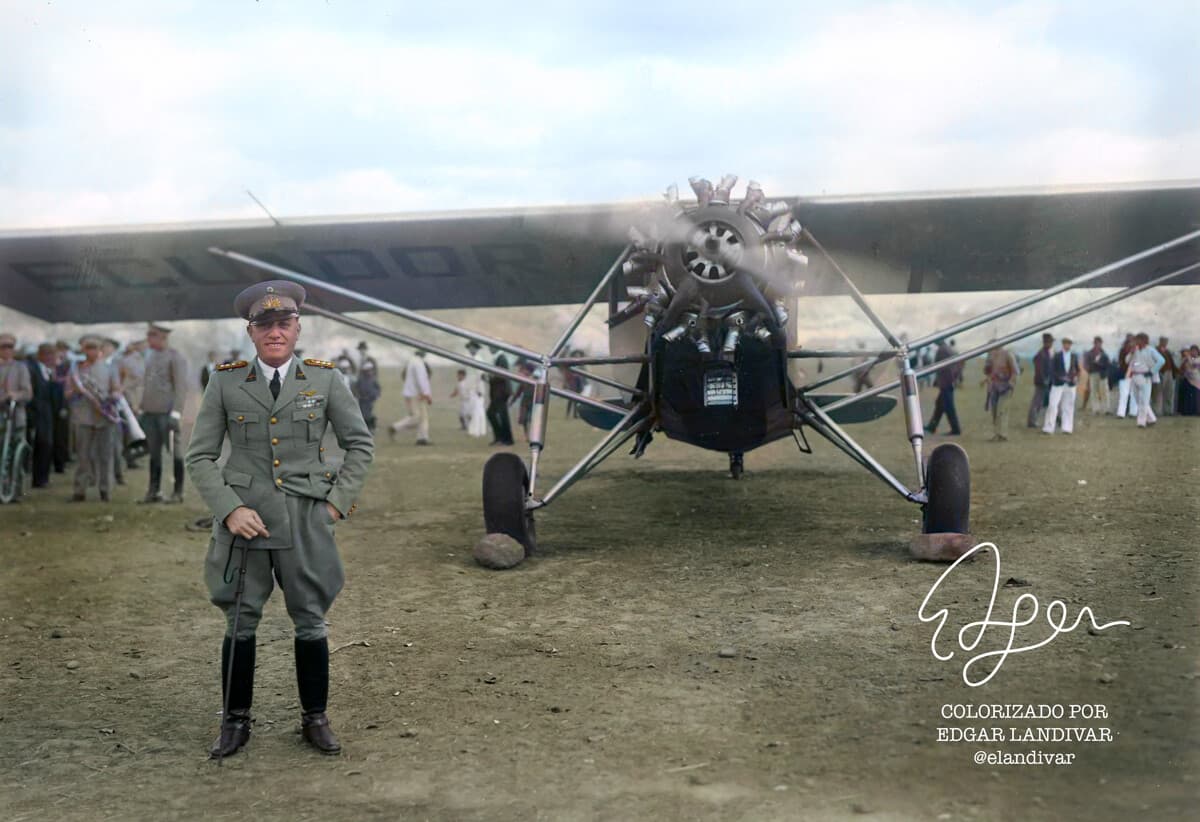
A window to Ecuador from a century ago. Photo restoration.
Restored and colorized photos open a vivid window onto Ecuador a century ago, from presidents and earthquakes to long-vanished railways.
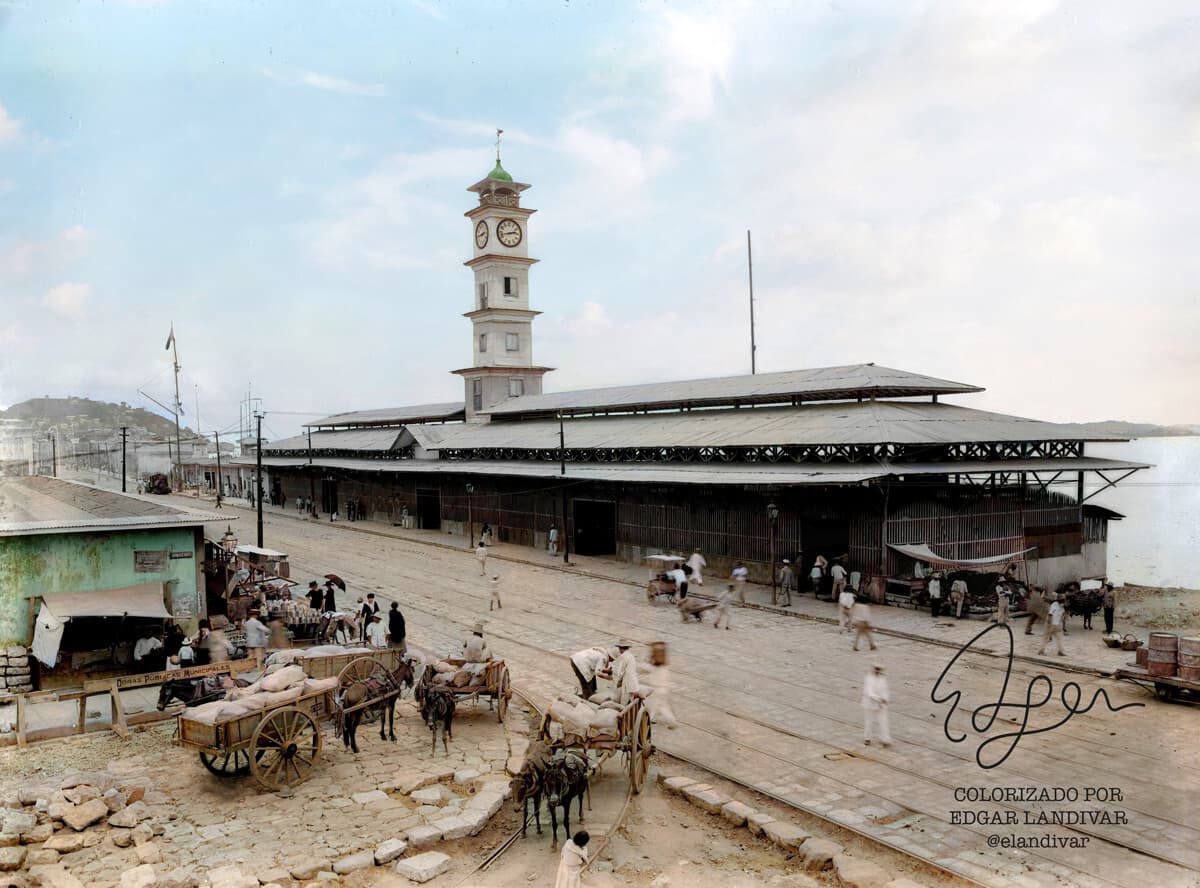
Old Guayaquil in video
Old Guayaquil comes alive in 1920s footage restored and colorized with AI, revealing its tram, the Malecón and real people from a century ago.