
Rubber Before Goodyear: The Gum That Melted
Before vulcanization, rubber was a gum that melted in summer and cracked in winter. From the Maya to Goodyear, here's how it was finally tamed.
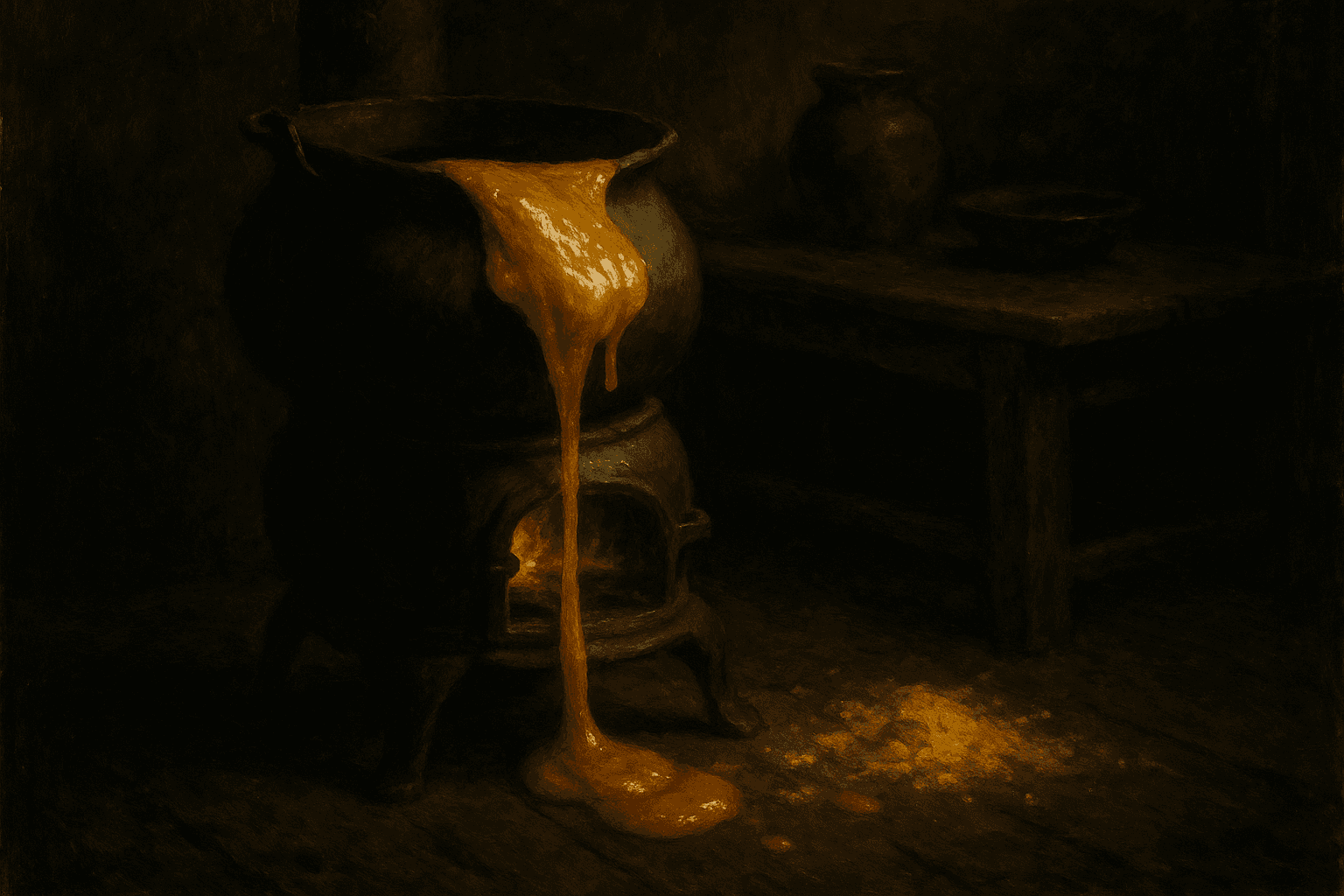
Today rubber is everywhere: in the soles of your shoes, in a surgeon's gloves, in the seal of a refrigerator door and in the wheels of nearly everything that moves. We take for granted that it is a docile material, one that shrugs off heat and cold without complaint. But for almost all of its history, rubber was exactly the opposite: a fickle, maddening gum that melted in summer into a sticky, foul-smelling paste, and that in winter turned hard and brittle as a cracker. The story of how that useless wonder became the material holding up the modern world runs through an Amazon jungle, a raincoat maker and, above all, an obsessive, penniless American.
The first rubber chemists lived in the jungle
Long before Europe knew what rubber was, the peoples of Mesoamerica had already mastered it. The Olmecs —whose name in Nahuatl means, precisely, "the rubber people"— were making balls, figurines and rubber bands from at least 1600 BCE. They did not use raw latex as it came: they mixed it with the juice of a vine, Ipomoea alba (a morning glory), and combining it with the sap of the Castilla elastica tree they obtained a tougher, more elastic material.
In 1999, researchers Dorothy Hosler and Michael Tarkanian, at MIT, showed in the laboratory that this recipe was no accident: by varying the proportions you got different rubbers. A half-and-half blend gave maximum bounce, ideal for the balls of the ritual ballgame; more latex produced a harder material for soles and bands. In other words, the Mesoamerican peoples were doing materials engineering three thousand years before the West, without knowing a word of chemistry. Those cultures left us far more than rubber: much of what we eat every day, as told in the Nahuatl words hidden in chocolate, tomato and avocado.
"Weeping wood": rubber reaches Europe
Rubber entered European science through the French explorer Charles-Marie de La Condamine, who in 1736 sent the first samples and descriptions to the Paris Academy of Sciences during his expedition to the Amazon —the same one that also made quinine known, part of the enormous wealth the Amazon was hiding. The indigenous peoples called the substance cahuchu, "weeping wood," for the way the latex oozed from the wounded trunk: that is where the Spanish word caucho comes from. Years later, the engineer François Fresneau located the Hevea tree and produced what is usually considered the first serious scientific study of the material.
In England they gave it a different name. In 1770, the chemist Joseph Priestley —the same man who isolated oxygen— noticed that a small piece of the gum was wonderful for rubbing pencil marks off paper. Because it was good for rubbing, they christened it rubber, the name the material still carries in English today. Curiously, the first great use of the material in Europe was neither industrial nor heroic: it was an eraser.
The waterproof dream that melted in your pocket
Rubber promised something fascinating: it was waterproof. In 1823, the Scottish chemist Charles Macintosh discovered that naphtha obtained from coal tar dissolved rubber, and used that solution to glue two layers of cloth together and make a waterproof fabric. The mackintosh was born, the raincoat that still bears his name (with a k added along the way).
But the invention had a humiliating flaw. Those first raincoats suffered from the same old curse: under the summer sun the rubber softened, turned sticky and gave off an unpleasant smell; in the cold, by contrast, it stiffened and cracked. A garment could turn into a reeking paste inside a warm closet or split apart on a freezing day. Rubber was a promise that fell to pieces —literally— with nothing more than a change in temperature. No one was going to build an industry on a material that survived neither summer nor winter.
The obsessive who bet everything on rubber
Here enters the central character of this story: Charles Goodyear, a ruined American merchant who became obsessed with "fixing" rubber. He was no chemist and had no money —he spent stretches in jail for debt— but he was convinced that the gum could be stabilized. For years he tried everything: he mixed it with magnesia, with lime, with nitric acid, hunting for a formula that would withstand heat. His family lived in poverty while he went on experimenting with pots of foul-smelling gum.
The lucky break came in 1839. According to the most widely told version, Goodyear was arguing in a store in Woburn, Massachusetts, waving a mixture of rubber and sulfur in his hand, when a piece accidentally fell onto a hot stove. Instead of melting into a sticky puddle, as ordinary rubber would have, the material transformed: it became firm, elastic and —this was the astonishing part— resistant to both heat and cold. Goodyear had stumbled, almost by chance, onto the process he had chased for years.
Vulcanization: taming fire and ice
The process consisted of heating rubber together with sulfur. The result was a stable material that no longer softened in the heat or shattered in the cold, and that kept its elasticity across an enormous range of temperatures. It was named vulcanization, in honor of Vulcan, the Roman god of fire. It was the missing ingredient: with rubber finally tamed, the door opened to soles, seals, tubes and, in time, to the wheels that would change transport, as told in the tires that came after Goodyear's rubber.
The story, however, was not entirely fair. On the other side of the Atlantic, the Englishman Thomas Hancock —who had already invented a machine to shred and recycle rubber, the "masticator"— examined some samples of Goodyear's vulcanized material, deduced the role of sulfur and patented the process in the United Kingdom on 21 November 1843, eight weeks before Goodyear filed his American patent, in January 1844. In fact, it was a collaborator of Hancock's who coined the word "vulcanization." Goodyear would spend the rest of his life tangled in patent lawsuits.
A useful wonder, a poor inventor
Charles Goodyear died in 1860 loaded with debt, having earned almost nothing from the discovery that made the modern rubber industry possible. The famous tire brand that bears his name was founded decades after his death and has no family connection to him: it merely took his name as a tribute. It is one of those ironies that recur in the history of technology —just as in the story of Teflon, another material born of an accident—: the one who solves the problem is not always the one who reaps the reward.
The next time you stretch a rubber band, watch a ball bounce or look at a car's tires, it is worth remembering that, for thousands of years, rubber was a useless wonder that melted in summer and cracked in winter. It took the chemists of the Mesoamerican jungle, an explorer in the Amazon, a raincoat maker and a ruined dreamer with sulfur and a hot stove to turn that fickle gum into the silent material that today holds up, quite literally, a good part of the world.
References
- "Charles Goodyear," Encyclopædia Britannica. britannica.com
- "Charles Macintosh," Encyclopædia Britannica. britannica.com
- "Prehistoric Polymers: Rubber Processing in Ancient Mesoamerica" (Hosler, Burkett and Tarkanian), MIT News. news.mit.edu
- "Charles-Marie de La Condamine," Encyclopædia Britannica. britannica.com
Enjoy stories about the materials that changed the world? Continue with the tire before modern rubber or explore the whole history section.
Categories
The books · born from this blog
Atahualpa con su abrigo de pelo de murciélago
y otras 49 historias verdaderas que parecen mentira
Available on Amazon
Tocar madera
Pequeña historia de las supersticiones que el mundo no ha podido soltar
Available on Amazon
100 futuros
Cien escenarios del mundo que viene con la inteligencia artificial
Available on AmazonYou may also like
Tires before rubber: the hard history of bumpy travel
Before the air-filled tire, travel meant wooden wheels with iron rims that jolted every bone. This is the story of rubber, from Goodyear to Michelin.

The Maya and Aztecs Made Paper Before Columbus
Centuries before Columbus, the Maya and Aztecs were making bark paper: amate, the skin of the codices the conquistadors would later burn.
Gunpowder Before Cannons: Alchemy, Fire and War
Chinese alchemists chasing eternal life invented gunpowder by accident. Before cannons came fireworks, fire lances and centuries of fire medicine.