
The Origin of the Word “Quarantine”: 40 Days in Venice
Where does the word quarantine come from? From the 40 days that Venice and Ragusa forced ships to wait during the Black Death. Here is its story.
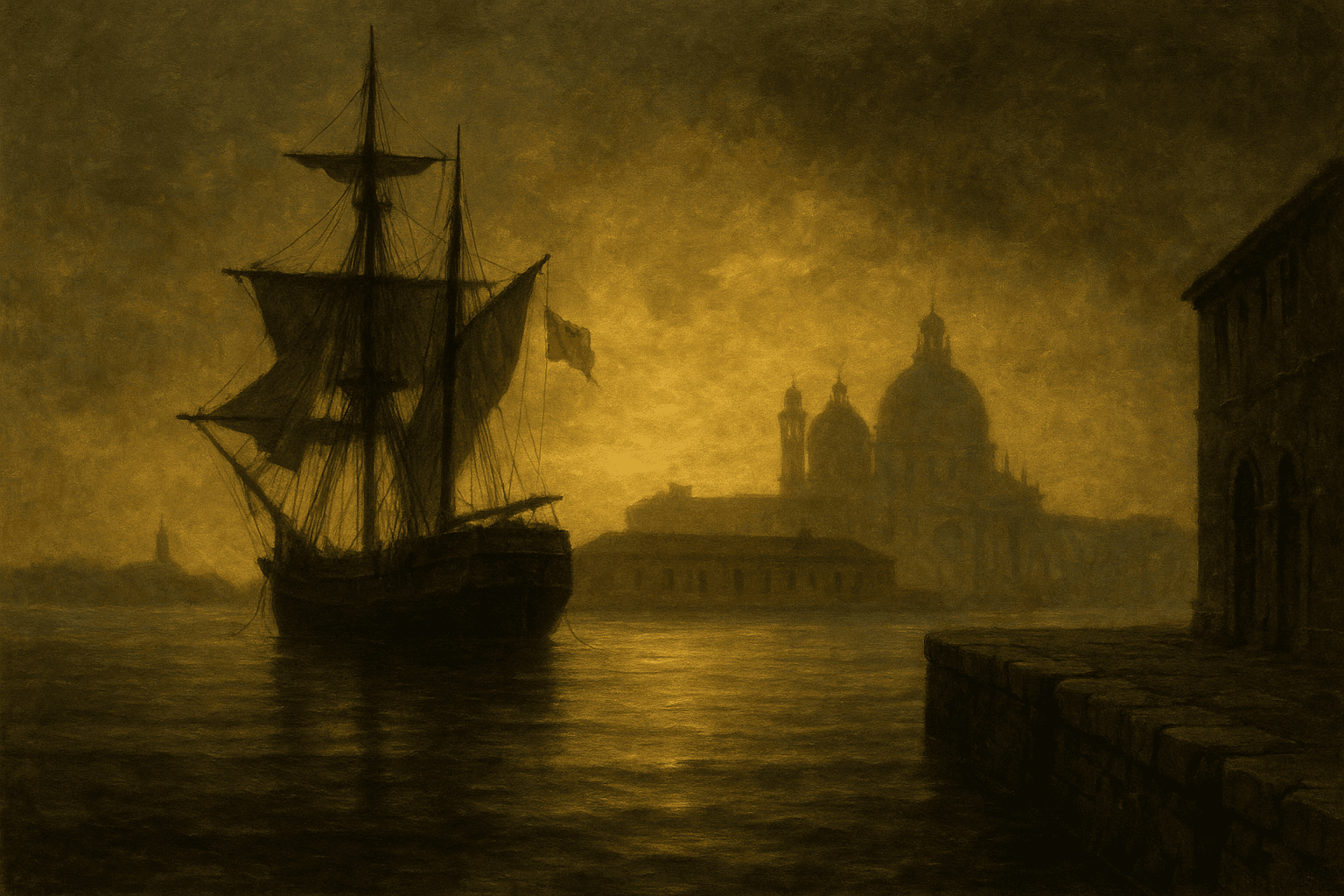
When the whole world learned to say “quarantine” in 2020, almost no one noticed they were saying a number. The word quarantine does not mean “lockdown” or “isolation”: it means, literally, “about forty”. It comes from the Italian quarantena —from quaranta giorni, “forty days”— which in turn comes from the Latin quadraginta, “forty”. Behind that count lie medieval ports, suspect ships, and one of the worst catastrophes in history: the Black Death. This is the story of how a forty-day waiting period became one of the most-used words on the planet.
Ragusa and the first quarantine (which lasted thirty days)
In the mid-14th century, the Black Death swept across Europe and killed perhaps a third of its population. No one understood how it spread —the bacterium and the role of fleas and rats were five centuries from being discovered— but port cities noticed something: the disease arrived with the ships. And if it arrived with the ships, perhaps it could be stopped at the dock.
The city-state of Ragusa —today’s Dubrovnik, in Croatia, then under Venetian influence— was the first to turn that hunch into law. On July 27, 1377, its Great Council decreed that people arriving from plague-stricken areas could not enter the city until they had spent a period of isolation on an uninhabited islet or in a nearby town, to see whether they fell ill. The term was thirty days, and so that first measure was called the trentino, from trenta, “thirty”.
In other words: the first “quarantine” in history was, strictly speaking, a “thirty-tine”. The word we use today was born a little later, when someone decided that thirty days were not enough.
From the trentina to the quarantena: why ten more days
Other Mediterranean cities copied Ragusa’s method and made it stricter. Venice, a trading power that received ships from half the world, extended the period from thirty to forty days: the quarantena. Suspect vessels had to anchor away from the port and wait forty days before crew and cargo could come ashore. To house the sick and the suspect, the Republic built the Lazzaretto Vecchio on an island in the lagoon, considered the world’s first permanent quarantine hospital (around 1423). That island, in fact, gives us another word we still use: the “lazaretto”, the enclosure where plague victims were isolated.
The system worked well enough to be exported. Genoa adopted it in 1467 and Marseille set up its own lazaretto soon after. For centuries, the great European ports flew the yellow flag that warned: ship in quarantine, keep away.
Why forty and not some other number?
Here is the curious part: no one knew that forty days were medically correct, because there was no way to know. So why that number, and not thirty, or fifty? Historians offer several explanations that probably reinforced one another.
The most practical is medical. The Hippocratic school, back in antiquity, held that acute diseases revealed themselves within a span of forty days; after that time with no symptoms, the danger was assumed to have passed. Forty days was, in the medicine inherited from the Greeks, the boundary between the acute and the chronic.
The most powerful, perhaps, is symbolic and religious. Forty appears again and again in the Bible as a number of trial and purification: the forty days of the flood, the forty years of Israel in the desert, the forty days of Jesus’ fast, the forty days of Lent. In a deeply Christian Europe, a forty-day isolation did not just sound prudent: it sounded like purifying penance. Just as people once believed that misfortunes were written in the stars, science and faith blended together seamlessly.
From the docks into the language
Over time, the word detached itself from the ships and from the exact number. It no longer mattered whether it was forty days, thirty, or fifteen: quarantine came to name any period of preventive isolation meant to stop a contagion. From Italian it jumped into Spanish (cuarentena), French (quarantaine), English, and nearly every European language, always carrying inside it, like a fossil, the count of the Venetian forty days.
It is a journey much like that of so many words we use today without thinking of their origin: just as “vaccine” hides a cow and “salary” hides salt, “quarantine” hides a number. The next time someone mentions a one-week quarantine, remember that they are using, without knowing it, the old count of the medieval ports: forty days to let the plague, if it had come aboard, give itself away.
References
- “Quarantine”, Online Etymology Dictionary: from Italian quarantina giorni, “space of forty days”, from quaranta, “forty”, for the period ships had to wait off Venice during the plague. etymonline.com
- “Etymologia: Quarantine”, Emerging Infectious Diseases (CDC): the word derives from quaranta giorni, the forty days of isolation imposed on ships in 14th-century Venice. ncbi.nlm.nih.gov
- Tognotti, E., “The concept of quarantine in history: from plague to SARS”: Ragusa’s trentino (1377), its Venetian extension to forty days, and the medical and Hippocratic reasons for the number. pmc.ncbi.nlm.nih.gov
- “The ‘quarantine’: an intuition of the fifteenth century”, 1600 Venezia: the Lazzaretto Vecchio in Venice and the city’s role in inventing quarantine. 1600.venezia.it
Enjoy the stories behind words? Continue with the origin of “vaccine” and that of “disaster”, or browse the whole etymology series.
The books · born from this blog

Atahualpa con su abrigo de pelo de murciélago
y otras 49 historias verdaderas que parecen mentira
Available on Amazon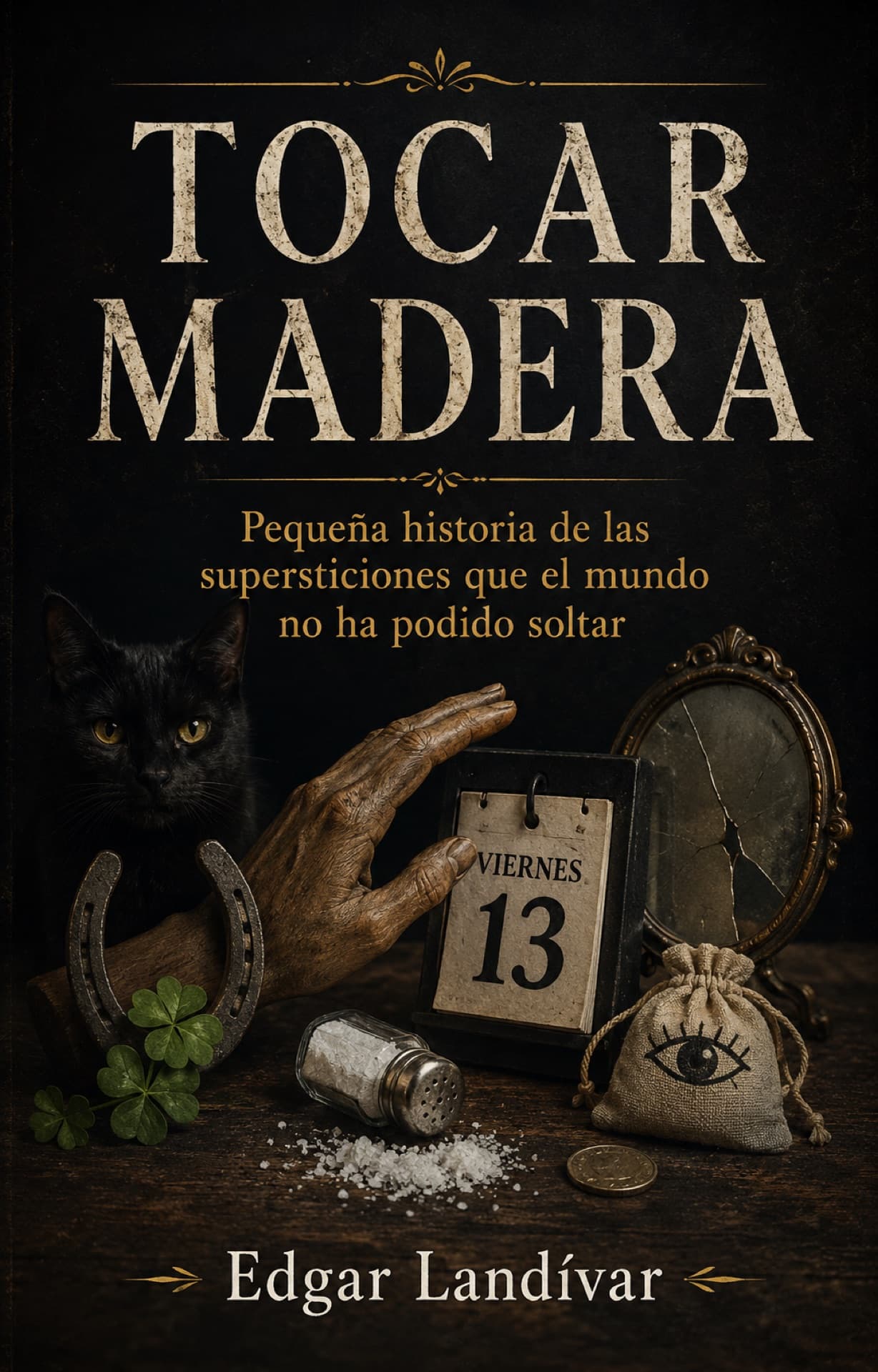
Tocar madera
Pequeña historia de las supersticiones que el mundo no ha podido soltar
Available on Amazon
100 futuros
Cien escenarios del mundo que viene con la inteligencia artificial
Available on AmazonYou may also like

The Origin of the Word “Dollar”: a Bohemian Valley
Where does the word dollar come from? From a silver-mining valley in Bohemia and a 16th-century coin. The story of the thaler that conquered the world.

The Origin of the Word “Museum”: House of the Muses
Where does the word museum come from? From mouseion, the temple of the Greek Muses and the great center of learning in Alexandria, long before glass cases.
The Origin of the Word “Candidate”: Togas and Chalk
Where does the word candidate come from? From the chalk-whitened toga that Roman office-seekers wore to look pure before the voters.