
The Story Behind the Name of Isla de la Plata and the Treasure It Still Hides
Why is it called Isla de la Plata? A real pirate's chronicle reveals the truth behind the name, once Drake's Island, and the treasure it may still hide.
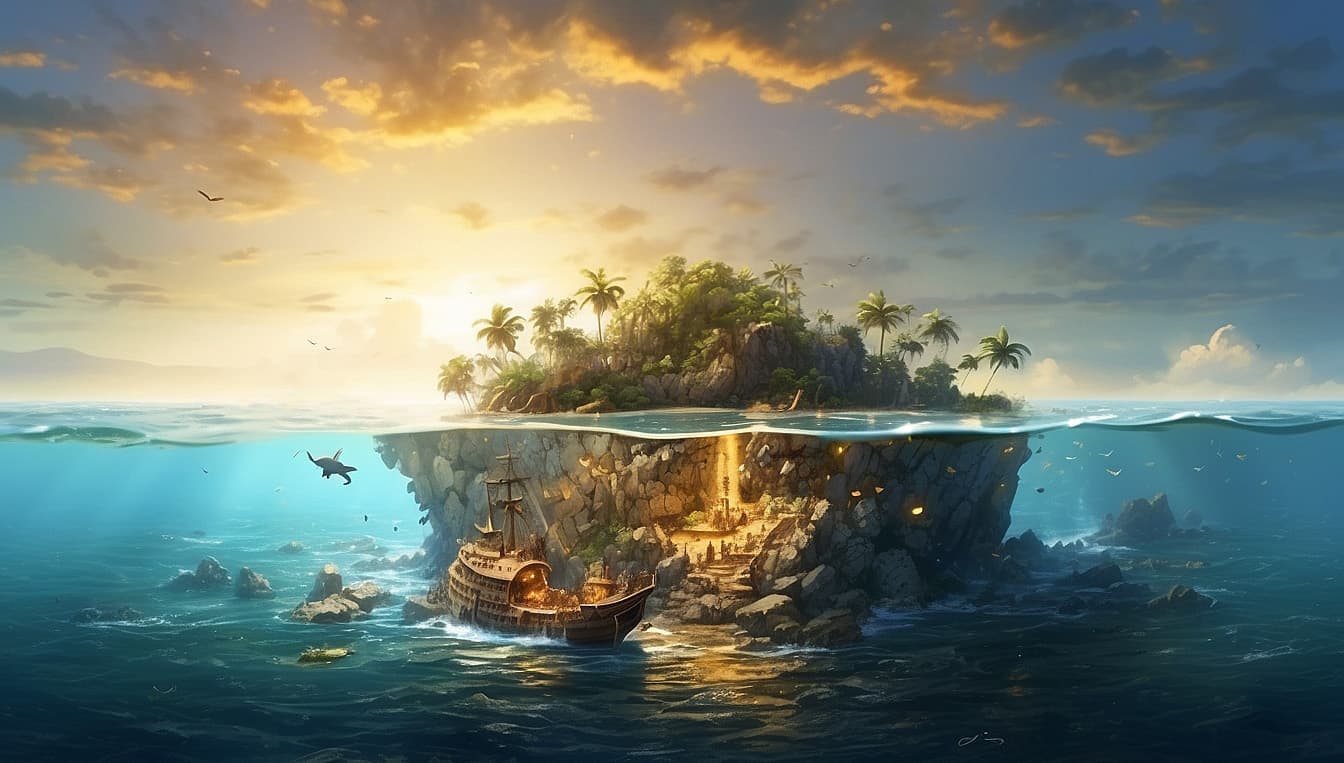
The largest island in Ecuador's Manabí province has a name that evokes a duality. Linguistically speaking, it means either a color or a metal; and for this very reason, two versions emerged about the possible origin of the island's name: some say it's called that because of the color reflected by its guano-covered flanks at sunset, while others say it's because there's a treasure (of silver, obviously) buried there. The truth, which I relate below, appeared unexpectedly while reading an old pirate book… I know, I know, many of my writings begin when I was reading an old book, but what can you do—it seems that at the end of the day this is becoming a "signature" of mine. 🙂
The book in question is a very particular one, as it was written by a real pirate, specifically by Alexandre Olivier Exquemelin, a French buccaneer who served as a chronicler aboard the pirate ships he crewed. His chronicles were published in the book titled Buccaneers of America, in 1678. This work also recounts the peculiar origins of the buccaneers, something I also briefly explain in this other article.
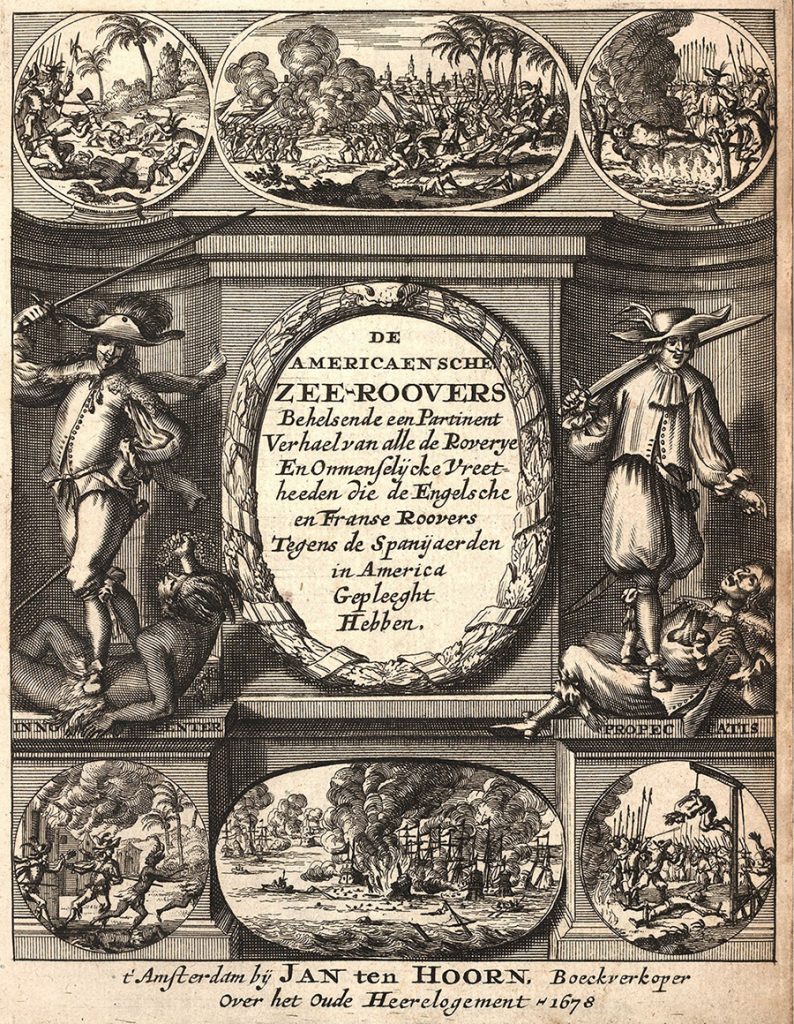
The book was initially published in Dutch, but was soon translated into other languages and became very popular in its time. Pirate legends have always been inspiration for all kinds of stories, and this one had the distinction of having been written by an authentic buccaneer.
Throughout much of the book, Exquemelin recounts the patrols they made around Isla de la Plata, where they would eventually provision themselves with food, especially turtles, whose meat they dried on site before storing it on the ships. They knew the currents around the island, the winds, and they took Spaniards or Indians familiar with the place as prisoners, so they could assist them in navigation.
It's worth mentioning that for the pirates, the island's name was not what we know today, but rather Drake's Island. Yes, as in Sir Francis Drake, the famous and feared pirate, known to the Spanish as "The Dragon." Of course, you might find it strange that a pirate has the title of Sir? You noticed that? Well, it turns out that Drake, for the English, was not a pirate but an expeditionary and also a privateer, who fought under the English flag when it suited him and when it didn't, well, he did his "freelance work" plundering other people's ships. You know, initially pirates were financed "secretly" by other European countries who didn't want Spain to obtain riches from America. But that's another story and a very long one. Let's get back to ours.
The part of the book that interests us I've translated from the English version of the book, and I leave it for you below.
This island received its name from Sir Francis Drake and his famous exploits. For it is recounted that here he made the distribution of that great quantity of silver which he took from the Spanish armada, distributing it to each man of his company in whole bowls full. The Spaniards affirm that he then took twenty tons of silver and sixteen bowls of coined money for each man, their number being then forty-five men in all, so that they were forced to throw much of it overboard, because their ship could not carry it all. For this reason this island was called by the Spaniards Isla de Plata, and by us Drake's Island.
— Buccaneers of America, by Alexandre Exquemelin
Apart from the origin of the name, which I think is quite clear, I don't know if the same thing strikes you as it does me—that near Isla de la Plata there's still a great quantity of the loot that the pirates threw into the sea! A treasure that will awaken the thirst for adventure in more than a few, since some have tried to search for that "legendary" treasure on the island itself, but they're probably looking in the wrong place.
I'll leave you with that curious fact 😉
References
- Alexandre Olivier Exquemelin, De Americaensche Zee-Roovers, Amsterdam: Jan ten Hoorn, 1678; English: Bucaniers of America, London, 1684. loc.gov
- Basil Ringrose, Bucaniers of America, the Second Volume, London: William Crooke, 1685. quod.lib.umich.edu
- Sir Francis Drake / Francis Fletcher, The World Encompassed by Sir Francis Drake, London: Nicholas Bourne, 1628. archive.org
Enjoy the stories behind words? Continue with the real origin of the word “gringo” and the origin of the word “ostracism”, or browse the whole etymology series.
The books · born from this blog
Atahualpa con su abrigo de pelo de murciélago
y otras 49 historias verdaderas que parecen mentira
Available on Amazon
Tocar madera
Pequeña historia de las supersticiones que el mundo no ha podido soltar
Available on Amazon
100 futuros
Cien escenarios del mundo que viene con la inteligencia artificial
Available on AmazonYou may also like
Ecuador's Año Viejo: The Myth and the Real History
Everyone repeats that Ecuador's Año Viejo burning began in an 1895 epidemic. The historical evidence tells a different and more curious story.
An old book of Guayaquil in full color
A handpicked selection of colorized photos brings century-old Guayaquil back to life, from its trams and firemen to faces from a vanished era.
The Origin of the Word “Soroche”
Soroche, the altitude sickness of the Andes, owes its name not to the air but to a mineral: for centuries its vapours were blamed for sickening travellers.