
Converting an old radio into a tube guitar amp (vacuum tubes)
Turn a forgotten vacuum-tube radio into a real guitar amp and chase that warm, coveted tube sound that costs guitarists a fortune to buy.
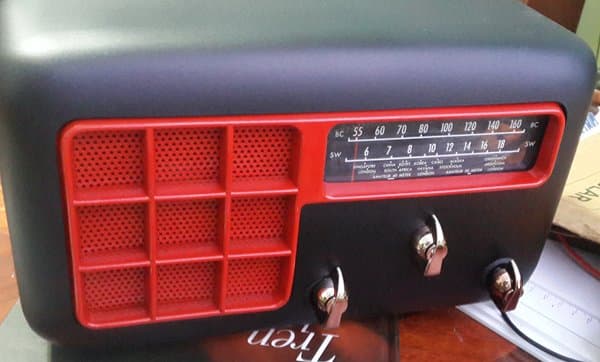
One of the little-known uses for an old tube radio (or empty tubes), it's like an electric guitar amp.
Why a tube amp for guitar?
The warm sound of a tube amp is haunted by virtually all guitarists who pay large sums for this technology. Every reputable manufacturer of guitar amps (Marshall, Fender, Roland, Peavey, and others) has tube amps in their high-end products.
That said, I am going to explain with an example, how to modify an old tube radio to plug in our electric guitar. With this we will not only be able to get a tube amplifier practically given away (in case we have an old radio thrown in a corner), but we will also recycle equipment that in many cases goes to the trash ... well, let alone the satisfaction of doing one of these tech shenanigans 😉
Before starting I want to emphasize that not all old radio is of interest for this task. My point is that there are many older radios that are more valuable if left intact, true to their original design, and that modifying them would be practically sacrilege.
I also want to highlight that tube radios typically use high voltages to power the tubes. These voltages can easily exceed 400VDC so it is recommended that the modifications be carried out by a person who is trained and knowledgeable about the risk involved.
Now, let's get to work.
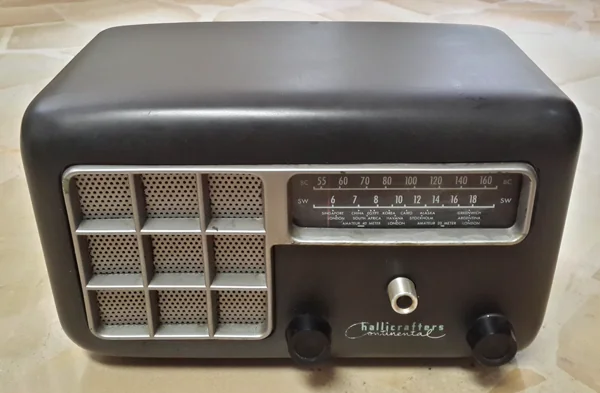
In my case, the patient is a Hallicrafters 5R30. A 1952 model. The casing is made of Bakelite and I had it working, having changed a couple of tubes a couple of years ago.
The amp circuit
The first thing to do is find the schematic diagram of this radio and identify the amplification circuit, going from the output speaker to the rear.
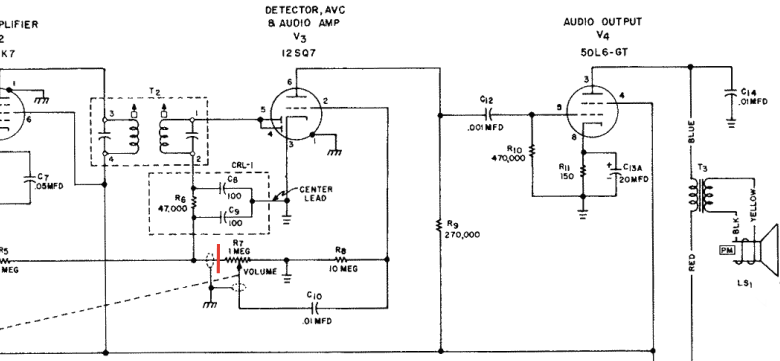
In my case I have put a red mark in the place where I intend to inject the signal from my guitar, which is just before the volume knob. Keep in mind that it is not the same in all cases.
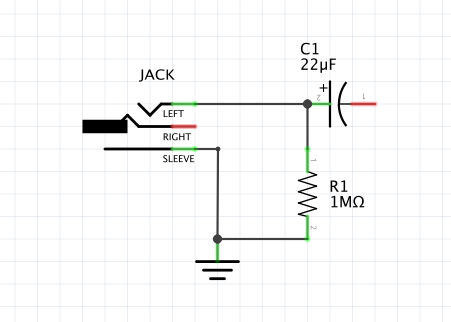
What I do here is cut the connection on the volume knob, leaving that terminal free, and then I solder a JACK there to connect my guitar and voila!
Well actually I don't just solder the JACK but add two more components, a 1M ohm resistor and a capacitor to separate the bias of the circuit with the guitar. It will also protect me in case some high DC voltage leaks into the circuit. To better illustrate, I show you the diagram of what the JACK will look like.
I leave you with a photo so you can see what I did.
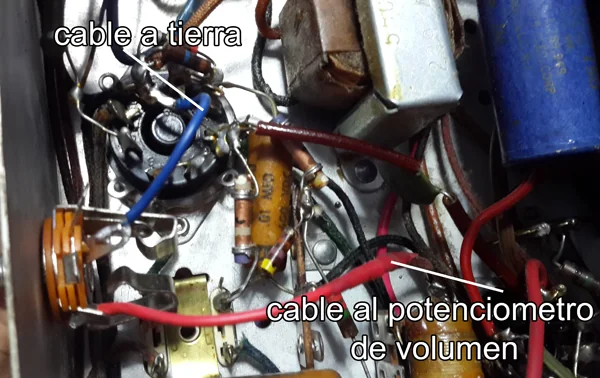
Once this simple modification is made, we can connect the guitar to our tube amplifier!
Using a better speaker
An optional recommendation if we want our amp to sound much superior is not to use the speaker that comes, but an external one for guitar. In my case I use a Marshall cabinet that comes equipped with a Celestion speaker and I must say that the sound is spectacular 😉
I leave you with a photo of the heating valves, for those who like me, get excited to see how this ancient technology works.
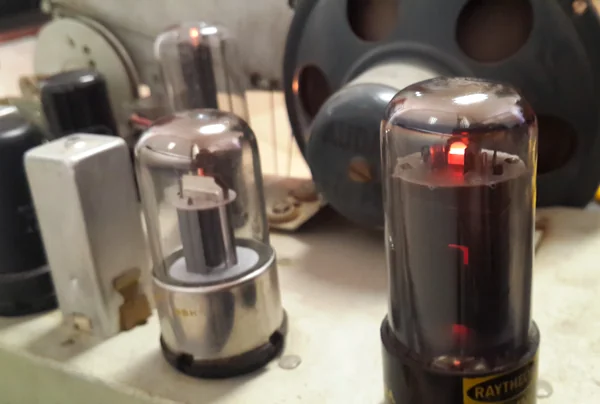
Here is a video (when I still did not put the carcass on it) so that you can see it in action. I have it connected to the speaker of a Marshall amplifier so as not to use the speaker that comes with the radio.
Operation of a tube amplifier
If you were intrigued and want to know how a tube amplifier works, I leave you this article that I wrote a while ago.
This project lives in the world of valves: understand how a tube amplifier works and see the restoration of an old amplifier. More in Electronics.
Categories
The books · born from this blog

Atahualpa con su abrigo de pelo de murciélago
y otras 49 historias verdaderas que parecen mentira
Available on Amazon
Tocar madera
Pequeña historia de las supersticiones que el mundo no ha podido soltar
Available on Amazon
100 futuros
Cien escenarios del mundo que viene con la inteligencia artificial
Available on AmazonYou may also like

Retro Tech Vintage Computer Club
How a nostalgic urge to restore an old Atari 2600 grew into a vintage computer club that fascinates collectors and teenagers alike.

Knock on Wood: The Real Origin of the Superstition
Almost everyone thinks knocking on wood comes from Celtic tree worship. But the documented trail leads to a far more recent origin: a children's game.

Stockholm Syndrome Was Born to Silence a Hostage
The famous syndrome didn't come from a study: the police's own psychiatrist coined it to discredit a hostage who criticized him. It isn't in the DSM.