
The Origin of the Word “Museum”: House of the Muses
Where does the word museum come from? From mouseion, the temple of the Greek Muses and the great center of learning in Alexandria, long before glass cases.
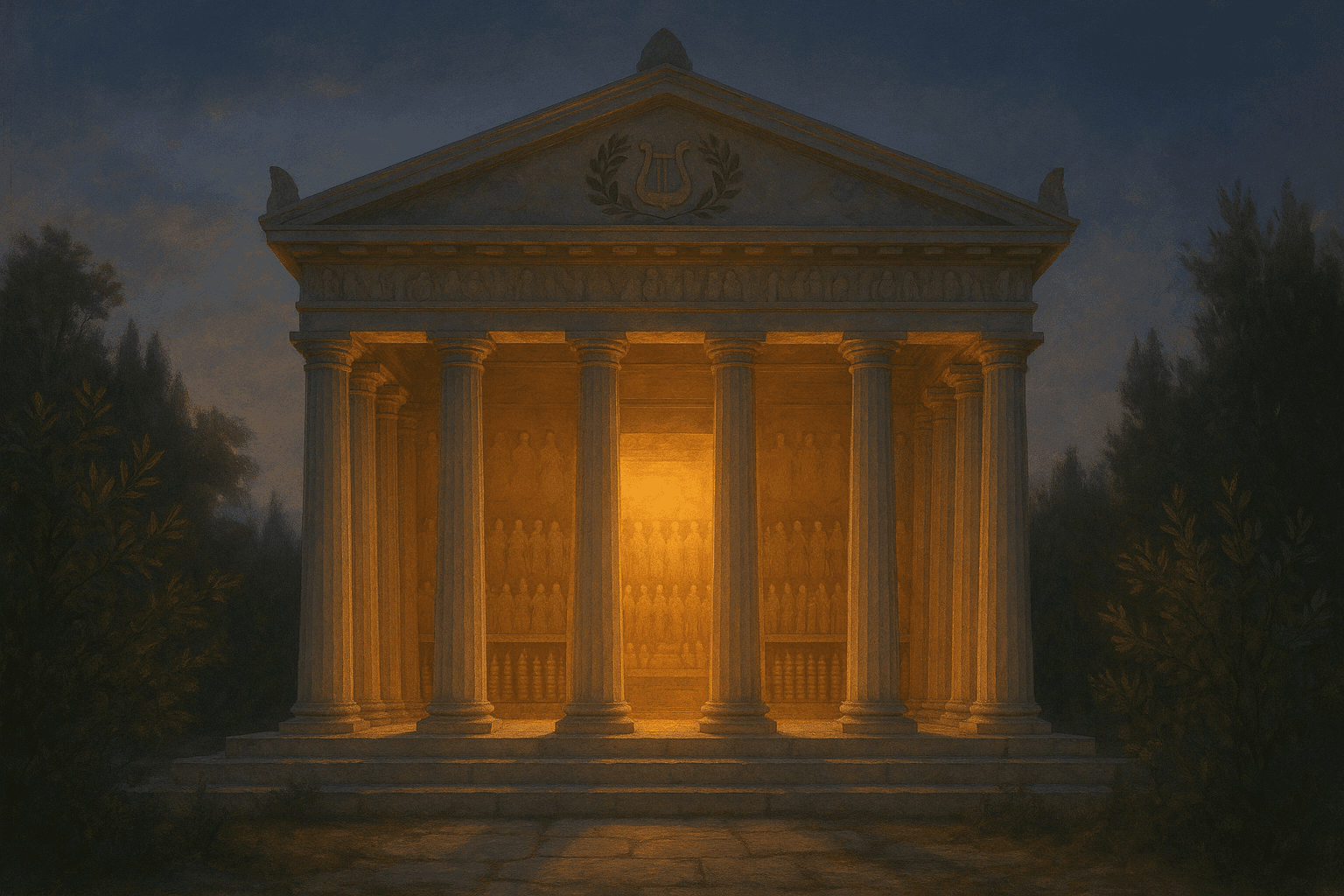
We walk into a museum expecting glass cases, paintings and silence, never suspecting that the word was not born speaking of objects but of goddesses. Mouseion, its Greek ancestor, meant “temple or shrine of the Muses”: a place consecrated to the daughters of memory who inspired poetry, music and science. Before it kept relics, a museum kept something far more elusive—inspiration. The story of how it went from a chapel devoted to nine goddesses to a building full of art is also the story of how the West organized its knowledge.
The nine daughters of memory
In Greek mythology the Muses were nine sisters, daughters of Zeus and Mnemosyne, the goddess of memory. That is no minor detail: for the Greeks, all creation—a poem, a melody, an astronomical calculation—sprang from remembering, and those nine goddesses were the guardians of that fertile recollection. According to Hesiod they were named Calliope, Clio, Erato, Euterpe, Melpomene, Polyhymnia, Terpsichore, Thalia and Urania, each presiding over an art: epic poetry, history, lyric, music, tragedy, hymns, dance, comedy and astronomy.
A mouseion was, literally, “the place of the Muses”: a shrine where they were worshipped and where, by extension, the arts they inspired were cultivated. In time the word stopped naming only the altar and came to name the place of study. Plato’s Academy and Aristotle’s Lyceum each had their own mouseion, a space dedicated to the Muses within the grounds where teaching and research went on.
The Mouseion of Alexandria: a museum without display cases
The most famous mouseion of antiquity looked nothing like what we now call a museum. Founded in Alexandria in the 3rd century BCE under the first Ptolemies, it was a research institution supported by the crown: scholars lived there, dined together and devoted themselves to study under royal patronage, with no obligation but to think. It was modeled on Aristotle’s Lyceum, but scaled up to imperial size.
Attached to that complex was the celebrated Library of Alexandria, which aimed to gather every book in the known world. Within its walls worked some of the names we still study: it was there that the circumference of the Earth was first measured and much of Greek science was developed—science that, centuries later, would travel to the Arab world and return transformed. It is the same current of learning that runs through the story of the word “algorithm”, from Baghdad to our own day, and the one that made possible technical marvels like the Antikythera mechanism, the computer that surfaced from a shipwreck. The museum, in its origin, was not a storehouse of things: it was a community of people thinking.
From temple of scholars to hall of curiosities
The word latinized its form into museum and survived the ancient world with the sense of “place of study”. For centuries it was barely used, until the Renaissance revived the taste for collecting: princes and scholars began gathering coins, fossils, statues and rarities in what were called cabinets of curiosities. The old Greco-Latin word was gradually applied to those private collections, and so museum came to mean “a collection of objects worth studying”.
The decisive leap came in 1683, when the Ashmolean in Oxford opened as Britain’s first public museum: a building where anyone—not just the collection’s owner—could walk in and see the objects. That is when the word took on the modern sense that now seems obvious to us: not the shrine of some goddesses nor the residence of some scholars, but the house where the things worth looking at are kept and displayed.
The relatives of museum: music and mosaic
The Muses left more marks on our language than we suspect. From mousiké téchne, “the art of the Muses”, came directly the word music: at first it named not only sounds but everything the Muses inspired, including sung poetry. And from the same family comes mosaic, which originally pointed to something “belonging to the Muses”, perhaps because it adorned the grottoes and fountains consecrated to them.
So every time we say museum, music or mosaic we are invoking, without knowing it, nine Greek goddesses of memory. It is a curious fate for divinities almost no one remembers anymore: their temples crumbled, their worship faded, but their name lives on in the three words we use for the art that is kept, the art that sounds and the art assembled from pieces. Like so many words that drag a history inside them, “museum” preserves, hidden in its letters, the memory of whom it was dedicated to.
References
- “Museum”, Online Etymology Dictionary: from Latin museum, from Greek mouseion “place of study, temple of the Muses”, from Mousa “Muse”; the sense of exhibition building is recorded by the 1680s. etymonline.com
- “Mouseion”, Wikipedia: the mouseion as a shrine of the Muses and, in Alexandria, a research institution founded under the Ptolemies and modeled on the Lyceum. en.wikipedia.org
- “The Nine Muses”, Ancient Origins: the nine Muses as daughters of Zeus and Mnemosyne, inspirational goddesses of literature, science and the arts. ancient-origins.net
- “History of the Ashmolean”, Ashmolean Museum: the Ashmolean opened in 1683 as Britain’s first public museum. ashmolean.org
Enjoy the stories behind words? Continue with the origin of “algorithm” and that of “algebra”, or browse the whole etymology series.
The books · born from this blog

Atahualpa con su abrigo de pelo de murciélago
y otras 49 historias verdaderas que parecen mentira
Available on Amazon
Tocar madera
Pequeña historia de las supersticiones que el mundo no ha podido soltar
Available on Amazon
100 futuros
Cien escenarios del mundo que viene con la inteligencia artificial
Available on AmazonYou may also like

The Origin of the Word “Quarantine”: 40 Days in Venice
Where does the word quarantine come from? From the 40 days that Venice and Ragusa forced ships to wait during the Black Death. Here is its story.

The Origin of the Word “Dollar”: a Bohemian Valley
Where does the word dollar come from? From a silver-mining valley in Bohemia and a 16th-century coin. The story of the thaler that conquered the world.
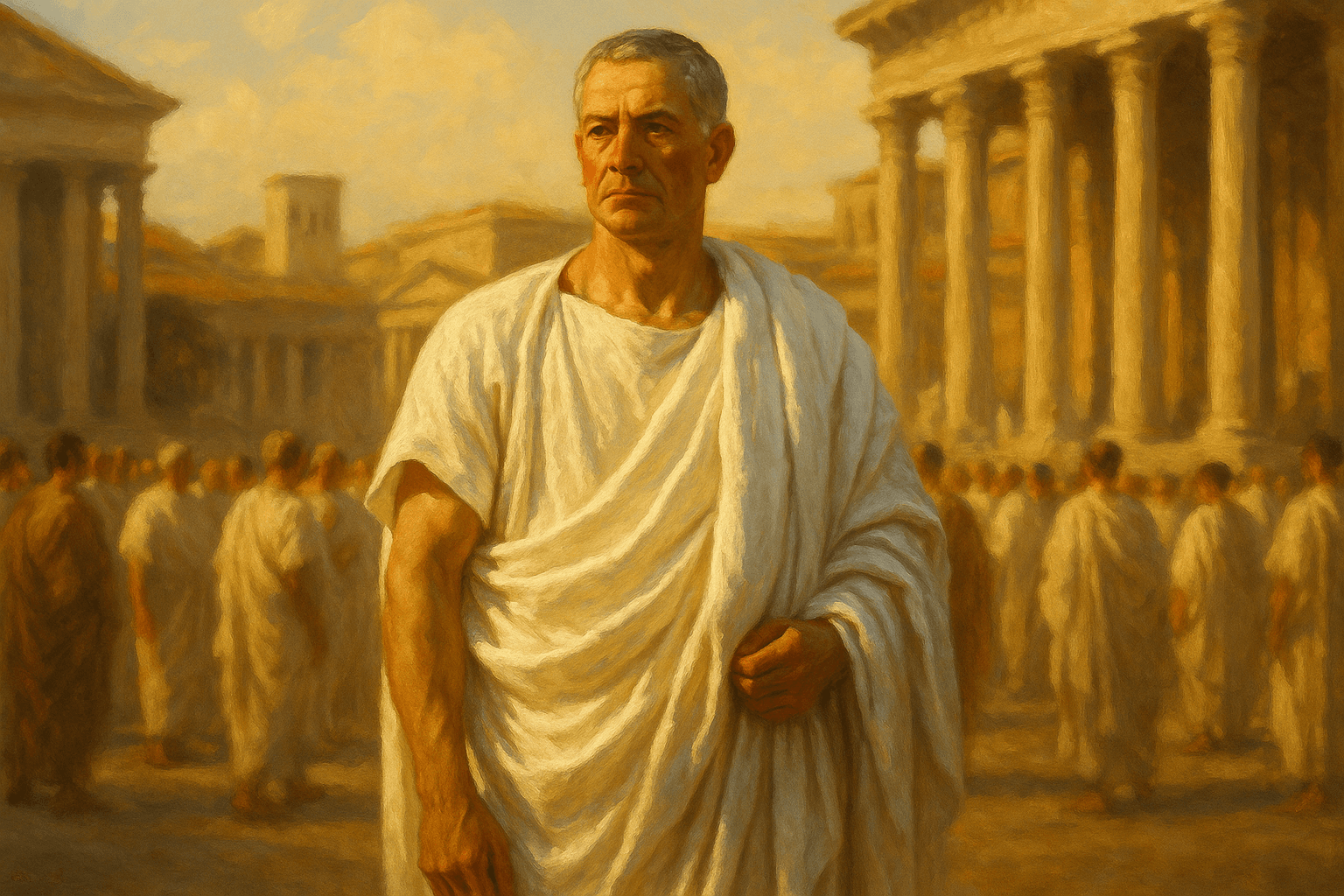
The Origin of the Word “Candidate”: Togas and Chalk
Where does the word candidate come from? From the chalk-whitened toga that Roman office-seekers wore to look pure before the voters.