
Stockholm Syndrome Was Born to Silence a Hostage
The famous syndrome didn't come from a study: the police's own psychiatrist coined it to discredit a hostage who criticized him. It isn't in the DSM.
Everybody knows what Stockholm syndrome is: that phenomenon by which hostages fall psychologically in love with their captors. It appears in movies, in songs, in dinner-table arguments and in amateur diagnoses of any toxic relationship. What almost nobody knows is what we are about to tell here: that the famous syndrome was not born from any scientific study, that it does not appear in the psychiatric diagnostic manuals, and that it was coined by an expert whom the most famous hostage of the case had just criticized in public. This is the story of the most successful diagnosis ever invented in order not to concede a point to a woman.
Six days in a vault
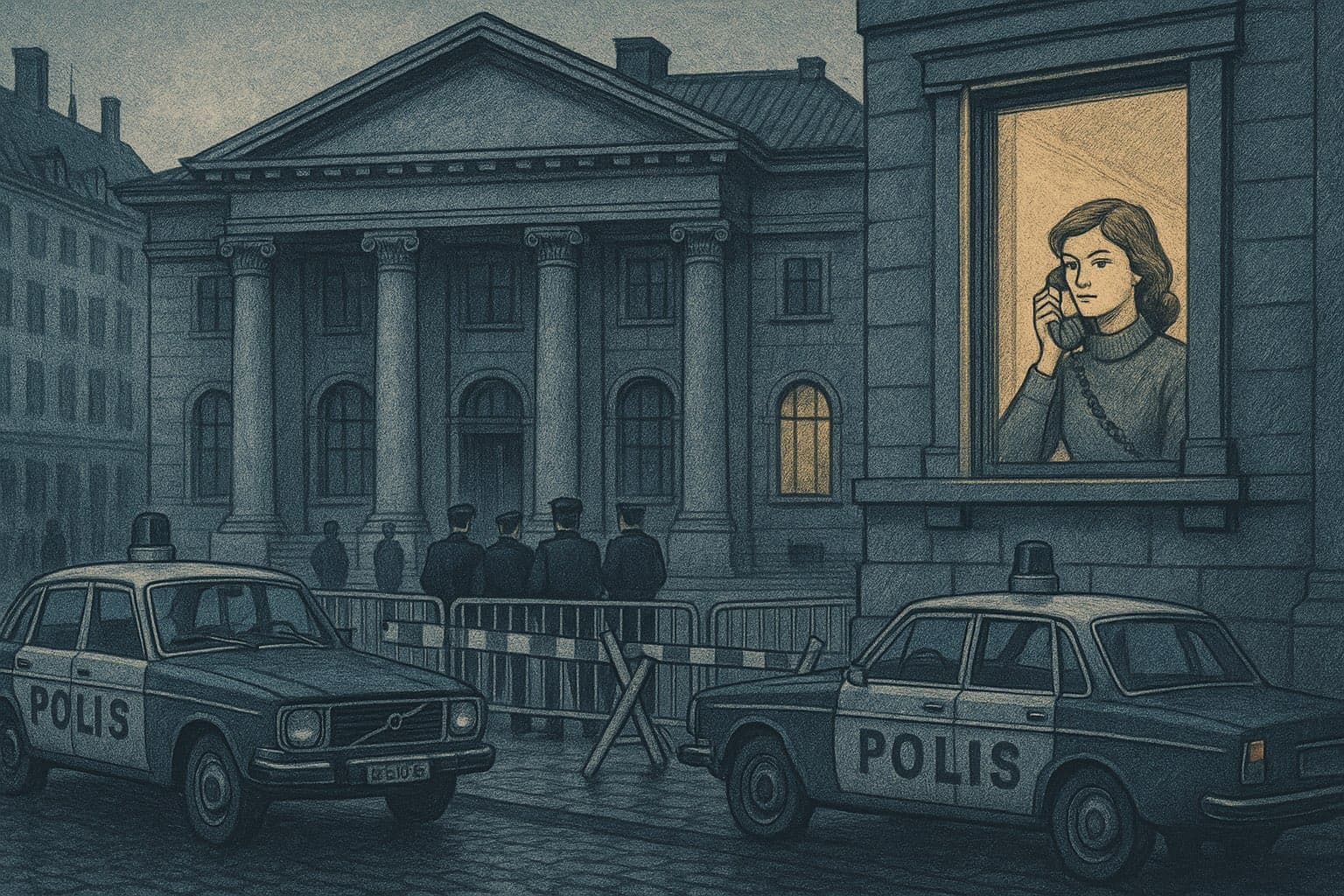
Stockholm, August 23rd, 1973. Jan-Erik Olsson, a convict on parole, walked into the Kreditbanken on Norrmalmstorg square with a submachine gun and took four hostages — three women and one man. He demanded that his old prison mate Clark Olofsson be brought from jail, and the police agreed. For six days, captors and hostages lived together in a bank vault while, outside, Sweden's first great media spectacle assembled itself: live cameras, snipers, and a police force improvising as it went — drills through the ceiling, gas threats, plans that changed by the hour.
Inside the vault something happened that scandalized Sweden: the hostages began to trust the robbers more than their rescuers. And the voice of that scandal was Kristin Enmark, a 23-year-old employee who did something extraordinary: she telephoned prime minister Olof Palme in mid-crisis and demanded that the hostages be allowed to leave with the captors, whom —she said— she fully trusted. To Palme she delivered a line that deserves bronze: “You are sitting there playing checkers with our lives.” When the police finally went in with gas on August 28th, the hostages walked out on their own feet, and none had suffered physical harm at the captors' hands.
The diagnosis of the criticized
And here comes the fold that changes the whole story. The police's psychiatric adviser during the siege was the criminologist Nils Bejerot, co-responsible for the very tactics Enmark had shredded by phone and on the radio. When journalists asked him how he explained hostages defending their captors and distrusting the police, Bejerot had two options: consider the criticism reasonable, or consider the criticism a symptom. He chose the latter: he christened the behavior “Norrmalmstorg syndrome” —soon rebaptized Stockholm syndrome— without ever having interviewed Kristin Enmark. The woman who had criticized him was converted, by definition, into a patient incapable of judging her own experience. You cannot lose a debate against someone whose disagreement you have just classified as pathology.
And was Enmark's distrust irrational? The facts suggest otherwise: inside that vault, the concrete threats to her life came from outside — if the police gassed or stormed the bank, the hostages were in the line of fire. Trusting the captor who treated her with calculated kindness, and distrusting a chaotic operation, was not a delusion: it was a rather lucid reading of the board. She herself has repeated it for decades, with growing weariness: she wasn't in love with anyone; she was trying to survive.
The syndrome that isn't in the manuals
The term took off the following year, when the heiress Patty Hearst, kidnapped and then converted into a bank robber, gave it its most mediatic case. But half a century later, the scientific balance is uncomfortable: Stockholm syndrome does not appear in the DSM —psychiatry's diagnostic manual— nor in its European equivalent, FBI data suggest that the vast majority of hostages develop no bond whatsoever with their captors, and much of the modern literature treats it less as a disorder than as what Enmark described: a perfectly understandable survival strategy. As we saw with “narcissist” and the myth of Narcissus, psychological labels travel better than their fine print: the world adopted the diagnosis and forgot to ask who had issued it, and why.
The moral has more edge than the anecdote: when an explanation allows us not to listen to someone, it pays to check who manufactured it. Popular culture's most famous “syndrome” was born exactly that way — not in a laboratory, but at the press conference of an inconvenienced expert. Kristin Enmark, for her part, has spent fifty years repeating her version, which fits in one line and needs no diagnosis: the police nearly got her killed, and she noticed. Sometimes the craziest explanation is that the hostage was right.
References
- David King, Six Days in August: The Story of Stockholm Syndrome, W. W. Norton & Company, New York, 2020. wwnorton.com
- Cecilia Åse, "Crisis Narratives and Masculinist Protection: Gendering the Original Stockholm Syndrome", International Feminist Journal of Politics 2015;17(4):595–610. DOI: 10.1080/14616742.2015.1042296 doi.org
- Nathalie de Fabrique, Stephen J. Romano, Gregory M. Vecchi and Vincent B. Van Hasselt, "Understanding Stockholm Syndrome", FBI Law Enforcement Bulletin 76(7), July 2007, pp. 10–15. ojp.gov
- M. Namnyak, N. Tufton, R. Szekely, M. Toal, S. Worboys and E. L. Sampson, "'Stockholm syndrome': psychiatric diagnosis or urban myth?", Acta Psychiatrica Scandinavica 2008;117(1):4–11. DOI: 10.1111/j.1600-0447.2007.01112.x doi.org
Categories
The books · born from this blog

Atahualpa con su abrigo de pelo de murciélago
y otras 49 historias verdaderas que parecen mentira
Available on Amazon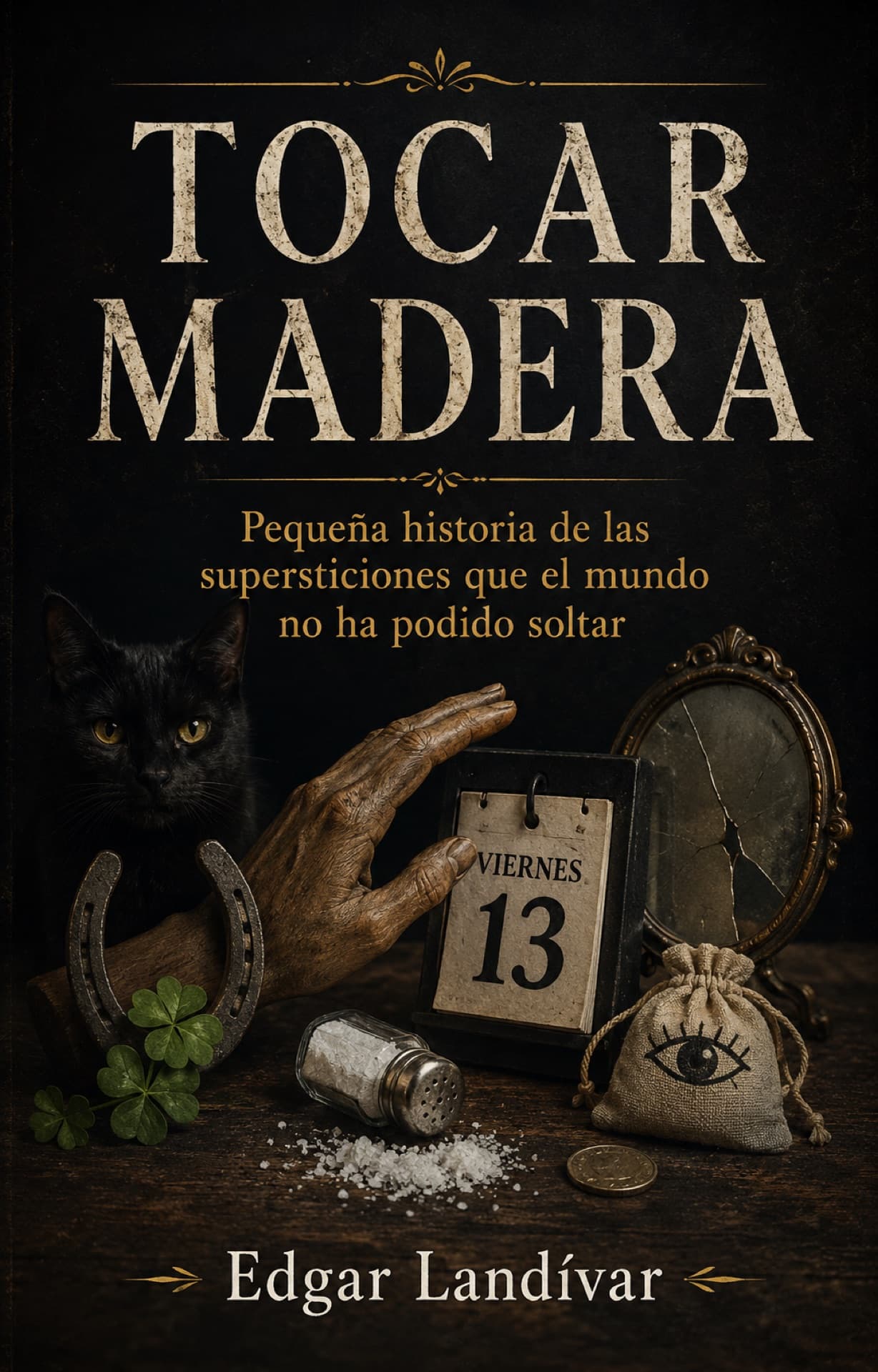
Tocar madera
Pequeña historia de las supersticiones que el mundo no ha podido soltar
Available on Amazon
100 futuros
Cien escenarios del mundo que viene con la inteligencia artificial
Available on AmazonYou may also like
The Fifth Sleep: when we slept in two shifts
For centuries we did not sleep eight hours straight, but in two sleeps with a waking hour in between. The history of segmented sleep, from Cervantes to science.

Knock on Wood: The Real Origin of the Superstition
Almost everyone thinks knocking on wood comes from Celtic tree worship. But the documented trail leads to a far more recent origin: a children's game.
The Man Who Has Edited a Third of Wikipedia
Steven Pruitt has made nearly 7 million Wikipedia edits without earning a cent. The story of the most generous obsession on the internet.