
When We Brushed Our Teeth with Radioactive Toothpaste and Drank Coca-Cola with Cocaine
From radioactive toothpaste to cocaine-laced Coca-Cola and leaded gas, history is full of everyday products that quietly poisoned us all.
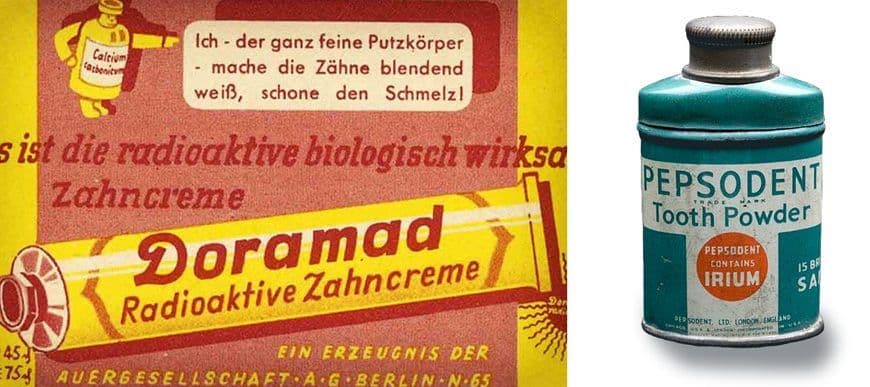
The title may sound bizarre, but throughout history humanity has used the most unusual and dangerous substances as part of its articles of common use. This account compiles some of the most gruesome cases of dangerous products that have been consumed throughout all time, sometimes out of ignorance, sometimes for convenience or for the benefit of dark interests.
When I was a teenager there was a reading that caught my attention among the articles that swarmed in the magazine collection Selections of my grandmother. As its name implies, this magazine “selected” the best publications from the press and published a compendium of interesting articles. The "crème de la crème". I don't remember the exact title, but it was something like "Was lead poisoning the cause of the fall of the Roman Empire?". The article argued that the madness of Nero or Caligula, as well as that of many members of the Roman army, was partly due to lead poisoning, since the Romans used lead in their alloys to make pots, vessels and even pipes to carry water — hence the word "plumber".
How can a substance, mistakenly thought harmless, change the course of history?… The matter left me thinking for a long time. I told myself: humanity paid the price of ignorance… But I soon discovered that one of the most popular gasoline additives of my teenage years was precisely lead! We filled our planet's atmosphere with so much lead that it will take millions of years to clean it up again. I still don't understand at what point we forgot the story of the Romans and how we all managed to turn a blind eye. Although leaded gasoline is now banned in most of the planet, it is too late: our children and our children's children will breathe poisoned air.
The interesting thing about all this is that history repeats itself over and over again. The human being has played with things that he does not know well through all the ages and this has also happened with other really incredible substances.
Radioactive elements at home
It seems unlikely that we could have consumed this, but let's remember that radioactivity is a relatively new discovery (just over a century old) and its effects on health were unknown at first. Many of the first scientists to study radioactive elements died from their manipulation. Despite this, it was still something very new and seen by many as a blessing, called to solve various problems of humanity, including that of power generation. It didn't take long for this revolutionary discovery to be turned into products such as radioactive toothpaste, radioactive miracle water, children's toys, and more.
In the 1930s and 40s the amount of products containing radioactive substances had grown to ridiculous limits. Anything that included a radioactive element was the latest in fashion. They were made from glow-in-the-dark watches, lipsticks, cigarettes, to suppositories and radioactive condoms.
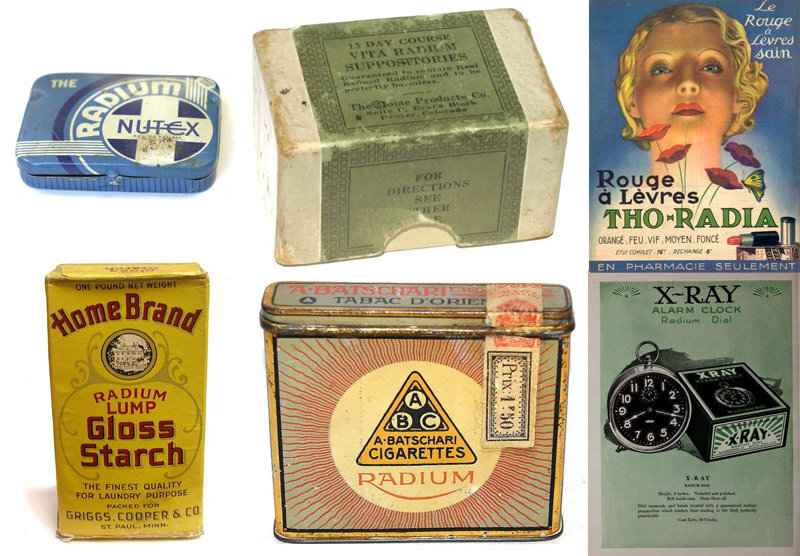
Currently, mass-use products with radioactive compounds are still marketed, such as certain smoke detectors or thorium blankets from camping fuel lamps. However, it has been mentioned that the amount of radioactive compound is so small that its effect is not harmful to humans. You believe it?
Well despite being "apparently" little the amount of radioactive element in some smoke detectors, there is a case that occurred in the USA in the 90s, where an individual named David Hahn bought so many smoke detectors in order to accumulate their radioactive components that he ended up trying to build a homemade nuclear reactor in his mother's backyard shed, which was later detected and dismantled by the authorities. David Hahn was dubbed "the Radioactive Boy Scout" for this incident.
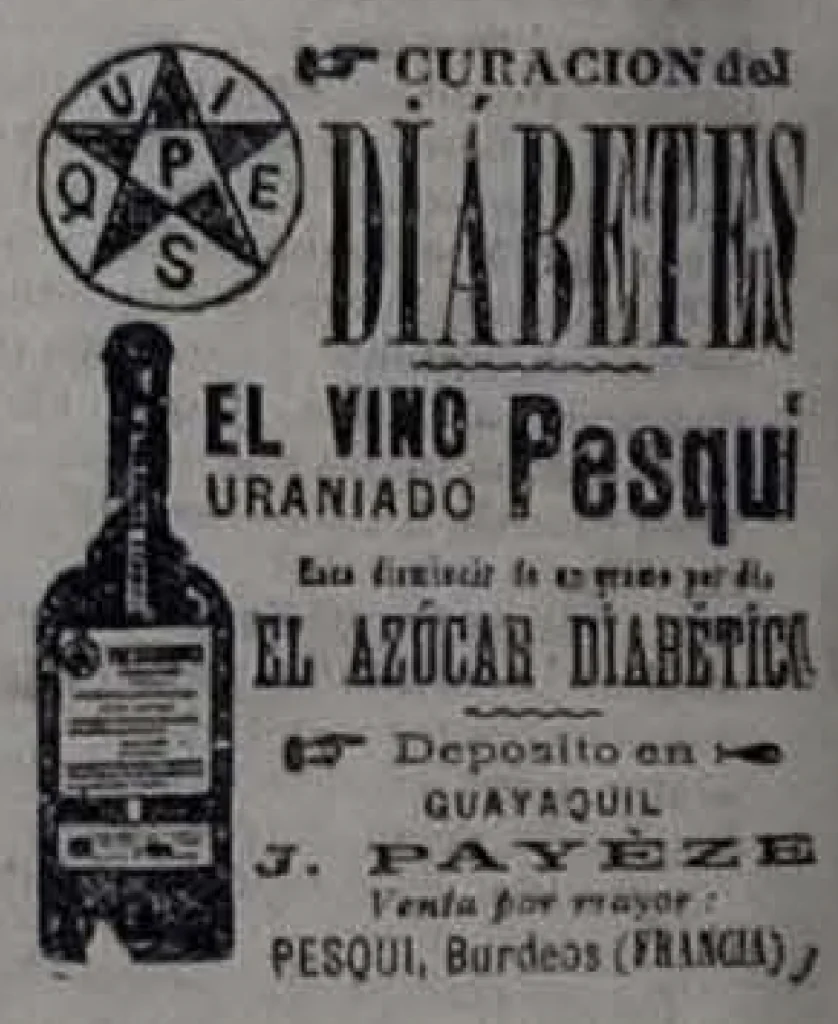
One more example is a peculiar medicine against diabetes, whose advertisement I found in an 1893 newspaper. It is the PESQUI URANIATED WINE.
Asbestos carcinogens everywhere
Asbestos and its derivatives were humanity's omnipresent "ally" for a long time. We find them in all kinds of products, mainly construction materials, and the most serious thing is that this substance still lives among us.
The problem with these minerals is that they are carcinogenic. Its harmful effects on health have been known for a long time. As early as the 1st century, a scientist and naturalist from the Roman Empire named Pliny the Elder wrote about the damaging effects on the lungs produced by the use of asbestos clothing by Roman slaves. So again, we can't just blame ignorance.
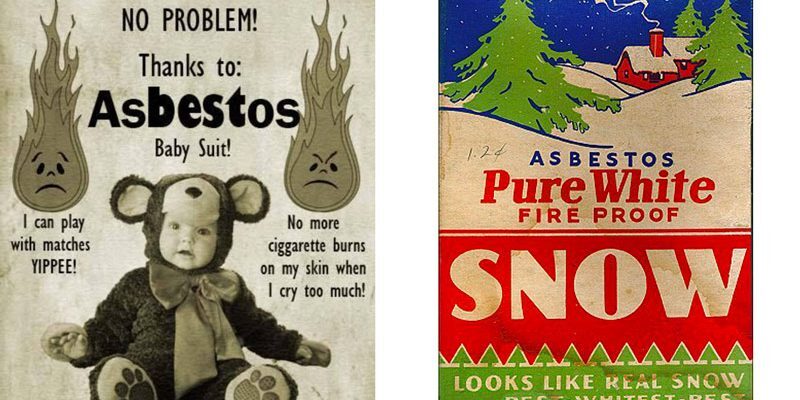
At one point it was so natural to live with asbestos products that asbestos clothing was marketed and even played with. This is the case with the popular asbestos snow, which was even used as a substitute for natural snow in various Hollywood movies. The iconic late 1930s movie The Wizard of Oz was filmed using this footage. Here's a link to the snow scene from the movie https://youtu.be/RG2keYgBiZc?t=166
The NCI (National Cancer Institute), a government entity in the United States of America has made information about asbestos and its risks available on its website: NCI: Asbestos Information. The main concern is with lung cancer.
In much of Latin America, a roofing material is still marketed under the Eternit brand, with a composition of approximately 10% of asbestos. The erosion of these panels slowly releases harmful asbestos particles into homes. In some countries they are highly popular.
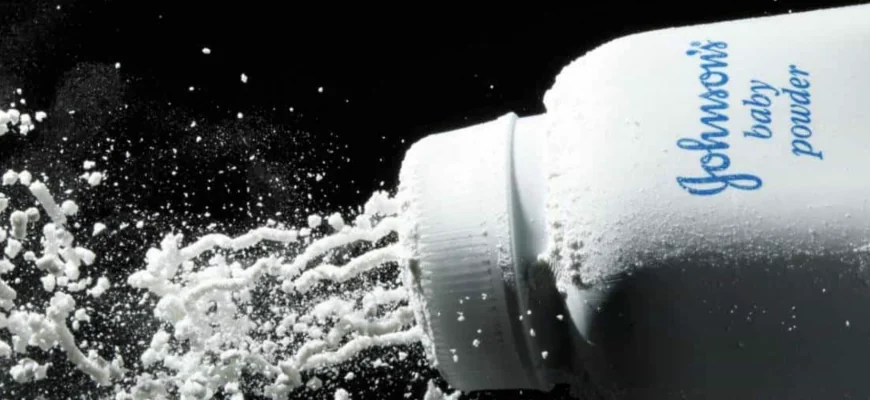
A recent and extremely alarming case is that of Johnson & Johnson's baby powder, which to date has accumulated tens of thousands of lawsuits from people who claim to be cancer victims resulting from the use of talc.
Drugs and alkaloids. They weren't always frowned upon.
As with other substances, the effects of these stimulant drugs were not well known in their early days. Some invented uses for them as anesthetics and as a replacement for other drugs. At the end of the 19th century a series of products came onto the market containing Cocaine. Believe it or not, at the beginning of the 20th century even Coca-Cola used an extract of coca leaves in its product, hence its name. Many speculate that it had almost 9 milligrams of cocaine per glass. I leave you with a recent news from the chain Fox News about the theme. http://www.foxnews.com/food-drink/2018/05/14/10-secrets-coca-cola.html
It is also very interesting to know that John Pemberton, the creator of this popular product, did it with the interest of developing a drink that would serve as a substitute for quitting his addiction to Morphine, so unlucky that he ended up addicted to his own creation. In 1903 the use of cocaine in the drink was stopped, but today a substance derived from coca leaves, not an alkaloid, is still used in the popular product. Coca-Cola, through its subsidiaries, is the only company in the United States with permission to import coca from other countries.
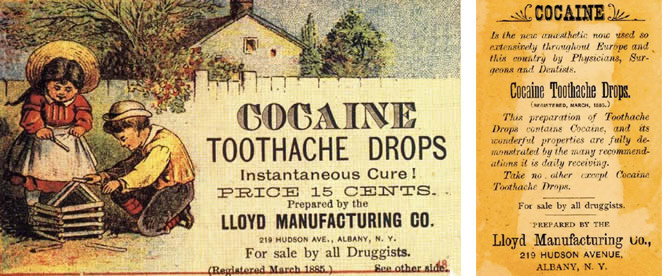
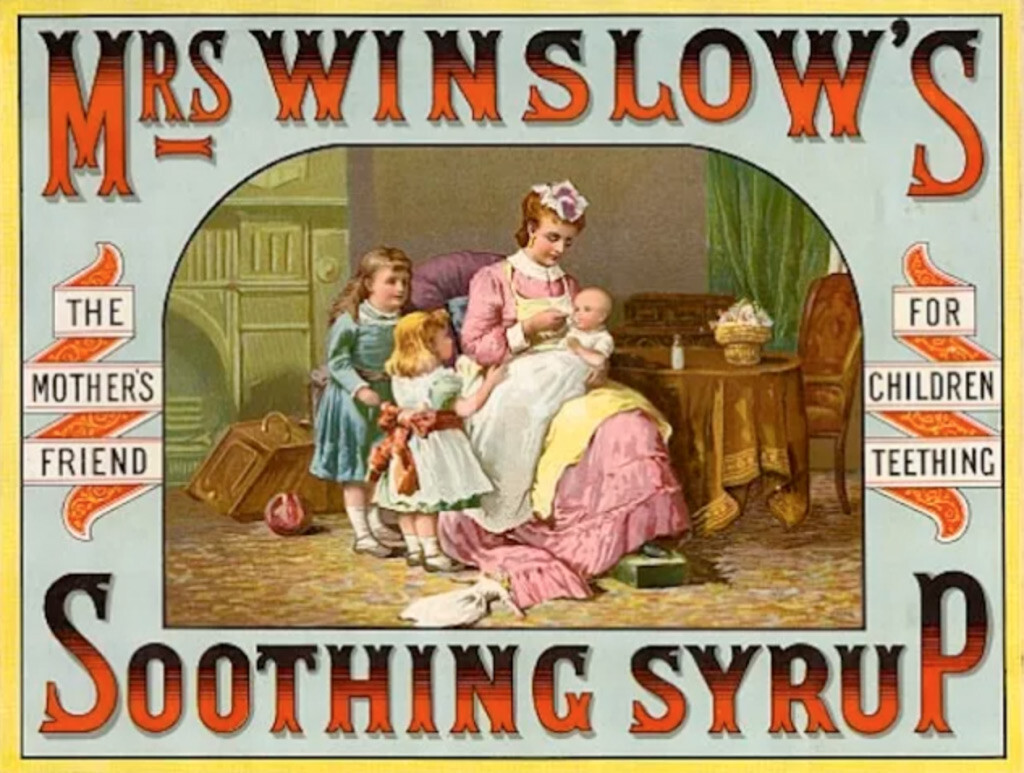
But cocaine was not the only drug, Heroin, Morphine and Cannabis, were also marketed at the time in countless "medicinal" products. Even the well-known pharmaceutical company BAYER came to market heroin in the form of cough syrup. Cocaine and morphine were instead prescribed for children's tooth pain. In the mid-19th century, a morphine-based syrup called Mrs. Winslow's Soothing Syrup, was a popular remedy for babies suffering from gum pain, after the appearance of their first teeth.
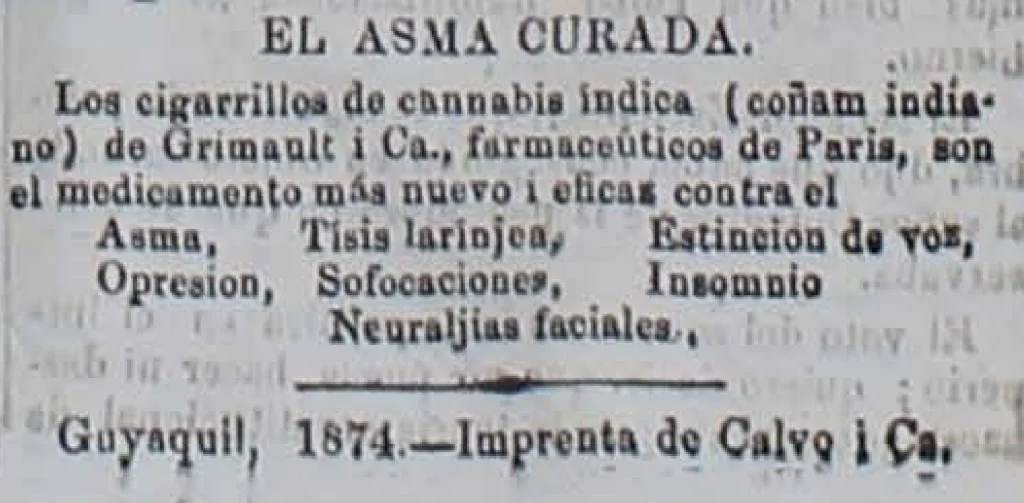
In an old advertisement published in 1874 by Diario Los Andes, from Guayaquil, Ecuador, it can be read that it advertises the use of cannabis cigarettes to cure various diseases such as asthma, consumption and even insomnia.
Lead is already in the bones of all of us
We already talked about Lead in the introduction to this article, so I will focus on listing some of the current uses of Lead that can be dangerous. Yes, it is still used and in large quantities, as it is not considered a great danger since in low doses it does not represent a potential danger to health; but what is not mentioned frequently is that Lead, once in our body, NEVER leaves there. That's right, this heavy metal builds up. We may have consumed it in small, seemingly harmless doses, but if we are constantly exposed, sooner or later it will end up accumulating enough to poison us. Lead poisoning is also known as Saturnism and one of its frequent symptoms is dementia. Yes, like that of Nero or Caligula.
The use of Lead in the industry is so great and so diverse that I will only be able to mention some of the current uses, certainly only a small percentage of the great universe of articles, but I will try to list the common everyday articles such as: batteries auto, tire counterweights, ceramic paint, welding, ammunition.
Many countries have banned the use of Lead in certain items of common use such as gasoline or wall paintings. Lead-soldered electronics have also been banned in some countries, including the European Union. This last initiative is easy to identify in electronic products marked with the initials RoHS (that is to say, Lead free).
Unfortunately I have to say at the end of this section, whatever we do to avoid having contact with Lead, the main polluting source of Lead today (and for many millions of years more) is our atmosphere. Thanks to the oil companies we breathe Lead every day. An interesting article about this is on the BBC site and I share reading: https://www.bbc.com/mundo/noticias-40582316
Insecticides, herbicides and antibiotics
In this section, rather than analyzing the past uses of these substances, since they have been innumerable, I will analyze the current reality and the controversy that exists with some of these substances.
Among the most controversial agrochemicals, without a doubt, glyphosate —which is actually an herbicide— should be mentioned. Decades of fighting to have its use completely banned have been in vain. Many do not realize the implications of this chemical and think that if it is used rationally in the crops, when the plants produce and their fruit is washed, the effects of glyphosate are minimized, but unfortunately that is not true. It is enough to analyze the current problem of bee honey in Argentina.
Argentina is one of the largest producers of honey in the world, but it also produces a lot of soybeans and the herbicide used in this crop is glyphosate. It happens that bees visit soy fields and unconsciously carry glyphosate to their hives. The result is honey contaminated with this poison. Currently, the European Union has prohibited the entry of honey contaminated with glyphosate due to the risks to the health of its inhabitants.
Another well-known case is that of Triclosan, which despite its continued use as an antibacterial, its use in food and cosmetics has been banned. In 2017, more than 200 doctors produced a document called the Florence Declaration (https://ehp.niehs.nih.gov/doi/10.1289/ehp1788), where serious health hazards are documented. And do you know what the INCREDIBLE part of all this is? That until recently you were probably putting it in your mouth. Well yes, a product managed to get the FDA and other agencies to authorize this ingredient for years. Do you know what it was called? COLGATE TOTAL 12, whose formula included triclosan until 2019, when it was finally removed.
References
- Museum of Radiation and Radioactivity (Oak Ridge Associated Universities), "Doramad Radioactive Toothpaste (ca. 1940-1945)", Radioactive Quack Cures collection, ORAU/ORISE. orau.org
- Ken Silverstein, "The Radioactive Boy Scout", Harper's Magazine, November 1998; expanded as The Radioactive Boy Scout: The True Story of a Boy and His Backyard Nuclear Reactor, Random House, 2004. harpers.org
- Mark Pendergrast, For God, Country and Coca-Cola: The Definitive History of the Great American Soft Drink and the Company That Makes It, Basic Books, 1993 (3rd rev. ed., 2013). basicbooks.com
- Tiffany Kary, "Colgate Total Toothpaste to Relaunch Without Controversial Chemical", Bloomberg News, January 15, 2019. bloomberg.com
Categories
The books · born from this blog

Atahualpa con su abrigo de pelo de murciélago
y otras 49 historias verdaderas que parecen mentira
Available on Amazon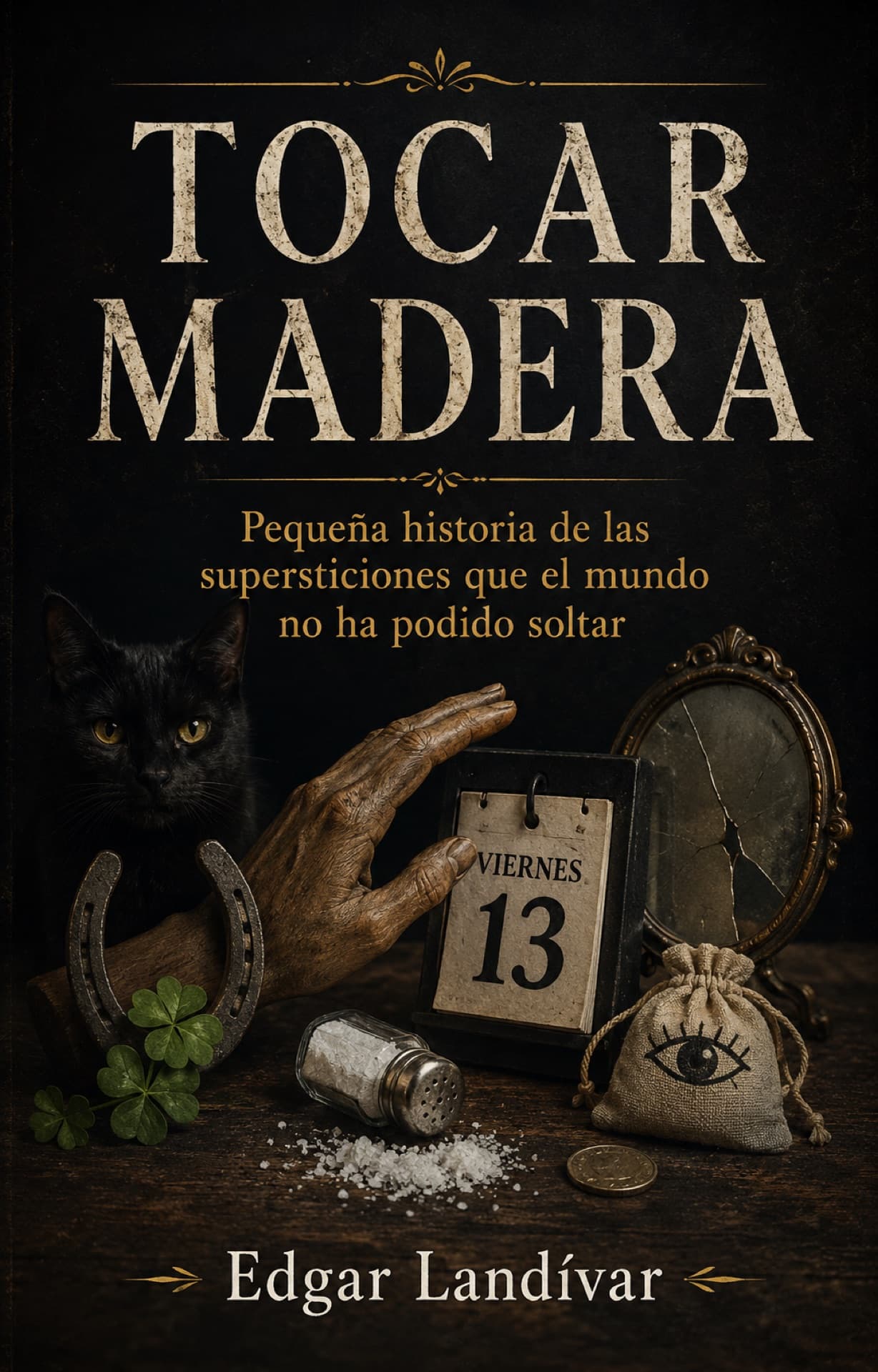
Tocar madera
Pequeña historia de las supersticiones que el mundo no ha podido soltar
Available on Amazon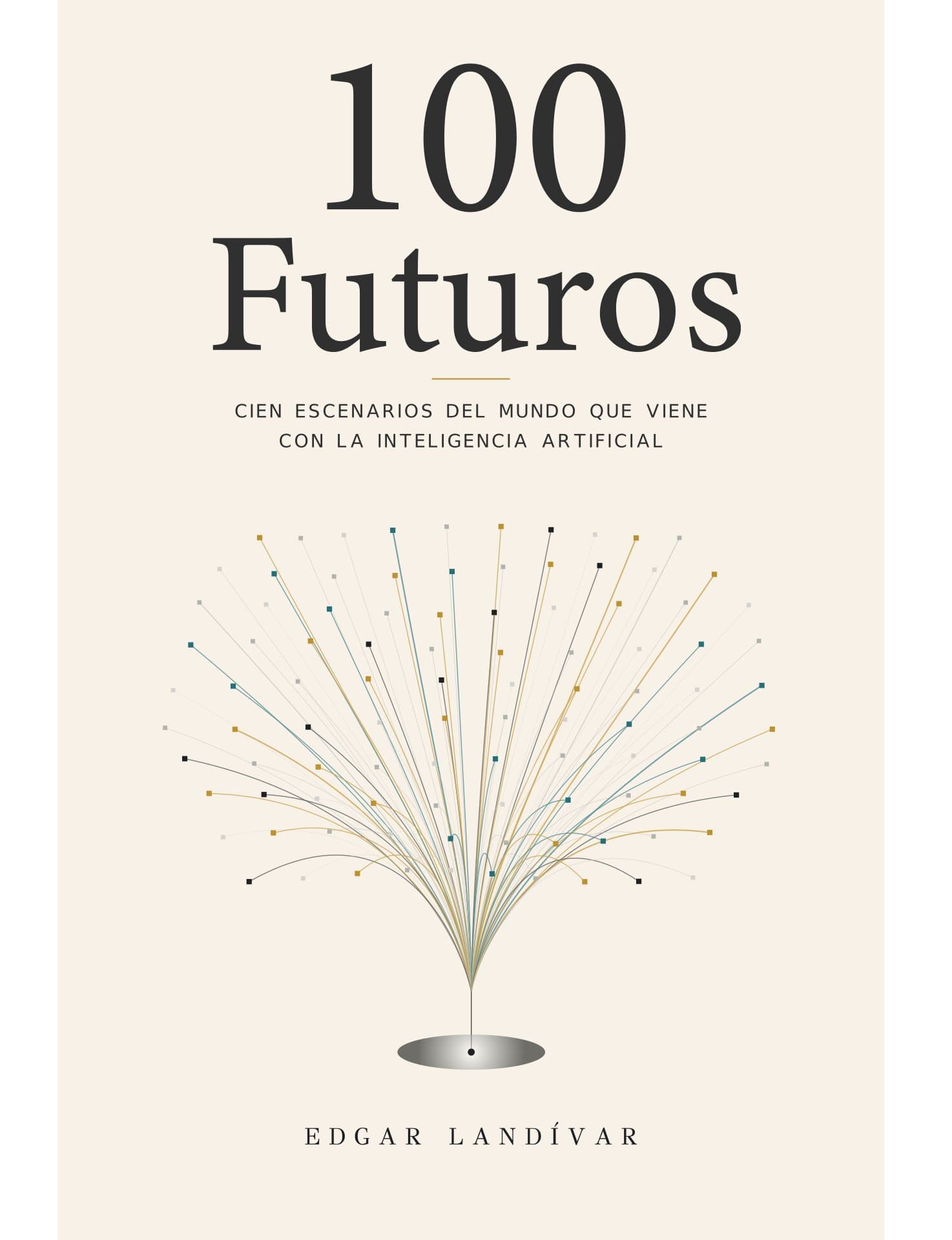
100 futuros
Cien escenarios del mundo que viene con la inteligencia artificial
Available on AmazonYou may also like
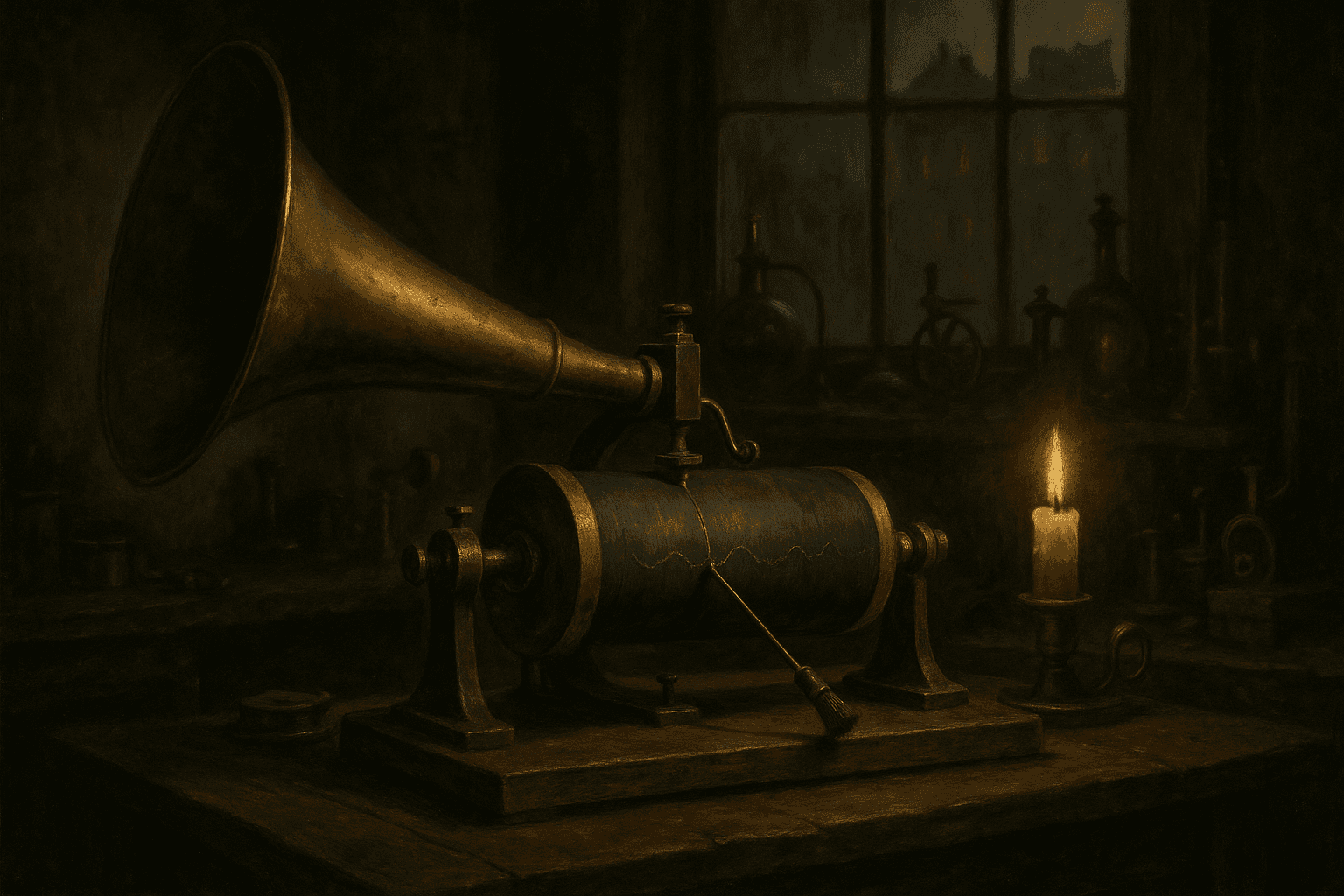
The oldest recorded voice: sound before Edison
In 1860, 17 years before Edison, a French typesetter recorded the oldest human voice we can hear today. This is how we finally heard the past.

The History of Zero: The Number We Took Ages to Accept
The history of zero: from a dot in an Indian manuscript to Brahmagupta's rules and the Florence ban. How we finally learned to write nothing down.

The Antikythera Mechanism: A 2,000-Year-Old Computer
The Antikythera mechanism is the oldest known analog computer: a bronze Greek machine, found in a shipwreck, that could predict eclipses 2,000 years ago.