
The Robot That Defeated Napoleon
The Mechanical Turk, an 18th-century chess automaton, dazzled Europe and even beat Napoleon, hiding a secret that fooled the world for decades.
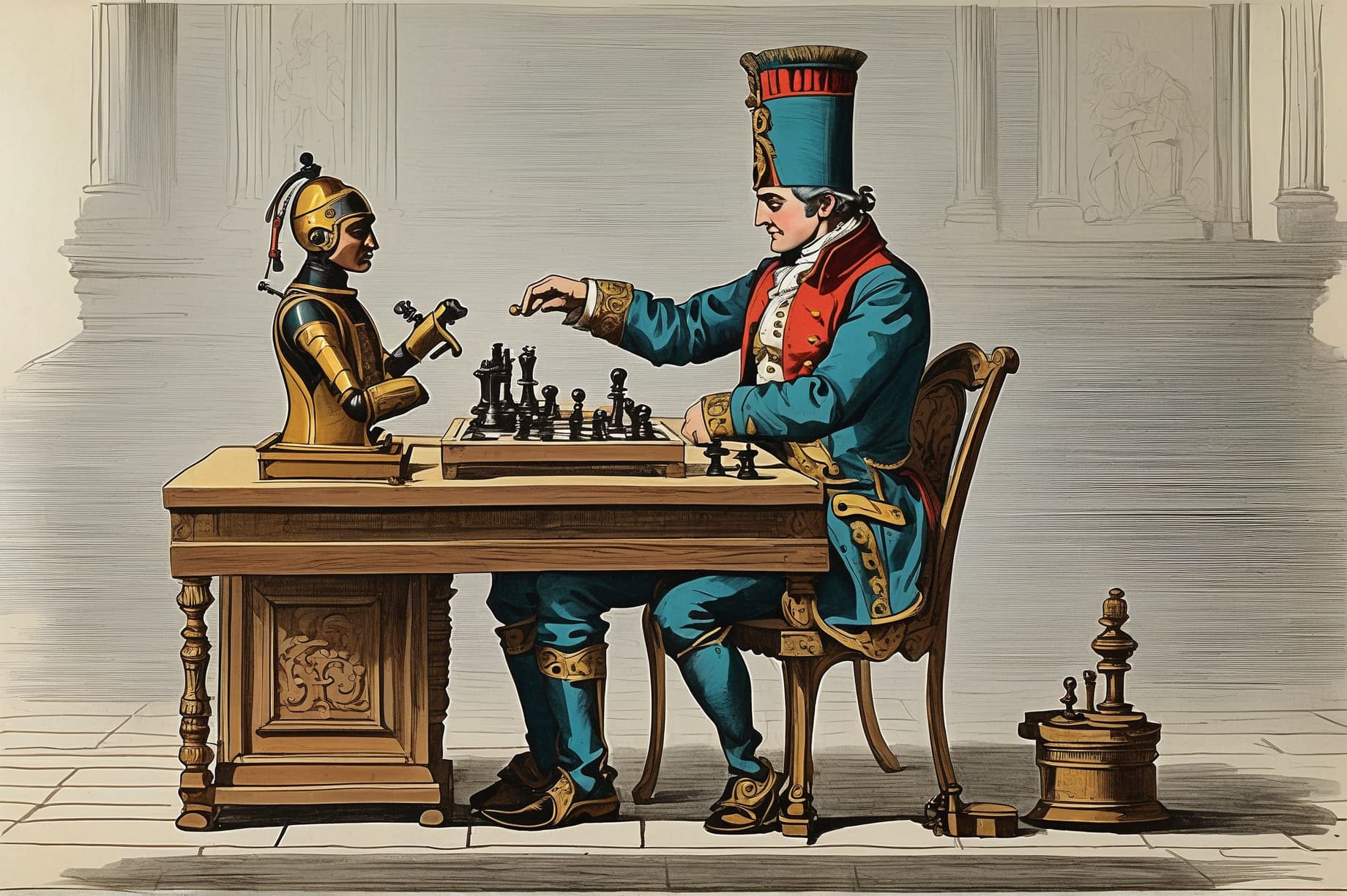
At the end of the 18th century, a Hungarian inventor built a magical automaton. Dressed in oriental attire, the figure came to life and played chess against anyone placed before it. Of course, such an invention caused astonishment in all who saw it. Not only because it seemed to move magically, but because it defeated all its opponents with apparent ease.
This prodigious artifact became known as the "Mechanical Turk" and was the work of Wolfgang von Kempelen. First presented in 1770 before the court of Maria Theresa of Austria, the Mechanical Turk was not just a figure that could move chess pieces on its own, but also seemed to understand the strategy and tactics of the game, executing moves with a skill that left spectators speechless.
The cabinet upon which the figure sat was equally impressive, adorned with carved wooden elements and doors that opened to reveal a labyrinth of gears, wheels, and other mechanisms. Kempelen made a show of opening these doors to display the supposed source of the automaton's intelligence, though always with a touch of sleight of hand to maintain the Turk's central secret.
For decades, the Mechanical Turk traveled through Europe and America, challenging the brilliant minds of the era, until one day word reached Napoleon's ears. Fascinated by rumors of a machine capable of playing and winning at chess, the French emperor requested a demonstration during his campaign in Vienna in 1809. In a room full of onlookers and dignitaries, Napoleon sat down before the Mechanical Turk to test its ability.
Napoleon began the game with a series of aggressive moves, perhaps attempting to disorient or confuse his non-human opponent. However, the Turk, secretly guided by its hidden operator inside the cabinet, responded with precision and cunning, quickly adapting to the emperor's strategy. As the game progressed, astonishment grew among the spectators as they watched Napoleon being matched and eventually bested by the machine.
At the end of the match, Napoleon, with a mixture of surprise and admiration, stood up and applauded Kempelen's ingenious creation. Though some say the Turk was intentionally defeated on this occasion so as not to embarrass the emperor, the legend of the Mechanical Turk only grew with this encounter.
The Turk continued its tour for decades, leaving many other notable players baffled, until in 1854 a fire destroyed it in a Philadelphia museum. Shortly after, and by then decades after its creator's death, the secrets of the Mechanical Turk were finally revealed to the public. It was discovered that the machine was nothing more than a mechanical illusionist, with a human chess master hidden inside, maneuvering the moves from a secret compartment.
This revealing discovery not only marked the end of the Mechanical Turk's career, but also left a lasting legacy at the intersection of technology, art, and magic, inspiring future generations to explore the limits of automation and artificial intelligence.
References
- Tom Standage, The Turk: The Life and Times of the Famous Eighteenth-Century Chess-Playing Machine, New York, Walker & Company, 2002. archive.org
- Silas Weir Mitchell, “The Last of a Veteran Chess-Player,” The Chess Monthly, New York, 1857.
Categories
The books · born from this blog

Atahualpa con su abrigo de pelo de murciélago
y otras 49 historias verdaderas que parecen mentira
Available on Amazon
Tocar madera
Pequeña historia de las supersticiones que el mundo no ha podido soltar
Available on Amazon
100 futuros
Cien escenarios del mundo que viene con la inteligencia artificial
Available on AmazonYou may also like
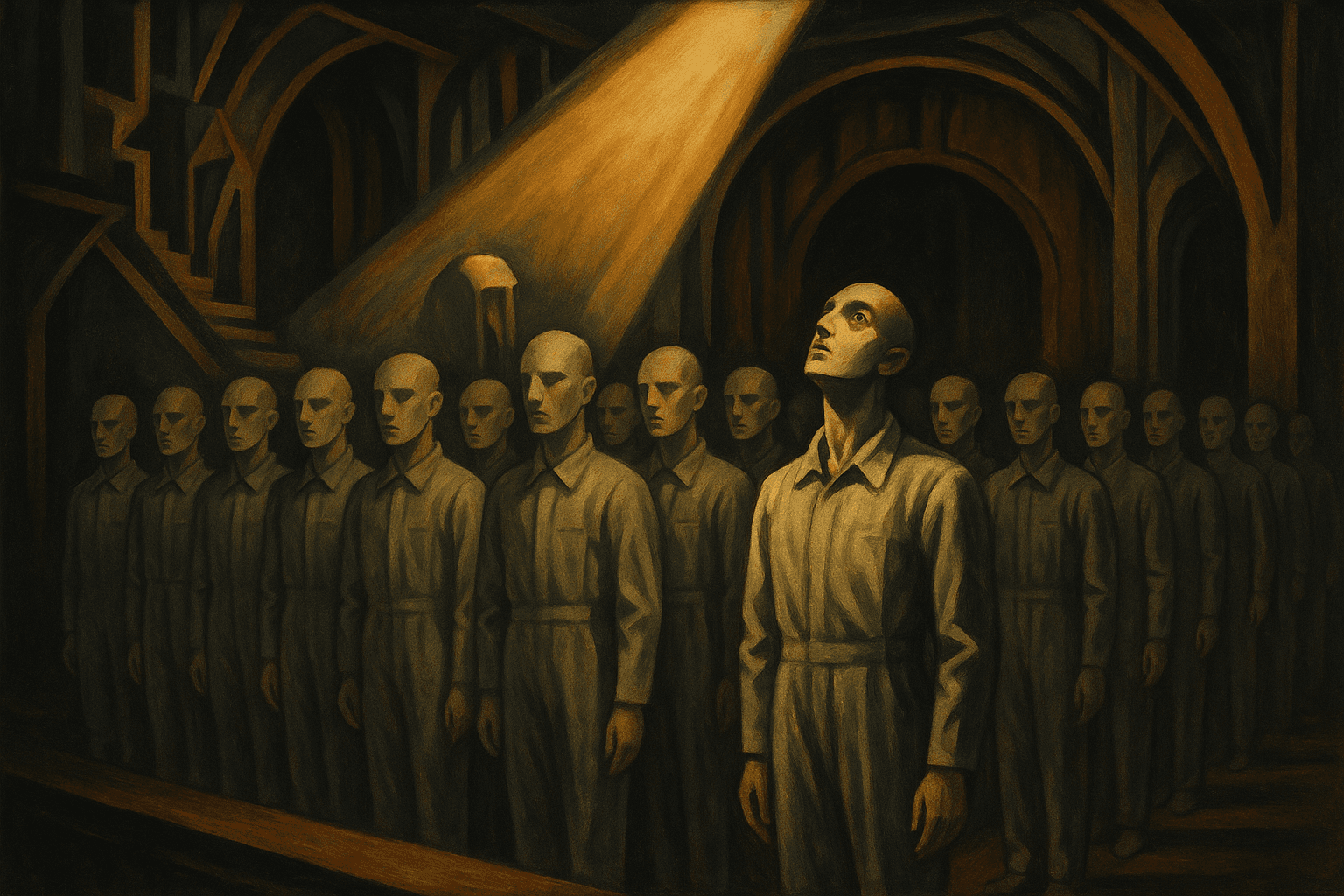
The Origin of the Word “Robot”: Born in a Czech Play
Where does the word robot come from? Czech writer Karel Čapek coined it in 1920 from robota, forced labor; and the idea was actually his brother Josef's.
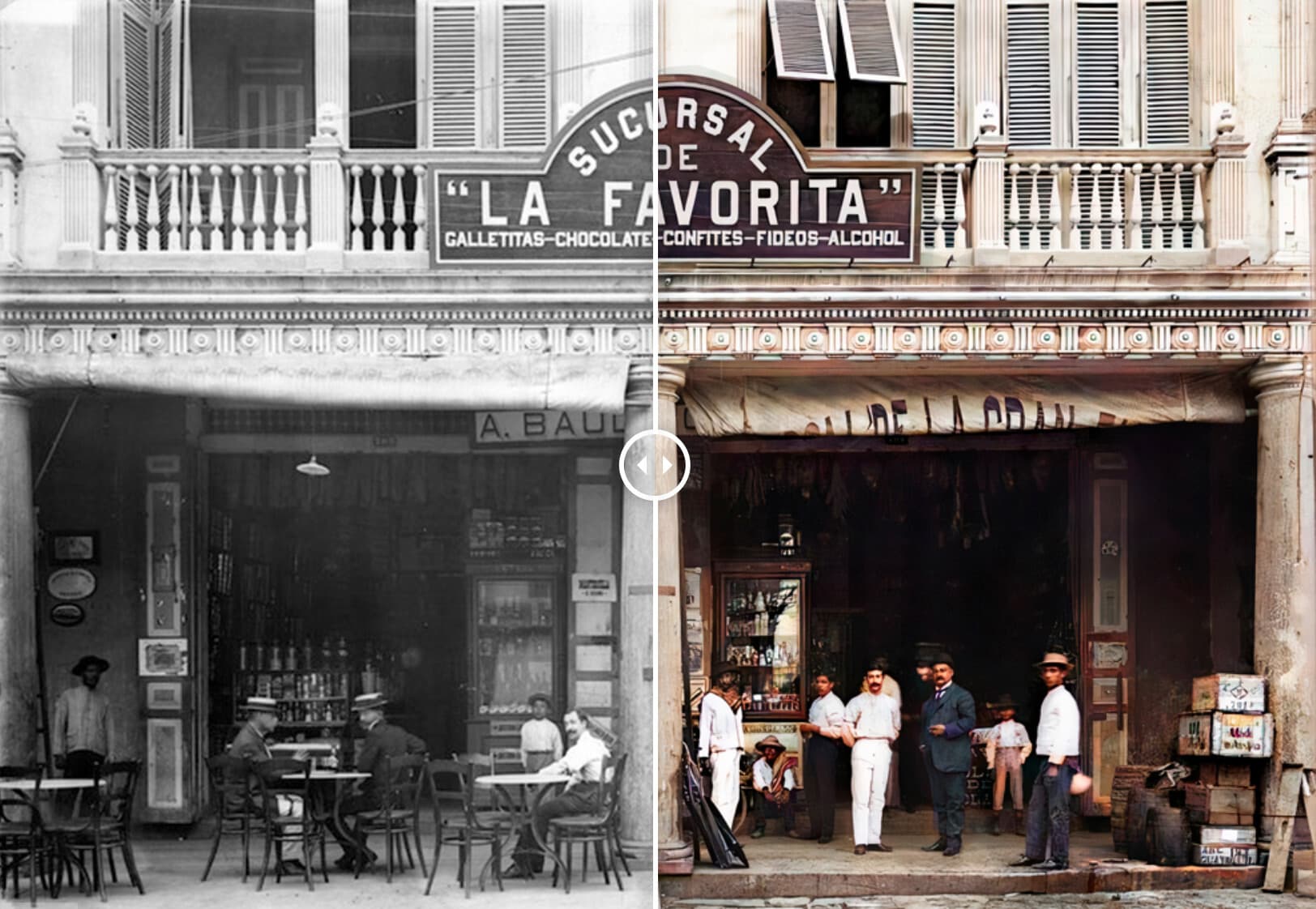
The before and after of a restoration of old photographs with artificial intelligence and Photoshop
Watch century-old photos of Guayaquil come back to life, colorized and repaired with artificial intelligence and Photoshop in striking before-and-afters.

The history of the stethoscope and Laennec's modesty
In 1816 a French doctor felt too awkward to press his ear to a patient's chest, so he rolled up paper — and the stethoscope was born.