
What “Bizarro” Really Means in Spanish (Not Bizarre)
For centuries, the Spanish word “bizarro” meant brave and gallant. How a false friend stole a word's meaning — and how the dictionary surrendered.
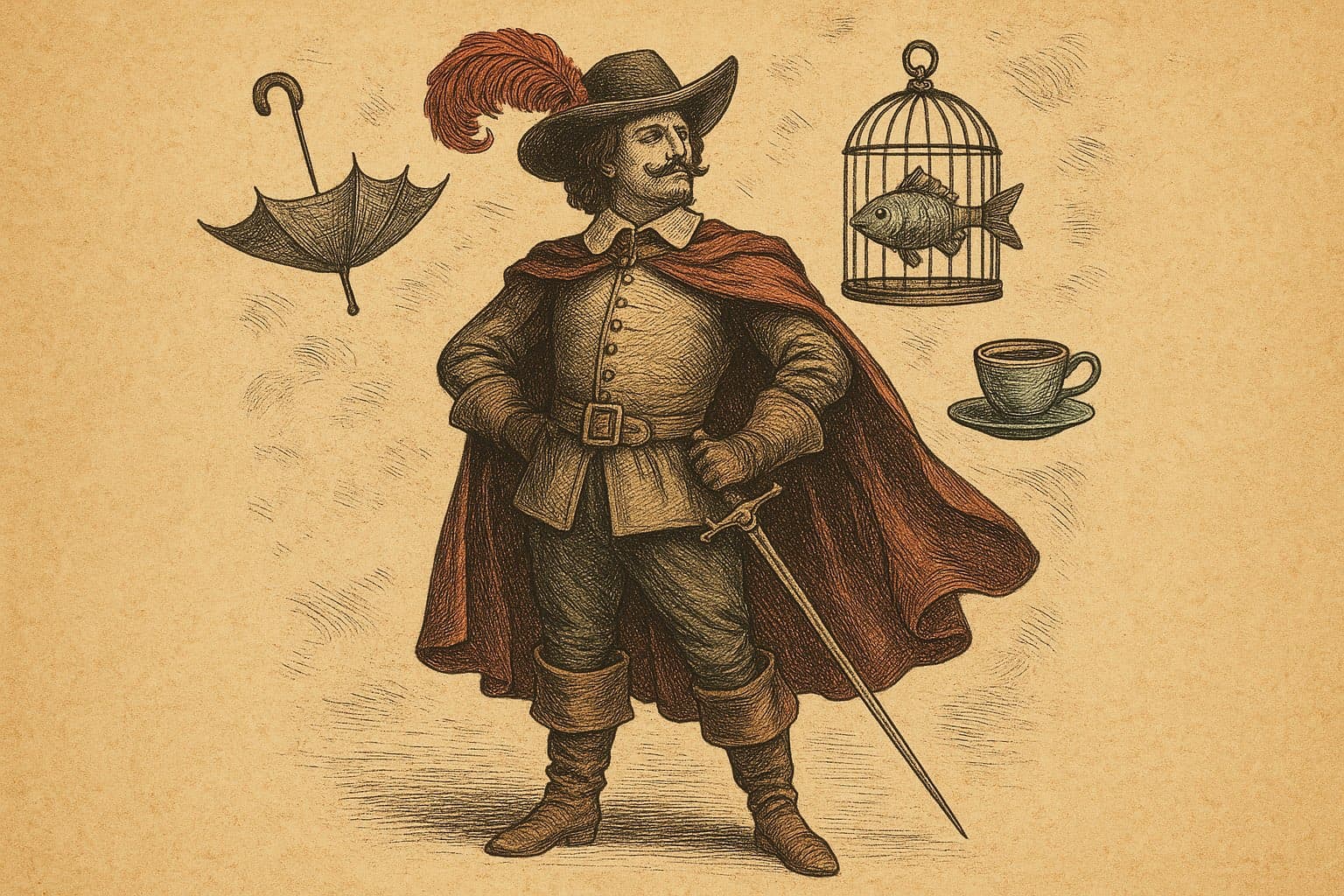
Try it at any dinner table in Latin America: ask what bizarro means. Most people will say “weird”, “strange”, “grotesque” — a video bizarro, a situación bizarra. And yet for centuries, in Spanish, the word meant exactly the opposite of a defect: brave, gallant, splendid. A “bizarro capitán” was a dashing, daring officer; Cervantes used it as a compliment; 19th-century war dispatches are full of “bizarros soldados” who had nothing extravagant about them. The story of how this word ended up meaning its own opposite is a small four-hundred-year linguistic war — foreign invasion, heroic resistance and final surrender included.
The most successful false friend in the language
The culprit is a classic “false friend”. French and English have bizarre, spelled almost identically and meaning “strange, outlandish”. When movies, the press and then the internet began arriving in English, Spanish speakers did the natural thing: we translated bizarre as bizarro, never suspecting we were emptying out a word of our own to refill it with imported merchandise. The irony is that the loanword is a boomerang: the French bizarre came from the Italian bizzarro —a direct relative of the Spanish word—, changed its meaning along the way, and returned home centuries later converted into something else. The word emigrated, made its fortune abroad under a new personality, and came back so changed that its own family didn't recognize it.
The resistance, and the surrender
For decades, “bizarro” was the favorite trench of Spanish-language purists. The Royal Spanish Academy's usage guide said it without anesthesia: using bizarro for “weird” was an error to be avoided. Correcting anyone who said “qué bizarro” became a national sport among lovers of the language. But language, as we have seen before in this series, obeys no decrees and no official labels: people kept using bizarro to mean weird, massively, across the continent. And in December 2022 came the news the purists feared: the Academy updated its dictionary and accepted “rare, extravagant, out of the ordinary” as a meaning of bizarro. The invasion was legalized. Language is a brutal democracy: usage wins, not nostalgia.
The secret the purists don't mention
But here comes my favorite fold in this story. The defenders of classic bizarro usually close their sermon with an etymology: the word supposedly comes from the Basque bizarra, “beard” — because a beard meant manliness, and manliness meant courage. It is a lovely and much-quoted origin. And it is probably also false. The reference etymologists, led by Corominas, favor the Italian bizzarro, derived from bizza, “tantrum, fit of anger”: the original Italian bizzarro was the hot-blooded, fiery one — from there it passed into Spanish as “spirited, gallant” and into French as “strange”. In other words: the word we use to correct others has, itself, a biography full of misunderstandings. The purist who corrects the anglicism by citing the Basque beard is, in all likelihood, repeating another myth — and this series, as we saw with the tripalium behind “travel”, already knows that etymologies that fit too neatly deserve suspicion.
So what do we say now?
My position is an armistice. There is no longer any point in correcting those who use bizarro as weird: they are backed by the usage of hundreds of millions of people and, since 2022, by the dictionary. But neither should we let the old meaning die — it is more beautiful, and it was ours first: let “bizarro” remain capable of being a compliment — gallant, generous, brave — and not just a grimace. Words, in the end, are like the comic-book character who bears this name: Bizarro, Superman's imperfect clone who does everything backwards. Copies of copies that come home different. The trick is not to expel them, but to know the full story — and in these pages, that happens to be the house specialty.
Enjoy the stories behind words? Continue with serendipity, the word born in a letter from 1754 and procrastination, the vice that infuriated the Romans, or browse the whole etymology series.
Categories
The books · born from this blog
Atahualpa con su abrigo de pelo de murciélago
y otras 49 historias verdaderas que parecen mentira
Available on Amazon
Tocar madera
Pequeña historia de las supersticiones que el mundo no ha podido soltar
Available on Amazon
100 futuros
Cien escenarios del mundo que viene con la inteligencia artificial
Available on AmazonYou may also like
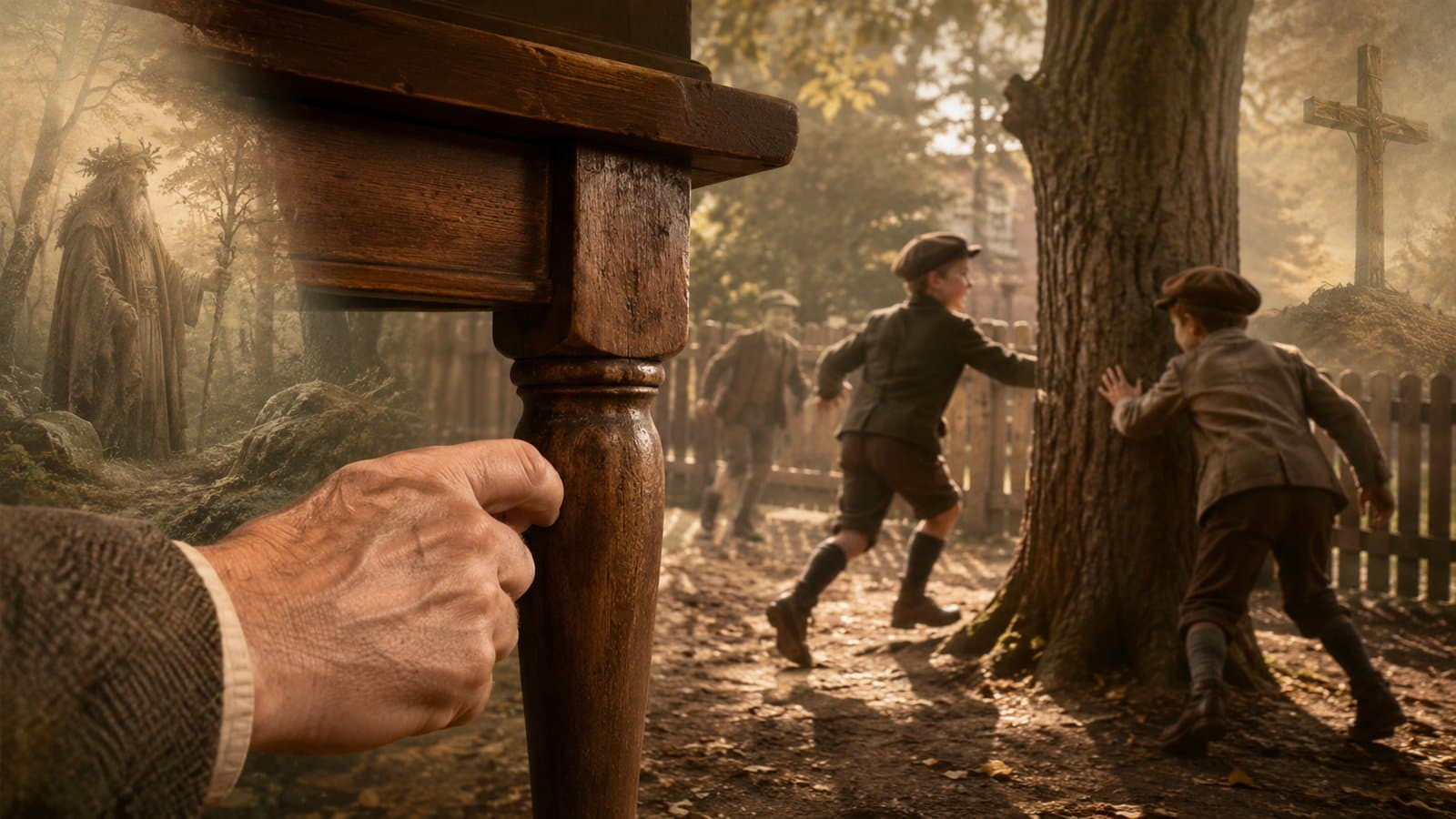
Knock on Wood: The Real Origin of the Superstition
Almost everyone thinks knocking on wood comes from Celtic tree worship. But the documented trail leads to a far more recent origin: a children's game.
Stockholm Syndrome Was Born to Silence a Hostage
The famous syndrome didn't come from a study: the police's own psychiatrist coined it to discredit a hostage who criticized him. It isn't in the DSM.
The Fifth Sleep: when we slept in two shifts
For centuries we did not sleep eight hours straight, but in two sleeps with a waking hour in between. The history of segmented sleep, from Cervantes to science.