
Isaac Peral's 1888 Electric Submarine (and Its Sad End)
In 1888, Isaac Peral built an electric submarine that sailed underwater and fired torpedoes, yet Spain buried this future in paperwork.
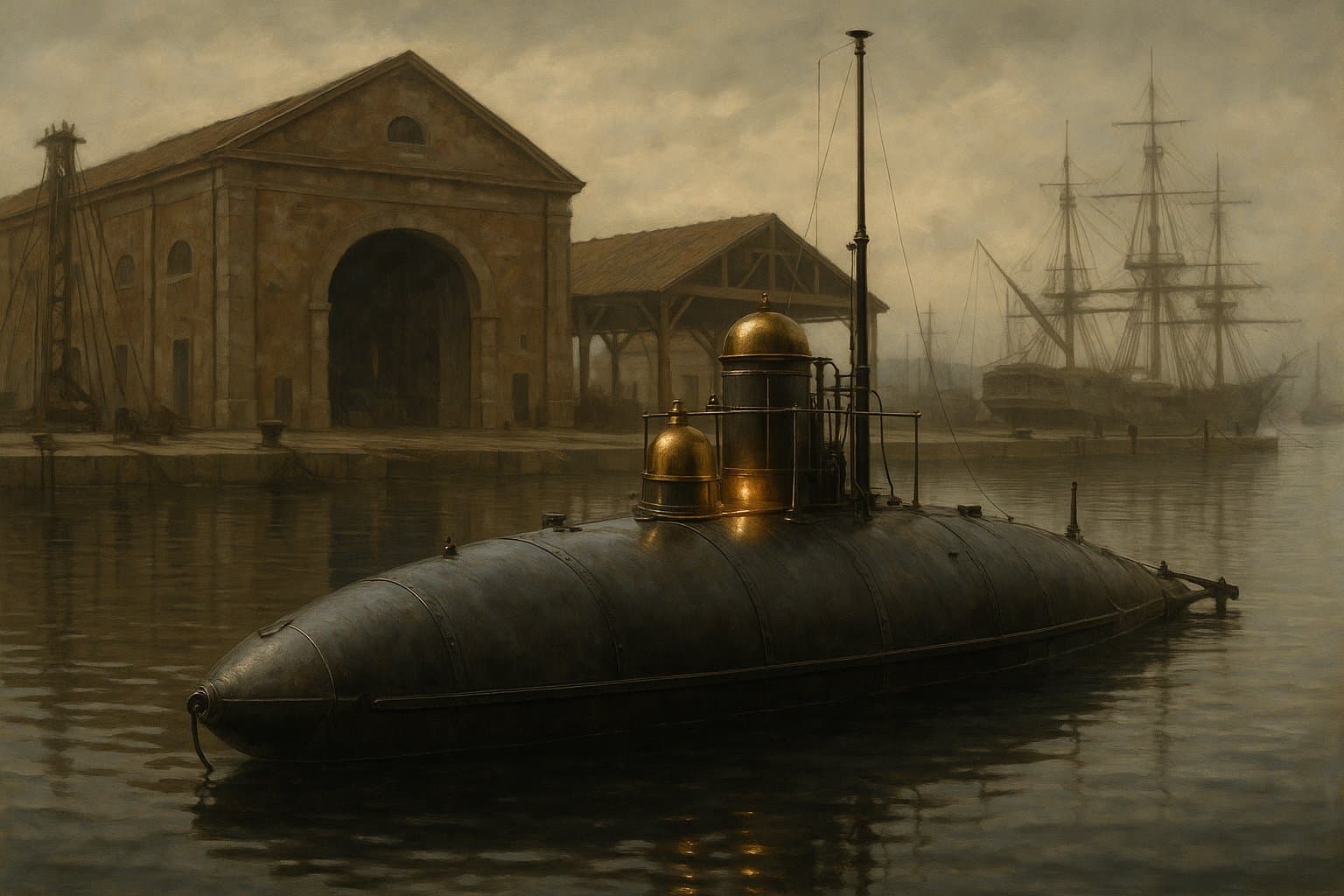
Some inventions, strangely enough, seem to arrive too early.
That was the case with Isaac Peral’s electric submarine.
At the end of the nineteenth century, when ships were still measured in smokestacks, cannons, steam and steel, a Spanish naval officer imagined something different: a vessel that could disappear underwater, move in silence and attack without being seen.
It was not a Jules Verne fantasy. It was a real military project and, remarkably, it worked.
A sailor with an inventor’s mind
Isaac Peral was born in Cartagena on June 1, 1851. He was a naval officer, scientist and inventor; not the usual dreamer locked away in a room, but a man trained inside the Spanish Navy, with technical experience and a very concrete concern: Spain had coasts, colonies and maritime interests that were increasingly difficult to protect with a shrinking fleet.
The Real Academia de la Historia presents him as a figure of deep technical training, tied to the Navy and to scientific education.
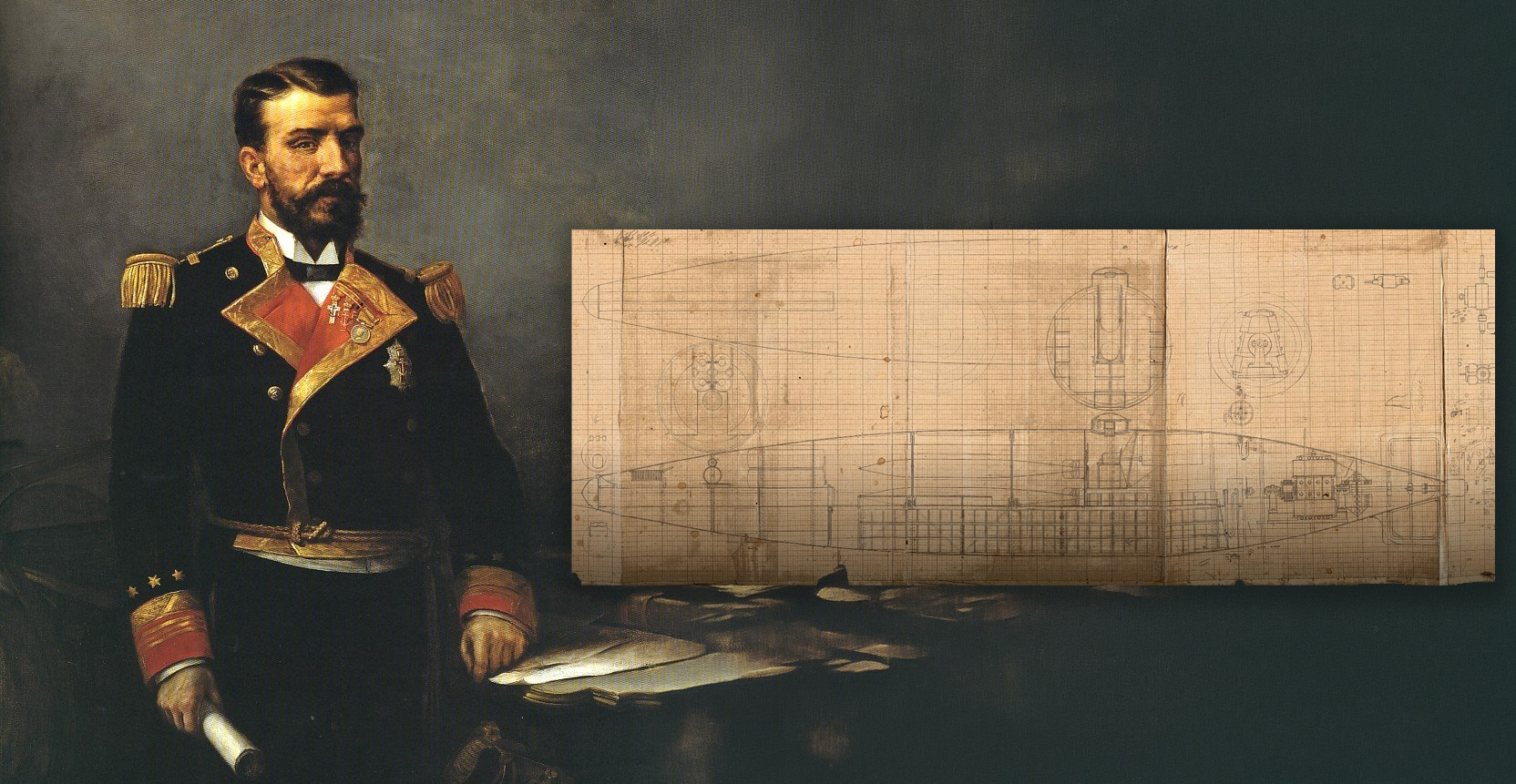
Peral wanted a submersible torpedo boat. Not a machine for exhibition, but a vessel capable of navigating underwater and launching a torpedo from that position. In 1885, he presented his proposal to the Ministry of the Navy. The prototype was later authorized and launched in 1888 at the Arsenal of La Carraca, in San Fernando, Cádiz.
In 1888 the world had not yet seen modern submarines like those of the twentieth century. Submarine warfare, as we would later understand it, still belonged to the future.
Peral was trying to bring that future forward.
Peral’s submarine had the shape of a dark cigar, almost like a metallic creature. It was about 22 meters long and was powered by electric motors fed by batteries. It included a torpedo tube, systems for underwater navigation, mechanisms for controlling depth and a primitive kind of periscope for observing from beneath the surface.
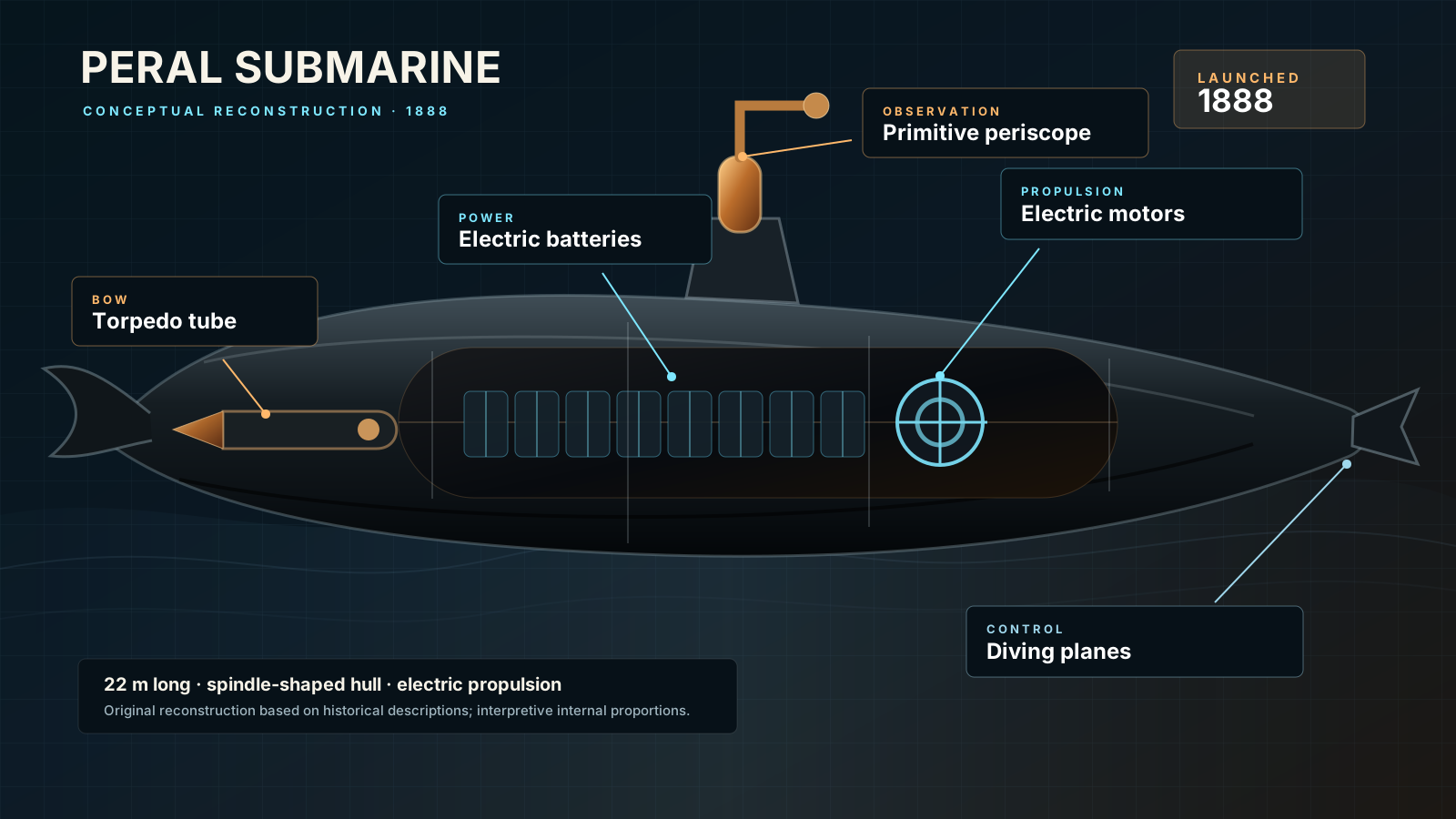
Today that may sound normal: a submarine with electricity, periscope and torpedoes feels almost obvious, because we have seen too many films, documentaries and video games. But at the time, it was not obvious at all. Electricity still had the smell of wonder.
What is fascinating is that his invention was not only a bright idea, but a set of technical solutions compressed into a single machine. It had to move underwater, allow its crew to breathe, orient itself, hold depth, remain stable, calculate course and, on top of all that, become a useful naval weapon.
The problem with proving the impossible
Tests began between 1888 and 1889. The submarine sailed, submerged, maneuvered and carried out trials that showed the idea was not absurd.
An article published by the Spanish Navy about Isaac Peral’s submarine describes it as a remarkable innovation because of its electric propulsion system, its conception as a submersible torpedo boat and its technical solutions ahead of their time: “Isaac Peral y el submarino”.
Because when someone invents something too new, they do not only have to solve the technical problem. They also have to solve the mental problem of everyone else.
The submarine passed successful tests, but the project became tangled in reports, doubts, resistance, technical disputes and personal tensions.
Eventually, the Consejo Superior de Marina concluded that the submersible torpedo boat did not meet the conditions promised by its author, and the project was abandoned. The Navy itself has published historical studies on that process, including this article from the Revista General de Marina: “El submarino Peral”.
The life of an innovator is not always simple, nor is it always full of easy victories. Peral clearly ran into the barrier of an old system, slow to make decisions and with little appetite for the future, for the new.
Seen from afar, an uncomfortable feeling remains: Spain had an advanced technology in its hands and did not know how to turn it into a sustained line of development.
The submarine did not die because it sank. It died in paperwork.
Peral left the Navy in the early 1890s. He died young, in 1895, at only 43. The Spanish Navy also covers aspects of his life and legacy in publications such as this one from the Revista General de Marina: “Isaac Peral y Caballero”.
Cartagena, Spain’s submarine city
The curious thing is that the machine did survive. Peral’s submarine was not completely lost. Today it is preserved in Cartagena, at the Naval Museum, where the Fundación Museo Naval highlights the legacy of Lieutenant Isaac Peral within its collections linked to the city’s naval history: Museo Naval de Cartagena.
The submarine is still now, but that stillness also speaks.
Because standing before that dark hull, one does not only see an old submarine. One sees a question: how many times does a society have an enormous possibility in front of it and let it pass because it does not fit its habits?
Peral’s story remains very much alive in Cartagena. The opening of his birthplace as a museum is scheduled for June 1, 2026, coinciding with the 175th anniversary of his birth, as part of an effort to strengthen the city’s relationship with the inventor’s memory and submarine history: Cartagena Puerto de Culturas.
Cartagena seems to have understood that Isaac Peral is not only a local figure, but a window onto a larger question: what does a country do when one of its own invents something ahead of the calendar?
References
- Real Academia de la Historia: Isaac Peral y Caballero
- Spanish Navy: Isaac Peral y el submarino
- Revista General de Marina: El submarino Peral
- Revista General de Marina: Isaac Peral y Caballero
- Fundación Museo Naval: Museo Naval de Cartagena
- Cartagena Puerto de Culturas: Isaac Peral Birthplace
- Va de Barcos: Infografía. Así era el submarino de Isaac Peral
References
- Real Academia de la Historia, "Isaac Peral y Caballero", Diccionario Biográfico electrónico (DB~e), Madrid, Real Academia de la Historia historia-hispanica.rah.es
- Armada Española (Spanish Navy), "Correos emite un sello del 125 aniversario de la botadura del submarino Peral", Armada — Ministerio de Defensa, Gobierno de España, March 2014 armada.defensa.gob.es
- Instituto de Historia y Cultura Naval (Spanish Navy), "Qué ver en el Museo Naval de Cartagena", Armada — Ministerio de Defensa, Gobierno de España armada.defensa.gob.es
- Ayuntamiento de Cartagena (Cartagena City Council), "La casa natal de Isaac Peral abre como museo dedicado al marino e inventor en su 175 aniversario", official news release, June 2026 cartagena.es
Categories
The books · born from this blog
Atahualpa con su abrigo de pelo de murciélago
y otras 49 historias verdaderas que parecen mentira
Available on Amazon
Tocar madera
Pequeña historia de las supersticiones que el mundo no ha podido soltar
Available on Amazon
100 futuros
Cien escenarios del mundo que viene con la inteligencia artificial
Available on AmazonYou may also like
The First Submarine Was Built Centuries Before You Think
Before Isaac Peral's electric submarine came centuries of trying: Drebbel under the Thames, the Turtle of 1776 and the deadly Hunley of 1864.
The Airship: The Elegant Future That Burned
The airship promised to cross oceans in silent luxury. From Giffard to the Hindenburg, the story of an elegant future that ended in flames.

The Bicycle: The Machine That Freed the City
In 1817 Karl Drais built a running machine with no pedals. A century later the bicycle had reshaped cities and helped set women free.