
Project Huemul: the secret Argentine experiment that promised to master nuclear fusion
How a physicist convinced Perón he could tame nuclear fusion on a Patagonian island, and how a young Balseiro exposed the spectacular fraud.
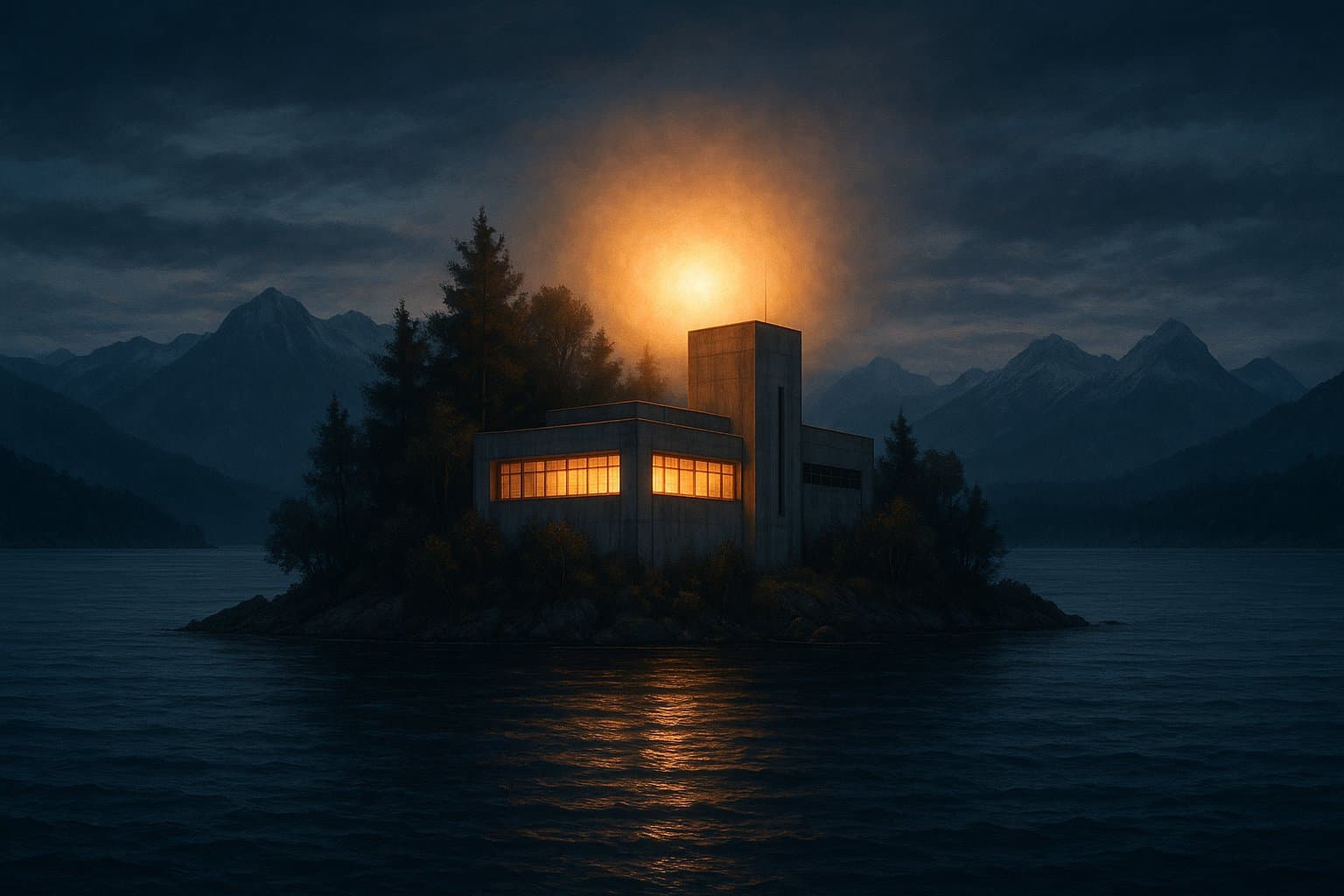
On a small island in Lake Nahuel Huapi, near Bariloche, Argentina tried to do something that still sounds like a promise from the future: master the energy of the stars. This was not a metaphor.
The idea was to produce controlled nuclear fusion, the same kind of phenomenon that powers the Sun, but contained inside a human-built installation in Patagonia, under the direction of an Austrian physicist named Ronald Richter.
The project began taking shape in the late 1940s. On Huemul Island, starting in 1949, a secret attempt to develop fusion energy was built under Richter’s leadership and with support from the Argentine government. The Balseiro Institute, which was born indirectly from that story, still remembers it as one of the strangest episodes in the origins of Argentina’s nuclear program.
The scene feels written for a novel. A European scientist arrives in postwar Argentina. He convinces President Juan Domingo Perón that he can achieve a cheap, powerful, almost limitless source of energy. He does not simply ask for a laboratory. He asks for an island.
Huemul Island had something perfect for that kind of project: it was close to Bariloche, but separated enough to wrap everything in mystery. Water around it, mountains behind it, controlled access, and that Patagonian feeling of being far from any inconvenient gaze.
There, an experimental plant was built. Not just any factory. A plant where, according to Richter, a thermonuclear process was being contained.
The day Argentina announced it had touched the future
On March 24, 1951, Perón publicly announced Richter’s supposed achievement: at the pilot plant on Huemul Island, thermonuclear reactions had allegedly been carried out “under conditions of control on a technical scale.” The news startled the international scientific community because, if true, it would have meant a breakthrough that the nuclear powers themselves had not yet achieved.
This was not announced as a minor improvement. Argentina announced that it had controlled a thermonuclear reaction. It was like saying: “we have learned to domesticate a piece of the Sun.”
And of course, the announcement traveled quickly. Newspapers talked. Scientists doubted. Officials celebrated. The press wanted to see. For an instant, the country could imagine itself entering world technological history through a huge door.
After the announcement, the story needed photographs. In June 1951, Argentine journalists were invited to the island to visit the facilities and show the public that scientific world operating in the middle of the lake. Newsreels of the time presented the plant as an expression of modernity, with equipment, guided tours, and narration full of epic language.
The problem with lighting a star
Nuclear fusion is not simply a matter of putting things together and waiting for energy to appear. For certain atomic nuclei to fuse, extreme conditions are required. Very extreme.
José Antonio Balseiro’s technical report explained that, for the kind of reaction Richter invoked, enormous temperatures were required: on the order of tens of millions of degrees Kelvin. Balseiro compared those figures with an electric arc, whose hottest zone did not reach 4,000 K, and with laboratory temperatures of about 100,000 K, still vastly below what was needed.
That comparison was devastating. Richter claimed to be close to the mountain, but Balseiro showed he was not even in the foothills. The distance between what had been promised and what was physically possible was enormous.
In 1952, the government decided to look more closely. An inspection commission visited Huemul Island in September of that year. It included José Antonio Balseiro, Mario Báncora, Dan Beninson, Juan Bussolini, and Otto Gamba. Balseiro, then only 32 years old, was called back from Manchester, where he was training in nuclear physics. His report would be decisive in ending the project.
On one side stood Richter, installed on his island, with the authority of mystery and the backing of a huge promise. On the other stood Balseiro, young, technical, sober, forced to tell power something uncomfortable: this does not work.
The Balseiro Institute’s own site preserves the report submitted to the president. It explains that the commission inspected the laboratories between September 5 and 8, 1952, and that the outcome of that inspection was the official decision to shut down Project Huemul.
Huemul did not fall because someone got angry. It fell because it could not sustain itself. The promise was too large and the evidence too weak. The Balseiro Institute summarizes the episode bluntly: a commission led by Balseiro demonstrated that the attempt had been a fraud, leading to the closure of the atomic project.
What makes this story interesting is that Huemul was also an X-ray of its time. After Hiroshima and Nagasaki, atomic energy had an almost supernatural aura. It was destruction, but also future. It was fear, but also progress. It was war, but also medicine, industry, electricity, and national prestige.
In that climate, a Latin American country tried to enter, all at once, the most advanced conversation on the planet. It did not succeed, but it tried. It had the vision, the ambition, and the nerve.
The ruins that became useful
Project Huemul failed. But it did not vanish without leaving anything behind. Part of its equipment was moved to what is now the Bariloche Atomic Center, and later the Institute of Physics of Bariloche was founded there, today known as the Balseiro Institute.
After the project was dismantled, Balseiro defended the importance of training excellent human resources in nuclear physics, making use of some of the facilities and equipment that Richter had left in Bariloche. The agreement that created the Institute of Physics of Bariloche was signed on April 22, 1955.
That changes the flavor of the story. Because Huemul was a failure, but it was a fertile failure.
It did not produce nuclear fusion. It did not light a sun. But indirectly, it helped push a more serious question: what if, instead of believing a visionary, we trained physicists?
Today Project Huemul remains a strange mixture of ambition, naivete, secrecy, propaganda, science, and ruins. A Patagonian island where an almost magical energy was promised, the same kind of energy that governments, laboratories, and figures such as Bill Gates are still trying to reach.
Huemul was a country’s attempt to imagine itself larger than its place on the map. And although no sun was lit on that island, something did remain burning: the suspicion that real science does not need to promise miracles. It only needs to build, patiently, what miracles merely announce.
Sources
- Instituto Balseiro — Report on Huemul Island
- Instituto Balseiro — The echoes of Project Huemul
- Instituto Balseiro — Institutional history and origins
- Argentina Atomic Power — 70 years after the most spectacular announcement
References
- Mario A. J. Mariscotti, El secreto atómico de Huemul: crónica del origen de la energía atómica en la Argentina, Buenos Aires, Sudamericana/Planeta, 1985. archive.org
- José Antonio Balseiro, "Informe del Dr. José Antonio Balseiro referente a la inspección realizada en la isla Huemul en setiembre de 1952" (1952), Comisión Nacional de Energía Atómica, Buenos Aires (published 1988), CNEA Nuclea institutional repository. nuclea.cnea.gob.ar
- Instituto Balseiro, "Informe sobre la Isla Huemul", official website of the Instituto Balseiro (Universidad Nacional de Cuyo – CNEA), San Carlos de Bariloche. ib.edu.ar
- Instituto Balseiro, "Antecedentes históricos del Instituto Balseiro", official website of the Instituto Balseiro (Universidad Nacional de Cuyo – CNEA), San Carlos de Bariloche. ib.edu.ar
Categories
The books · born from this blog

Atahualpa con su abrigo de pelo de murciélago
y otras 49 historias verdaderas que parecen mentira
Available on Amazon
Tocar madera
Pequeña historia de las supersticiones que el mundo no ha podido soltar
Available on Amazon
100 futuros
Cien escenarios del mundo que viene con la inteligencia artificial
Available on AmazonYou may also like

The Airship: The Elegant Future That Burned
The airship promised to cross oceans in silent luxury. From Giffard to the Hindenburg, the story of an elegant future that ended in flames.

The Bicycle: The Machine That Freed the City
In 1817 Karl Drais built a running machine with no pedals. A century later the bicycle had reshaped cities and helped set women free.

The Airplane Before the Wrights: Who Almost Won
Before the Wright brothers flew in 1903, pioneers nearly got there first: Cayley, Lilienthal, Ader and Santos-Dumont. This is their untold story.