
Spam: The First Junk Email in History
On May 3rd, 1978, a salesman sent the first unsolicited mass email to 400 people. That we call it “spam” is the fault of a can of ham.
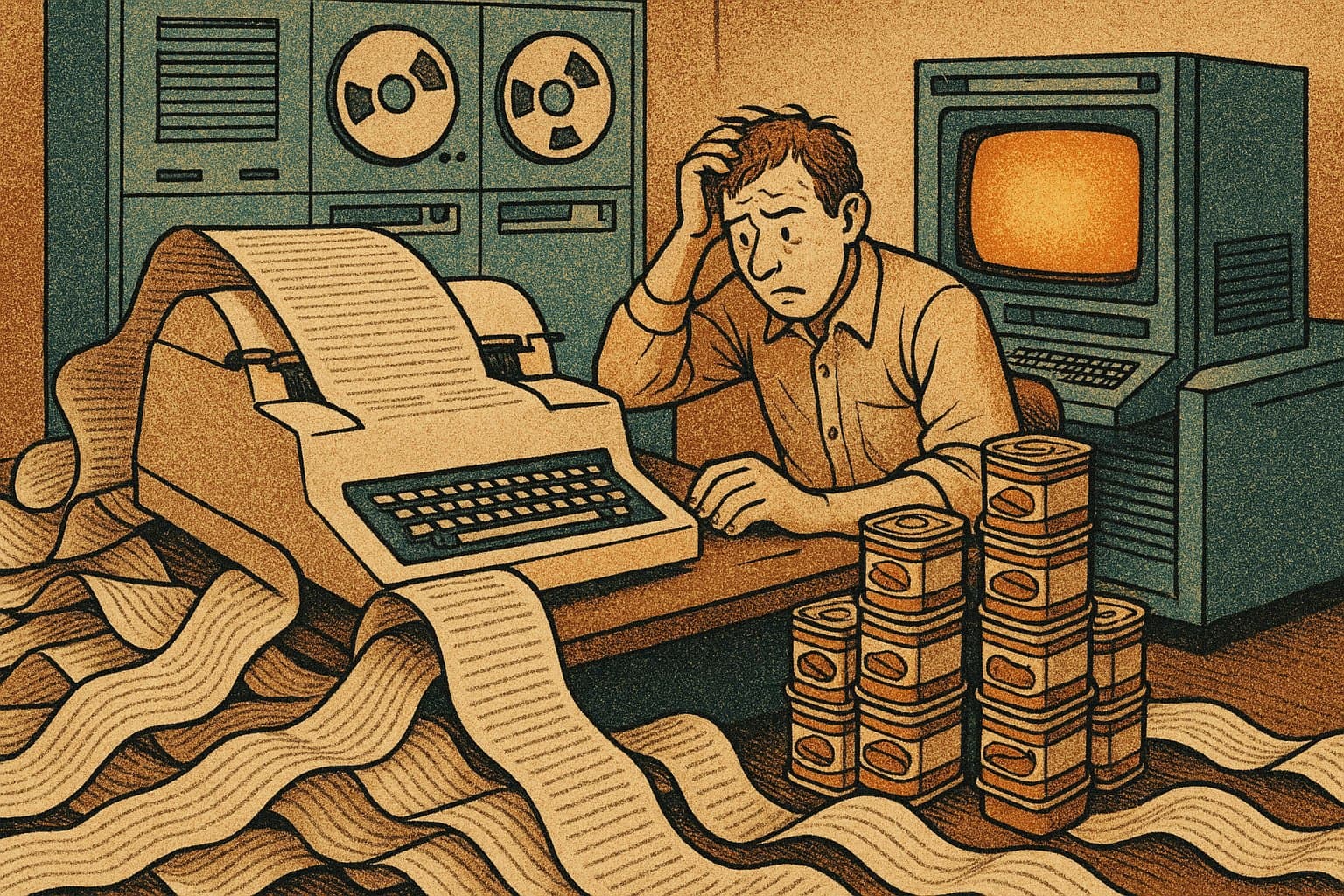
Every day, an enormous share of the email circulating around the planet is junk: offers nobody asked for, princes with stranded inheritances, miraculous cryptocurrencies. We call that plague spam, and the word is so ordinary that nobody asks the obvious question anymore: why is junk mail named after a can of ham? The answer involves an overenthusiastic salesman in 1978, a troupe of English comedians dressed as Vikings, and one of the most famous food brands of the 20th century. Let's take it in order.
First came the can
SPAM, the original, was born in 1937: canned pork from the Hormel company, christened in an internal contest (the winner took home a hundred dollars for the contraction of spiced ham). The Second World War made it omnipresent: it was cheap, needed no refrigeration, and fed Allied troops and civilians on every front — millions of soldiers came home never wanting to see another can in their lives. By the 1970s, in Britain, SPAM was the symbol of inescapable food: it was everywhere, whether you liked it or not. Hold on to that fact.
Then, the singing Vikings
In December 1970, Monty Python aired a sketch that became legend: a couple descends into a café where absolutely every item on the menu involves SPAM — “egg and spam; egg, bacon and spam; spam, egg, sausage and spam...” — while a table of Vikings in horned helmets (the opera kind, not the real kind) chants “SPAM, SPAM, SPAM!” louder and louder until it drowns out all conversation. That was precisely the joke: something unwanted, repeated to infinity, that won't let you speak. The perfect metaphor was ready twenty years before the thing it would come to name.
May 3rd, 1978, at the gates of paradise
And so we arrive at the original sin. In 1978, ARPANET —the precursor network of the internet— connected a few thousand academics and military people. Gary Thuerk, a salesman at the computer company DEC, had an idea that struck him as brilliant: instead of notifying people one by one about the presentations of his new machine, he sent a single email to some 400 recipients on the West Coast — so many that the addresses overflowed the recipient field and spilled into the body of the message. The first unsolicited mass email in history, dispatched from the very heart of the network's innocence.
The reaction was twofold and prophetic. On one side, general outrage: complaints, reprimands, a scandalized administrator declaring that this violated the spirit of the network. On the other —and this explains the following fifty years— it worked: Thuerk boasted for decades of having sold millions of dollars' worth of equipment thanks to that single message. Junk mail was born carrying both its punishment and its reward — and the reward won.
The late baptism
Curiously, Thuerk's message wasn't called spam at the time — the name arrived later, through the door of online games and forums. In the chats and virtual worlds of the 80s and 90s, obnoxious users would flood the screen by repeating text endlessly, and someone with a good memory compared it to the Viking chorus in the café: that was spamming. When in 1994 a pair of Arizona lawyers plastered thousands of Usenet forums with ads for their immigration services —the first massive commercial spam of the modern era—, the community already had the word ready. From there it jumped to email and into the dictionary. Hormel, it must be said, took it sportingly: it asked that the meat be written SPAM in capitals and the junk in lowercase, and kept selling cans — it even has its own museum.
The moral is very much this blog's brand: words reach their destination by absurd roads. Junk mail is called spam because some comedians mocked a wartime can of ham, eight years before an impatient salesman invented the problem. In the history of the internet, almost everything good was built by idealists giving their work away — and almost everything annoying was inaugurated by someone trying to sell you something. Fifty years later, the balance remains exactly the same.
References
- S. Hambridge and A. Lunde, RFC 2635: DON'T SPEW — A Set of Guidelines for Mass Unsolicited Mailings and Postings, IETF, June 1999. rfc-editor.org
- Gary Anthes, 'Unsung innovators: Gary Thuerk, the father of spam,' Computerworld, 2007. computerworld.com
- 'SPAM (food),' Encyclopædia Britannica. britannica.com
- 'Gary Thuerk,' Encyclopædia Britannica. britannica.com
Categories
The books · born from this blog

Atahualpa con su abrigo de pelo de murciélago
y otras 49 historias verdaderas que parecen mentira
Available on Amazon
Tocar madera
Pequeña historia de las supersticiones que el mundo no ha podido soltar
Available on Amazon
100 futuros
Cien escenarios del mundo que viene con la inteligencia artificial
Available on AmazonYou may also like

The History of the Match: Fire in Your Pocket
The friction match was born by accident in 1826, poisoned thousands of factory women, and only later became the safe fire we carry in our pocket.
The History of the Floppy Disk and the Save Icon
The floppy disk held 80 KB in 1971 and survives today as the «save» icon many young people never touched. This is the full history of the floppy disk.
The History of the Modem: When the Internet Screeched
The modem turned data into sound to travel down the phone line. This is its story, from the 1958 Bell 101 to the screech of dial-up internet.