
Your Next Hard Drive Will Be Made of DNA!
Scientists already stored video, books, and a GIF inside DNA, and one gram could hold 215 petabytes: your next hard drive may be biological.
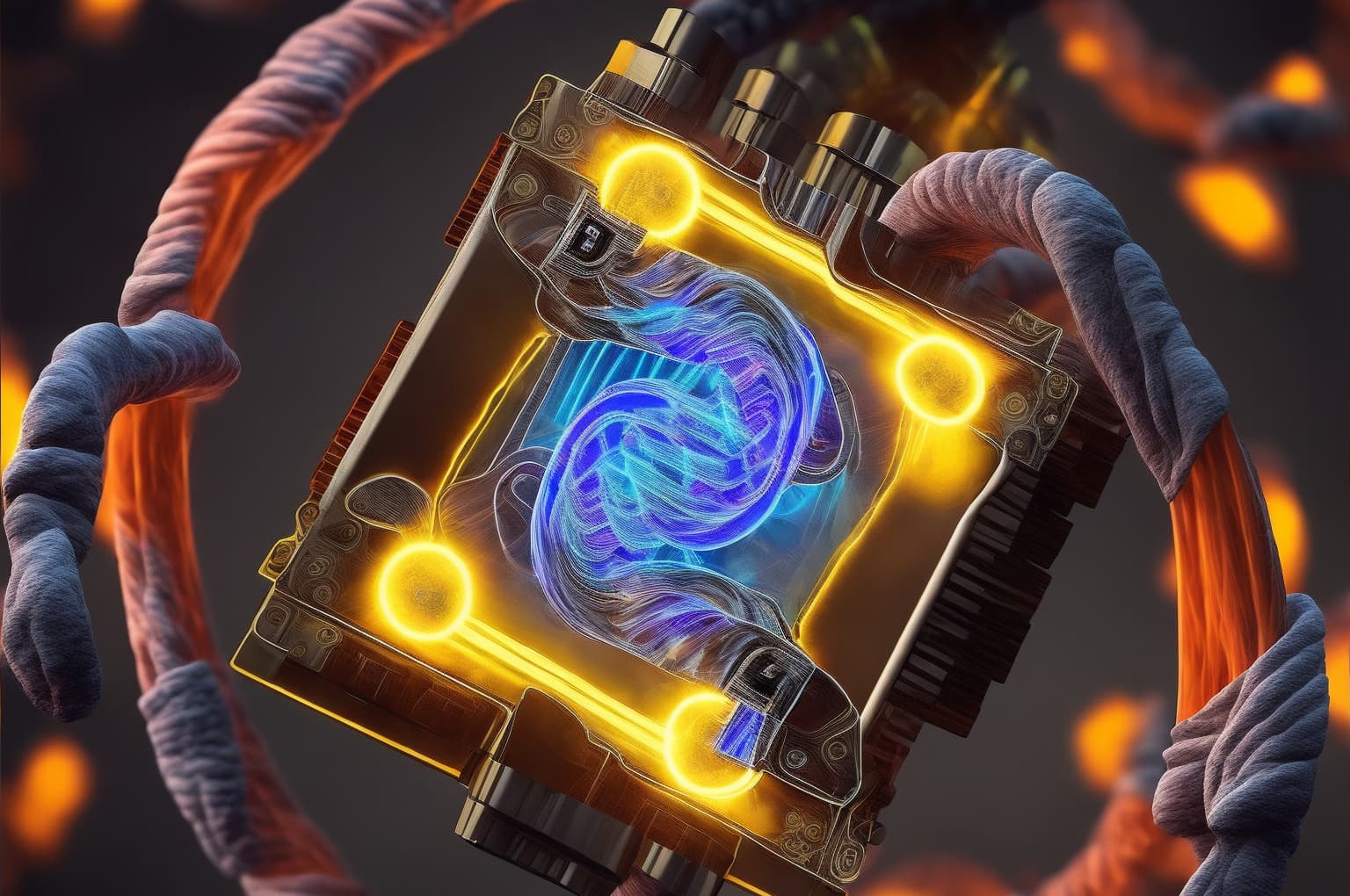
Today we're going to talk about a super interesting and somewhat unusual topic: storing information in DNA. Yes, you read that right—DNA! That molecule that contains our genetic information could become the "hard drive" of the future. Can you imagine storing your photos, documents, and music in your own DNA? Join me on this journey into a world where biology and technology merge in a surprising way!
To start, it's important to understand how information storage works in an electronic device. Our digital devices store information in zeros and ones (bits), which are interpreted by the computer to show us images, texts, etc. Now, how could we store information in DNA? DNA is composed of four nitrogenous bases: adenine (A), thymine (T), cytosine (C), and guanine (G). So, the idea is to encode our digital information into these four letters of DNA.
Research and experiments to achieve this type of storage already exist. A notable example is that of a group of scientists from Harvard who, in 2017, managed to store a GIF file (an animation) in the DNA of a living bacterium. This achievement was an important milestone in the field, as it demonstrated that it is indeed possible to store and retrieve information under biological conditions. Moreover, this experiment also opened the door to multiple applications, such as storing information in living organisms to track diseases and improve gene therapies.
Another success story in DNA information storage was that of a team of researchers from the University of Washington and Microsoft who, in 2016, managed to store 200 MB of information in synthetic DNA, including a high-quality video, a playlist, and a book. This project demonstrated that DNA can not only store information in living organisms but also in synthetic molecules, which could facilitate its implementation in storage devices.
So, why haven't we replaced our hard drives and USB drives with DNA yet? Well, there are some obstacles we still need to overcome. The process of writing and reading information in DNA is still quite slow and expensive. Additionally, it's necessary to develop more precise and efficient techniques to avoid errors in reading and writing information. Even so, the potential is enormous. It's estimated that one gram of DNA could store up to 215 petabytes of information (approximately 215 million gigabytes), which far exceeds the storage capacity of any current device.
In summary, although the idea of storing information in DNA sounds like science fiction, we're already taking steps toward that future. It will probably still be several years before this technology becomes widely accessible, but it's certainly a fascinating field worth keeping an eye on. Can you imagine storing all of humanity's information in a little tube full of DNA? The future awaits us!
The future of technology holds surprises: understand what LoRaWAN is and how we might harvest energy from radio waves. More in Technology.
Categories
The books · born from this blog
Atahualpa con su abrigo de pelo de murciélago
y otras 49 historias verdaderas que parecen mentira
Available on Amazon
Tocar madera
Pequeña historia de las supersticiones que el mundo no ha podido soltar
Available on Amazon
100 futuros
Cien escenarios del mundo que viene con la inteligencia artificial
Available on AmazonYou may also like
Why veins look blue when your blood is red
Human blood is never blue—it is always red. So why do veins look blue under the skin? The answer lies in how light travels through your body and how you see.
The History of the Match: Fire in Your Pocket
The friction match was born by accident in 1826, poisoned thousands of factory women, and only later became the safe fire we carry in our pocket.
Teflon: The Lab Accident That Ended Up in Your Kitchen
Teflon was born from a failed DuPont experiment in 1938, served in the atomic bomb, and ended up on your nonstick pan. This is its story.