
Ecuador: An Ungovernable Eden. A Chronicle of Political Instability
Ecuador's history is riddled with coups d'état, and I'm not just referring to the relatively recent period of instability...
- Coups & falls
- Crises & resignations
- Elections
- Assassinations
breakdowns
republic
- 1830
- 1875
- 1920
- 1965
- 2010
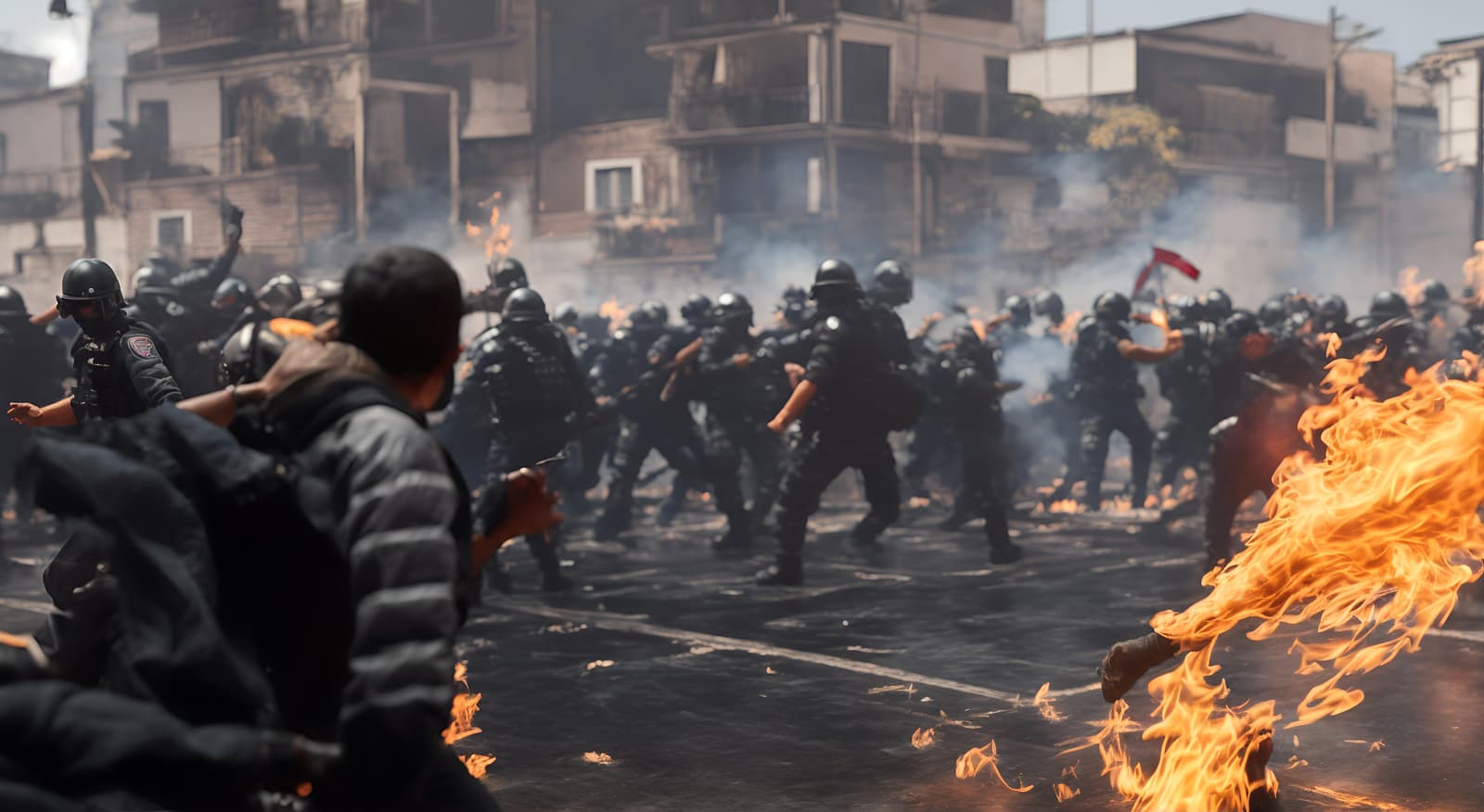
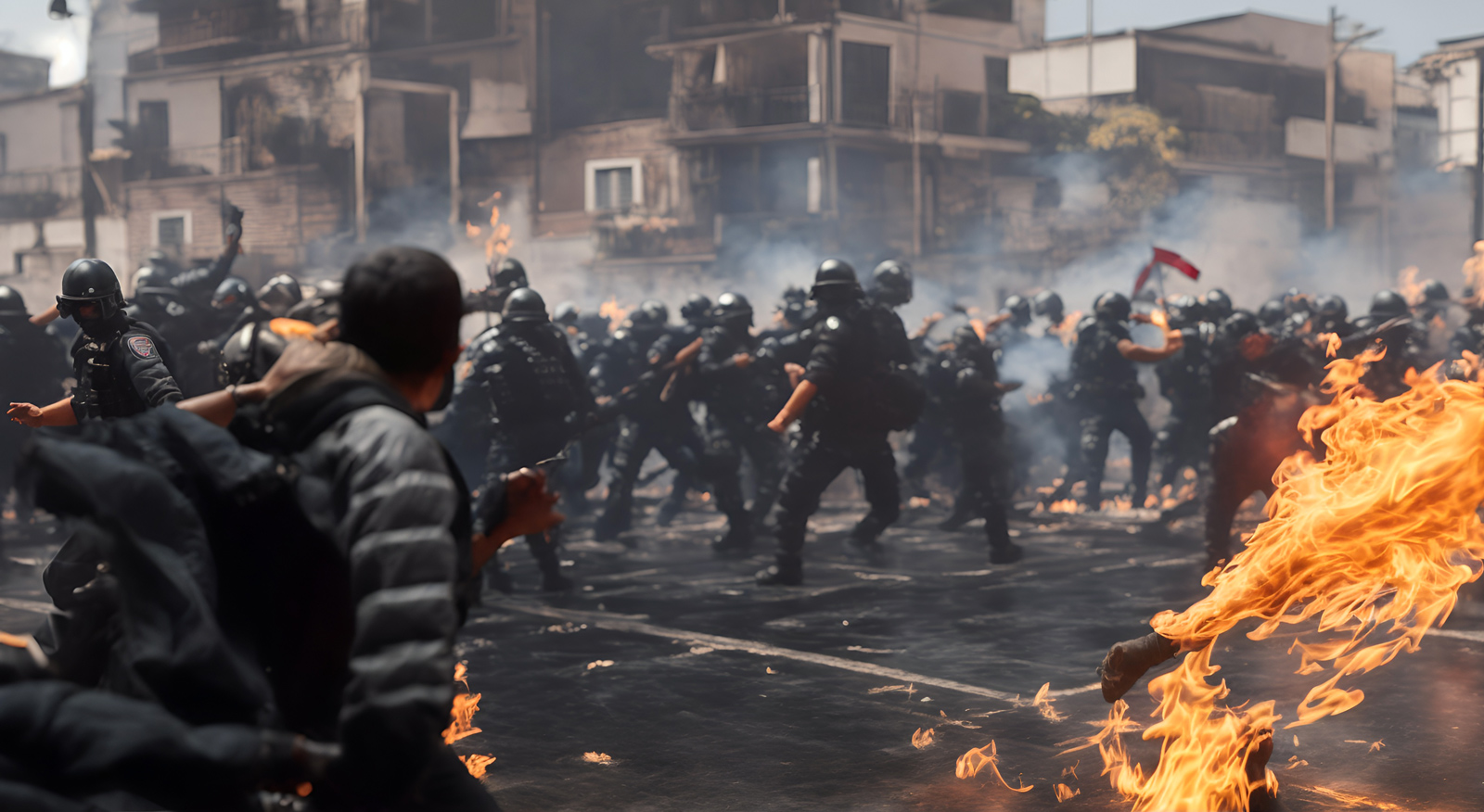
Ecuador's history is riddled with coups d'état, and I'm not just referring to the relatively recent period of instability (1997-2007), but since the earliest years of the republic. We could be considered the most ungovernable country in the region. Sometimes you hear on the street: "when we don't like a president, we throw him out," a baseless sense of heroism that does us harm.
This article provides a historical overview of attempted coups and changes of government in Ecuador, highlighting the country's political instability over time. I recommend the reader take it as a guide to continue exploring our history and thereby gain a better understanding of the challenges and events that have affected governance in Ecuador and that we must resolve.
Chronicle of Coups d'État in Ecuador
Let's begin with Ecuador's first president, Juan José Flores, who ended his term irregularly on two occasions. The first time was after an uprising known as the Revolution of the Chihuahuas, and the second time due to a "nationalist" insurrection that accused Flores of tyranny.
In 1850, Manuel de Ascázubi assumed the presidency due to a power vacuum, but left office after a power struggle between Guayaquil and Quito, as well as the risk of a potential civil war. Diego Noboa y Arteta took office, but after four years he too fell victim to a coup d'état and was expelled to Peru.
Eight years later, in 1859, President Francisco Robles faced problems. The Quito opposition forced him to flee to Riobamba, where he temporarily installed the capital, and then to Guayaquil. However, García Moreno and his followers conspired and disavowed Robles's government, who finally resigned after a constant struggle.
García Moreno and his group governed for a year (until 1860) as a Governing Junta, but Guillermo Franco proclaimed himself Supreme Chief and signed the infamous Treaty of Mapasingue. García Moreno fought against Franco and his troops in Guayaquil, managing to defeat him and proclaiming himself Supreme Chief of Ecuador.
After García Moreno's first presidency, Jerónimo Carrión assumed office, but was accused of relegating the government to his Minister. The Legislature attacked his regime on several occasions, and Carrión denounced a conspiracy. Finally, he resigned in 1867 under intense pressure.
In 1869, President Javier Espinosa faced a major crisis after the Ibarra earthquake. García Moreno was preparing as a candidate for the upcoming elections, but seeing that he had no guarantee of winning, he organized a coup d'état that succeeded and thus began his second term.
In 1875, García Moreno ran again and won the elections, what would have been his third term, but he was assassinated as he was entering Carondelet. Francisco León Franco temporarily assumed power, but after a few months was replaced by José Eguiguren due to an alleged mental incapacity.
In 1876, Antonio Borrero assumed the presidency and was well regarded by the press. However, Ignacio de Veintemilla, a military man, began to conspire and, through a "masterstroke," proclaimed himself Supreme Chief, carrying out a coup d'état.
Veintemilla governed his dictatorship with many setbacks, military confrontations and uprisings. In 1878, he managed to win the elections and went from dictator to constitutional president until 1882, but decided to remain in power as dictator again.
In 1883, the so-called Army of Restorers fought against Veintemilla by arms. After overthrowing him, they decided to establish a governing junta with five leaders in command, known as the pentavírate (Sarastí, Cordero, Guerrero, Pérez-Pareja, Ignacio Lizarzaburu).
It's 1895 and Luis Cordero Crespo is president. The world watches the horror of the war between China and Japan and a scandal is discovered. Chile, being neutral, sells one of its ships to Japan through Ecuador, which becomes known as "the sale of the flag." Cordero's enemies accuse him of being a traitor.
Cordero resists, but the demands escalate to arms and Quito becomes the scene of a bloody struggle. Eloy Alfaro, seizing this opportunity, is behind this fight. Cordero, rifle in hand, fights to defend the palace, but a week later resigns. He can't take it anymore.
Upon resigning, Cordero is replaced by Vicente Lucio Salazar. However, Alfaro sought not only Cordero's resignation, but power itself. Therefore, days later, on June 5, 1895, the liberal revolution erupts. In September, Alfaro, after much violence, arrives in Quito to begin his de facto government.
Alfaro had left power, but was betrayed. Now Lizardo García was governing, having won the elections in 1905. Alfaro wanted to return and managed to finance an army to overthrow García. After winning the battle of Chasqui, he took power again by force.
Alfaro becomes constitutional president after the elections, but by 1911 he becomes unpopular and the people begin to protest in the streets. The revolt intensifies so much that Alfaro is forced to abandon power just days before the end of his term.
Emilio Estrada Carmona wins the elections and governs under the supervision of Alfaro, who was exiled in Panama. Alfaro predicts that Estrada will suffer a heart attack and proclaims loudly that his heart will not withstand the agitation of Quito. Although Estrada denies it, he dies of a heart attack in December 1911.
After Estrada's death, Carlos Freile Zaldumbide assumes office, but doesn't remain in power for long. After two months, another coup d'état, orchestrated by Leonidas Plaza, places Francisco Andrade Marín in power, who assumes the presidency on March 6, 1912.
However, Andrade Marín also fails to consolidate his position. A few months later, he himself yields the interim presidency to Alfredo Baquerizo Moreno, who assumes the government for 20 days until the president-elect, Leónidas Plaza y Gutiérrez, takes office.
It's 1925 and Gonzalo Córdova is president. He's been in government for less than a year and there is great popular discontent. His health problems, the fiscal deficit and border issues contribute to fanning a coup d'état on July 9, 1925, known as the July Revolution.
In the July Revolution, a Governing Junta composed of several figures assumes power and takes turns in government. This peculiar form of government displeases the people, who were apparently happy at first. In April 1926, the Army stages a coup d'état and Isidro Ayora assumes the presidency.
Ayora tries to restore order, but the global and local economy are in crisis. Cocoa exports decline and indigenous uprisings and coup attempts further complicate the situation. Finally, Ayora resigns in 1931.
After Ayora, Luis Larrea Alba takes charge of power and tries to dissolve parliament unsuccessfully. His totalitarian aspirations generate popular discontent and he cannot remain in office for more than a month. He resigns in favor of Alfredo Baquerizo Moreno.
Alfredo Baquerizo Moreno prepares elections and Neptalí Bonifaz wins, but cannot assume power because Congress invents reasons to disqualify him, claiming an alleged Peruvian nationality. This triggers the Four-Day War. Baquerizo flees to save his life and takes refuge in an embassy.
We continue in 1932. Faced with the power vacuum, Carlos Freile, loyal to Bonifaz, is left in charge. Amid chaos and confrontations, Bonifaz attempts to return, but it's too late and he faces a rebellion. Freile decides to resign after 5 days and power is transferred to Alberto Guerrero Martínez.
Still in 1932, the word that defines this year could be "misrule." Guerrero Martínez dedicates himself to calling elections immediately to restore peace in the country. Juan de Dios Martínez wins the elections and assumes the constitutional presidency on December 5.
As you might imagine, winning elections didn't guarantee stability. Juan de Dios Martínez faces popular discontent and a smear campaign led by Velasco Ibarra from Congress. They manage to remove him and his term lasts less than a year.
Abelardo Montalvo assumes power and tries to resolve tensions with Peru and call presidential elections. He achieves his goal and Velasco Ibarra wins his first of five presidencies. Ibarra takes office on September 1, 1934.
Ibarra had popular support and apparently was doing things well, but from Congress they conspired against him. Ibarra dissolved Congress, which was not accepted by the military, who took him prisoner and forced him to sign his resignation. His term also lasted less than a year.
Power is entrusted to Antonio Pons in August 1935. He calls elections and it appeared that the right would be the winner. The church campaigned politically in its favor. However, Pons reflects on the danger of a rightist triumph amid the worldwide fascist threat and resigns.
The military appoints Federico Páez, who assumes de facto power. The dictatorship represses the press and takes a violent stance against opponents. However, he wins the people's faith by repatriating the body of Brother Miguel. Now popular, he convenes a Constituent Assembly.
The Constituent Assembly appoints Páez interim constitutional president, but in practice he remains a dictator. His actions and maneuvers irritate some, including his own Minister of Defense, Alberto Enríquez Gallo, who overthrows him in October 1937.
Alberto Enríquez Gallo, as you might assume, also doesn't last more than a year. However, he manages to promote the enactment of some laws and tries to improve the situation of the national banking system. Finally, he leaves office in August 1938, leaving the impression of a positive administration.
Mariano Suárez, as interim president, tried to stabilize the political situation and called presidential elections. However, his government was brief, as in September 1947 he was overthrown in a military coup led by Carlos Mancheno Cajas.
Carlos Mancheno Cajas assumed de facto power and governed with the backing of the army. During his government, political reforms were implemented and a new Constitution was enacted. However, his government also faced resistance and popular protests. Finally, in January 1948, Mancheno resigned and constitutional order was restored.
Rafael Andrade assumed the presidency after Mancheno's resignation. During his government, economic development policies were implemented and the industrialization of the country was promoted. However, his government also faced criticism for alleged irregularities and corruption. Andrade governed until 1952 and handed power to Galo Plaza Lasso.
Galo Plaza Lasso, democratically elected, assumed the presidency in 1952. During his government, social reforms were implemented and education and public health were promoted. Plaza Lasso also sought to strengthen Ecuador's international relations. However, his government also faced challenges, such as labor conflicts and political tensions. Plaza Lasso concluded his term in 1956 and was succeeded by Camilo Ponce Enríquez.
Camilo Ponce Enríquez assumed the presidency in 1956 and governed until 1960. During his term, economic policies oriented toward industrial development were implemented and the country's infrastructure was strengthened. However, his government was criticized for its authoritarian style and lack of political openness. Ponce Enríquez handed power to Carlos Julio Arosemena Monroy.
Carlos Julio Arosemena Monroy assumed the presidency in 1961. During his government, agrarian reforms were promoted and social programs were implemented. However, his term was marked by political conflicts and confrontations with Congress. Arosemena was removed by Congress in 1963 and succeeded by Carlos Alberto Freile Zaldumbide.
Carlos Alberto Freile Zaldumbide assumed the presidency on an interim basis in 1963 and was then elected as constitutional president in 1964. During his term, economic development policies were promoted and modernization programs were implemented. Freile Zaldumbide governed until 1966 and handed power to Otto Arosemena Gómez.
Otto Arosemena Gómez assumed the presidency in 1966 and governed until 1968. During his term, agrarian reform was promoted and social welfare policies were implemented. However, his government faced political and social tensions. Arosemena Gómez was removed by a military coup in 1968 and a military government was installed.
Velasco Ibarra assumes his 4th presidency in 1960. He had to devalue the Sucre and this generated discontent. Tired of the opposition, he arrested several leaders, which worsened the situation. There were student protests in Quito and Cuenca. Part of the army rebelled and deposed Ibarra after a year in government.
Carlos Julio Arosemena Monroy succeeded Ibarra, as he was his vice president. He was doing an acceptable job, but Congress tried to destabilize him. However, he had a slip that cost him the presidency: at an official event he got drunk and behaved improperly. He went into exile in Panama.
With Arosemena's departure, a governing junta was formed. Although it was provisional, it lasted almost 3 years. In the end, the country was engulfed in protests that caused deaths and hundreds of detainees. Once again, the military intervened and pressured the junta to resign in 1966.
With the junta's resignation, Clemente Yerovi was put in the position, as interim de facto ruler. Despite this, he was magnanimous and tried to seek consensus. He established the Constituent Assembly and resigned from his position after only 7 months.
Velasco Ibarra assumes his 5th presidency. Although he took office constitutionally, in the middle of his term he declared himself a dictator. He faced pressure from various political actors who threatened his government with slander. In February 1972, the military staged a coup d'état.
We're now in the decade of the 1970s and, as you can see, there are some common denominators: the constant involvement of the armed forces, social, student and indigenous demonstrations, and the ambition of political actors, among others.
In February 1972, General Guillermo Rodríguez Lara became dictator. Despite a "state of siege" that lasted four years, student demonstrations were commonplace. During this period, the country experienced the oil boom. Rodríguez Lara was pressured to hand over power to the military itself and did so.
After his resignation, a military junta took over. The Triumvirate, composed of Poveda, Durán and Leoro, governed. As was customary, it was considered that the solution to all problems was to draft a new constitution. This process was carried out and elections were called. Jaime Roldós Aguilera won the elections and assumed the presidency in 1979.
During his government, Roldós governed with good rhetoric and diplomacy. However, the opposition, led by León Febres-Cordero, accused him of being involved in illicit business. Tragically, after a year and a half in office, Roldós died in a plane crash while traveling to a ceremony in Loja. He was succeeded by Vice President Osvaldo Hurtado.
In 1997, after a "long" period of more than 17 years of relative stability, President Abdalá Bucaram faced demonstrations from all sectors denouncing corruption and repudiating his government. Congress invented grounds for removal based on mental incapacity.
Rosalía Arteaga assumed power by vice-presidential succession, but Congress argued that there was no possibility of succession, as that provision had been removed from the constitution. Fabián Alarcón, president of Congress, was appointed interim president of the Republic.
In 1999, Jamil Mahuad assumed the presidency. During his term, the "bank holiday" occurred and deposits were frozen. Mahuad finally opted for dollarization as the only way out of the crisis. The population exploded in anger and the social crisis worsened. The Armed Forces intervened and overthrew the president.
In 2003, Lucio Gutiérrez governed amid accusations of corruption, nepotism and dictatorial actions. He facilitated Bucaram's return, which generated discontent in the population. The "forajidos rebellion" took over Quito. The Armed Forces withdrew their support and Gutiérrez fled in a helicopter.
Final Words
It's difficult to summarize several decades (almost two centuries) in a single article. As an Ecuadorian, it's not easy to admit that we are an ungovernable or unstable country, but that seems to be the case. It always happens that the group not in power conspires against those trying to govern. The reasons behind this dynamic are diverse and numerous. What's important, after learning the true history of our country, is to ask ourselves the question again: Do you believe that a coup d'état is what the country needs to solve its problems?
This cycle of coups also shaped the tragic end of Eloy Alfaro, and it traces back to the independence told in the Battle of Pichincha. More of the country's history in Ecuador.
Categories
The books · born from this blog
Atahualpa con su abrigo de pelo de murciélago
y otras 49 historias verdaderas que parecen mentira
Available on Amazon
Tocar madera
Pequeña historia de las supersticiones que el mundo no ha podido soltar
Available on Amazon
100 futuros
Cien escenarios del mundo que viene con la inteligencia artificial
Available on AmazonYou may also like
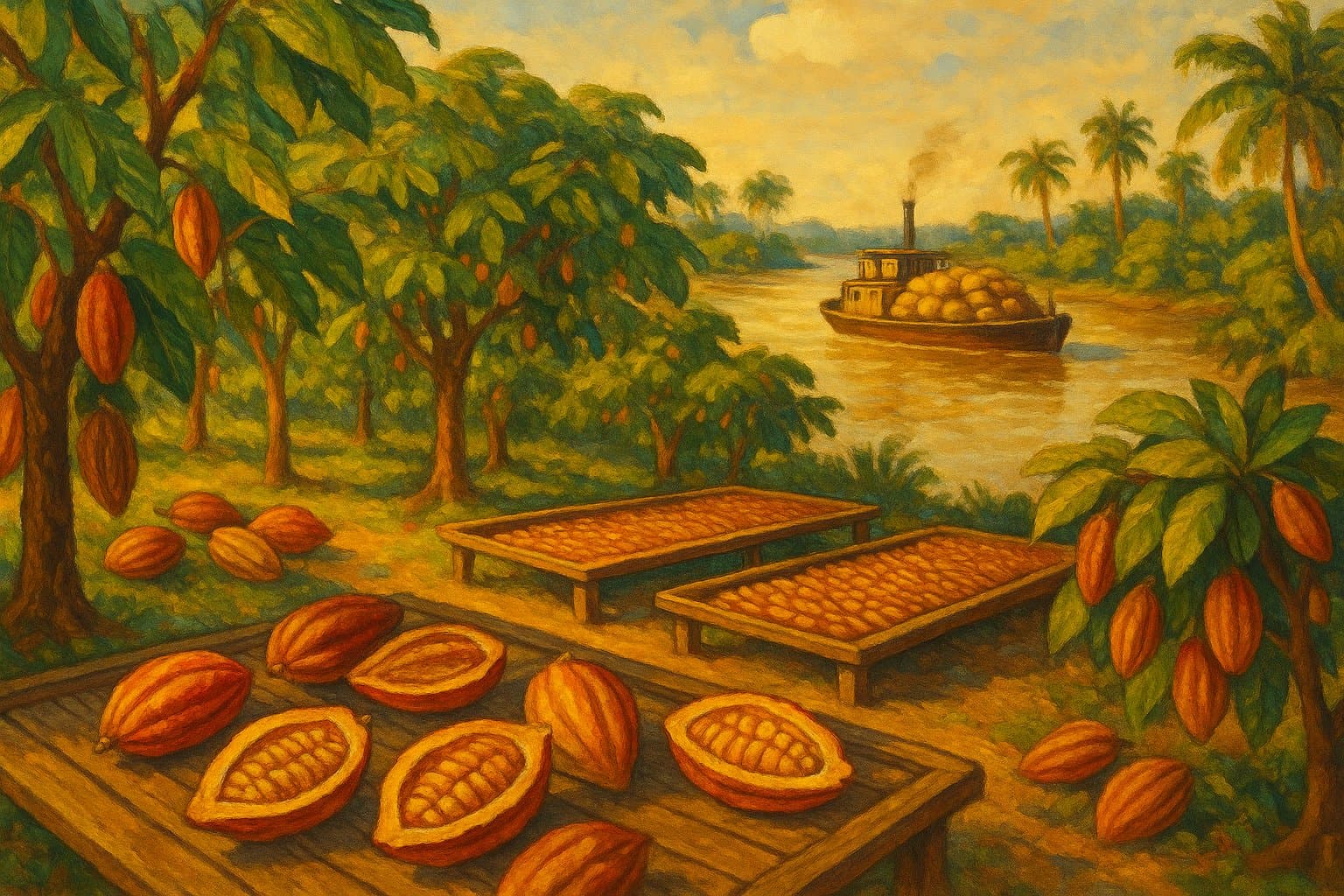
Ecuador's Cacao Boom: When the Golden Bean Ruled
Between 1880 and 1920 Ecuador was the world's top cacao exporter. The «golden bean» built fortunes in Guayaquil until a silent plague brought it all down.
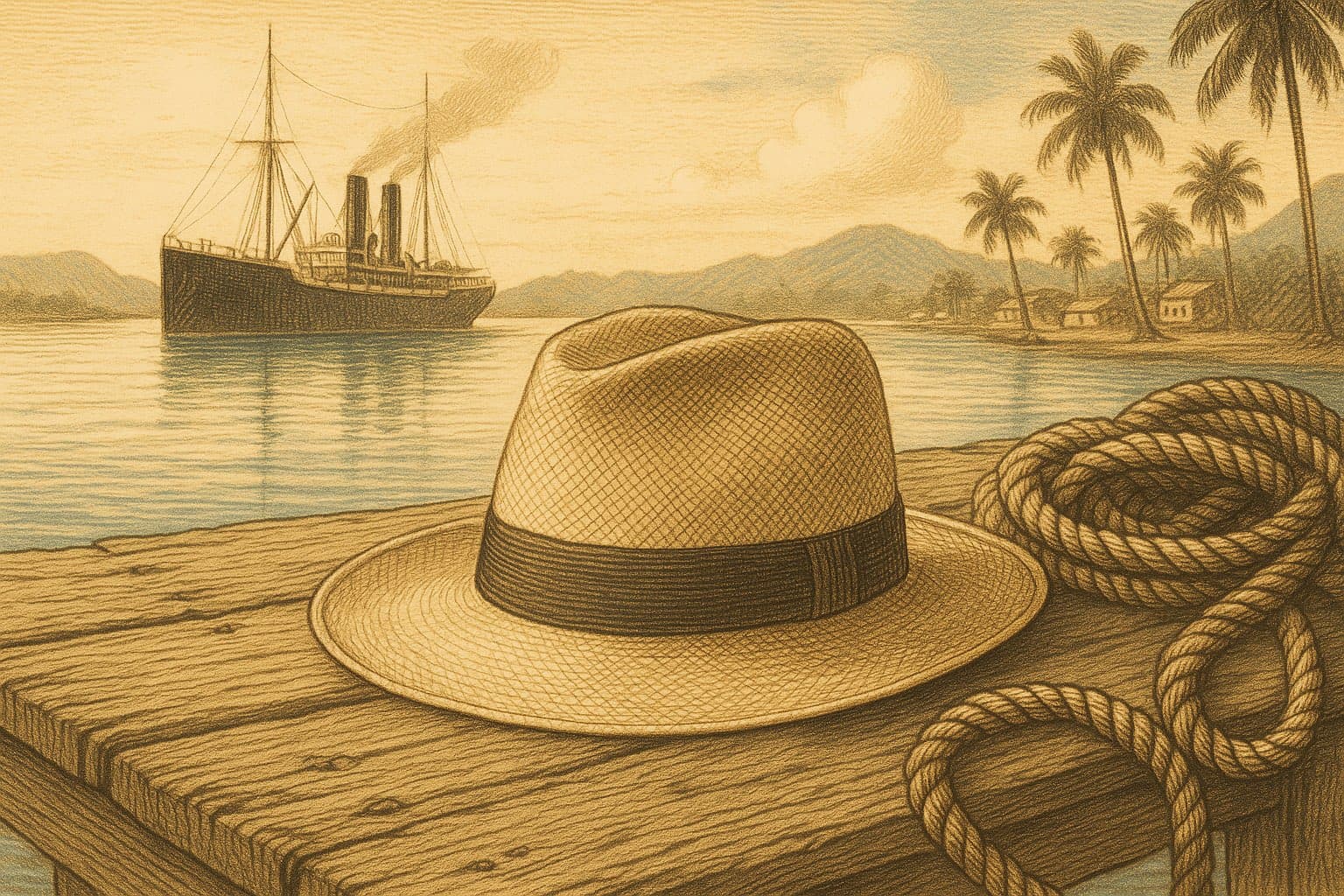
Why Is the Panama Hat Called Panama If It Was Born in Ecuador?
The world's most famous hat is woven in Montecristi and Cuenca, yet it bears another country's name. The story of a stylish injustice.
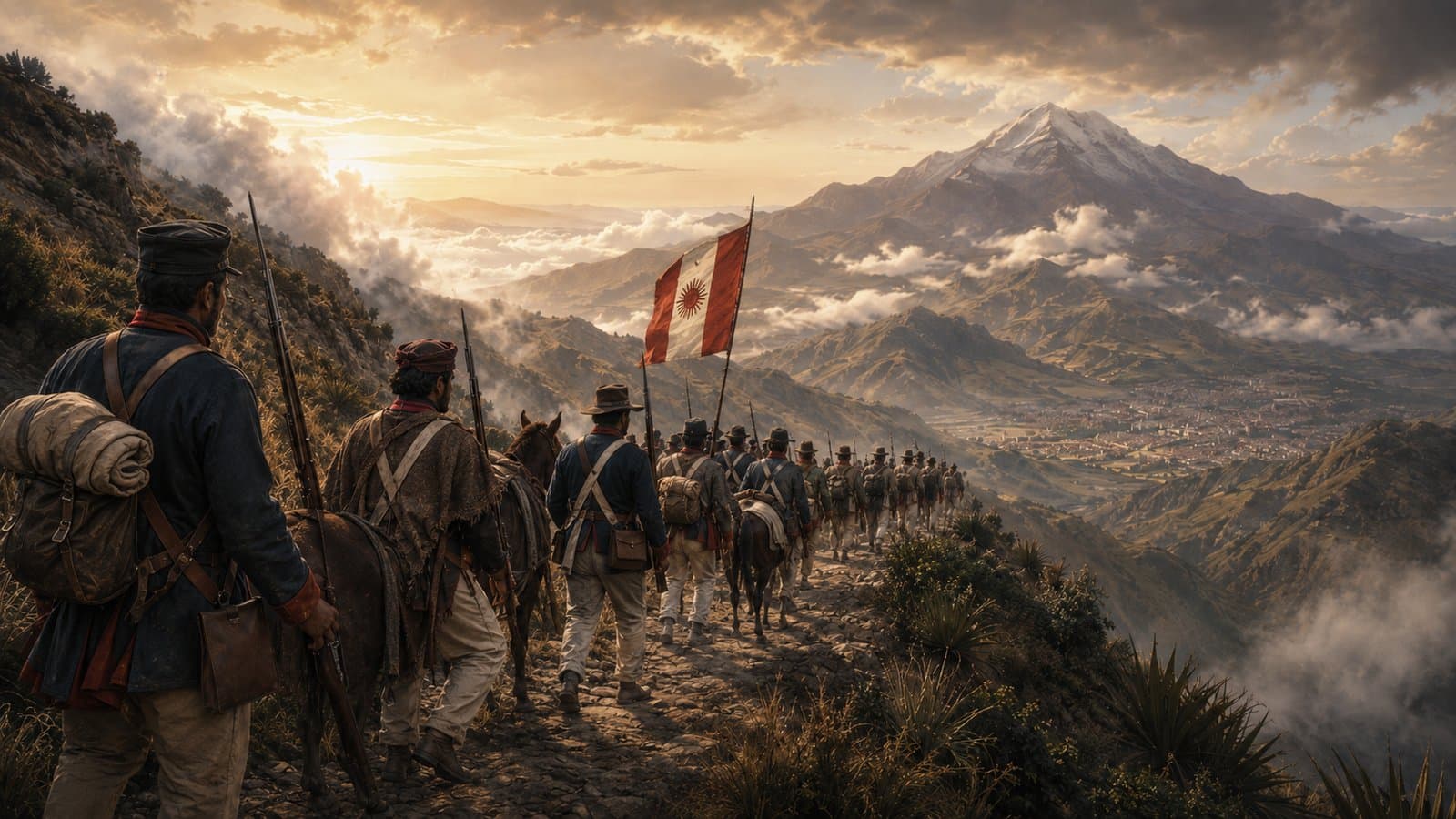
Why did so many Peruvians fight the Battle of Pichincha? An essay and chronicle of the Santa Cruz Expedition
On May 24, 1822, the freedom of Quito was decided. But a huge part of the patriot army did not come from Ecuador: it came from Peru.