
The LaserDisc: The Future That Came Too Early
In 1978 the LaserDisc already offered sharp images, instant access and digital sound — everything DVD would bring twenty years later. It came too early.
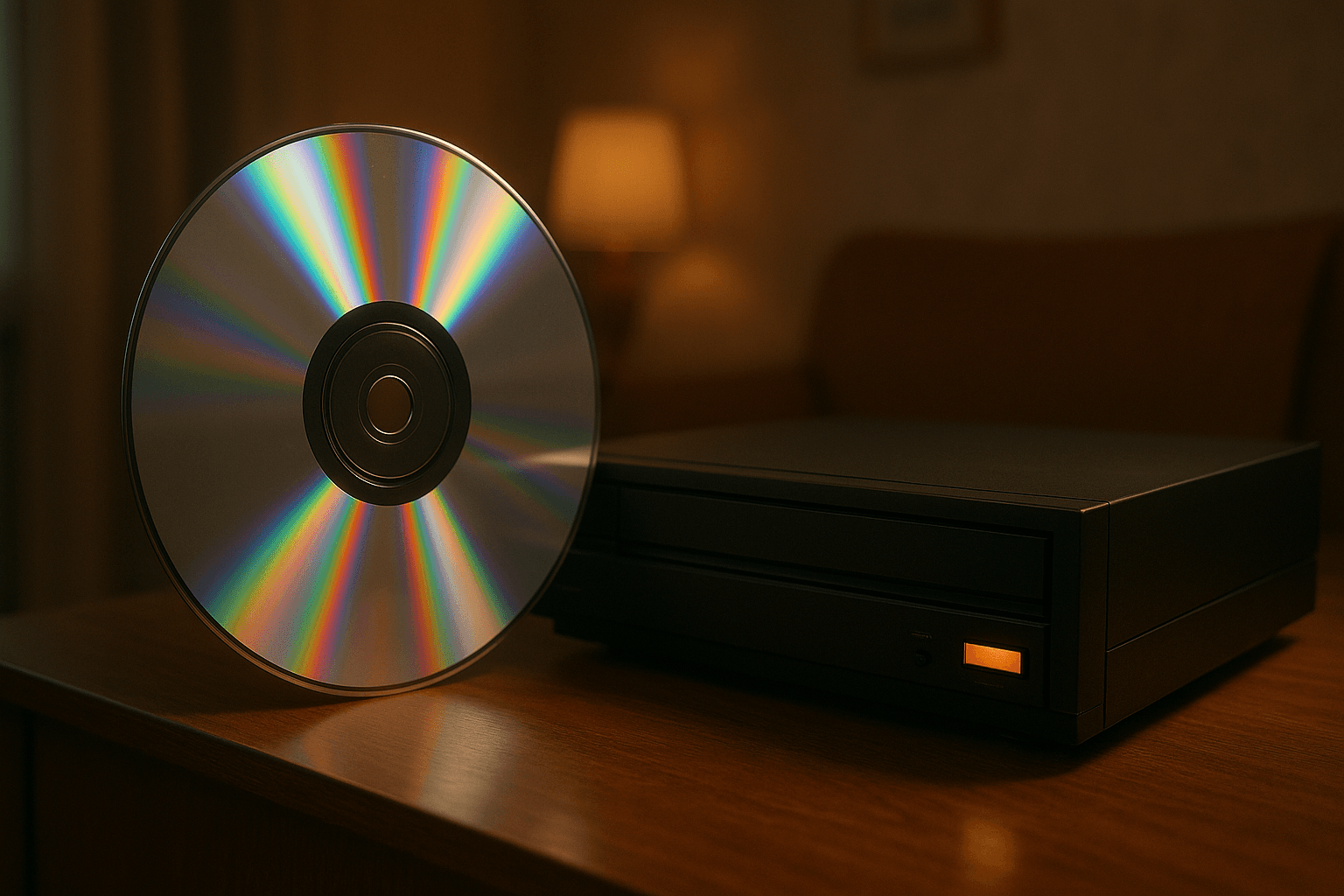
Before the DVD, before Blu-ray and streaming, there was a shiny disc the size of a vinyl record that promised something out of science fiction: watching a movie with cinema-grade quality, jumping to any scene instantly, and reading it with a laser beam that never touched the surface. It was called the LaserDisc, and it reached stores in 1978. The problem is that it arrived far too early.
While the world was busy fighting over videotapes, a handful of engineers had already built the future of home cinema. Almost no one bought it, yet almost everything we take for granted today — the optical disc, instant access, special editions — was born in that silver platter most people never had in their living room.
A disc read with light
The LaserDisc was the first commercial optical storage medium in history: the direct great-grandfather of the CD, the DVD, and Blu-ray. It was developed by three very different players: Philips, which supplied the optical technology; the movie studio MCA, owner of a huge film catalog; and later Pioneer, which would become its great champion.
The idea was revolutionary. Instead of a magnetic head brushing against a tape, a laser beam read millions of tiny pits stamped into a 30-centimeter disc, with no physical contact at all. That meant the disc didn't wear out with each play, unlike tapes, which lost quality trip after trip. It's the same "read without touching" logic that every later optical disc would inherit.
DiscoVision and the shark that launched the format
The commercial debut came in the United States in 1978, under a now-forgotten name: DiscoVision. The first title released in North America was, very fittingly, Jaws, on December 15, 1978, in Atlanta. Philips built the players and MCA pressed the discs.
It was a rocky start. The build quality of the earliest discs was uneven, and the Philips–MCA alliance fell apart within a few years. The company that picked up the torch and truly bet on the format was Pioneer, which rebranded it and kept it alive for two decades, above all among demanding movie fans.
Cinema quality (and a trick tape never had)
Here is what made the LaserDisc special: it was vastly better than VHS. It offered around 425 lines of horizontal resolution against tape's barely 240, cleaner colors, and — on many titles — digital audio with CD quality. It was, in fact, the first home format to support surround sound. Anyone who watched a movie on LaserDisc never looked at VHS the same way again.
And it had a superpower tape could never match: instant access. The format supported two recording modes. In CAV (constant angular velocity), each side held about 30 minutes but allowed a perfect freeze-frame, frame-by-frame stepping, and jumping to any chapter at once. In CLV (constant linear velocity), a side stretched to 60 minutes at the cost of those tricks. No more rewinding for two minutes as on VHS: you picked the scene and there it was. That instant jump is, deep down, exactly what we do today by dragging a finger along a progress bar.
Why almost no one bought it
If it was so superior, why did it fail? For the same unglamorous reasons that decided the war between VHS and Betamax: price, convenience, and catalog.
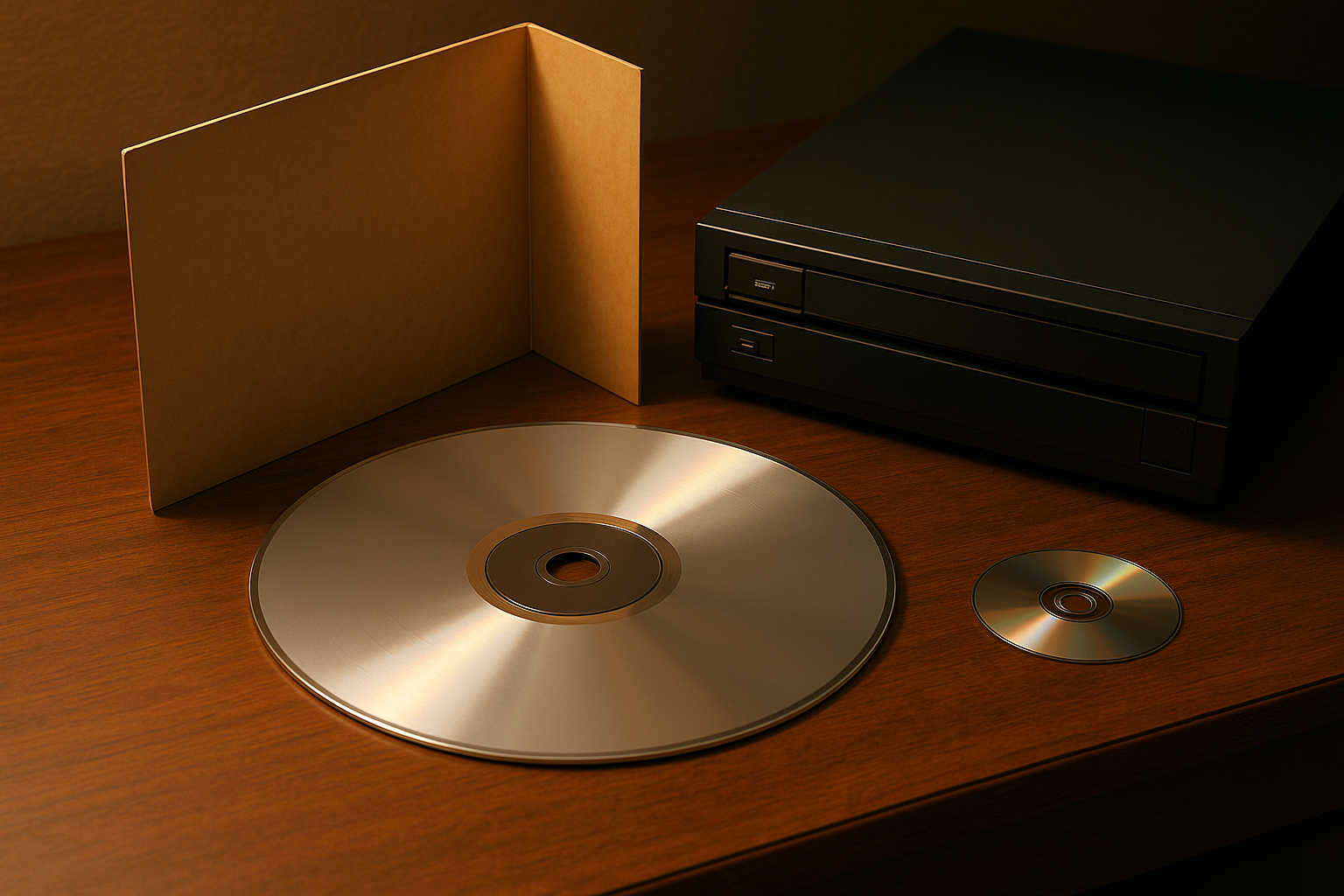
First, the player and the discs were expensive, well above a VHS deck. Second — and this was lethal — the LaserDisc could not record. The whole appeal of VHS was taping the soap opera or the game to watch it later; the optical disc could only play back what was already pressed. Third, the discs were huge and fragile: the size of a vinyl record, heavy, and since each side lasted about an hour, right in the middle of the movie's climax you had to get up and flip the disc — or even swap it for a second one. A feature film often took two or more discs.
Then there was the catalog's vicious circle: because few players sold, many studios didn't bother releasing their movies on LaserDisc, and because there were few movies, few players sold. Rental stores, led by Blockbuster, threw their weight behind VHS. The better product lost again, just as would happen to the medium that reigned afterward and eventually gave way in the history of the floppy disk.
Dragon's Lair: when the disc became a video game
The LaserDisc had an unexpected moment of glory in 1983, in the arcades. Dragon's Lair, with animation by ex-Disney artist Don Bluth, was practically an interactive cartoon: the player moved the joystick at the right instant and the disc jumped to the matching sequence. Nothing so spectacular had ever been seen in an arcade machine.
But it was also a lesson about the format's limits. The Pioneer players inside were designed to read movies linearly, not to seek from one scene to another every few seconds. That constant scrambling made them fail and break down quickly. The technology dazzled, but it pushed the machine beyond what it could take.
The niche that made it immortal
The LaserDisc was never mainstream in the West — it's estimated to have reached only a small percentage of U.S. homes — but it found two refuges. In Japan it was considerably more successful, and among cinephiles worldwide it became a cult object. It was on LaserDisc that many habits we now associate with home cinema were born: movies in their original widescreen (letterbox) instead of cropped, and above all special editions with director's commentary tracks. The legendary Criterion Collection started right there, lovingly restoring films on a format almost no one owned.
Its technical influence was even greater. The optical research that made it possible led to the CD in 1982, then the DVD in 1996 — Pioneer even sold combined LaserDisc-and-DVD players — and the whole lineage of discs that dominated the turn of the century. Pioneer built players until 2009, gracefully closing out a format more than thirty years old, a story of an invention ahead of its time that recalls other machines that debuted too soon, like Edison's phonograph.
The LaserDisc didn't fail because it was bad, but because it was premature. It was right about almost everything — the optical disc, the laser, instant access, digital sound, the extras — but it had all of it twenty years before price, technology, and audiences were ready. It was, quite literally, a future that came too early.
References
Categories
The books · born from this blog

Atahualpa con su abrigo de pelo de murciélago
y otras 49 historias verdaderas que parecen mentira
Available on Amazon
Tocar madera
Pequeña historia de las supersticiones que el mundo no ha podido soltar
Available on Amazon
100 futuros
Cien escenarios del mundo que viene con la inteligencia artificial
Available on AmazonYou may also like

The Airship: The Elegant Future That Burned
The airship promised to cross oceans in silent luxury. From Giffard to the Hindenburg, the story of an elegant future that ended in flames.

The Bicycle: The Machine That Freed the City
In 1817 Karl Drais built a running machine with no pedals. A century later the bicycle had reshaped cities and helped set women free.
The Airplane Before the Wrights: Who Almost Won
Before the Wright brothers flew in 1903, pioneers nearly got there first: Cayley, Lilienthal, Ader and Santos-Dumont. This is their untold story.