
The History of Smiling in Photographs: From the Mona Lisa to Digital Cameras
Why nobody smiled in old photographs: a journey from long exposures and the Mona Lisa's enigma to the digital cameras that made grinning effortless.
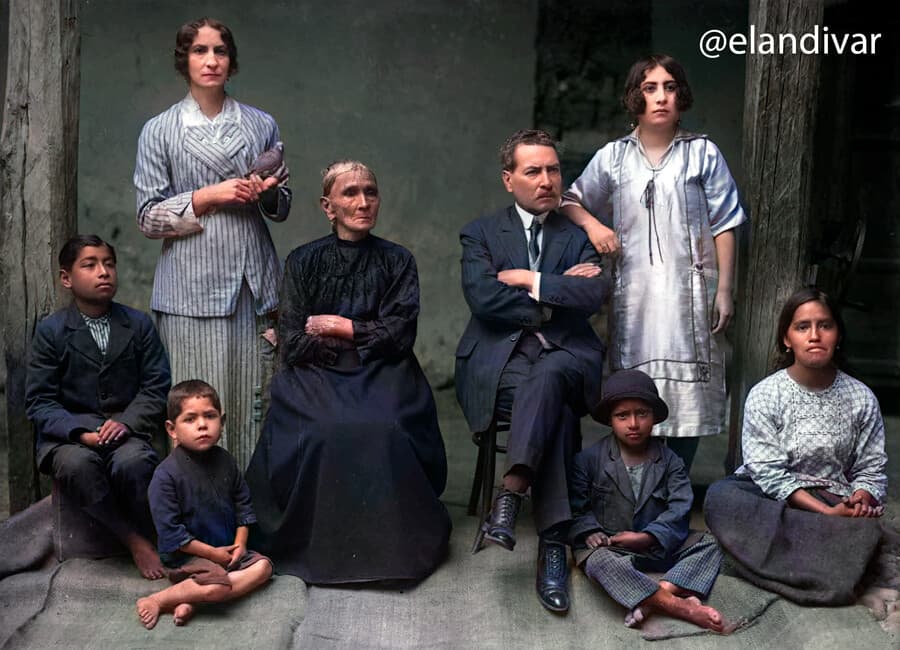
I recently posted on Twitter an old colorized photo of several people and it didn't take long before someone became intrigued by a peculiarity. Why were all the people in the photo so extremely serious?
What's interesting is that it's not the only photo like this—in reality, the custom of smiling in photos is relatively new. If we reflect on why we smile in photos, we find ourselves facing social questions. Of course, we all want others to see our "happy" version. At the end of the day, smiling costs nothing and anyone can have a better smile than the people who appear in the top 100 richest in the world. Smiling equalizes us in a way, and being seen as happy by others feeds the most voracious of our appetites: the ego.
But then, why wasn't it the norm before?
Even by the early twentieth century, when photography had been around for a few decades, smiling wasn't the most common thing. This shouldn't confuse us. It's not that people rarely laughed in the twentieth century—people laughed in the street, told jokes, there were comedies at the theater—but they'd arrive at the photographer's studio and stop laughing. Why?
To answer this question we have to travel to the past and understand that photography wasn't a process like what we're used to now. In its early days, it was a complex experiment in chemistry and optics. One of the first photographic techniques, called the Daguerreotype, could require the person to remain motionless for several minutes.
In those times, early photographers were very meticulous. The person being photographed had to remain still, because the slightest movement would make the photo come out blurry. Motionless and for a good while, making it harder to maintain a smile the whole time. Now it's easier—autofocus corrects any slight blur and smart algorithms do the rest of the work; the result is sharper images. But in those days, the right amount of light, the distance from the object to the lens, the quality of the chemicals, meticulousness in the developing process, the cleanliness of the lenses, and the cooperation of the "patient" were all vital.
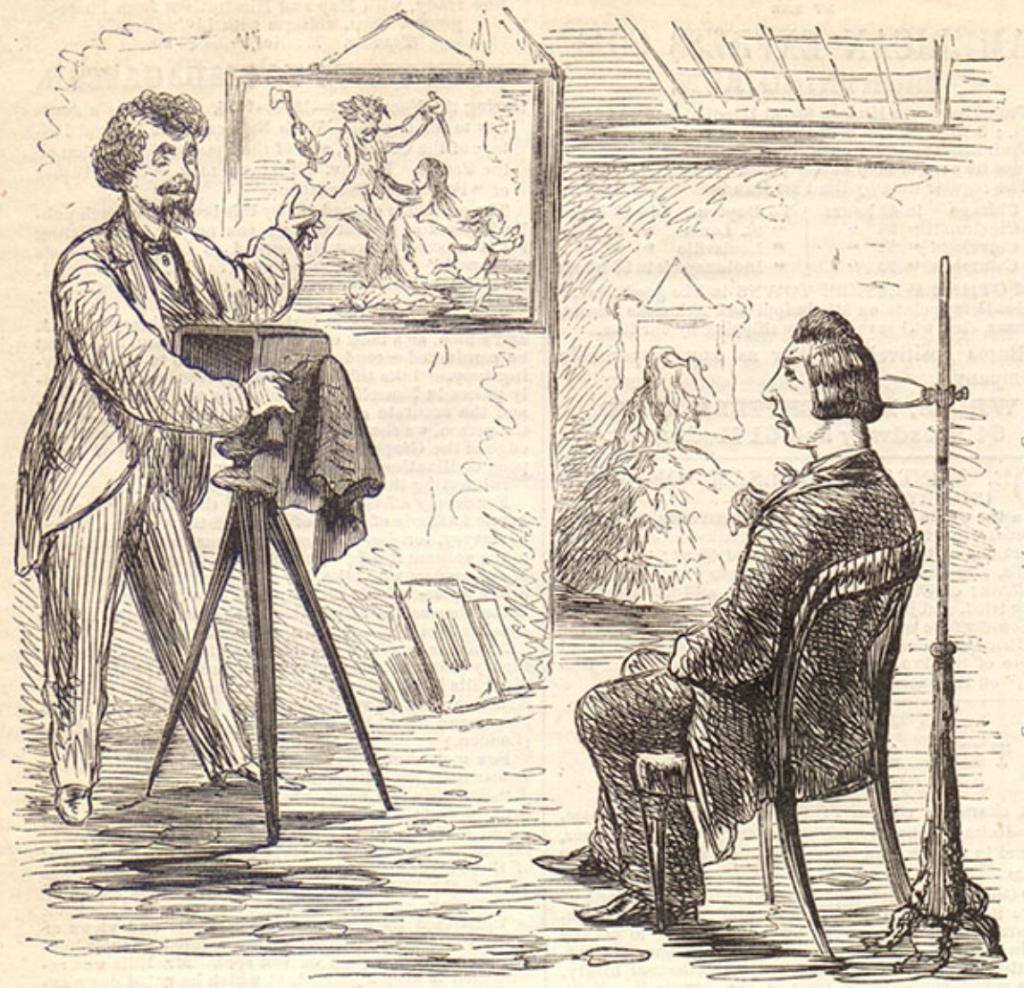
Taking a photograph is such a quick process now that with any smartphone we can take a burst of photos in a second. Therefore, smiling is an act that consumes very little effort compared to the early days. Even when we ask someone to take a photo of us and they take a few seconds too long, our patience overflows, because it's hard to fake a smile for very long.
In the early twentieth century, a family photo session could take a whole day or two and if they were lucky it would generate fewer than ten acceptable photos.
But the story doesn't quite end here—there's another reason, and it's cultural. But to analyze it we must go back even further in time and dig around before photography itself. Because people must have learned to pose somehow. What were they used to posing for before photography?
The answer is portraiture. Painting. Sculpture.
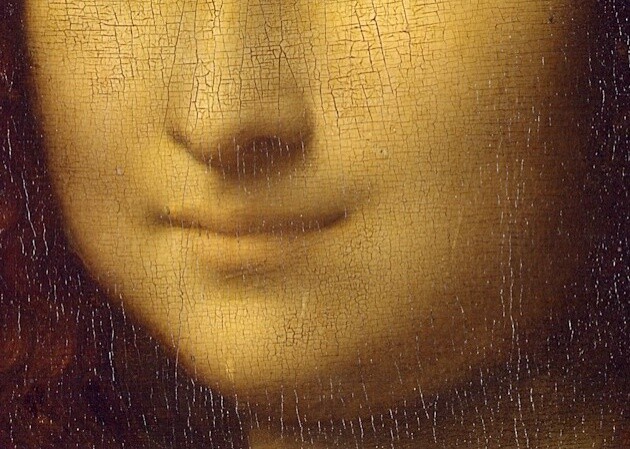
Now that was a slow process. Imagine. Maintaining a smile for an entire day is virtually impossible, so obviously it wasn't the most common thing. Even famous portraits like the Mona Lisa herself are striking precisely because of that—because of her ambiguous smile, camouflaged in seriousness. Had you thought about that? Had you thought about why the whole world talks about her strange smile? It's for no more mysterious reason than that it was NOT common back then.
In those days of the Middle Ages, smiling was something more reserved and was understood as a more expressive, shameless, spontaneous, and even, at times, boisterous phenomenon. In this era there was indeed some hesitation about these "extravagant" expressions of the human being. Many could consider them exaggerated and even a product of madness. For the most fervently religious, they could be related to actions of the devil, taking hold of people's behavior.
But times have changed and now you'd better smile in photos, because if not, someone comes along and asks: Is something wrong, are you sad?
Categories
The books · born from this blog

Atahualpa con su abrigo de pelo de murciélago
y otras 49 historias verdaderas que parecen mentira
Available on Amazon
Tocar madera
Pequeña historia de las supersticiones que el mundo no ha podido soltar
Available on Amazon
100 futuros
Cien escenarios del mundo que viene con la inteligencia artificial
Available on AmazonYou may also like
Knock on Wood: The Real Origin of the Superstition
Almost everyone thinks knocking on wood comes from Celtic tree worship. But the documented trail leads to a far more recent origin: a children's game.
Stockholm Syndrome Was Born to Silence a Hostage
The famous syndrome didn't come from a study: the police's own psychiatrist coined it to discredit a hostage who criticized him. It isn't in the DSM.
The Fifth Sleep: when we slept in two shifts
For centuries we did not sleep eight hours straight, but in two sleeps with a waking hour in between. The history of segmented sleep, from Cervantes to science.