
The Fifth Sleep: when we slept in two shifts
For centuries we did not sleep eight hours straight, but in two sleeps with a waking hour in between. The history of segmented sleep, from Cervantes to science.
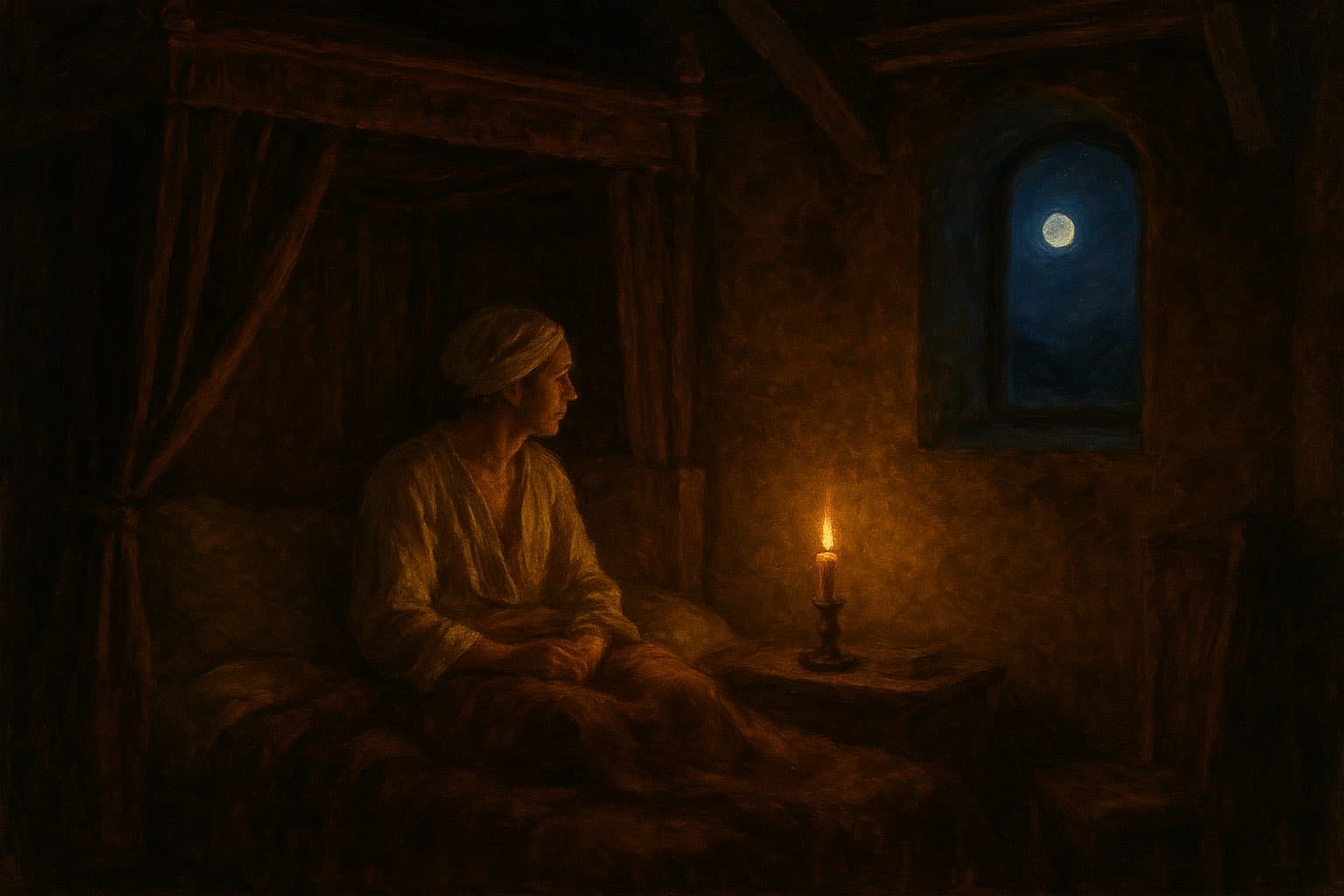
My grandmother had a precise way of saying that someone was sleeping like a log: «he's in the fifth sleep». Not the first or the second: the fifth, way down at the bottom, where neither noise nor worry can reach. As a child I imagined that sleep had floors, like a building, and that the fifth was the deepest basement, the room you go down to when you truly let go.
Years later I found out two things. The first, a little disappointing: that «fifth» counts no sleeps. It's the same «fifth» as in the Spanish «vive en el quinto pino» («lives at the fifth pine», i.e. miles away), an exaggerated numeral that enumerates nothing: it just means «very far», «at the very edge», «at the deepest point». My grandmother wasn't describing a fifth sleep phase; she was saying, with the elegance of an old saying, that the sleeper had sunk as deep as one can sleep.
The second thing I discovered, however, gave me pause. Because it turns out there was a time when sleeps really were counted. Not five. Two.
When the night had two halves
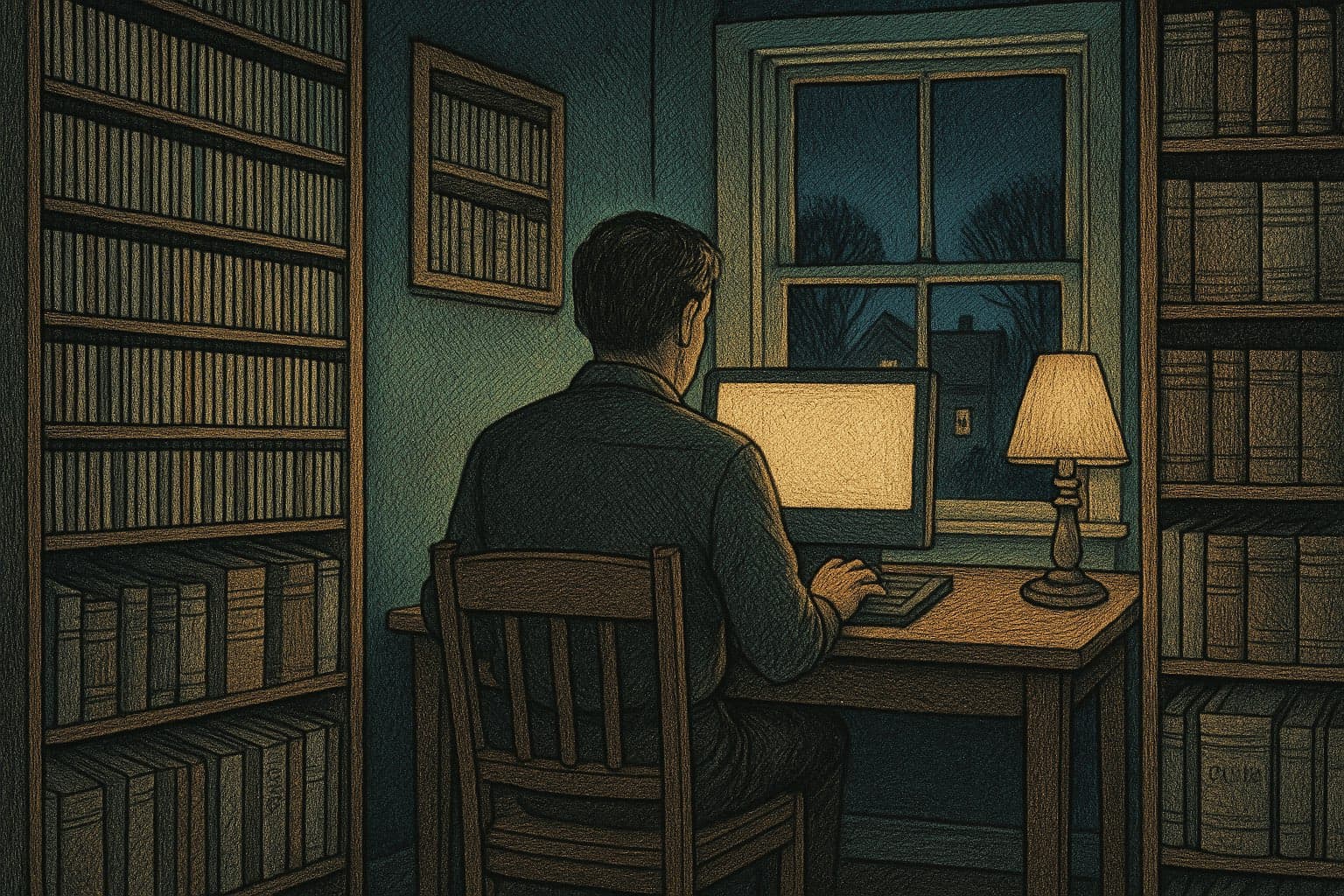
For most of Western history, people did not sleep eight hours straight. They slept in two shifts. They went to bed at nightfall, slept about four hours —what they called the «first sleep»— and then woke up. Not from insomnia or anxiety: they woke because that was simply how it worked. They spent an hour, sometimes two, in quiet wakefulness in the dead of night, and then lay down again for the «second sleep», until dawn.
The historian Roger Ekirch reconstructed this forgotten custom by tracking down more than five hundred references in diaries, court records, medical manuals, prayers and poems, from the Odyssey to the seventeenth century. The conclusion was unequivocal: sleep split in two was neither a rarity nor an ailment. It was, quite simply, how the world slept.
The hour stolen from the middle of the night
And what did people do in that hour wrested from the middle of the night? Everything. They prayed; there were manuals with prayers written for that exact moment of wakefulness. They talked in bed with whoever lay beside them. They tended the fire, checked on the animals, visited a neighbor. They reflected on what they had just dreamed in the first sleep, still fresh. And they made love: a sixteenth-century French medical manual advised couples that the best time to conceive was not on getting into bed, exhausted from the day, but after the first sleep, rested, when «they do it with more relish and do it better». The in-between hour had a life of its own, its own uses, its own intimacy.
Don Quixote slept the first sleep
And here comes what I most enjoyed discovering, because it was hidden in a book we all think we know. In the second part of Don Quixote, Cervantes describes one of those nights with complete naturalness:
Don Quixote satisfied nature by sleeping his first sleep, without giving way to the second; quite the opposite of Sancho, who never had a second, because his sleep lasted from night until morning.
There it is, perfectly clear: Don Quixote sleeps the first sleep and wakes, like any man of his time; Sancho, a one-piece sleeper, skips the waking and runs straight through to dawn. Cervantes tells it as one mentions something obvious, because to his readers in 1615 it was. Curiously, Ekirch gathered dozens of English testimonies and missed this one, which is among the clearest of all.
How we lost the second sleep
Why did we stop sleeping this way? Because of light. As long as the night was dark and costly to illuminate, going to bed early and splitting sleep in two was the natural thing. But then came gas lighting, cafés open late, the nightlife of cities and, above all, the Industrial Revolution with its factory schedules. The night grew shorter, the middle watch came to be seen as wasted time, and the first sleep gradually swallowed the second. Mentions of the «two sleeps» fade from the seventeenth century on, and by the 1920s the custom had been wiped from memory entirely. We were born believing that eight straight hours were the only natural way to sleep. They are not: they are merely the modern way.
The body has not forgotten
The loveliest part is that the body has not entirely forgotten. In the 1990s, the psychiatrist Thomas Wehr ran an experiment at the United States National Institutes of Health: he subjected a group of volunteers to fourteen hours of darkness each night, as in a long winter without electricity. After a few weeks, with no one asking them to, their sleep split on its own into two shifts, with one or two hours of serene wakefulness in between, exactly the pattern the old texts described. Two-part sleep was no cultural whim: it lay dormant within us, waiting for us to turn the light off long enough.
So the next time you wake at three in the morning and panic, thinking you have insomnia, consider another possibility: that nothing is wrong, that you have simply finished your first sleep, and your body, faithful to a custom of centuries, has opened a small window of stillness in the middle of the night. Don't turn on your phone. Stay there, in that gentle wakefulness that for millennia belonged to thoughts, to prayers and to love. And when you fall asleep again, for the second sleep, do so at peace.
May you reach, this time, all the way to the fifth.
References
- Real Academia Española, Diccionario de la lengua española, 23rd ed., entries «pino» and «infierno». dle.rae.es
- A. Roger Ekirch, «Sleep We Have Lost: Pre-industrial Slumber in the British Isles», The American Historical Review, vol. 106, no. 2, 2001, pp. 343-386. DOI: 10.1086/ahr/106.2.343. doi.org
- A. Roger Ekirch, At Day’s Close: Night in Times Past, New York, W. W. Norton, 2005.
- Miguel de Cervantes, Don Quijote de la Mancha, Part Two, ch. LXVIII, 1615.
- Thomas A. Wehr, «In short photoperiods, human sleep is biphasic», Journal of Sleep Research, vol. 1, no. 2, 1992, pp. 103-107. DOI: 10.1111/j.1365-2869.1992.tb00019.x. doi.org
Categories
The books · born from this blog

Atahualpa con su abrigo de pelo de murciélago
y otras 49 historias verdaderas que parecen mentira
Available on Amazon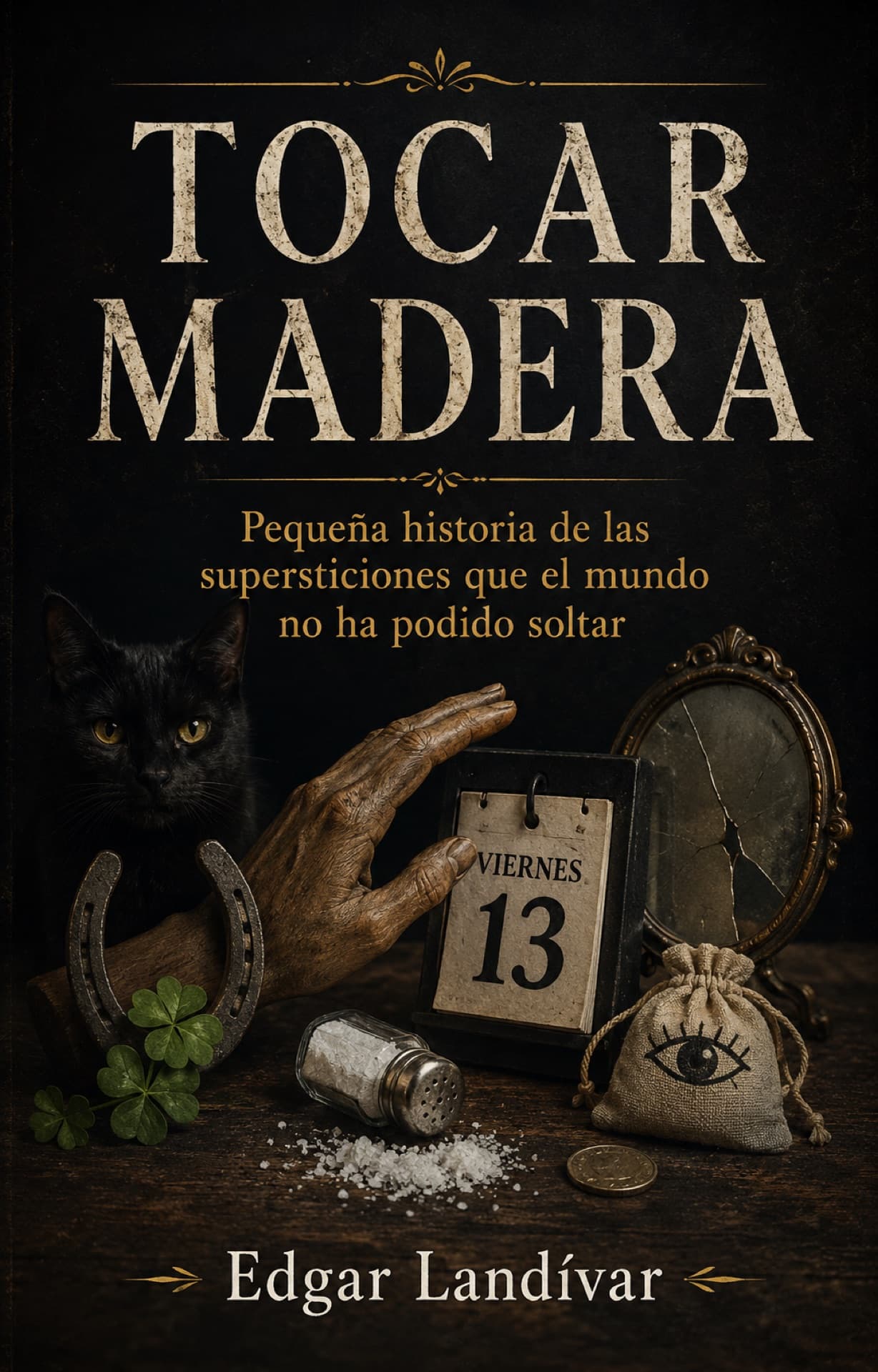
Tocar madera
Pequeña historia de las supersticiones que el mundo no ha podido soltar
Available on Amazon
100 futuros
Cien escenarios del mundo que viene con la inteligencia artificial
Available on AmazonYou may also like
Stockholm Syndrome Was Born to Silence a Hostage
The famous syndrome didn't come from a study: the police's own psychiatrist coined it to discredit a hostage who criticized him. It isn't in the DSM.
Knock on Wood: The Real Origin of the Superstition
Almost everyone thinks knocking on wood comes from Celtic tree worship. But the documented trail leads to a far more recent origin: a children's game.
The Man Who Has Edited a Third of Wikipedia
Steven Pruitt has made nearly 7 million Wikipedia edits without earning a cent. The story of the most generous obsession on the internet.