
Velcro: The Story of an Invention Copied From a Plant
George de Mestral invented Velcro in 1941 after seeing burrs cling to his dog. The story of the fastener copied straight from nature.
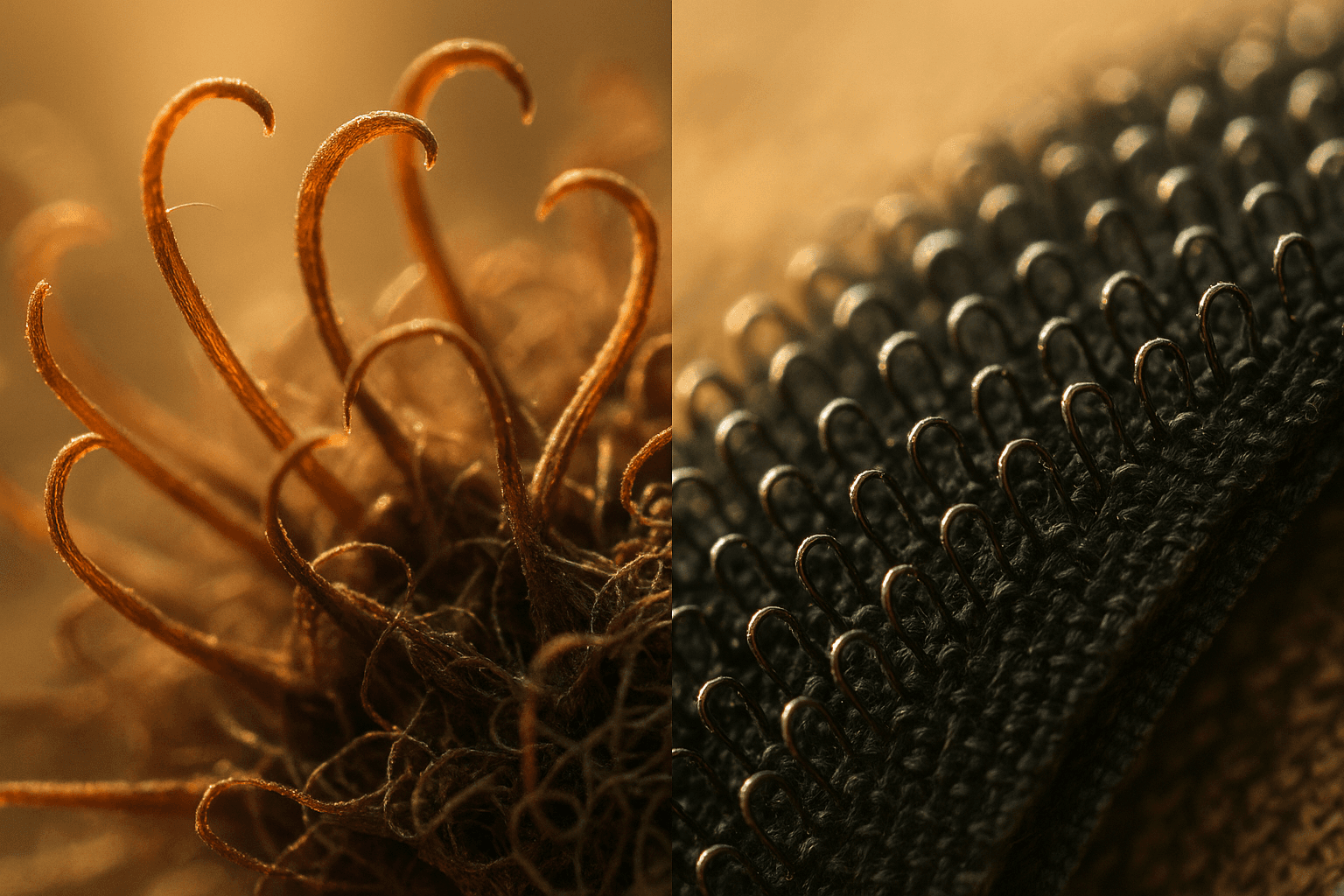
Every time you fasten a child's shoe, tighten a strap, or rip open the "rrrip" of a gym-bag pocket, you're using an invention that was born out of an annoyance. Velcro didn't come from a lab or a chalkboard covered in formulas: it came from a walk in the countryside and the curiosity of an engineer who wondered why some seeds clung so stubbornly to his trousers. The answer had been written into a plant for millions of years.
A walk in the Swiss Alps
It was 1941 when George de Mestral, a Swiss engineer born in 1907, came home from hunting with his dog in the Jura mountains. Waiting for him was the usual nuisance after a hike through the hills: his trousers and the dog's coat were covered in burrs, the prickly seeds of the burdock plant that grab onto anything passing nearby.
Most people pull the burrs off, grumble, and forget about them. De Mestral did something different: instead of tossing one out, he took it to the microscope. What he saw under the lens left him fascinated.
The trick nature had already invented
That annoying seed was covered in thousands of tiny hooks, each one curved at the tip like a fishing hook. Every hook caught onto the small loops in the fibers of his clothing and the curls of the dog's fur. That was the whole secret: hooks against loops. Once caught, they held on through surprising tugs, yet a firm pull separated them without breaking anything, ready to grab again.
Burdock had been using that mechanism for millions of years so that animals would carry its seeds across the land. De Mestral had the brilliant idea: if the plant could stick and unstick over and over, why not build a fastener that did the same? It was an early, textbook case of biomimicry, the art of copying solutions nature had already worked out—very much in the spirit of so many discoveries born of serendipity: finding something valuable while looking at—or for—something else.
Ten years to copy a burr
The idea was simple; making it real was not. De Mestral spent nearly a decade of trial and error trying to reproduce those hooks. The textile experts he consulted thought he was crazy. His first cotton versions worked, but cotton wore out fast: the hooks flattened after just a few uses.
The material that changed everything was nylon, then newly invented. De Mestral discovered that when nylon was woven under infrared light, it formed hard, nearly indestructible hooks that didn't deform. With the help of a weaver in Lyon and a loom-maker in Basel, he also devised a machine that could mass-produce the two tapes: one with thousands of hooks and another with thousands of loops. Pressed together, they stuck with the same "rrrip" we recognize instantly today.
Velcro: a name made of velvet and hooks
De Mestral patented his fastener in 1955 (US patent No. 2,717,437, soberly titled "Velvet Type Fabric and Method of Producing Same") and christened the invention—and his company—with an invented word: Velcro, a fusion of the French velours (velvet) and crochet (hook). Like so many successful brands, the name ended up becoming the generic term almost everyone uses for the product, even though "Velcro" remains a registered trademark.
By 1960 the looms were already turning out the fastener in bulk and its conquest of the world had begun. It wasn't instant: at first it was seen as cheap and inelegant, and it took time to earn a place. It's a slow-success story much like that of another invention born by accident, the Teflon on your pan, which also took decades to find its footing.
To space, but without the myth
There's a popular belief that Velcro was invented by NASA. It's not true: by the time the Apollo missions came around, Velcro had already existed for years. What the space agency did do was adopt it enthusiastically. In zero gravity, where any loose object floats away and is lost, Velcro proved ideal for anchoring tools, instruments, and bags to the walls of the spacecraft. Apollo astronauts even wore Velcro patches inside their helmets so they could scratch their noses, and food pouches secured with Velcro for long spacewalks.
The same misunderstanding surrounds other "space" materials that actually predate the space age, like Teflon itself. The truth, in Velcro's case, is nicer than the myth: it wasn't designed by an agency with a giant budget, but by a Swiss hunter who bothered to look closely at what others yanked off and threw away. The next time you hear that "rrrip" as you undo a strap, remember the burr: nature had patented it long before we did. Not so different from how a melted chocolate bar taught us how a microwave works.
References
- "George de Mestral," Wikipedia: biography of the Swiss engineer, the 1941 walk, the nylon-and-infrared development, and the 1955 patent. wikipedia.org
- "An Idea That Stuck: How George de Mestral Invented the VELCRO® Fastener," Velcro Companies: the brand's official account of the fastener's origin and its name. velcro.com
- "How a Swiss invention hooked the world," SWI swissinfo.ch: the decade of trial and error, the Lyon weaver, and the mechanization of the process. swissinfo.ch
- "Myth: NASA invented Teflon and Velcro," The Naked Scientists: why NASA didn't invent Velcro, even though it popularized it on space missions. thenakedscientists.com
Enjoy these stories of accidental inventions? Continue with the history of Teflon and the word serendipity, or explore the whole science and technology section.
Categories
The books · born from this blog

Atahualpa con su abrigo de pelo de murciélago
y otras 49 historias verdaderas que parecen mentira
Available on Amazon
Tocar madera
Pequeña historia de las supersticiones que el mundo no ha podido soltar
Available on Amazon
100 futuros
Cien escenarios del mundo que viene con la inteligencia artificial
Available on AmazonYou may also like

The QR code story: from Toyota to the restaurant menu
The QR code was born in 1994 to track car parts at Toyota. Thirty years later it took over restaurant menus. This is its unlikely history.
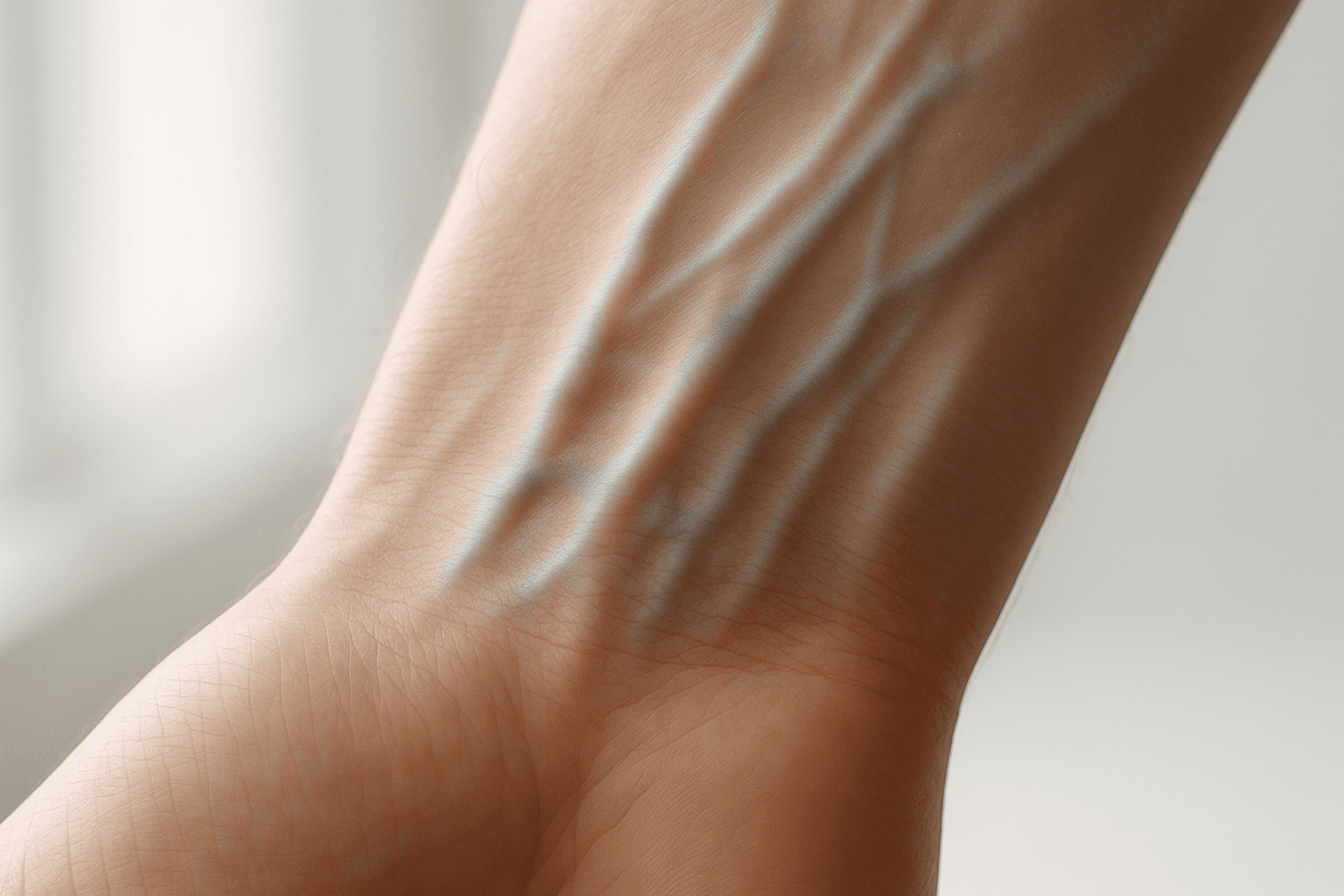
Why veins look blue when your blood is red
Human blood is never blue—it is always red. So why do veins look blue under the skin? The answer lies in how light travels through your body and how you see.

The nocebo effect: when expecting harm creates it
The nocebo effect is the placebo's dark twin: believing a treatment will hurt can make it hurt. Its origin, real cases and what science says.