
Tuvalu: The Archipelago That Sold Its Stamps
A tiny Polynesian nation with no exports got rich selling postage stamps to collectors, until greed and fake printing errors flooded the market.
Tuvalu is a small archipelago in Polynesia. Its population, just over 10,000 inhabitants, doesn't generate any significant economic activity, and despite the fact that its islands risk being completely submerged by the ocean due to rising sea levels, it's said to be likely the happiest country in the world.
But by Western standards, laughter doesn't pay the bills, so that doesn't make a difference when it comes to ranking it as one of the poorest countries on the planet. Its GDP is just over 30 million dollars. Many football signings are worth more than that.
In this context, the Tuvaluan Prime Minister started thinking about how to make extra money out of thin air. They didn't produce any goods in large quantities, but at the end of the day they were a country and that counts: they must have had something unique that could be exported.
And that unique thing found its foothold in the country's rarity. They realized there were no Tuvalu stamps in the stamp collector's market, precisely a market plagued with hunters of rarities who would pay a high price to have stamps issued by a practically unknown country in their hands.

And so it was that in the late seventies Tuvalu authorized the printing of thousands of stamps. Since there was no printing press in Tuvalu, an English partner appeared (who is said to have ended up having total control over the archipelago's stamp issuance) who took care of the printing.
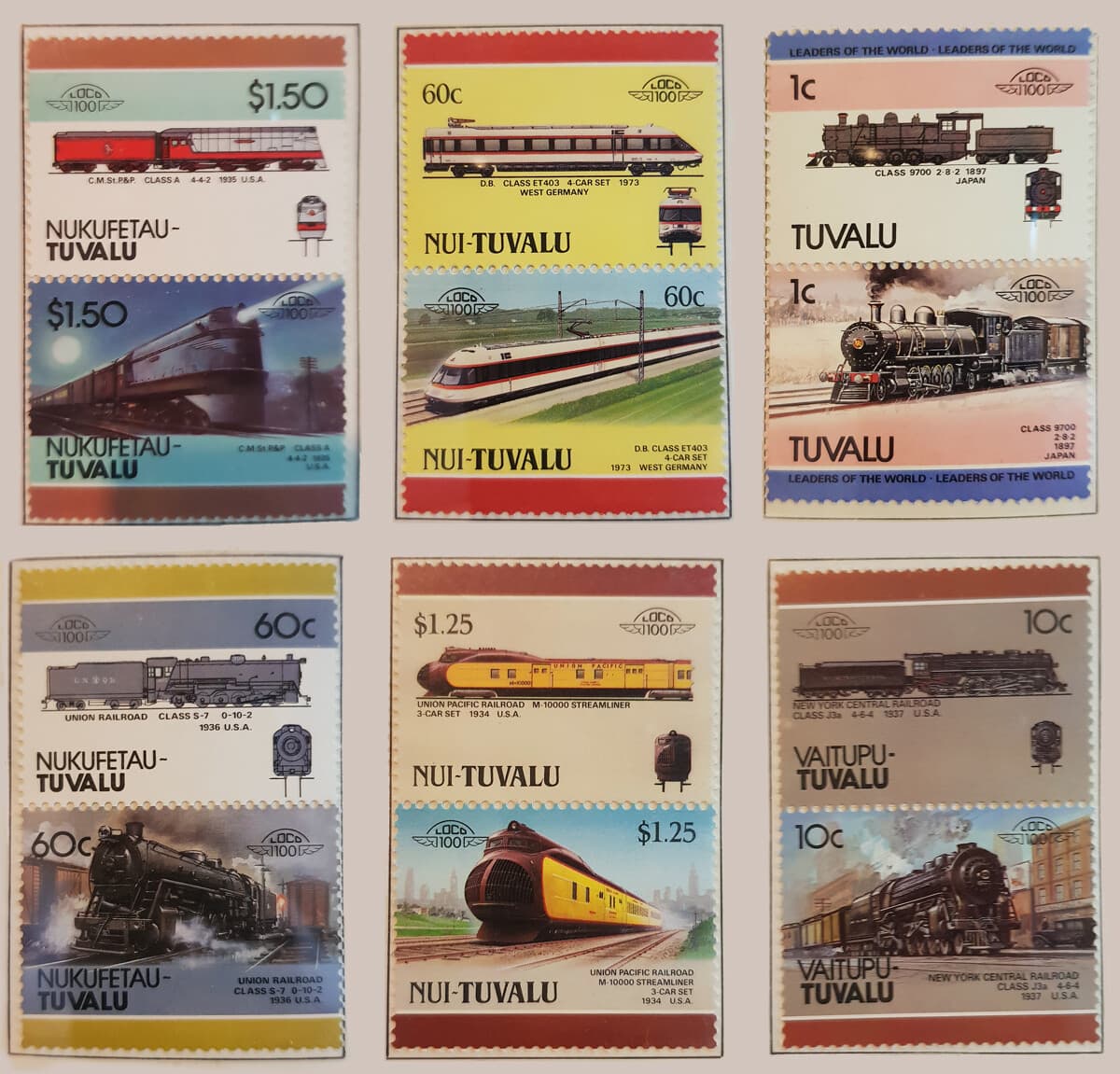
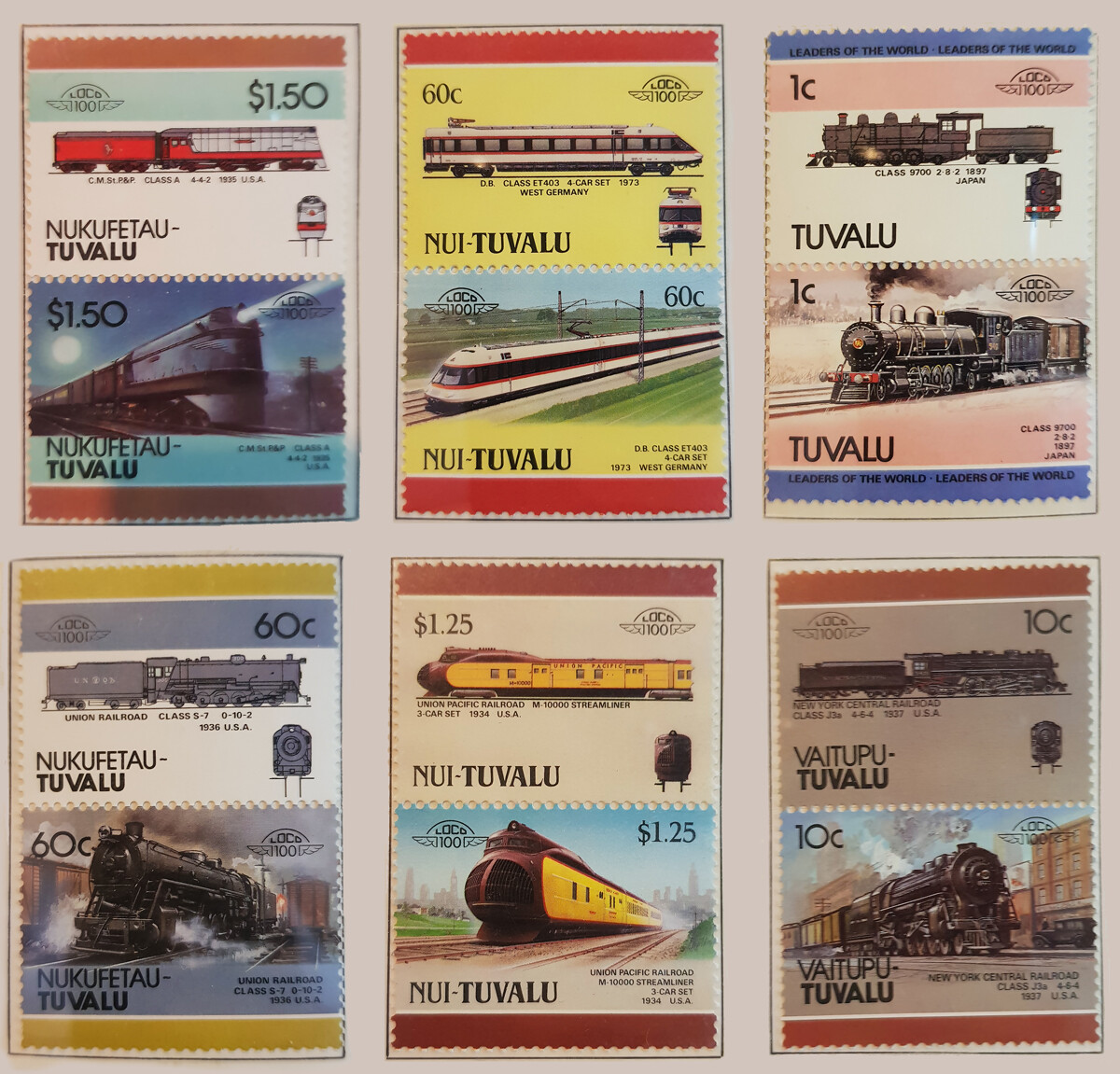
Whether by initiative of the islands' rulers or the shady English partner, someone got so excited about this "golden goose" that things got out of hand. Soon they were already issuing editions of stamps on different themes. For example, a famous (and beautiful) collectible edition of locomotive stamps, in a country that didn't know what a locomotive was. These curiosities catapulted sales in the collector's circle until one day, blinded by the money that was pouring in, they had the bad idea of crossing the thin line of what's right and began deliberately introducing errors into the prints, as they realized that stamps with errors had high value... and in this way some letters were printed in the wrong place, others upside down, some backwards, and so on, they invented as many errors as they could until the market became saturated with fake errors.
Close to 14,000 deliberate errors were introduced and as always happens in shady businesses, Tuvalu's partner (the Englishman Clive Feigenbaum) wanted more money than agreed upon, and the dispute ended up in the English courts: it was Tuvalu that sued Feigenbaum’s company, and won.
This whole business of selling stamps became an important source of income for the islands. A business that has currently been reduced to very little or almost nothing. Over the course of almost 3 decades of postal stamps, everything was produced, irrelevant stamps, of poor quality, but also authentic works of art like those of the Leaders of the World series, with its famous locomotives from around the world, which the English magnate made in partnership with several exotic islands and almost unknown places.
So the reader doesn't remain curious about what these collections looked like, I'll share some photographs.
References
- World Bank, "GDP (current US$) – Tuvalu", World Development Indicators, Washington D.C. data.worldbank.org
- Brian Cannon (comp.), "Tuvalu and the Leaders of the World – A Philatelic Scandal", official website of Tuvalu Post Limited (Tuvalu's state postal company), stamp.tuvalupost.tv. stamp.tuvalupost.tv
- Attorney-General of Tuvalu v Philatelic Distribution Corporation Ltd [1990] 1 WLR 926, Court of Appeal (Civil Division), England and Wales, judgment of 20 October 1989. vlex.co.uk
Categories
The books · born from this blog

Atahualpa con su abrigo de pelo de murciélago
y otras 49 historias verdaderas que parecen mentira
Available on Amazon
Tocar madera
Pequeña historia de las supersticiones que el mundo no ha podido soltar
Available on Amazon
100 futuros
Cien escenarios del mundo que viene con la inteligencia artificial
Available on AmazonYou may also like

Knock on Wood: The Real Origin of the Superstition
Almost everyone thinks knocking on wood comes from Celtic tree worship. But the documented trail leads to a far more recent origin: a children's game.
Stockholm Syndrome Was Born to Silence a Hostage
The famous syndrome didn't come from a study: the police's own psychiatrist coined it to discredit a hostage who criticized him. It isn't in the DSM.
What “Bizarro” Really Means in Spanish (Not Bizarre)
For centuries, the Spanish word “bizarro” meant brave and gallant. How a false friend stole a word's meaning — and how the dictionary surrendered.