
What the Turing Test Is and Why It's No Longer a Challenge for Artificial Intelligence
The Turing Test was AI's holy grail for decades, but a fake Ukrainian boy and modern chatbots reveal why it stopped being a real challenge.
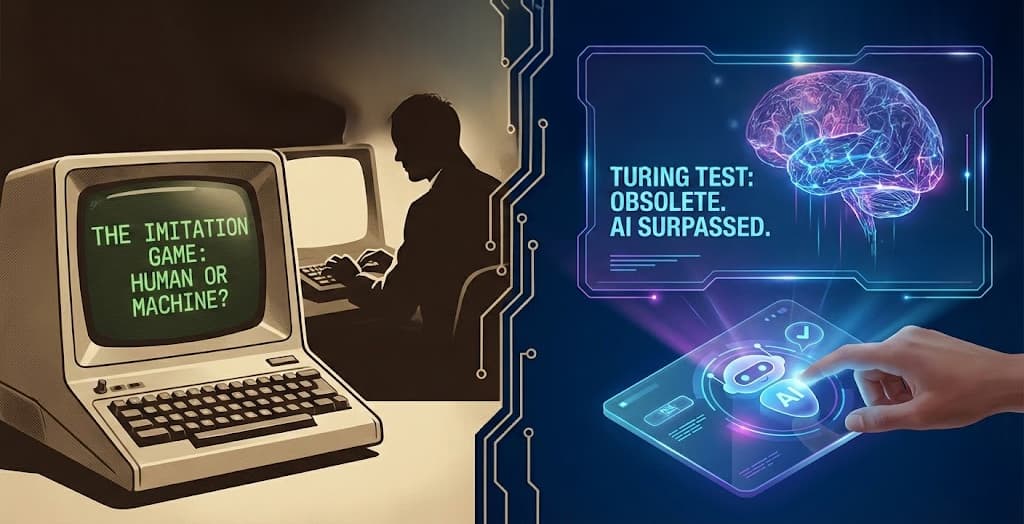
I recently found myself rereading Alan Turing's famous 1950 paper, "Computing Machinery and Intelligence", and I couldn't help but think about how much things have changed. Back then, the idea of a machine conversing with a human was pure science fiction. Today, it's something we do to order a pizza or complain about a lost package.
For decades, the Turing Test was the "Holy Grail" of artificial intelligence. Though honestly, it's a pretty naive test. But the idea was that if a machine managed to pass it, we were supposed to have reached the summit. Things have changed.
What is the "Imitation Game"?
To understand why it's no longer a challenge, we first need to understand the simple genius of its design. Alan Turing proposed what he called the "Imitation Game."
Imagine three closed rooms.
- In one there's a man.
- In another, a woman.
- In the third, an interrogator who must figure out who is who based only on written notes (or text chat, in modern terms).
Turing proposed replacing one of the participants with a machine. If the interrogator, after a 5-minute conversation, can't distinguish which is the human and which is the computer, then the machine has passed the test.
The premise is fascinating: it doesn't matter if the machine really "thinks," what matters is whether it can act indistinguishably from a human.
The day a "Ukrainian boy" broke the test
Many believe the Turing Test was only beaten with the arrival of ChatGPT, but the story has a curious twist. In 2014, a chatbot called Eugene Goostman managed to convince 33% of the judges at the Royal Society in London that it was human.
The trick? Its programmers were very clever. They didn't try to create a superintelligence; they created a character. Eugene pretended to be a 13-year-old Ukrainian boy.
Every time the bot didn't understand a question or answered something nonsensical, the judges thought: "Well, he's a kid and English isn't his first language." Eugene didn't pass the test by being intelligent, it passed by exploiting our own biases and empathy. It was a triumph of social engineering, not artificial consciousness.
Why it's no longer a challenge for modern AI
We arrive at the present. With massive language models (LLMs) like GPT-4, Claude, or Gemini, the Turing Test has become, paradoxically, irrelevant. Mind you, I'm not the only one saying this—prominent figures in the industry have said the same. Personally, here are three solid reasons:
As of today (2025), AI is "too" intelligent to pass the Turing Test. If you ask an AI for the square root of 48593 and it answers in 0.001 seconds with 10 decimal places, you know it's a machine. To "fool you," the AI would have to pretend it's calculating, take a little time, or even get it wrong on purpose.
The test measures deception, not intelligence. Turing's objective was philosophical, but in practice, the test rewards the ability to lie. An AI that passes the test is an expert at seeming human, which includes hesitating, using verbal fillers, or making up facts. Do we really want the gold standard of AI to be its ability to deceive us?
What comes next—will there be an effective test?
The Turing Test has run its course. It was a vital tool for inspiring the development of computing, but today we need new metrics. Scientists like Gary Marcus or institutions like the Santa Fe Institute are proposing tests of "real understanding," where AI must not only repeat statistical patterns but demonstrate that it understands the physics of the world or the logic of cause and effect.
My personal prediction is that there won't be an effective test. AI, sooner rather than later, will be more intelligent than all of us (maybe more intelligent than all of us put together) and will be capable of being as "human" as it wishes.
Any attempt to develop a test that works will be something that can function for a short period of time before being surpassed.
The CAPTCHA is exactly one of those tests AI ended up surpassing: read how the test that told humans from bots lost to artificial intelligence. More in Artificial Intelligence.
Categories
The books · born from this blog

Atahualpa con su abrigo de pelo de murciélago
y otras 49 historias verdaderas que parecen mentira
Available on Amazon
Tocar madera
Pequeña historia de las supersticiones que el mundo no ha podido soltar
Available on Amazon
100 futuros
Cien escenarios del mundo que viene con la inteligencia artificial
Available on AmazonYou may also like

By 2025, Artificial Intelligence Will Begin to Replace Our Primary Care Doctors
Artificial intelligence already diagnoses better than doctors, and a Google surgery conference convinced me it will soon handle our first consultations.
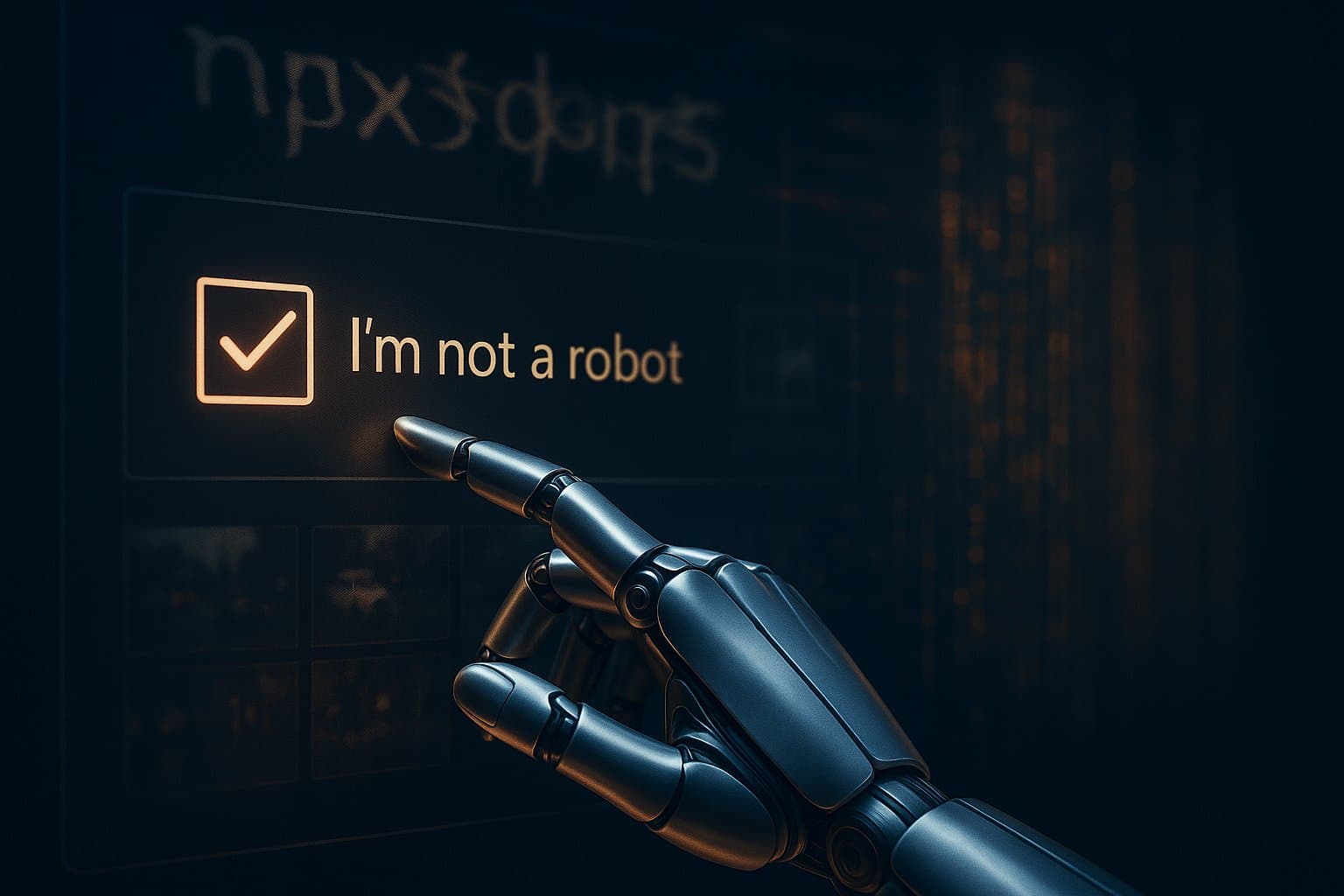
CAPTCHA: the test that lost to AI
For twenty years the CAPTCHA told humans from bots. Today artificial intelligence solves it better and faster than we do. This is its downfall.
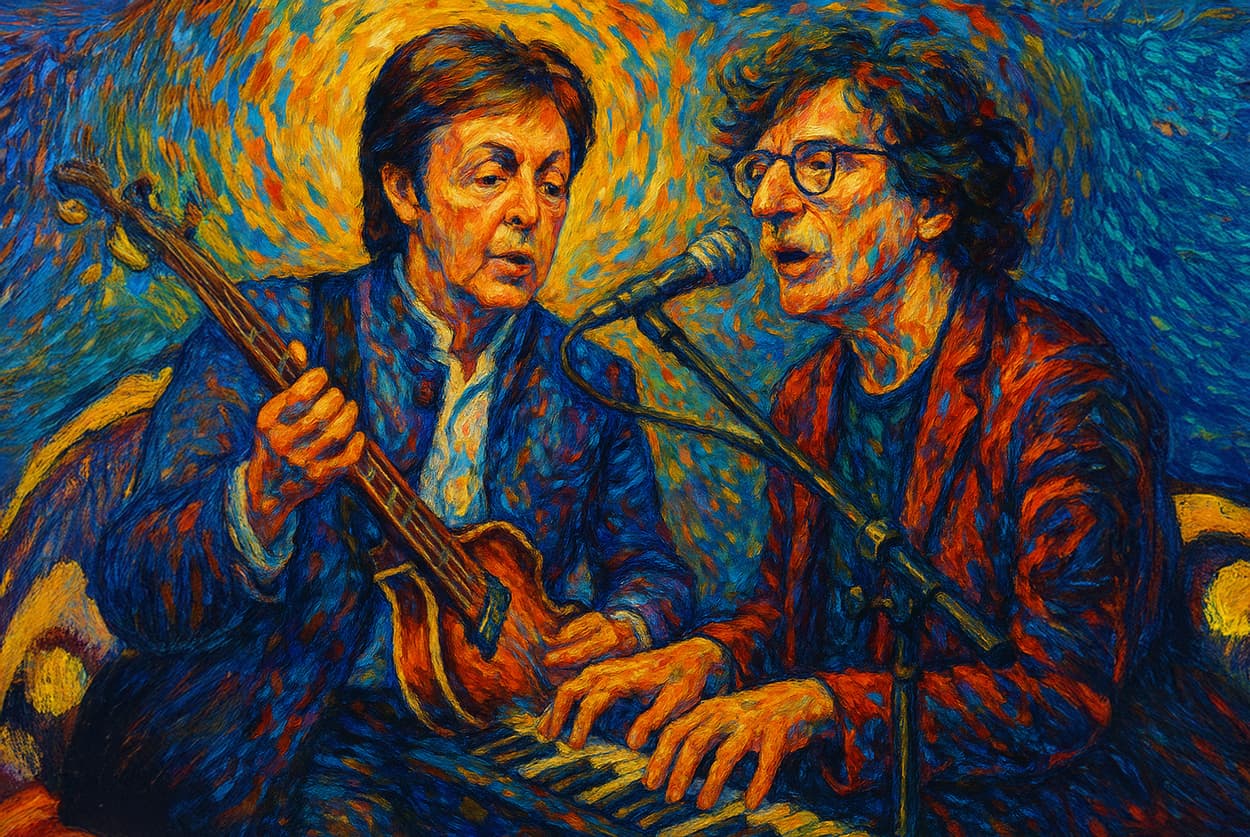
I'm Obsessed with a Song That Doesn't Exist! …Or Does It?
I fell in love with a Paul McCartney song in English, until I discovered it never existed and AI had written every note of it.