
Nostalgia: The Word That Was a Medical Diagnosis
Nostalgia was born in 1688 as a deadly disease: a Swiss student invented it to name the illness suffered by soldiers who longed for their homeland.
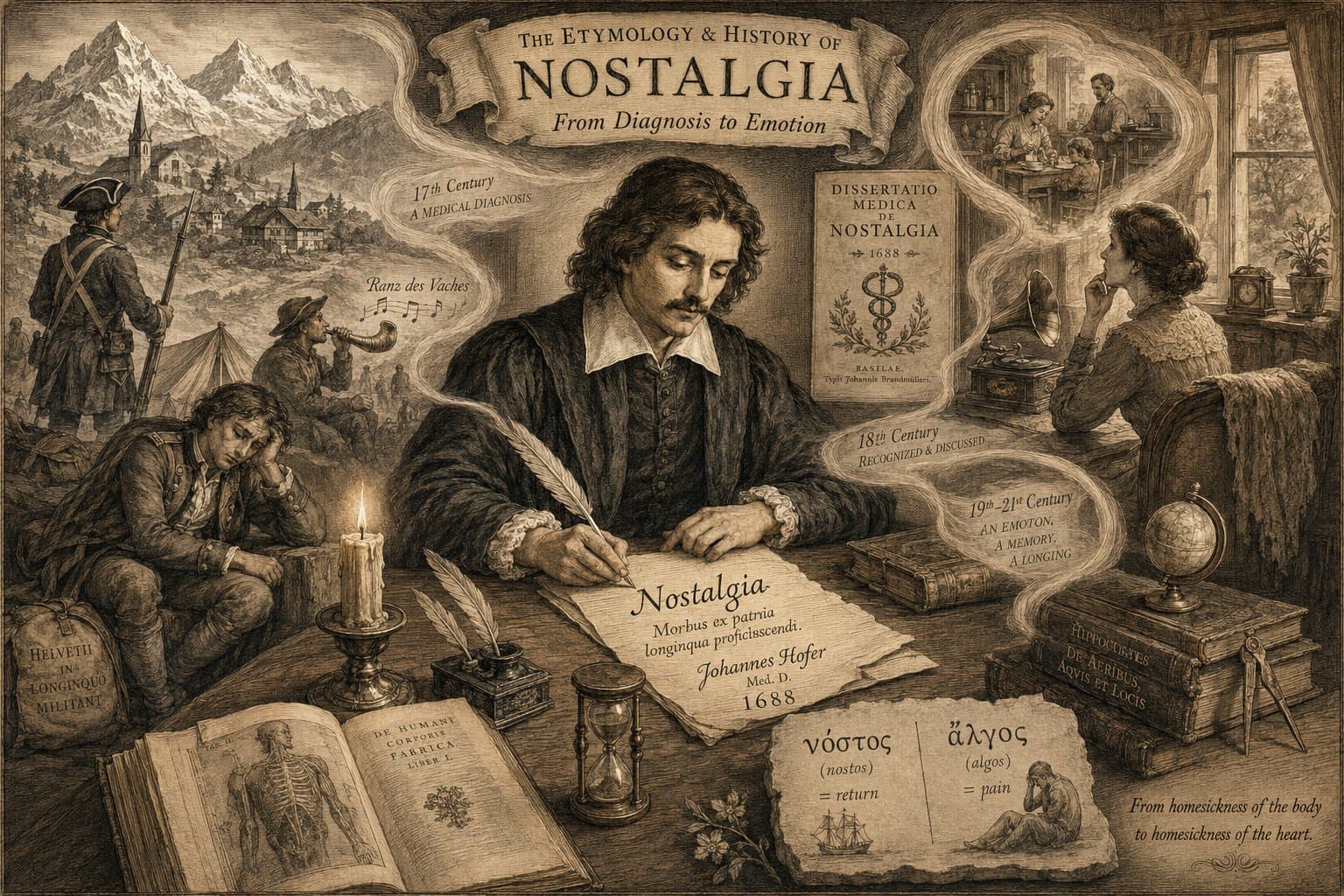
Today nostalgia is a bittersweet, even pleasant feeling: the song that takes us back to our teens, the smell that carries us to our grandmother's kitchen. It is hard to imagine that the word was born as the name of a serious illness, one that could kill, and that for more than a century doctors treated it with the same seriousness as a fever. But so it was: nostalgia has a date of birth, an author and a clinical diagnosis.
A student invents a word in 1688
The word was coined in 1688 by a young Swiss physician, Johannes Hofer, in his doctoral dissertation at Basel. Hofer needed a learned term for an affliction he saw around him, which in German was called Heimweh, «home-pain». He reached for Greek, like so many others, and combined two roots: nóstos, «the return home», and álgos, «pain». Nostalgia: the pain over the return, the grief of being unable to go back.
It was not the only term pulled out of a hat in that age of words invented with surgical precision; centuries later, others would follow the same method to name nameless phenomena, as when «petrichor» was coined for the smell of rain.
The deadly disease of the Swiss soldiers
For Hofer and his colleagues, nostalgia was not a poetic metaphor but a real and dangerous ailment. Its most famous victims were the Swiss mercenaries who served in armies all over Europe, far from their valleys and their mountains. Away from home, some sank into a deep melancholy: they stopped eating, lost weight, burned with fever, faded away. And some did, in fact, die.
The condition was so well recognized that military commanders took extraordinary measures. It is said that in some Swiss regiments it was even forbidden to sing or play certain Alpine tunes —the Ranz des Vaches, the melody with which herdsmen called the cattle— because it awoke in the soldiers a longing for home so violent that it drove them to desert or to fall ill with nostalgia. A song could disarm an entire battalion.
From diagnosis to feeling
Throughout the 18th and 19th centuries, doctors argued endlessly about nostalgia: where it lodged in the body, whether it belonged to the brain or the soul, how to cure it. The only prescription that truly worked was also the most obvious: send the patient back home.
Over time, however, the word was «demilitarized» and «demedicalized». It stopped being the disease of uprooted soldiers and became something broader and gentler: not only the longing for a place, but for a time. Today we feel nostalgia not only for our homeland but for our childhood, for an era, for people who are no longer here. The disease turned into an emotion.
A word that changed its nature
It is one of the loveliest semantic journeys I know: a word that began in the cold jargon of a 17th-century hospital and ended up being the very stuff of songs, films and Sunday afternoons. As with «serendipity», the word born in a letter from 1754, sometimes we know exactly when and why a term appeared, and yet we use it as if it had existed forever. Nostalgia, ironically, now makes us nostalgic for what it once meant.
References
- Johannes Hofer, Dissertatio medica de nostalgia, oder Heimwehe, Basel, 1688.
- Svetlana Boym, The Future of Nostalgia, Basic Books, 2001.
- Jean Starobinski, «The Idea of Nostalgia», Diogenes, vol. 14, no. 54, 1966.
Do you enjoy the stories behind words? Continue with the origin of «serendipity» or explore the whole etymology series.
Categories
The books · born from this blog

Atahualpa con su abrigo de pelo de murciélago
y otras 49 historias verdaderas que parecen mentira
Available on Amazon
Tocar madera
Pequeña historia de las supersticiones que el mundo no ha podido soltar
Available on Amazon
100 futuros
Cien escenarios del mundo que viene con la inteligencia artificial
Available on AmazonYou may also like
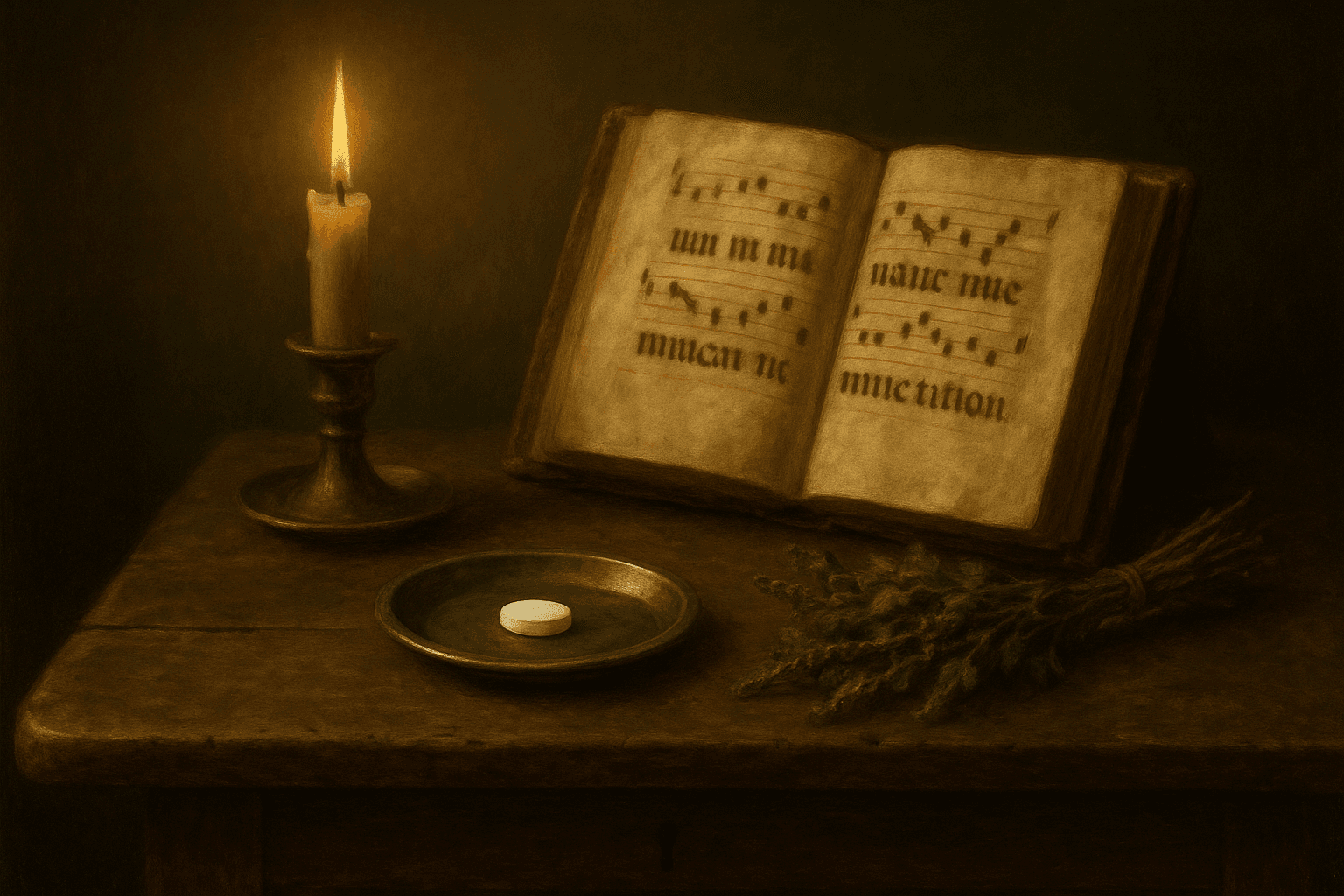
Placebo: the Latin word that means «I shall please»
«Placebo» means «I shall please» in Latin and began as a medieval funeral chant. Here is how it jumped from the church to medicine and its famous effect.
The Origin of the Word “Robot”: Born in a Czech Play
Where does the word robot come from? Czech writer Karel Čapek coined it in 1920 from robota, forced labor; and the idea was actually his brother Josef's.
Vaccine: the word that hides a cow
The word «vaccine» comes from the Latin vacca, «cow». Edward Jenner coined it after finding that cowpox protected people against the deadly smallpox.