
NFC: The Invisible Tech in Cards, Phones and Passports
NFC powers contactless payments, transit cards and passports with a tap. Here is how near field communication works and where this invisible tech came from.
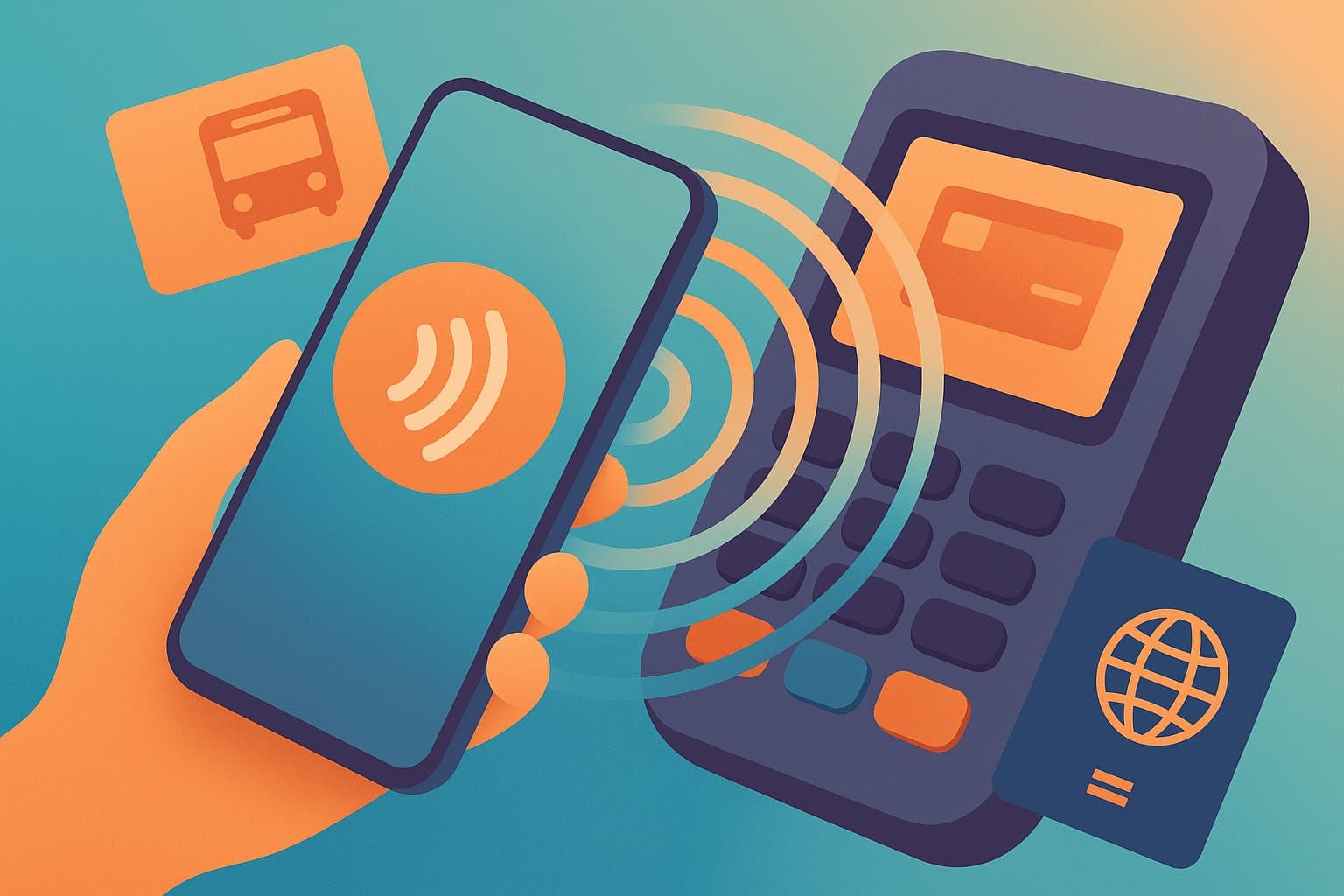
You hold your phone near the subway reader and the gate opens. You tap your card on the terminal and the payment clears in less than a second. You slide your passport into a slot and the machine reads your details without opening it. Behind all those everyday gestures lies one discreet, almost magical technology: NFC, or Near Field Communication. It makes no sound, often needs no battery, and works only when two objects nearly touch. This is the story of how it works and where it came from.
What NFC actually is
NFC is a form of very short-range wireless communication: it works only when two devices are within about 4 centimeters of each other. It operates on one specific radio frequency, 13.56 MHz, which is license-free worldwide, and that is why the same card works the same in Tokyo as in Guayaquil.
It was not born out of nowhere. NFC is, at heart, a close relative of RFID (radio-frequency identification), the system used since the 1980s for anti-theft tags, hotel keys and toll roads. What its creators did was take one variant of RFID, standardize it and put it inside phones, so that a single device could both read tags and behave like a card.
How it works: energy traveling through the air
Here is the elegant part. A transit card or an NFC tag has no battery. So how does it answer? Through magnetic induction, the same principle that charges an electric toothbrush without wires.
The reader —the payment terminal, the turnstile, your phone— generates a small oscillating magnetic field through an antenna, which is really a coil of wound copper. When you bring the card close, that field passes through the coil hidden inside the card and induces an electric current in it. That current, tiny but enough, powers the card's chip just long enough for it to reply. The reader supplies the energy; the card only supplies the data. It is a dialogue that lasts milliseconds.
That is why the range is so short, and that is a virtue, not a flaw. Unlike WiFi or Bluetooth, which spread waves across meters, the NFC field fades almost immediately. It is physically hard for someone a meter away to «listen in» on your bank transaction, because at that distance there is no signal left to catch. The forced closeness is, in itself, a layer of security.
From Sony and Philips to your pocket
The modern history of NFC begins on March 25, 2002, when Sony and Philips (whose chip division is today NXP) agreed to jointly develop a common short-range wireless standard. The six fundamental patents were filed by two engineers, the Austrian Franz Amtmann and the Frenchman Philippe Maugars, who in 2015 would receive the European Inventor Award for it.
In December 2003, NFC was approved as an ISO/IEC international standard, and in 2004 Nokia, Philips and Sony founded the NFC Forum, the non-profit organization that has since defined how all NFC devices should understand one another. The idea was ambitious: that a card, a tag and a phone from different makers could speak the same language just by touching.
The first commercial phone with built-in NFC was the Nokia 6131 NFC, announced in January 2007. For years the technology moved slowly, until smartphones arrived: the Samsung Nexus S (2010) was the first Android with NFC, Google Wallet debuted contactless payments in 2011 and, above all, Apple Pay brought them to the whole world with the iPhone 6 in 2014. From then on, paying by tapping your phone stopped being science fiction.
Where you use it without noticing
NFC is in far more things than you imagine. Contactless payments with a card or phone are the most visible case, but it is also used by transit cards, hotel keys, office access control, festival wristbands and even some toys and video-game figures.
It may surprise you, but your passport probably carries an NFC chip inside its cover: e-passports store your data and photo on a chip that immigration machines read by proximity, with no need to open the document. It is the same family of technology that lets your phone, when you touch a tag stuck on a poster, open a web page or connect automatically to a network.
It should not be confused with other technologies that also seem like magic. The QR code solves a similar problem —linking the physical world to the digital one— but with a camera and a drawing, not radio. And Apple's AirTag uses a mix of Bluetooth and ultra-wideband to locate itself from a distance, something NFC, tied to its few centimeters, could never do.
Is it safe?
The question is inevitable, especially when money is involved. The short answer is yes, fairly. Beyond the natural barrier of its few centimeters of range, NFC payments do not send your card's real number: they use a «token», a single-use code that is useless if someone intercepts it. If that data were stolen, no one could rebuild your card from it.
That does not mean it is infallible: relay attacks and malicious readers exist, which is why many large payments ask for confirmation with a fingerprint, face or PIN. But the design rests on a sensible idea: the closer you force things to be, the less room you leave for fraud. Like the USB-C connector, NFC is one of those technologies we use a hundred times a day without thinking about them… precisely because they work so well that they become invisible.
References
- «Near-field communication», Wikipedia. en.wikipedia.org
- «What is near-field communication (NFC)?», TechTarget. techtarget.com
- «From RFID to Apple Pay: A Brief History of NFC», NFCBuzz. nfcbuzz.com
- «Nokia 6131», Wikipedia. en.wikipedia.org
Do you enjoy these everyday technologies almost nobody understands? Continue with the history of the QR code or explore the whole technology section.
Categories
The books · born from this blog

Atahualpa con su abrigo de pelo de murciélago
y otras 49 historias verdaderas que parecen mentira
Available on Amazon
Tocar madera
Pequeña historia de las supersticiones que el mundo no ha podido soltar
Available on Amazon
100 futuros
Cien escenarios del mundo que viene con la inteligencia artificial
Available on AmazonYou may also like
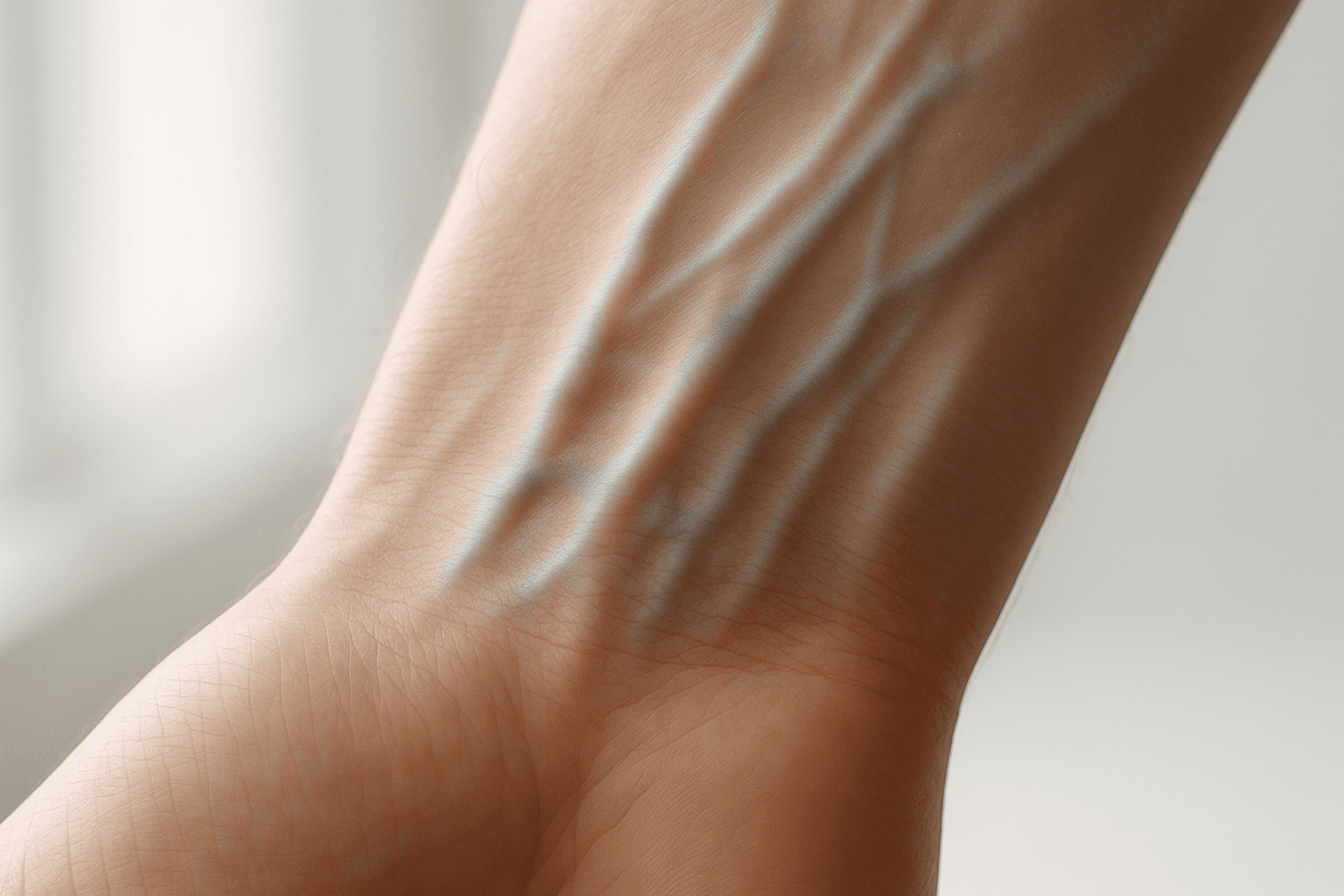
Why veins look blue when your blood is red
Human blood is never blue—it is always red. So why do veins look blue under the skin? The answer lies in how light travels through your body and how you see.

The nocebo effect: when expecting harm creates it
The nocebo effect is the placebo's dark twin: believing a treatment will hurt can make it hurt. Its origin, real cases and what science says.

The History of the Match: Fire in Your Pocket
The friction match was born by accident in 1826, poisoned thousands of factory women, and only later became the safe fire we carry in our pocket.