
Klein-Venedig: The German Colony in Venezuela
For nearly two decades, part of Venezuela was administered by German bankers under the Spanish Crown. A province turned into a contract.
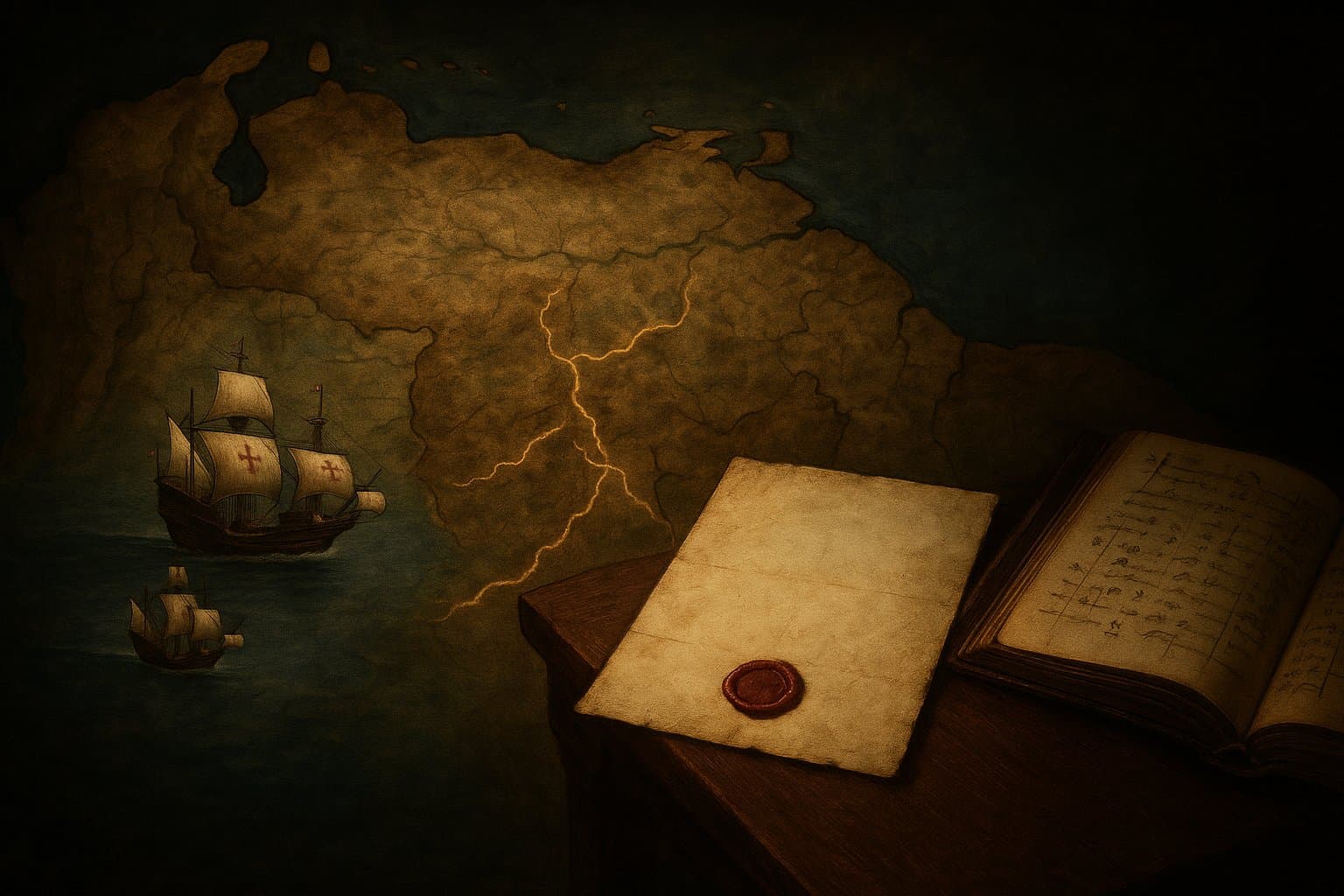
In the early sixteenth century, part of what is now Venezuela came under the administration of a family of German bankers.
It was not a German colony in the modern sense. Germany, as a nation-state, did not even exist. Venezuela still belonged to the Spanish world. But for almost two decades, the province was governed by representatives of the Welser banking house of Augsburg, thanks to a contract signed with the Spanish Crown.
The episode is known as Klein-Venedig, or Little Venice.
And although the name sounds picturesque, the story is not exactly a postcard. It is a mixture of imperial debt, commercial ambition, conquest, failed expeditions and a desperate search for gold.
The emperor who needed money
To understand this story, we have to begin in Europe.
Charles V was king of Spain and emperor of the Holy Roman Empire. His power was enormous, but so were his expenses. Governing, waging wars and sustaining an imperial machine of that size required a lot of money.
Among his financiers were the Welsers, a powerful family of bankers and merchants from Augsburg.
On March 27, 1528, the Spanish Crown signed an agreement with the Welser house for the exploitation, settlement and government of the province of Venezuela. The contract required them to found two cities within two years, build three fortresses, arm four ships and bring 300 Spanish men and 50 German miners. [1]
The key word is government.
The Welsers were not merely financing an expedition or selling goods. They received a concession to administer an American province in the king’s name.
In practice, Venezuela became, for a time, a kind of outsourced colonial enterprise.
A province as an investment
The agreement with the Welsers was not born out of romantic fascination with the Caribbean. It was business.
The banking family supplied resources, ships, men and organization. In exchange, it expected wealth: land, metals, trade, labor and prestige.
A study in Oxford Research Encyclopedias summarizes Klein-Venedig as a German-Spanish administration marked by chaos and distrust. [2]
From Europe, the idea may have sounded orderly: sign a contract, appoint governors, found cities, exploit the territory and generate profits.
But America rarely obeyed plans drawn up at a desk.
The province was immense, difficult to control and poorly known to Europeans. There were tensions with Spanish settlers, Indigenous resistance, supply problems, long expeditions and a growing obsession with finding gold.
Ambrosio Alfínger and the German beginning
The first major figure in this adventure was Ambrosio Alfínger, representative of the Welsers and the first governor and captain general of the province of Venezuela. According to Fundación Empresas Polar’s Diccionario de Historia de Venezuela, his real name was Talfinger, and he had worked for the Welser commercial house before being sent to America. [3]
Alfínger arrived in the Coro region in 1529. He soon came into conflict with Juan de Ampíes, son of Juan Martínez de Ampíes, who also aspired to the governorship. [4]
Coro became the starting point of this strange experience: an American province, under Spanish authority, administered by German agents and full of tensions from the very beginning.
The fever of El Dorado
Like so many stories of conquest, Klein-Venedig became trapped by the myth of El Dorado.
German governors and expeditionaries set out from Coro into the interior on long and costly campaigns. Among them were Nikolaus Federmann, Georg von Speyer and Philipp von Hutten.
Federmann was governor of the province of Venezuela, an expeditionary and founder of settlements. As a young man he had entered the service of the Welser house and was sent to America to assist Alfínger. [5]
Georg von Speyer, born in Speyer and known to the Spanish as Espira or Spira, was appointed governor and captain general of Venezuela in 1534. [6]
Philipp von Hutten, the last German governor of Venezuela, also explored the interior in search of the myth of El Dorado. [7]
↓ Option A — Radial map of expeditions
The promise was always the same: somewhere beyond the known world, immense wealth had to exist. But the expeditions consumed men, resources and time. Gold did not appear as easily as expected.
When the business began to fail
The province did not behave like a profitable investment.
Founding cities was difficult. Maintaining them was even harder. Expeditions into the interior exhausted settlers and left settlements exposed. Relations among Germans, Spaniards and Indigenous peoples were also full of conflict.
In 1533, the bishop of Coro, Rodrigo de Bastidas, informed the king that the province was on the edge of anarchy because no one had heard from Alfínger, who had been absent for two years. He also said that residents were impoverished and indebted, and that the Welser Company had stopped selling to them on credit. [8]
That detail sums up the practical failure of Klein-Venedig very well.
In Europe, it could look like a promising concession. In Venezuela, the reality was different: absent governors, indebted settlers, food shortages, uncertain expeditions and a province that was becoming harder and harder to sustain.
The end of Little Venice
The German experiment in Venezuela ended gradually.
In 1546, Juan Pérez de Tolosa arrived in Coro as the new governor and captain general of the province. Fundación Empresas Polar records him as the first Spanish governor after the representatives of the Welser Company. [9]
Then came the legal disputes. In 1556, the Spanish court decided that the company of Antonio and Bartolomé Welser had no right to appoint governors in Venezuela and revoked its privileges for failing to fulfill the clauses of its capitulations. [10]
↓ Option B — Contract sheet
That was how Klein-Venedig ended.
Not with a great battle, but with claims, breaches, judicial decisions and a concession that no longer made sense to the Crown.
The Welsers had received an American province as a business opportunity. But distance, geography, local conflicts and lack of results made the project unviable.
So, was Venezuela German?
It would not be correct to say that Venezuela was a German colony in the modern sense. Nor did a unified Germany exist that could administer overseas territories, as other European empires would do centuries later.
What did happen was this: the province of Venezuela was administered for a time by representatives of a German banking house, under the authority of the Spanish Crown.
For almost two decades, a portion of America was contractually handed to German entrepreneurs so they could settle, govern and exploit it in the king’s name.
It was not a German flag planted in the Caribbean. It was something perhaps more interesting: a province turned into a contract.
References
- Fundación Empresas Polar: Welser
- Oxford Research Encyclopedias: Klein-Venedig
- Fundación Empresas Polar: Ambrosio Alfínger
- Fundación Empresas Polar: Historical chronology of Venezuela, 1529
- Fundación Empresas Polar: Nicolás de Federmann
- Fundación Empresas Polar: Jorge de Espira
- Real Academia de la Historia: Felipe de Hutten
- Fundación Empresas Polar: Historical chronology of Venezuela, 1533
- Fundación Empresas Polar: Historical chronology of Venezuela, 1546
- Fundación Empresas Polar: Historical chronology of Venezuela, 1556
References
- "Welser", Diccionario de Historia de Venezuela, 2nd ed., Caracas, Fundación Empresas Polar, 1997 (online edition). bibliofep.fundacionempresaspolar.org
- Giovanna Montenegro, "Germans in the Habsburg Empire in South America (Colonial Venezuela)", Oxford Research Encyclopedia of Latin American History, Oxford University Press, 2022. DOI: 10.1093/acrefore/9780199366439.013.1039. doi.org
- "Alfínger, Ambrosio", Diccionario de Historia de Venezuela, 2nd ed., Caracas, Fundación Empresas Polar, 1997 (online edition). bibliofep.fundacionempresaspolar.org
Categories
The books · born from this blog
Atahualpa con su abrigo de pelo de murciélago
y otras 49 historias verdaderas que parecen mentira
Available on Amazon
Tocar madera
Pequeña historia de las supersticiones que el mundo no ha podido soltar
Available on Amazon
100 futuros
Cien escenarios del mundo que viene con la inteligencia artificial
Available on AmazonYou may also like
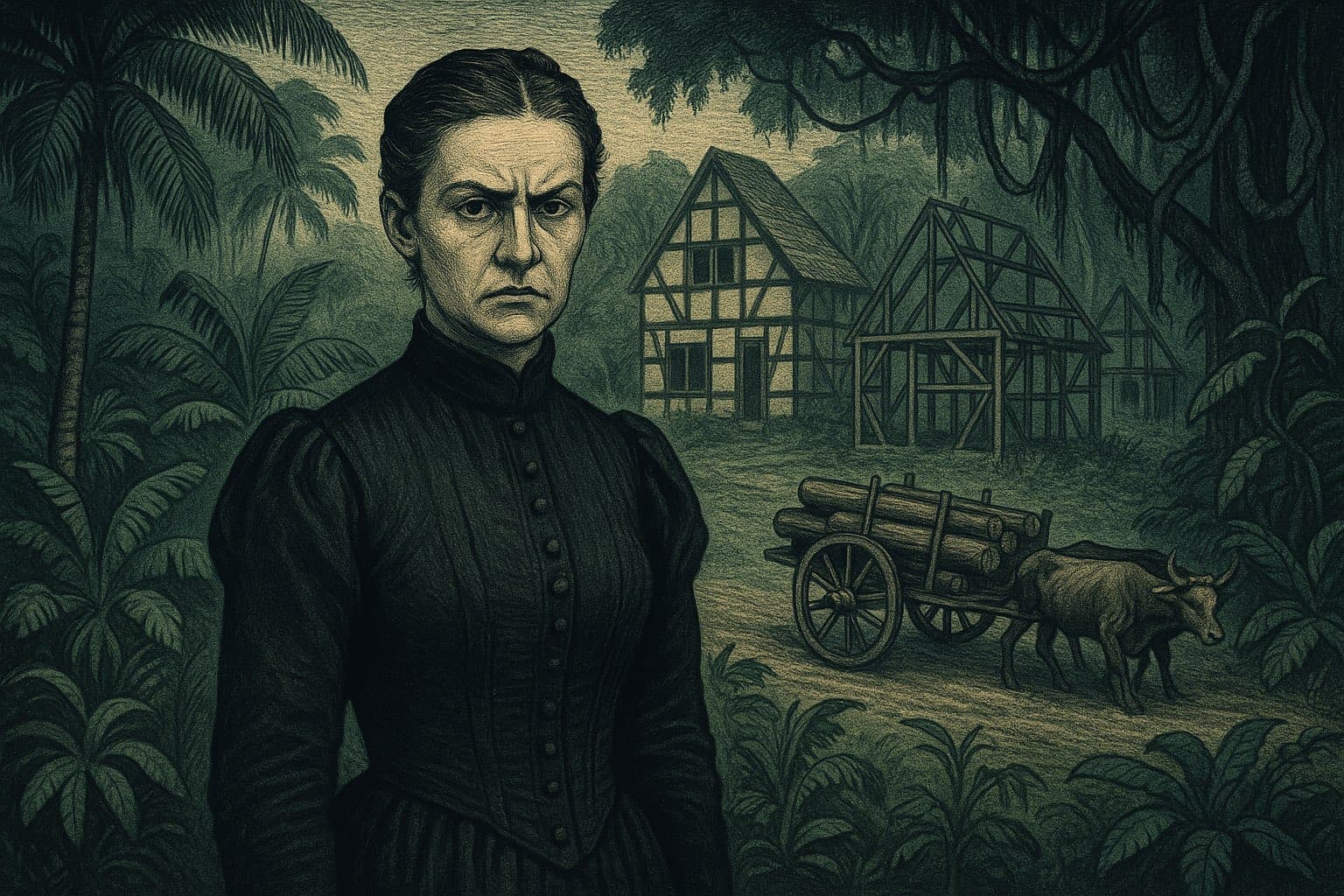
Nietzsche's Sister Founded an Aryan Colony in Paraguay
In 1886, Elisabeth Nietzsche and her antisemitic husband took 'pure' German families into the Paraguayan jungle. It went exactly as it deserved.
The history of the stethoscope and Laennec's modesty
In 1816 a French doctor felt too awkward to press his ear to a patient's chest, so he rolled up paper — and the stethoscope was born.

Placebo: the Latin word that means «I shall please»
«Placebo» means «I shall please» in Latin and began as a medieval funeral chant. Here is how it jumped from the church to medicine and its famous effect.