
Reviving an Ancient Drink: Plantain Champagne (and Banana, Too)
Plantain champagne once bubbled through old Guayaquil streets, and here's how that lost recipe was chased down and recreated with modern fermentation.
The development of ancient beverage-making processes is captivating. It's a kind of science, where experimentation and chance gradually create and refine recipes that over time pass from one generation to the next and become ancestral, polished, with their own tradition and characteristics. The history of these recipes has fascinated me for many years.
One of the interesting things is how, intuitively, the human collective has been doing chemistry involuntarily. Mixing fruits, grains, canes, and tubers, in a trial-and-error process, or sometimes by chance. How the first ferments were discovered, even without understanding the enzymatic reactions involved, is admirable. An example that captivated me from childhood was a story from my aunt Laura about the making of yuca chicha by the tribes of the Ecuadorian Amazon. "They chew it and then spit it into a container."
Over time I came to understand that this seemingly disgusting practice was the key to a much more complex transformation. What the tribal women were doing unconsciously was adding enzymes from saliva (amylase) to convert the starches in the yuca into sugars, which are easier for fungi (yeast) to metabolize, and which would later convert that sugar into alcohol. In the end, what you have is a delicious beverage that, because of its alcohol content, transported shamans to mysterious worlds. Of course, the process was banned by the Spanish conquistadors of the time, to the point that they prohibited the consumption of chewed chicha in all their colonies.
Everything I've told you so far is because I wanted to write some background for what brings us here today: plantain champagne. So let's get to the point.
A few years ago I came across a kind of chronicle of old Guayaquil, in one of its passages, which I estimate is set between 1895 and 1905, the following is recounted:
There was no shortage of demijohns of champagne. In those days they made a good chicha from ripe plantain, as bubbly as champagne. They sold it from donkeys, carrying a demijohn on each side. A bottle served as the measure and cost a "medio." The boys offered it shouting, "A medio a bottle o' champagne!"
Taken from Rielando en un Mar de Recuerdos by Carlos Saona
This paragraph intrigued me. I was so curious that I ended up getting an old book of ancient Ecuadorian recipes and drinks, called COCINERA NACIONAL, published in 1908. I searched through the whole book, trying to find traces of how this old beverage was made, but nothing. I did amuse myself with other recipes for some interesting chichas, but I'll tell you about that in a future article.
What I did find was an additional reference in the book "Apuntes para la historia agrícola e industrial de la provincia de León" (This was the name for what is now Cotopaxi province).
With silk plantains, almendra, and guineos, exquisite sparkling liquors are made, as coveted as the best champagne; and as a table fruit it is a most delicious dessert.
Apuntes para la historia agrícola e industrial de la provincia de León, by Aurelio Cañadas
The thing is, there are some challenges when trying to make a kind of plantain champagne, and they're not necessarily easy to solve. The main one is the high percentage of starch that ripe plantain contains and consequently the low percentage of sugar. It's more feasible to make a chicha-type drink (fermented fruit) with bananas, also called guineos here, because their sugar percentage is much higher than ripe plantain.
The reader will wonder why sugars matter so much? And the answer is that they're necessary for their subsequent transformation into alcohol (ethanol). I won't get into technicalities, but it's enough to say that some sugars, like glucose, can be transformed into alcohol and carbon dioxide. The latter is a gas—that is, the "champagne-like" or sparkling bubbles that fermented drinks have.
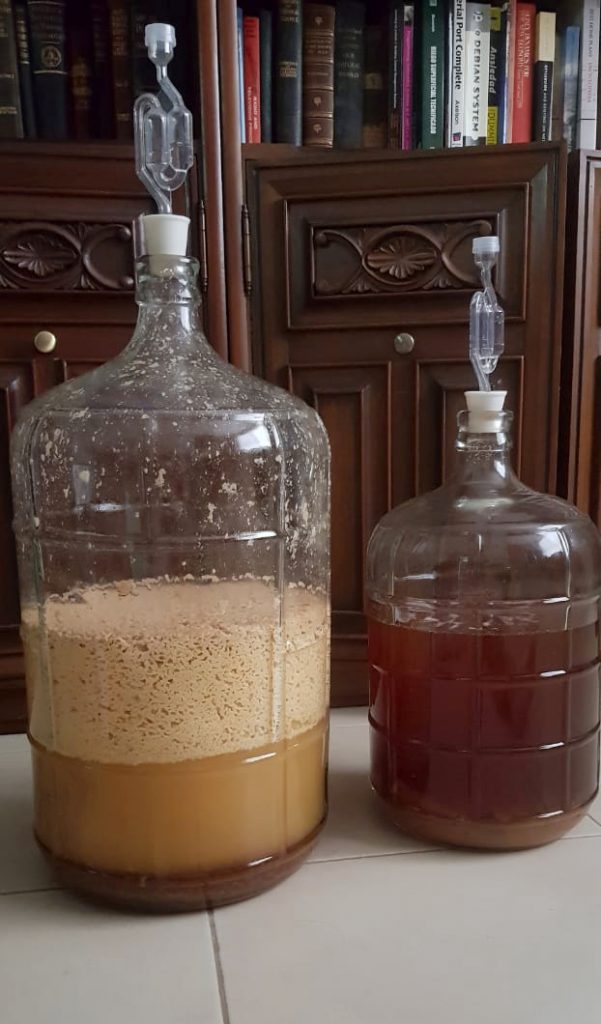
The rest of this story is the development of the recipe. A difficult mission because there's practically no information about the original recipe, so I had to go stumbling along trying different ideas. In the end, after researching for a while, I decided to recreate the recipe with modern methods and managed to ferment ripe plantain successfully, using commercial amylase (widely used in the food industry) and champagne yeast (from the Saccharomyces cerevisiae strain). After that, most of the process boils down to patience and dedication.
Plantain champagne is part of an Ecuadorian cuisine full of treasures: discover paila ice cream, machica and pinol, and how long we've been eating crabs on the coast.
Categories
The books · born from this blog
Atahualpa con su abrigo de pelo de murciélago
y otras 49 historias verdaderas que parecen mentira
Available on Amazon
Tocar madera
Pequeña historia de las supersticiones que el mundo no ha podido soltar
Available on Amazon
100 futuros
Cien escenarios del mundo que viene con la inteligencia artificial
Available on AmazonYou may also like
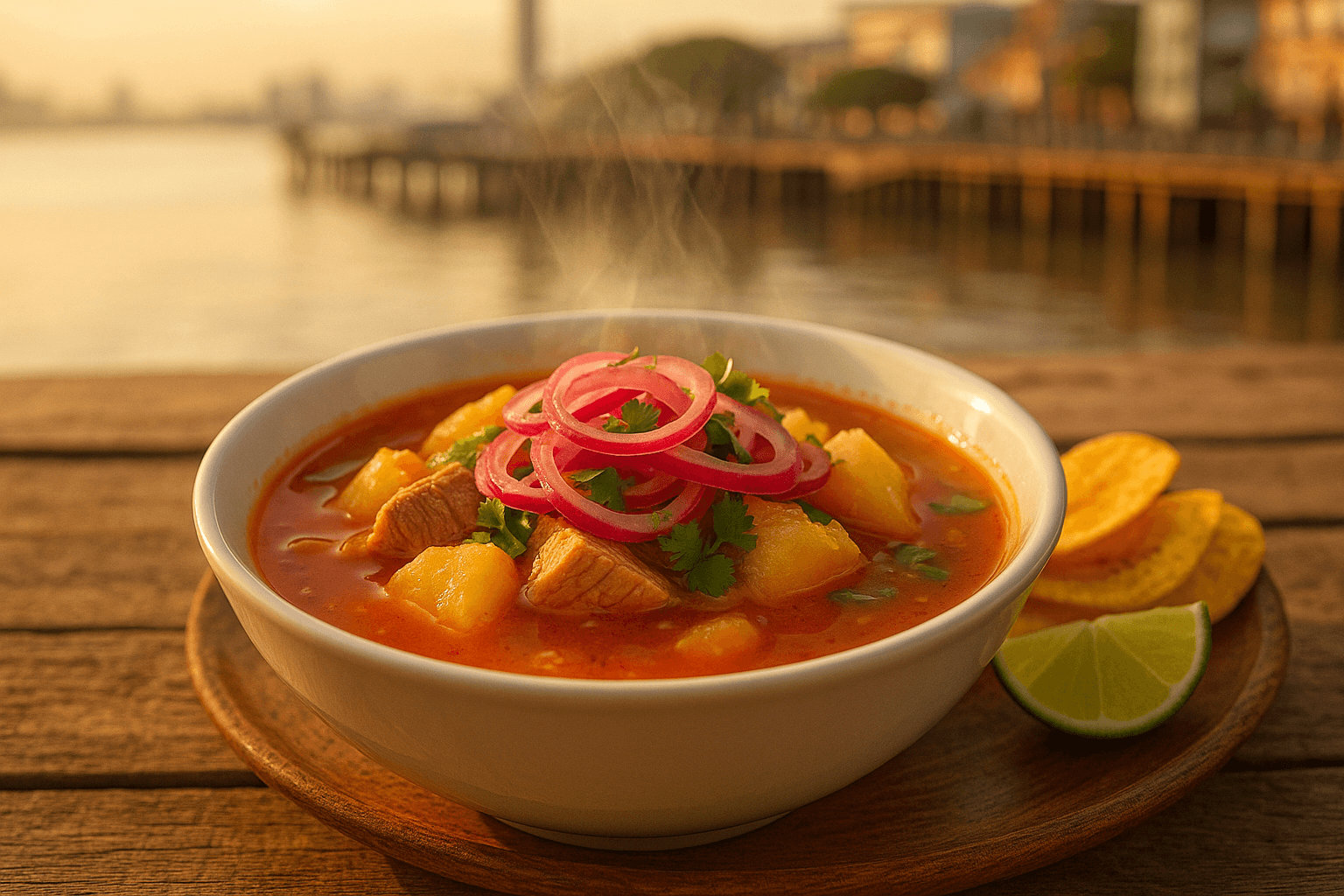
History of encebollado, Ecuador's fish stew
Encebollado was born on Guayaquil's docks as fishermen's food and is now Ecuador's national dish and the coast's most trusted hangover cure.
How Long Have We Been Eating Crabs on Ecuador's Coast?
How far back does Ecuador's love of crabs really go? The trail runs from pre-Hispanic mangroves to a vivid 1748 chronicle by Antonio Ulloa.
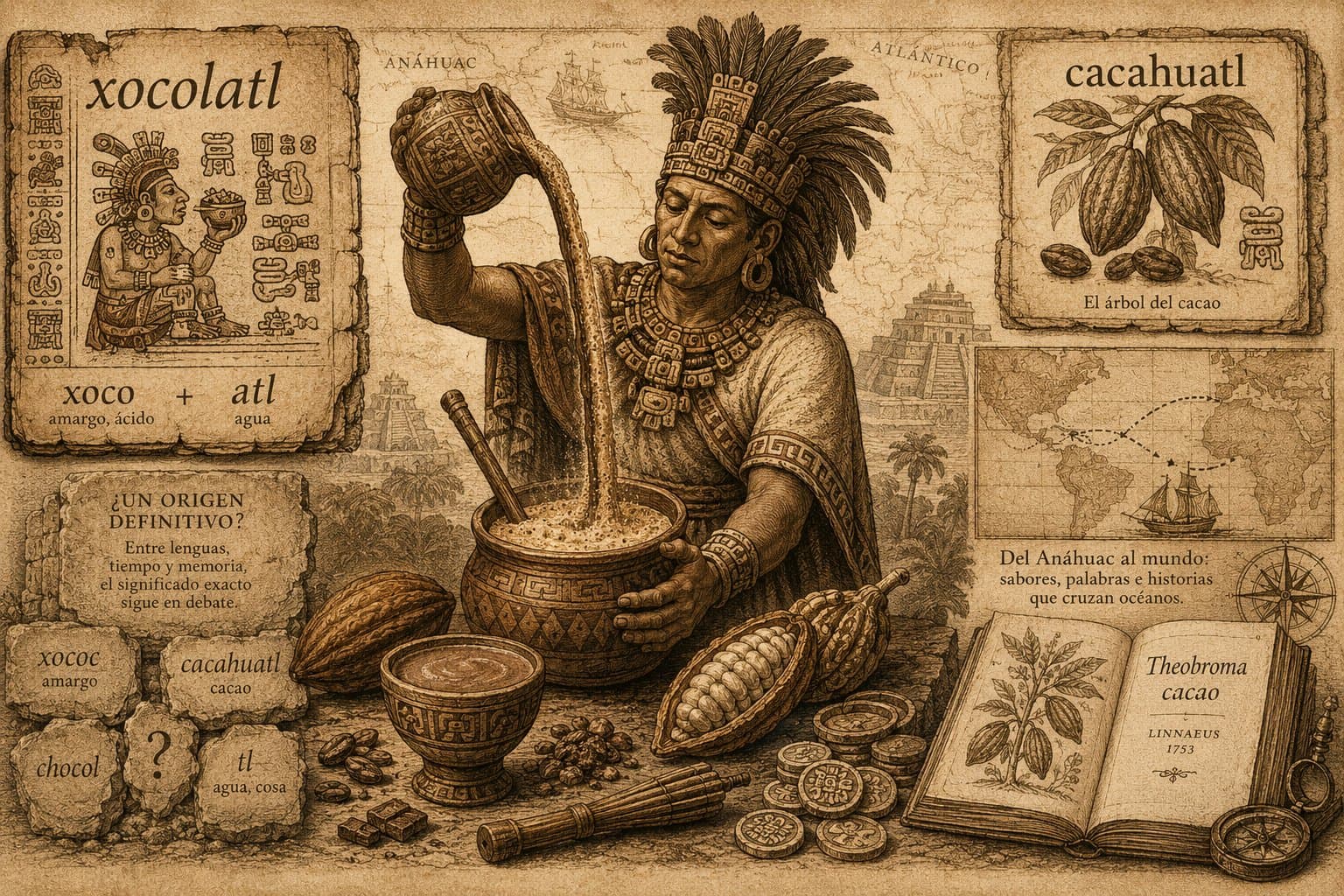
The Delicious Origin of the Word “Chocolate”
The word chocolate comes from Nahuatl, though its exact origin is still disputed between “bitter water,” “hot water” and a blend with Mayan.