
The History and Origin of All the Tomalás
The Tomalá surname hides a saga of balsa rafts and defiant caciques: the chief of Puná Island who refused to bow to Huayna Cápac or the colonizers.
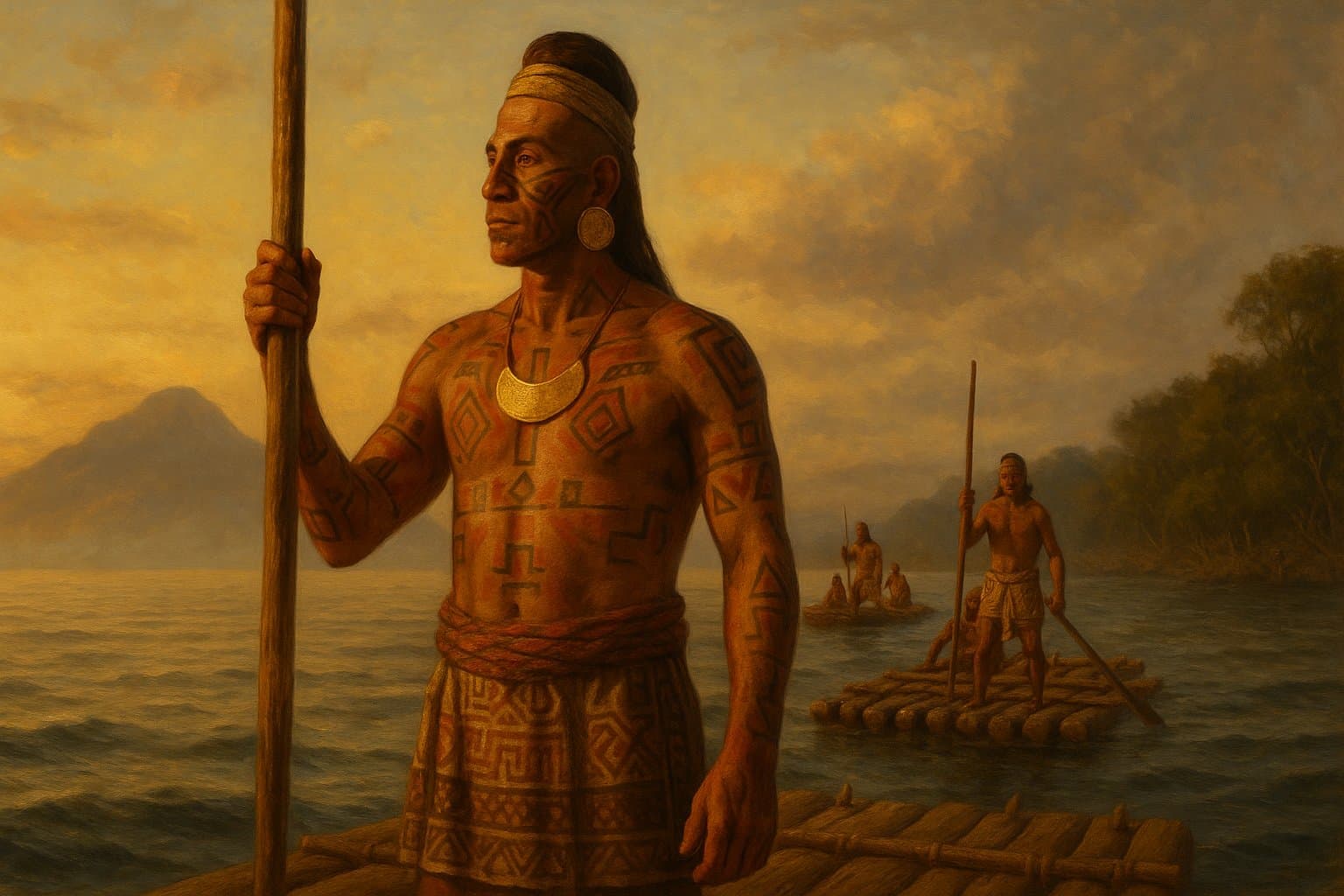
There are surnames that simply look like surnames. You spot one on an ID card, on a class roster, on a ballot, or in a neighbor's name, and you can't imagine that behind it lies a story of balsa rafts, caciques, Inca emperors, Spanish conquistadors, legal disputes, coats of arms and family memory.
Tomalá is one of those surnames.
In Ecuador, especially along the coast, Tomalá is no ordinary surname. It is tied to Puná Island, to the Gulf of Guayaquil and to a figure who, though he does not appear as often as Rumiñahui, Atahualpa or Huayna Cápac, deserves to be in the conversation: cacique Tumbalá, lord of Puná.
Before going further, a necessary clarification: the surname Tomala also exists in the world with a Polish origin, derived from Tomasz. So when we talk here about "the Tomalás" we mean the Ecuadorian Tomalá lineage, the one that tradition and several studies tie to the old indigenous nobility of Puná. The Dictionary of American Family Names itself records this dual possibility: Tomala can be Polish, but Tomalá, in Ecuador, appears as a Hispanicized form of the name of a Puná Island chief (Ancestry — meaning of the Tomala surname).
The island that was not just any island
To understand the Tomalás one has to start with Puná.
Today we think of Puná as an island in the Gulf of Guayaquil, but in pre-Hispanic times it was much more than a geographic point. It was a kind of maritime key. Whoever controlled Puná had influence over navigation routes, trade, fishing, supply lines and communications between the Ecuadorian coast and northern Peru.
Cieza de León, one of the most important chroniclers of the 16th century, describes the inhabitants of Puná as great traders, rich in resources and known for their bravery. He also tells us the island held long-standing rivalries with Tumbes and with other neighboring lands. We are not talking, then, about an isolated people but about a maritime, strategic society that was rather hard to subdue (Cieza de León, Crónica del Perú).
And that is where Tumbalá enters the picture.
Cieza calls him lord of Puná. He was not simply a village chief. He was a hereditary authority, a local ruler, a principal cacique. In later colonial terms he would have been called a "natural lord": someone whose power came from his own lineage and from the indigenous political order that preceded the Spaniards. In fact, Cieza says Tumbalá received that dignity from his forebears, and that this was why he could not bear to accept Huayna Cápac as the sovereign of his island.
Tumbalá versus Huayna Cápac
The conflict with the Incas is the most fascinating part of this story.
Huayna Cápac, after consolidating his rule over several regions of what is now Ecuador, reached the coast. From Tumbes, already in control of nearby territories, he sent word to Tumbalá that he had to appear before him, obey him and contribute whatever the island had.
It looks like an almost diplomatic scene, but it was really a demand for submission.
Tumbalá understood perfectly what it meant. It was not just about handing over gifts. Accepting the Inca meant losing autonomy, allowing Inca constructions on his territory, maintaining them with his own resources, and submitting his people to a foreign power. According to Cieza, Tumbalá and the principal lords of the island decided to feign friendship while they prepared their resistance.
The episode of the balsas reads like something out of a historical novel.
Huayna Cápac was received on Puná with honors. Quarters were prepared for him. Everything seemed peaceful. But meanwhile, the Puneños were weaving a strategy together with people from the mainland.
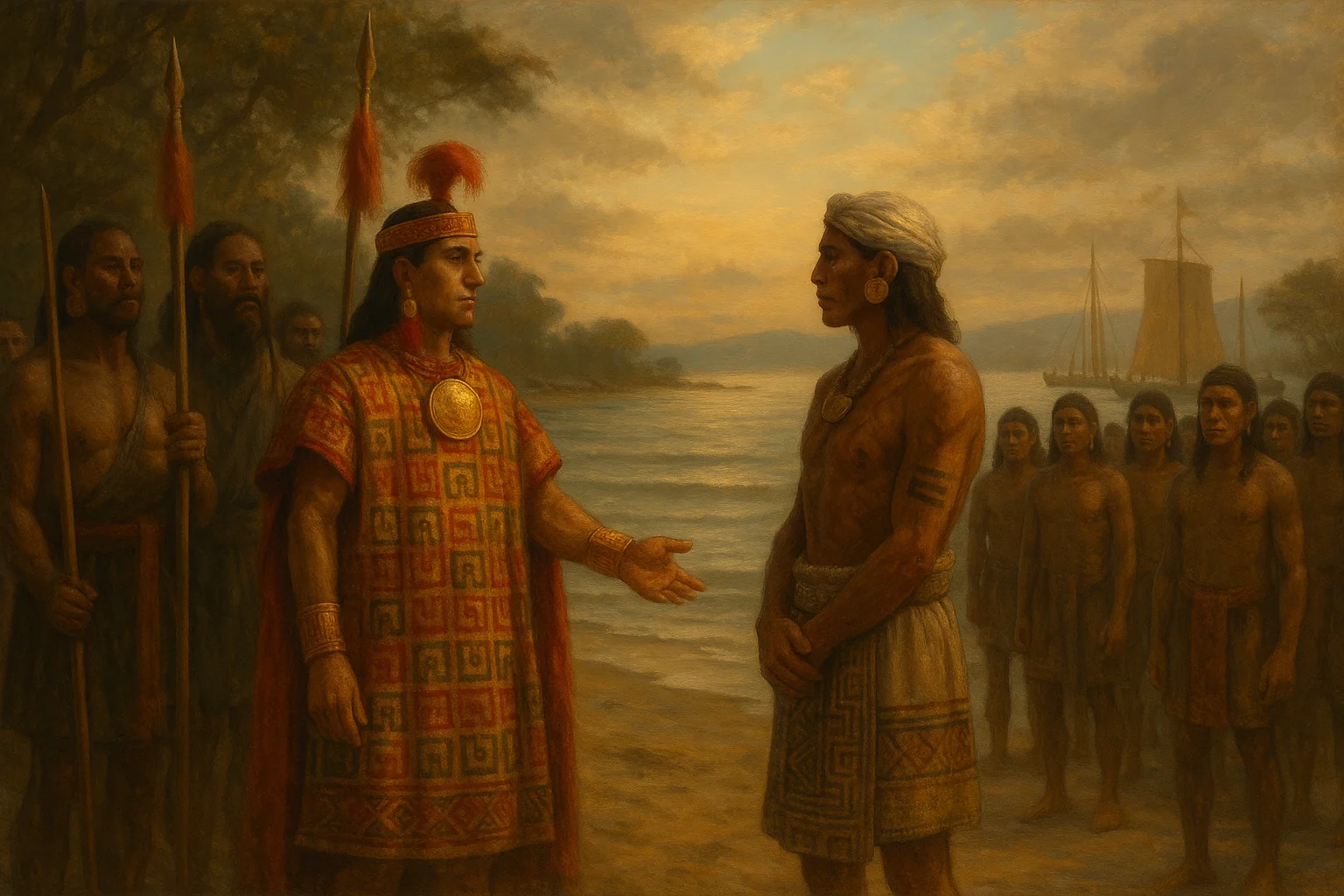
The trap was maritime and, according to Cieza, savagely effective. The Puneño balsas were logs lashed together with cabuya cords. When the Inca captains, priests and nobles — the orejones of Cuzco — were embarked to be ferried, the islanders waited until the small fleet was in the deepest part of the gulf. There, all at once, they cut the lashings. The balsas came apart in the open sea.
What followed was a massacre. The orejones came from a highland Andean culture and most of them did not know how to swim. The Puneños, in contrast, lived off the water: they were expert swimmers. In the water, they surrounded the Inca nobles who were trying to cling to the loose timbers and finished them off one by one. Cieza says that almost none escaped alive. The military and religious elite that Huayna Cápac had brought north died drowned and put to the knife in the Gulf of Guayaquil before they had even fully set foot on Puná.
The Inca answered harshly. According to the chronicle, Huayna Cápac punished Puná severely — Cieza speaks of a punitive massacre against the surviving islanders — and ordered the episode to be recorded in songs, as a memory of that rebellion. He later attempted a work on the Guayas River known as the Paso de Guaynacapa, which seems never to have been finished.
By this point the reader will have noticed something interesting: Tumbalá is not a passive figure facing the Inca advance. He appears as a ruler who understands politics, pretends when it suits him, negotiates, measures forces and uses the sea as a defense.
Put another way: Puná did not fall simply because an empire arrived and commanded. Puná resisted.
From Tumbalá to Tomalá
Here we enter the part about the surname.
The shift from Tumbalá to Tomalá seems to come from the Hispanicization of the name. The chroniclers wrote what they heard as best they could. An indigenous name could appear as Tumbalá, Tumbala, Tumalá or Tomalá, depending on the ear of the scribe, the original language, the local pronunciation and the Spanish habit of fitting foreign sounds into their own spelling.
In fact, the Ecuadorian historian Rodolfo Pérez Pimentel argues that the cacique's original name was neither Tumbalá nor Tomalá, but simply Tumbal, without that final "á" that seems to have been a product of the Spanish ear. Seen that way, the various spellings would be successive layers of adaptation: from the original indigenous Tumbal to the chronicler's Tumbalá, and from there to the modern Tomalá (Rodolfo Pérez Pimentel — Tumbalá).
This is not unusual. It happened to a great many indigenous names across the Americas. The Spaniards did not just conquer territories; they also reorganized names, titles, documents, baptisms, censuses and inheritances.
On the Santa Elena peninsula, a report by Expreso records an interesting local account: many autochthonous surnames were apparently adopted or fixed after caciques, districts or places of origin. There it is explicitly mentioned that Tumbalá, the cacique who ruled the area from Puná to Posorja, gave rise to Tomalá, one of the most widespread surnames in the region (Expreso — La Península revisa sus apellidos).
That said, in honesty: the story that Tumbalá personally fled to the Santa Elena peninsula after the conflict with Huayna Cápac belongs more to the ground of oral and family tradition than to any direct documentary proof I have been able to find. What is well supported is the link between Tumbalá, Puná, the nearby coast and the transformation of the name into Tomalá. It is also well documented that the Tomalá lineage continued to hold power in the region during the colonial period.
So a careful way of telling it would be this: after the conflicts with Inca power and later with Spanish power, the name Tumbalá kept surviving and transforming into Tomalá across Puná, Posorja, Engabao, Santa Elena and other coastal areas. Not necessarily as a single, neatly dated migration, but as a displacement of lineage, memory and surname.
The noble title of the Tomalás
This is one of the most curious parts.
When you hear "cacique," it can sound like a quaint folkloric word. But in colonial documentation the cacique was not merely a picturesque figure. He was a recognized authority. In many cases, the Spaniards leveraged existing indigenous hierarchies and folded them into the colonial system.
That is why we find phrases like "cacique," "natural lord" or "principal." They were not ornaments. They were categories of power.
The Tomalá case is especially interesting because they did not stay only as an indigenous memory. They entered the Spanish legal world. Don Diego Tomalá, a descendant of the Puná lineage, appears in 16th-century documents as "cacique and natural lord of the island of Puná." On top of that, in 1557 he filed a probanza de méritos y servicios before the Crown, and in 1560 he received a coat of arms. Yes, just as it reads: a Tomalá with a coat of arms recognized within the Spanish imperial world (Antonio Jaramillo Arango, Tomalá de la Puná).
The coat of arms was not a pretty little drawing. It was political recognition. According to the study by Jaramillo Arango published by UNAM's Institute of Historical Research, those privileges were tied to the services don Diego rendered to the Crown during the conflicts that followed the conquest.
Here the story turns uncomfortable, and precisely because of that, it becomes more real.
The Tomalá lineage first appears as indigenous resistance against Incas and Spaniards, but then some of its descendants move skillfully inside the colonial system. Don Diego, and later don Francisco Tomalá, consolidated power, prestige and legal advantages. The family went from being seen as a local indigenous lineage to becoming an elite recognized by the Spanish order.
History is rarely clean. It is almost always mud, negotiation and survival.
-
c. 1490
Tumbalá
Cacique and lord of Puná
Resisted the Inca empire. Sank Huayna Cápac's orejones in the gulf by cutting the cords of the balsa rafts in open water.
-
1557 — 1560
Don Diego Tomalá
Cacique and natural lord of Puná
First Tomalá recognized by the Spanish imperial order. Filed his probanza de méritos before the Crown (1557) and was granted a coat of arms (1560).
-
1587
Don Francisco Tomalá
Cacique and encomendero vecino of Guayaquil
Son of Diego. By then a colonial elite, he took part in the defense of Puná against the English privateer Thomas Cavendish, using maritime organization and early intelligence.
The Tomalás as navigators and strategists
Another thing rarely told is that the Tomalás were not just land caciques. They were people of the sea.
Puná Island lived off the water. Its balsa rafts, its routes and its knowledge of the gulf were central to its power. You see this from the resistance against Huayna Cápac through the later colonial episodes.
In the 16th century, Francisco Tomalá, son of Diego, appears as a figure of great influence in Guayaquil and Puná. Jaramillo Arango notes that by the late 16th century Francisco could already present himself not just as cacique but as a vecino encomendero of Guayaquil. That is, he had made an enormous social leap within the colonial system.
And there is a remarkable episode: during the attack by the English privateer Thomas Cavendish, the Puneños and the Spaniards defended the area together. The same study tells us that Francisco Tomalá played an important role in that defense, using early intelligence and maritime organization to respond to the attack.
Who would have said that behind such a common surname in Santa Elena and Guayas lies a story tied to Incas, Spaniards and Englishmen.
The surname as memory
The most beautiful thing about this story is that Tomalá is not just a surname: it is a capsule of memory.
Inside it survives Tumbalá, the cacique who would not easily hand over his island. Puná survives, an island far more important than we tend to imagine. A story of adaptation also survives: from indigenous lordship to colonial document, from oral name to written surname, from cacique to "don," from balsa raft to coat of arms.
And one question survives: how many Ecuadorians carry in their surnames stories they don't know?
Because Tomalá is not the only case. The peninsula and the coast are full of surnames that seem to hold traces of old caciques, districts and peoples. Guale, Yagual, Caiche, Tomalá. Names we often repeat without stopping to think that they might be, in fact, the last visible pieces of an indigenous political map that was erased and rewritten.
So where do the Tomalás come from?
The short answer would be: from the old lineage of Tumbalá, lord of Puná.
The long answer is more interesting: they come from a powerful maritime society of the Gulf of Guayaquil, from an island that resisted the Inca empire, from a cacique who preferred strategy over submission, from a Hispanicization of the name Tumbalá, from colonial documents that recognized his descendants as caciques and natural lords, and from a coastal memory that still refuses to vanish.
Maybe that is why the Tomalá surname has something special. It does not sound imported. It does not sound bureaucratic. It sounds like an island, a balsa raft, an estuary, a cacique, a gulf.
It sounds like a very old part of Ecuador that is still here, even when we don't know how to read it.
Sources consulted
- Cieza de León, Crónica del Perú
- Antonio Jaramillo Arango, Tomalá de la Puná (Instituto de Investigaciones Históricas, UNAM)
- Rodolfo Pérez Pimentel — Tumbalá
- Expreso — La Península revisa sus apellidos
- Ancestry — meaning of the Tomala surname
Do you enjoy the stories behind words? Continue with the buccaneers and barbecued meat and the origin of the name of Isla de la Plata.
The books · born from this blog
Atahualpa con su abrigo de pelo de murciélago
y otras 49 historias verdaderas que parecen mentira
Available on Amazon
Tocar madera
Pequeña historia de las supersticiones que el mundo no ha podido soltar
Available on Amazon
100 futuros
Cien escenarios del mundo que viene con la inteligencia artificial
Available on AmazonYou may also like
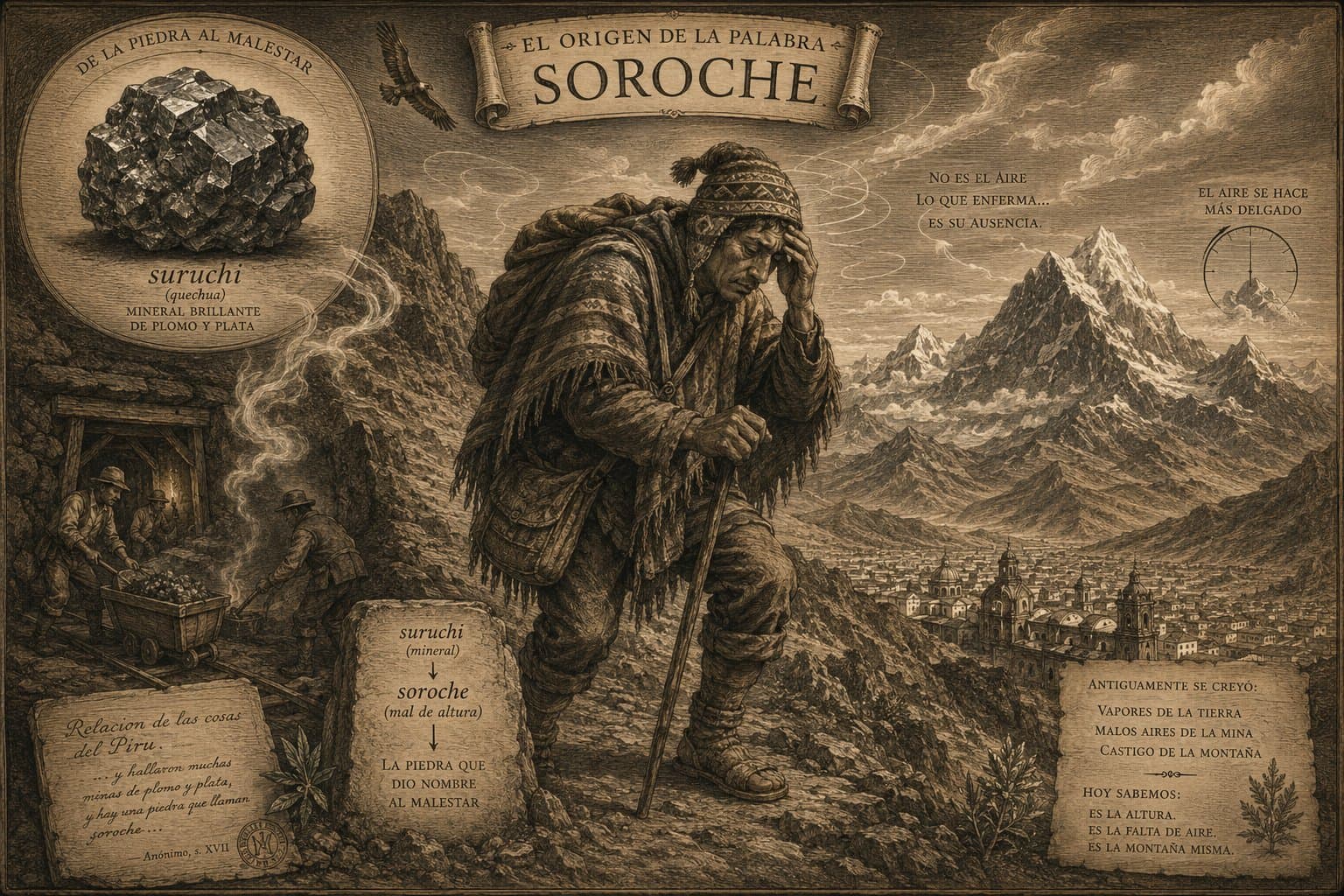
The Origin of the Word “Soroche”
Soroche, the altitude sickness of the Andes, owes its name not to the air but to a mineral: for centuries its vapours were blamed for sickening travellers.

Tagua: the Vegetable Ivory That Buttoned Europe
Tagua, the seed of an Ecuadorian palm, mimicked ivory and buttoned the world's clothes for decades, until cheap plastic pushed it aside almost overnight.
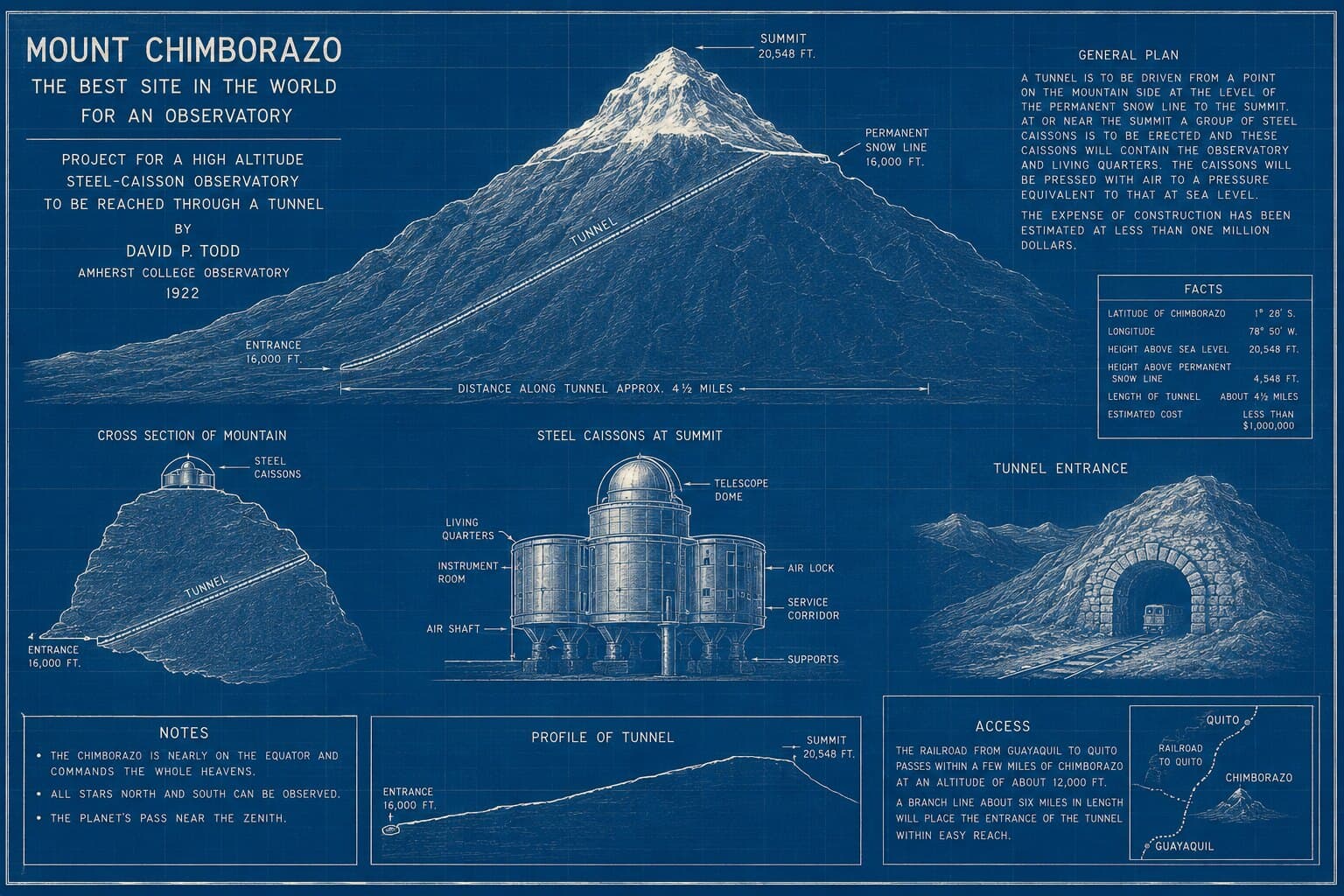
David Todd and his tunnel to the top of Chimborazo
In 1922 astronomer David P. Todd proposed boring a tunnel into Chimborazo all the way to the summit to build a pressurized steel observatory inside it.