
The Origin of “Chuchaqui”, the Ecuadorian Hangover
“Chuchaqui” is the hangover the Ecuadorian way, a word almost nobody understands across the border. Its origin lies in Quichua and the coca leaf.
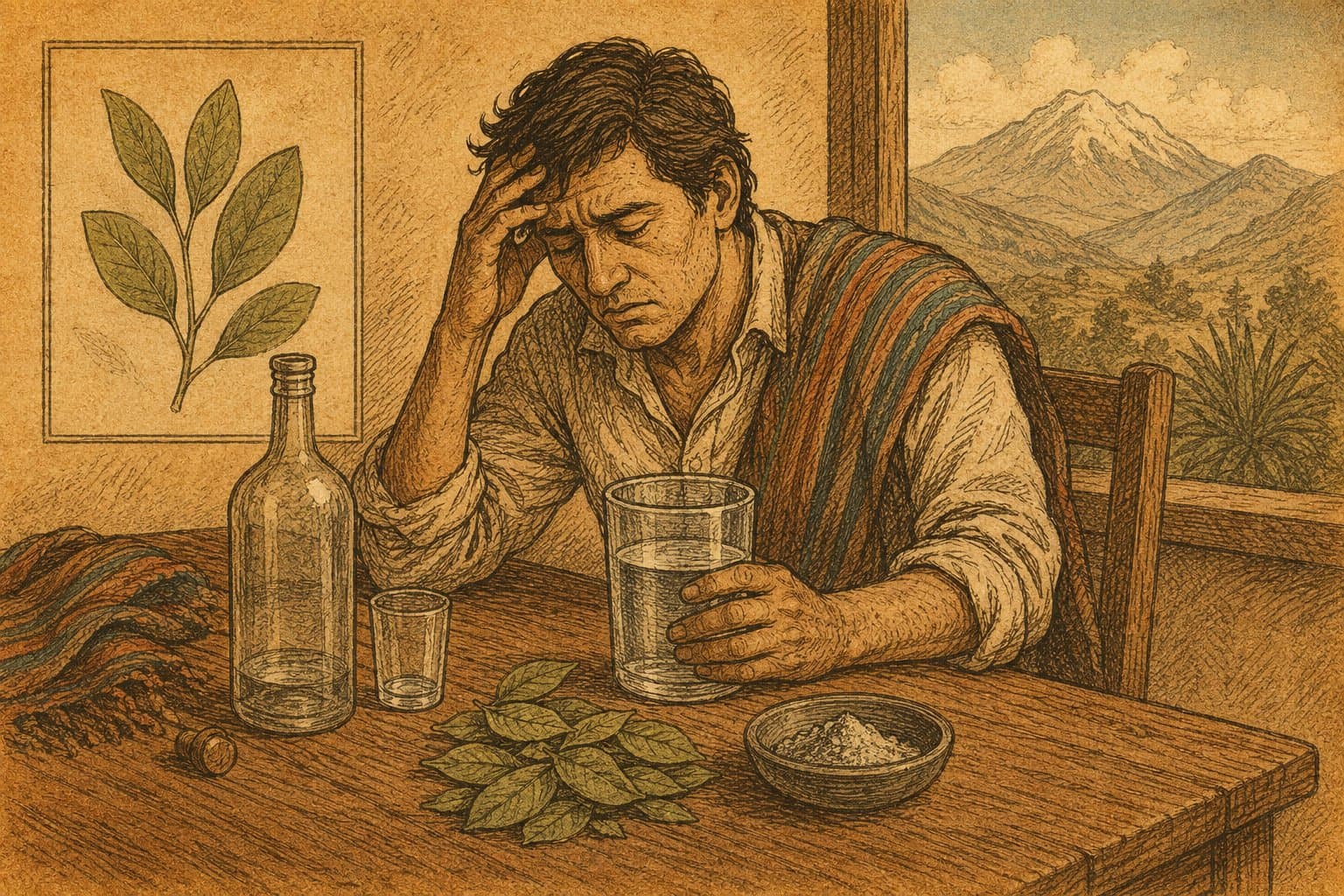
Few words are as Ecuadorian as chuchaqui. Every child learns to use it long before understanding what it really means, and it describes, with enviable precision, that sorry state of the morning after: the dry mouth, the pounding head, the stomach on strike, and the deep regret of having said “just one more and we're off.” The funny thing is that, if you cross the border and complain about your chuchaqui, chances are nobody will have the slightest idea what you mean. The word is ours —and its biography is far older than the beer that triggered it.
A word understood only in Ecuador
The morning-after misery has a different name in nearly every Spanish-speaking country. In Spain and much of the Americas it's resaca; in Mexico, cruda; in Colombia, guayabo; in Chile, caña; in Venezuela, ratón; in Central America, goma. Medicine, which has a serious word for everything, calls it veisalgia. But in Ecuador —and practically only in Ecuador— it's called chuchaqui.
That exclusivity is no accident: chuchaqui doesn't come from Spanish but from Quichua, the language spoken on this land long before the first barrel of cane liquor arrived. It's one of many Quichua words that slipped into our everyday Spanish and stayed for good, like ñaño (brother), guagua (baby) or achachay (how cold!). Only this one, instead of naming a sibling or the cold, ended up naming one of humanity's most universal experiences.
The Quichua root: “chaki” and the coca leaf
The explanation repeated by dictionaries and linguists traces the word back to the Quichua “chaki” (also spelled chaqui), and connects it to a very specific malaise: the one left behind by chewing coca leaves.
Chewing coca —the acullico or chacchado of the Andes— is an age-old practice among the indigenous peoples of South America. The leaf, mixed with a little alkaline ash, releases a mild stimulant that takes away hunger, fatigue, and altitude sickness. But when the effect wears off, it leaves behind a dull sensation, a kind of listlessness and dryness. That comedown was called, in Quichua, something related to chaki. The metaphor for the day after the party was almost inevitable: a body in pieces, a dry mouth, and the wish to stop existing for a while.
But “chaki” means, above all, “dry”
And here is the detail that makes the etymology fit perfectly. In Quechua, the root ch'aki / chaki means, in its most basic sense, “dry”, and by extension, “thirst.” The colonial Quechua vocabularies —starting with the one by the Jesuit Diego González Holguín, from 1608— already recorded the word with that meaning. And if there's one sensation that defines the day after, it's exactly that: the thirst, the cardboard mouth, the urge to drink water by the liter.
In fact, in the central Andes —southern Peru and much of Bolivia— the hangover is called outright ch'aki: “I'm ch'aki” means, literally, “I'm dry.” The same root, the same misery, two countries to the south. What Ecuadorian Quichua did was take that root and double the opening sound into chu-chaki, chuchaqui. That expressive doubling, that reduplication of syllables for emphasis, is a hallmark of the language: it stretches and hammers its words so they weigh more in the mouth. There is no —however much someone may have joked about it— hidden Greek or Latin prefix in that opening “chu”; it's Quichua from start to finish.
So the next time you wake up with a chuchaqui, take comfort in knowing you're pronouncing a small fossil of the language of the Incas and of the coca leaf —a word that has survived centuries, patiently waiting for each morning after. As we already saw with cocolón, which does not come from “cook too long”, with the word “pelucón”, and with the real origin of “gringo”, the words most truly ours almost always have a longer and more interesting story than we imagine.
References
- Carlos Joaquín Córdova, El habla del Ecuador. Diccionario de ecuatorianismos, Universidad del Azuay, Cuenca, 1995, s.v. "chuchaqui".
- Asociación de Academias de la Lengua Española, Diccionario de americanismos, 2010, s.v. "chuchaqui" (Ec., "malaise felt the day after drinking to excess"). asale.org
- Diego González Holguín, Vocabulario de la lengua general de todo el Perú llamada lengua qquichua o del Inca, Lima, 1608, s.v. "chhaqui / chaki" ('dry thing').
- El Telégrafo, "¿Qué significa chuchaqui?", Society section. eltelegrafo.com.ec
Enjoy the stories behind words? Continue with the real origin of “gringo” and the origins of “cocolón”, or browse the whole etymology series.
Categories
The books · born from this blog
Atahualpa con su abrigo de pelo de murciélago
y otras 49 historias verdaderas que parecen mentira
Available on Amazon
Tocar madera
Pequeña historia de las supersticiones que el mundo no ha podido soltar
Available on Amazon
100 futuros
Cien escenarios del mundo que viene con la inteligencia artificial
Available on AmazonYou may also like
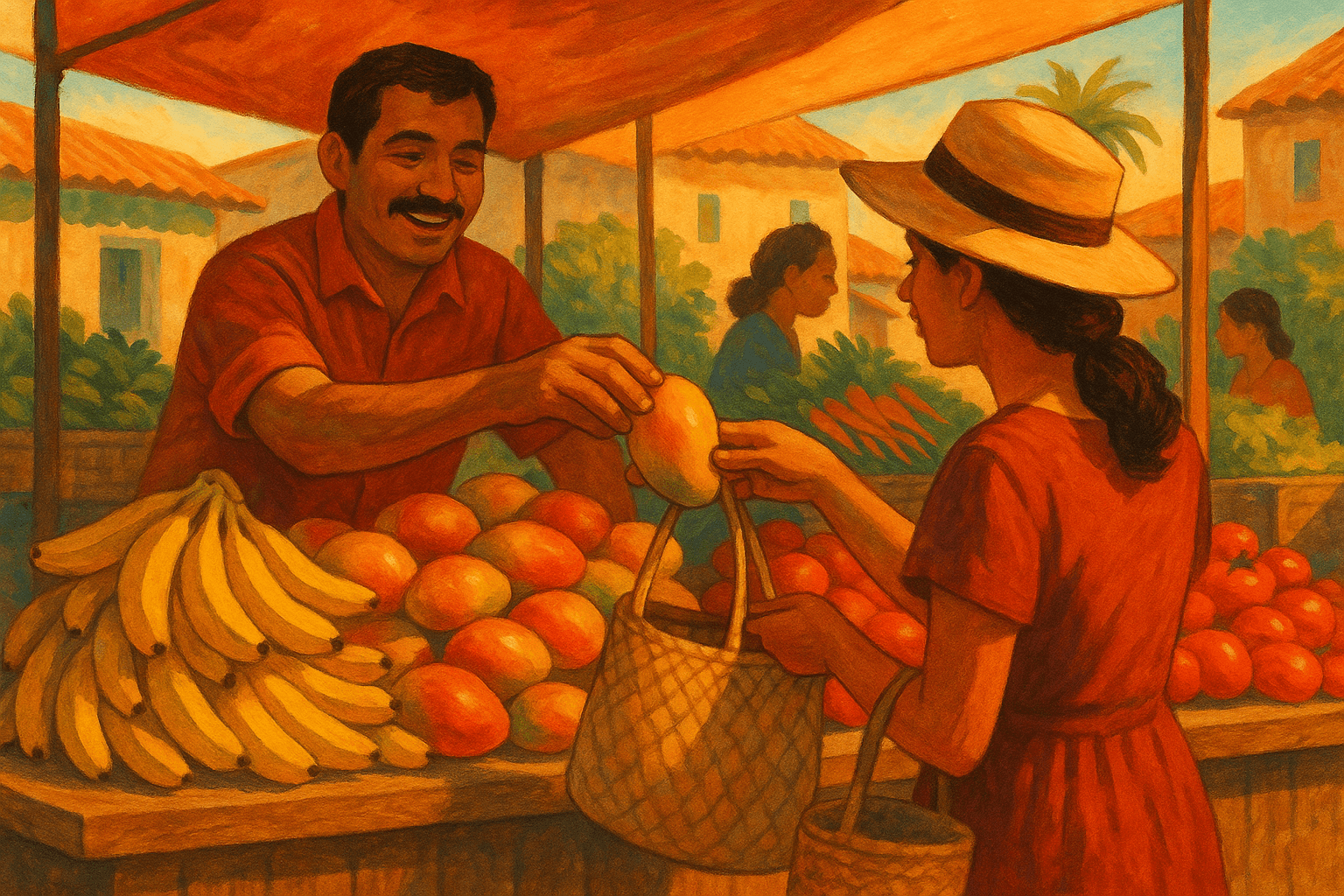
The Origin of “Ñapa”: From Quechua to Lagniappe
Where does the word ñapa come from? From Quechua yapa, “something added.” The story of the market freebie that traveled to Louisiana and became lagniappe.
The origin of the word alcohol: from makeup to the glass
«Alcohol» comes from the Arabic «al-kuhl», a black powder used as eye makeup. How a cosmetic ended up naming the most famous drink in the world.
The origin of the word bikini: a nuclear explosion
«Bikini» comes from the Pacific atoll where the U.S. tested atomic bombs in 1946. A French designer named his swimsuit that way so it would be «explosive».