
A Brief Study on the Origin of the Term "Pelucón"
The origin of «pelucón» runs from Renaissance wigs and English bigwigs to Chilean royalists, long before Correa revived it in Ecuador.
In 2007, Rafael Correa took office as President of the Republic of Ecuador and immediately dusted off a practically forgotten colloquial term to refer to the country's wealthy or moneyed class. This term is now in popular use, but… where did it come from?
In reality, the term is not new. It had already been used in other countries to stigmatize the social class "of high lineage," almost always for political purposes. In fact, in Latin America, in the nineteenth century, it was widely used in Chile to denote the conservative and royalist group (in favor of the Spanish monarchy) that did not want changes or independence because they held a privileged and comfortable position. It is speculated that around 1820 the term began to be coined. Its use was broad and extensive in Chilean political life.
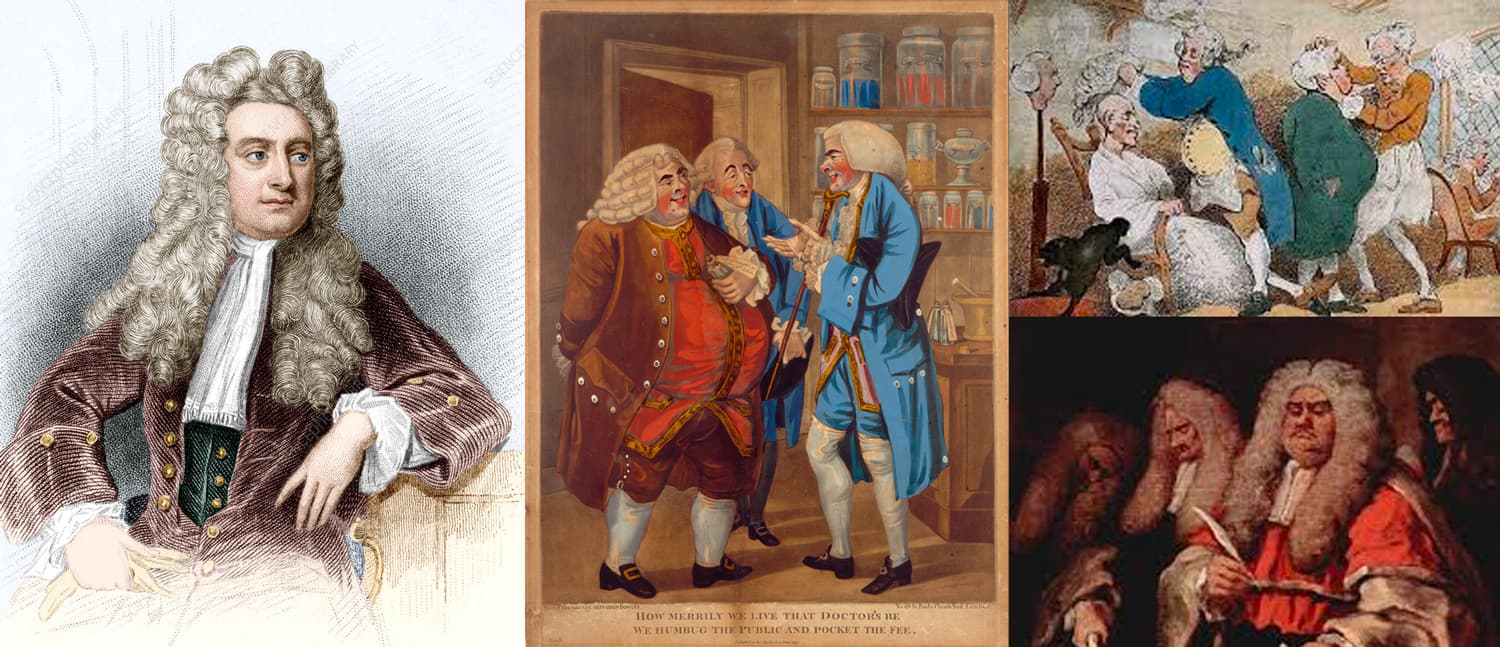
But "pelucón" has traveled through more than one country like a contagious virus, and its origins predate those mentioned here. In fact, when Correa himself was interviewed and asked about the term, he compared it to its literal translation into English: "BIG WIG," which would translate as "of large wig" or… pelucón. That's right, Bigwig was a term used in Europe, especially in England, to refer to the aristocracy, who wore large wigs as a symbol of status or social position.
In those times, acquiring and sporting one of these wigs was a luxury not everyone could afford.
The European pelucón
Who hasn't seen portraits of ancestral pelucones adorning palaces and manor houses? Or even in films, where these characters appear clad in florid hair and snooty attitude. Museums around the world have a picturesque legacy from this era, which is estimated to have begun back around the 1600s and from there spread throughout Europe and even America.
Some historians say the fashion was imposed by Louis XIII in France, as a way to hide his premature baldness, and as always happens with fashion, when some celebrity adopts a style that makes them "distinguished," others also want to distinguish themselves and follow suit. That's why jewelry and handbag brands dress celebrities of the moment for free with their new models.
Well, the thing is that famous figures, even founding fathers or distinguished scientists, used these wigs as part of their attire. For example, for many European judges, the wig was almost part of their uniform.
And since it was a status symbol, the fashion also spread to the common people, because in the absence of a wig, it was more accessible to let one's hair grow long and wavy, neatly combed, adorned with sumptuous and lacy outfits. Remember the portraits of the very American founding father George Washington or the brilliant scientist Isaac Newton.
Up to this point, the reader will have noticed that the term "pelucón" has a long tail that transports us to a remote and Renaissance past. They will also have noticed that its journey to the present world has been wrapped in contrasts, chiaroscuros between fashion and political strategies. It has gone from being a symbol of social status to being used with the purpose of stigmatizing or offending a social group.
Returning to Ecuador
But the history of this peculiar term does not end here yet. Its arrival in today's Ecuador was not in 2007, as I cited at the beginning of this article. Ecuador had already been lexicographically infected before, much earlier, only we had forgotten it.
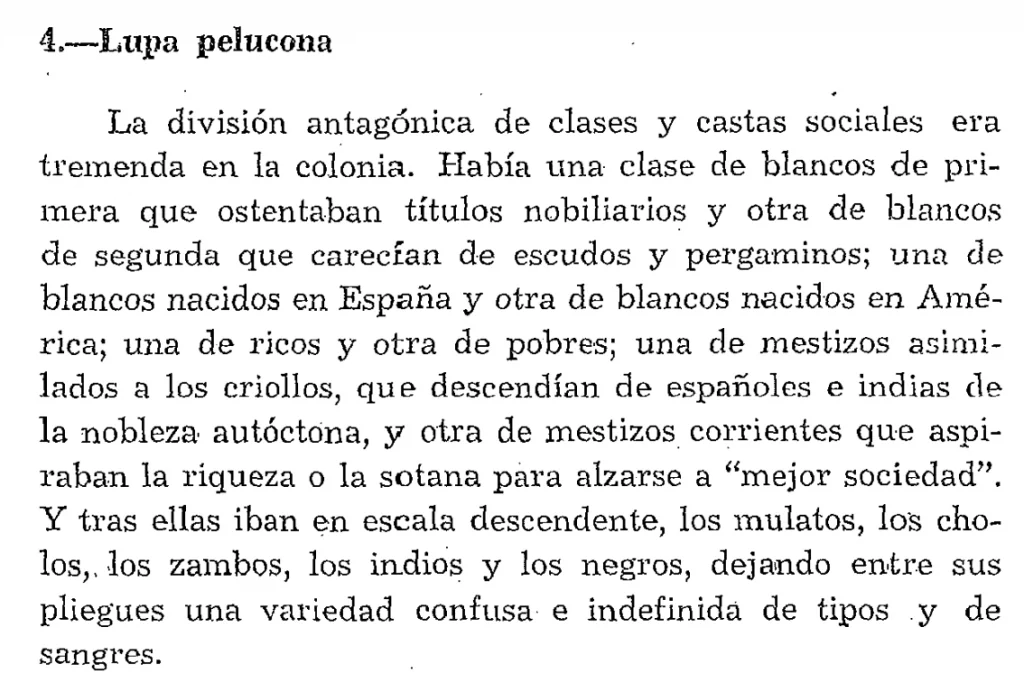
At the beginning of the twentieth century the term was already used in Ecuador with a somewhat less political meaning and more with the intention of denoting a fashion, generally linked to youth. Evidence of this are some appearances of the term in the newspaper Los Andes, in the year 1918. References to the term are found up to the 1950s where it begins to disappear from the mouths of Ecuadorians. In the year 1933 it is mentioned in the book PROVINCIALISMOS ECUATORIANOS, from which I have extracted the following image and meaning.

In addition, another interesting reference appears in the REVISTA DE LA CASA DE LA CULTURA ECUATORIANA N.14, from 1953. Here the term is mentioned and associated with an evident classism in the colonial era.
With this I conclude this brief investigation, which I hope has entertained the reader 😉
Other references:
Chilean politics: "Pelucones: Parties, movements and coalitions"
Enjoy the stories behind words? Continue with why Chipipe is not “shit pipe” and the buccaneers and barbecued meat, or browse the whole etymology series.
The books · born from this blog
Atahualpa con su abrigo de pelo de murciélago
y otras 49 historias verdaderas que parecen mentira
Available on Amazon
Tocar madera
Pequeña historia de las supersticiones que el mundo no ha podido soltar
Available on Amazon
100 futuros
Cien escenarios del mundo que viene con la inteligencia artificial
Available on AmazonYou may also like
The Origin of the Word “Quarantine”: 40 Days in Venice
Where does the word quarantine come from? From the 40 days that Venice and Ragusa forced ships to wait during the Black Death. Here is its story.
The Origin of the Word “Dollar”: a Bohemian Valley
Where does the word dollar come from? From a silver-mining valley in Bohemia and a 16th-century coin. The story of the thaler that conquered the world.
The Origin of the Word “Museum”: House of the Muses
Where does the word museum come from? From mouseion, the temple of the Greek Muses and the great center of learning in Alexandria, long before glass cases.