
The origin of the word bikini: a nuclear explosion
«Bikini» comes from the Pacific atoll where the U.S. tested atomic bombs in 1946. A French designer named his swimsuit that way so it would be «explosive».
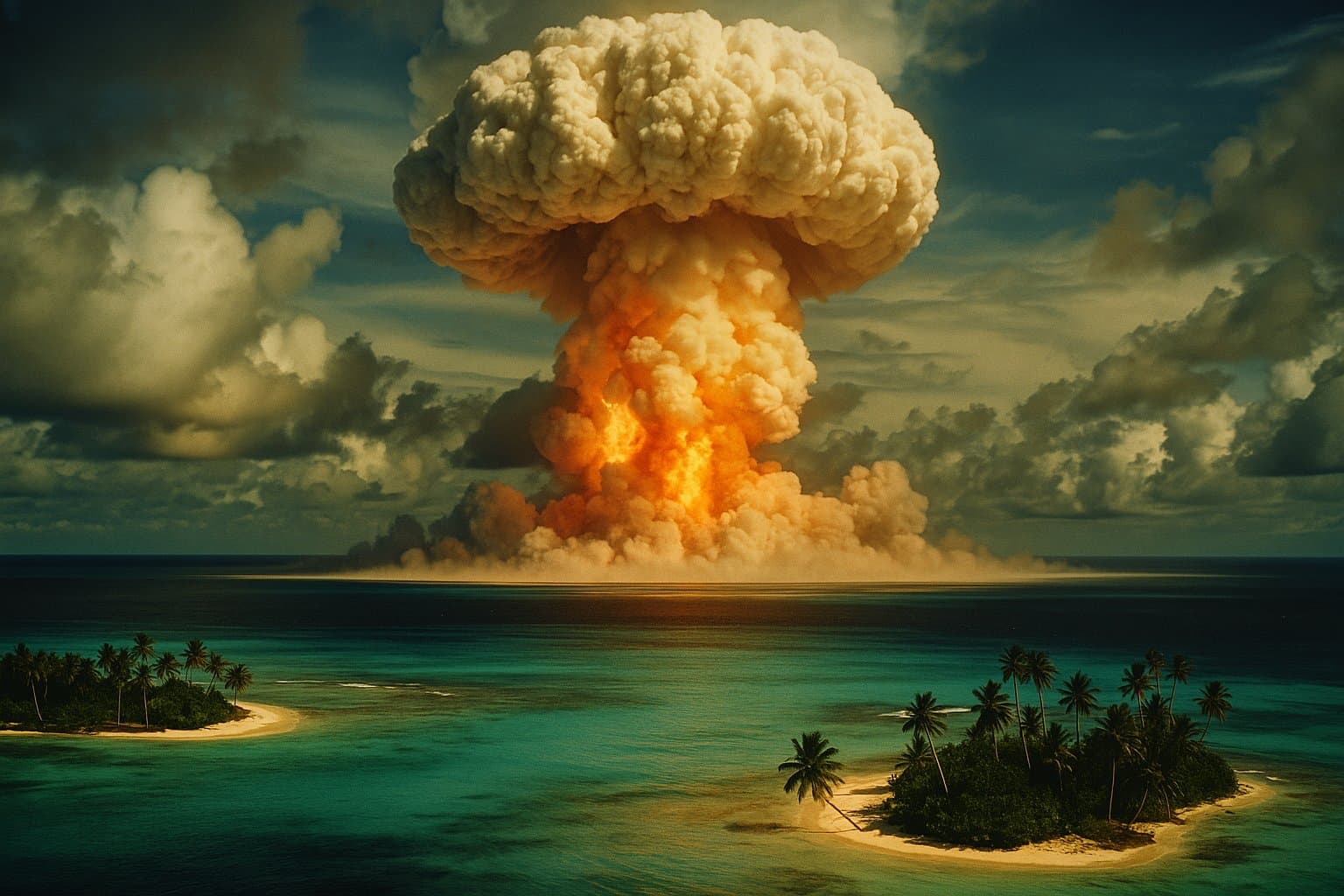
Every summer, millions of people wear a bikini without suspecting that its name was born from one of the most sinister images of the twentieth century: an atomic mushroom cloud over the Pacific Ocean. The lightest garment on the beach carries the name of a place where the United States detonated nuclear bombs and displaced an entire people from their island. Behind a cheerful, summery word hides a story of marketing, radiation and an atoll that was never habitable again.
The atoll that named it all
Bikini Atoll is a ring of 23 coral islets in the Marshall Islands, in the middle of the Pacific. Its name is neither English nor French: it comes from the Marshallese Pikinni, a combination of pik («surface») and ni («coconut tree»). In other words, something like «surface of coconuts». The German colonizers, who administered the Marshalls in the late nineteenth century, transliterated that name as «Bikini», and so it stayed on Western maps.
For centuries it was a remote, peaceful place, home to a few hundred people who lived off fishing and the coconut. Everything changed in 1946, when the name of that lost atoll leapt onto front pages around half the world for a terrible reason.
Operation Crossroads: bombs in paradise
With the Second World War over, the United States wanted to study the effect of atomic weapons on warships. It chose Bikini Atoll as the stage and christened the plan Operation Crossroads. Before it began, the Navy displaced the atoll's 167 inhabitants, promising them a return that in practice would never be safe: radioactive contamination left the atoll uninhabitable for decades, a toxic legacy much like the one left behind by lead when it was in gasoline and almost everything else.
On July 1, 1946, the first bomb, «Able», went off; days later the second, «Baker», underwater. Images of the atomic mushroom cloud over the lagoon traveled around the planet. During those weeks, «Bikini» was one of the most repeated words in the world's press. And that is where a French engineer with a very good nose for publicity enters the scene.
Louis Réard and the "explosive" swimsuit
Louis Réard (1897–1984) was not a fashion designer but an automobile engineer. When he took over his mother's lingerie business in Paris, he began experimenting with swimwear. In the summer of 1946 he was preparing a revolutionary design: two minimal pieces, a bra top and two triangles of fabric joined by strings, which for the first time left the navel bare.
Réard wanted a name that conveyed the impact of his creation. With Bikini Atoll in every newspaper, the choice was almost inevitable: he called his swimsuit the bikini, betting that the garment would cause a shock in society as «explosive» as an atomic bomb. It was pure advertising calculation: to associate a few centimeters of cloth with the most devastating force humanity had just unveiled.
The war against the "atom"
Réard was not the only one playing with the nuclear imagery. Weeks earlier, another French designer, Jacques Heim, had launched his own two-piece and called it the Atome («atom»), advertising it as «the smallest swimsuit in the world». But Heim's still covered the navel.
Réard answered with a line that became legendary: his bikini was «smaller than the smallest swimsuit in the world». To drive it home, he said a true bikini had to be able to pass through a wedding ring. The rivalry between the «atom» and the «bikini» was, at heart, a war of names inspired by the same bomb. The one that sounded more emphatic won, just as a place name or a surname can turn into an everyday word, as when a stingy French minister christened the «silhouette».
Micheline Bernardini and the wedding ring
On July 5, 1946, Réard unveiled his creation at the Molitor swimming pool in Paris. The problem was that no professional model would wear anything so daring. The only one willing was Micheline Bernardini, a nude dancer from the Casino de Paris. The photograph of Bernardini in that tiny suit —printed with newspaper clippings— became the first image of a bikini as we understand one today.
The scandal worked exactly as Réard had hoped. Bernardini received, according to legend, tens of thousands of letters from admirers. The garment was banned on several beaches in Europe and the United States, branded indecent, but the name —and the image— were already unstoppable. As with so many consumer fashions, controversy was the best sales engine; a logic not so different from the one that surrounded other substances and habits that began as taboo, like the tobacco an ambassador made fashionable at the French court.
From place name to a family of words
Over the years the name was popularly broken into two parts, as if bi- meant «two». That is not true etymologically —the «bi» of the atoll has nothing to do with the Latin number— but the false logic proved so convenient that it spawned a whole family of garments. In 1964, designer Rudi Gernreich launched the monokini (a topless suit), playing on that «mono-» for «one». Then came the trikini, the tankini and other variants, all daughters of a linguistic split that never existed in the original Marshallese.
So a Pacific atoll gave its name not only to a garment but to a whole vocabulary of beachwear. Few words have traveled so far from their origin: from «surface of coconuts» in the Marshall Islands to a routine label in any shop in the world.
The forgotten echo of an island
While the bikini triumphed on the beaches, the people of Bikini Atoll remained in exile. Moved first to the island of Rongerik, they suffered hunger and hardship; later attempts to resettle their home failed because of the radiation levels that lingered in the soil and in the coconuts. Decades on, the atoll is still practically uninhabited, and its former people scattered across other islands.
Every time someone talks about a bikini they pronounce, without knowing it, the name of that place and that tragedy. Like so many words worn down by use until their origin is forgotten —and as happens with «assassin» and the legend of hashish— «bikini» lost its historical weight along the way. But there it remains, hidden in the most summery of garments: the echo of a nuclear explosion and of an island that never got its people back.
References
- «Bikini», Wikipedia. en.wikipedia.org
- «Bikini introduced», HISTORY. history.com
- «How the Summer of Atomic Bomb Testing Turned the Bikini Into a Phenomenon», Smithsonian Magazine. smithsonianmag.com
- «Bikini Atoll», Wikipedia. en.wikipedia.org
Do you enjoy the stories behind words? Continue with the origin of «nicotine» or explore the whole etymology series.
Categories
The books · born from this blog
Atahualpa con su abrigo de pelo de murciélago
y otras 49 historias verdaderas que parecen mentira
Available on Amazon
Tocar madera
Pequeña historia de las supersticiones que el mundo no ha podido soltar
Available on Amazon
100 futuros
Cien escenarios del mundo que viene con la inteligencia artificial
Available on AmazonYou may also like
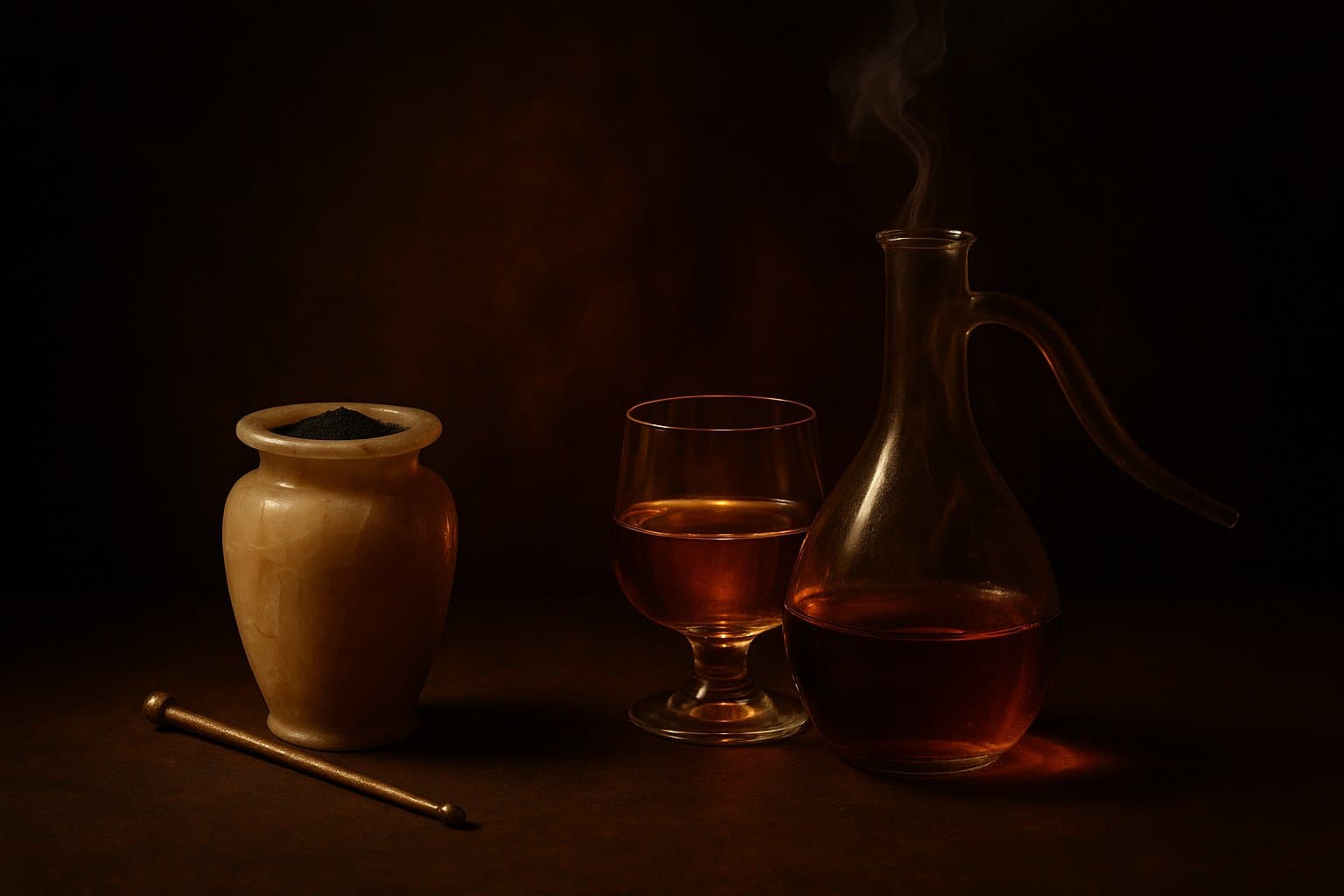
The origin of the word alcohol: from makeup to the glass
«Alcohol» comes from the Arabic «al-kuhl», a black powder used as eye makeup. How a cosmetic ended up naming the most famous drink in the world.

The origin of the word nicotine: a French ambassador
«Nicotine» comes from Jean Nicot, the ambassador who sent tobacco to Catherine de' Medici in 1560. How a surname ended up naming an addictive molecule.

The origin of the word sandwich: an earl and a table
«Sandwich» comes from the title of an 18th-century English noble. Legend says it was to keep playing cards; history hints at something duller.