
The Origin of the Word Guagua in the Andes
«Guagua» means baby across much of the Andes and comes from the Quechua and Aymara wawa. Here is the story of the word and its curious double: the bus.
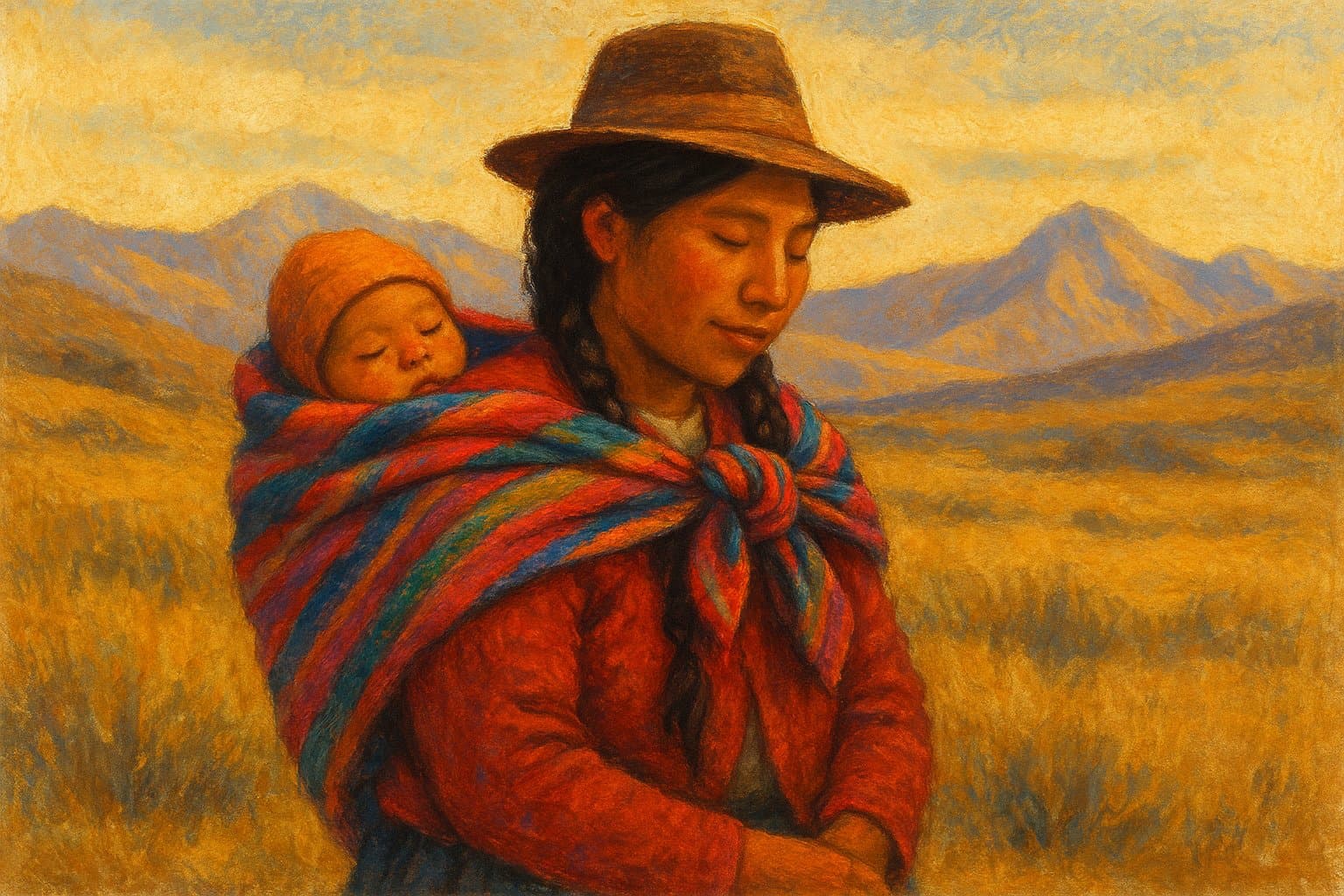
Across much of South America, calling a baby «guagua» is the most natural thing in the world. In Ecuador, Peru, Bolivia, Chile and southern Colombia, a guagua is a small child, a newborn, and very often an affectionate nickname for a son or daughter, whatever their age. The word feels so everyday that almost no one stops to wonder where it comes from. And yet, behind those two syllables lies one of the most widely spoken languages of the Americas before the Spanish arrived—and a story that ends, unexpectedly, on a bus.
A word that comes from Quechua (and Aymara)
«Guagua» is a loanword from the Andean languages. In both Quechua and Aymara the word is wawa, and it means exactly the same thing: small child, baby, infant. It is an ancient term, shared by the two great language families of the highlands, which gives a sense of how deeply rooted it is in Andean culture.
When that word passed into Spanish, it underwent a very regular sound change. The Quechua /w/, which had no comfortable spelling in Spanish, was adapted as /gu/: the same process that turns English whisky into «güisqui». So wawa became guagua, a word that is perfectly Spanish in form but indigenous at its core. It is not an isolated case: Andean Spanish is full of these loans, like soroche for altitude sickness or chuchaqui for a Quito hangover.
Why it sounds almost like crying
There is a charming theory about why the word is wawa and not something else: it may be onomatopoeic. That is, it would imitate the sound a baby makes when it cries—that universal «waaa, waaa!»—just as «tick-tock» imitates a clock. This is not unique to Quechua: in a great many of the world's languages, with no contact between them, the words for «baby» or «mother» are suspiciously alike (baby, baba, mama, papa), because they are born from the first sounds a child can pronounce.
Onomatopoeia or not, what is certain is that guagua is documented in American Spanish from the seventeenth century onward and never fell out of use. Unlike so many learned words that feel foreign, this is a word of intimacy: the one a mother says, the one whispered beside a cradle. That is why it has survived five centuries without losing an ounce of its tenderness.
From cradles to altars: the bread babies
In Ecuador, the word gave rise to one of the most beloved traditions of the year. Every November 2, on the Day of the Dead (Día de los Difuntos), bakeries fill up with guaguas de pan: dough figures shaped like a swaddled child, decorated with colors and filled with sweet jam, served alongside the thick, purple colada morada drink. The bread baby tenderly represents the loved ones who are no longer here, especially the youngest ones.
The name says it all. It comes from the Aymara and Quechua t'anta wawa, literally «bread child» (t'anta is bread; wawa, child). In 2023, Ecuador's Ministry of Culture added colada morada and guaguas de pan to its list of Intangible Cultural Heritage, recognizing that these edible figures are far more than a dessert: they are memory, identity, and a bridge between the living and the dead that is chewed once a year.
The other guagua: the one with wheels
Here comes the surprise. If a Cuban, a Canary Islander, a Puerto Rican or a Dominican hears «guagua», they do not think of a baby: they think of a bus. And no, it is not the same word that traveled and changed its meaning. They are two homonyms with completely different origins that, by sheer coincidence, sound identical.
The bus-guagua is of Cuban origin and was born in the twentieth century from the English waggon («wagon», «cart»), pronounced roughly like «guagón». From Cuba the term jumped to the Canary Islands, carried by emigrants, and today those four places—Cuba, Puerto Rico, the Dominican Republic and the Canary Islands—are almost the only ones in the Spanish-speaking world where people «catch the guagua» to get to work. It is one of those cases where two words born in opposite worlds—the Andean highlands and a Caribbean port—end up spelled exactly the same, as happens with so many words of indigenous root that Spanish absorbed and transformed.
So the next time someone says «guagua», it is worth asking which one they mean. It might be a Cuban bus with echoes of English, or it might be what it was first and what it still is across half a continent: the oldest and sweetest way of naming a newborn, a word the Andean peoples have been saying, beside their children, since long before Spanish existed.
References
- Eva Bravo, «Guagua: una palabra viajera con alma americana». ebravo.es
- RAE-ASALE, Tesoro de los diccionarios históricos de la lengua española, s. v. «guagua». rae.es
- «T'anta wawa», Wikipedia. en.wikipedia.org
- «wawa», Wiktionary. en.wiktionary.org
Do you enjoy the stories behind words? Continue with the origin of «soroche» or explore the whole etymology series.
The books · born from this blog
Atahualpa con su abrigo de pelo de murciélago
y otras 49 historias verdaderas que parecen mentira
Available on Amazon
Tocar madera
Pequeña historia de las supersticiones que el mundo no ha podido soltar
Available on Amazon
100 futuros
Cien escenarios del mundo que viene con la inteligencia artificial
Available on AmazonYou may also like

Why Money Is Called “Plata” in Latin America
Why do so many Latin Americans call money “plata” (silver)? The answer lies in a metal, the mountain of Potosí, and coins that once circled the whole globe.
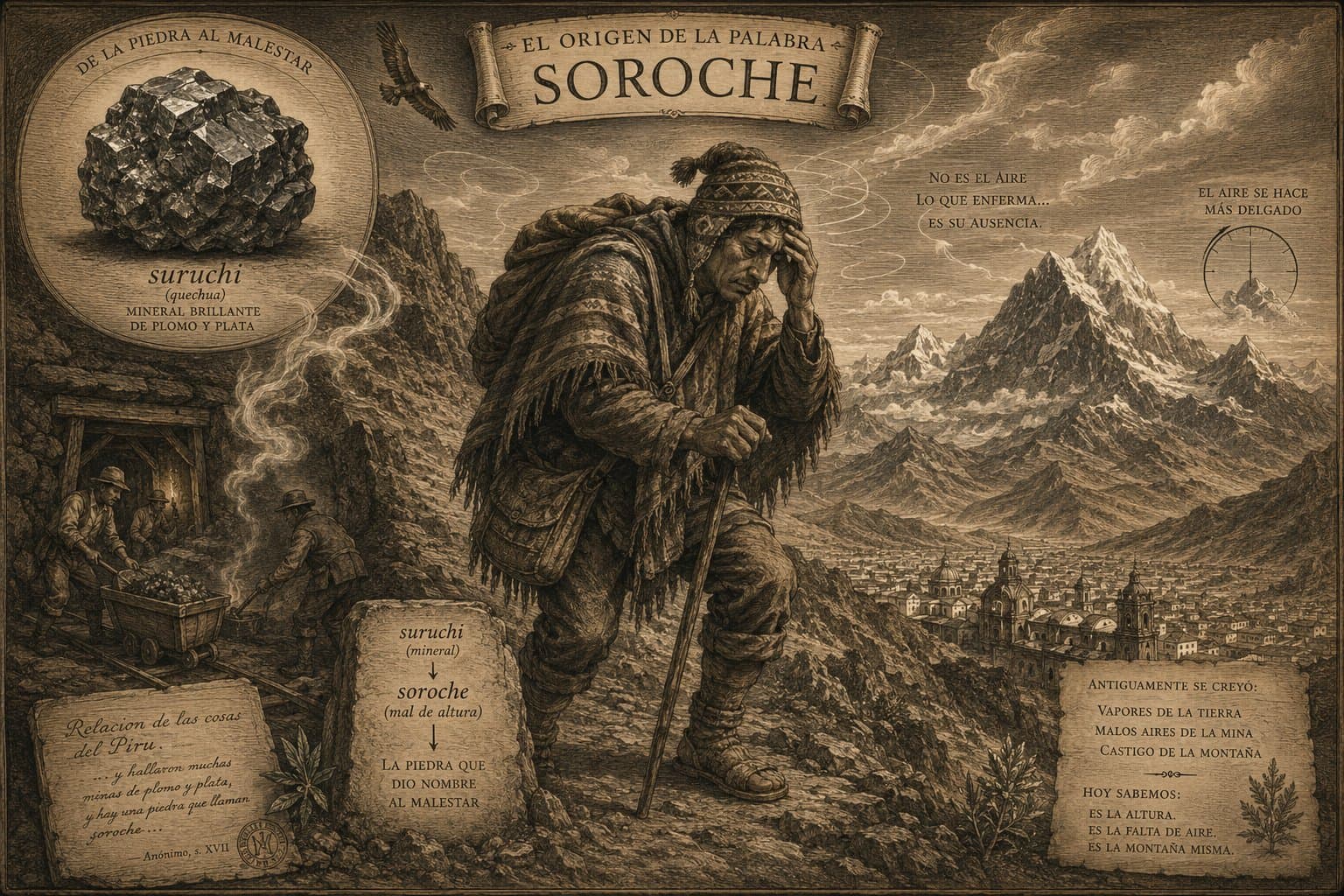
The Origin of the Word “Soroche”
Soroche, the altitude sickness of the Andes, owes its name not to the air but to a mineral: for centuries its vapours were blamed for sickening travellers.

The Origin of the Word “Quarantine”: 40 Days in Venice
Where does the word quarantine come from? From the 40 days that Venice and Ragusa forced ships to wait during the Black Death. Here is its story.