
The Origin of the Word “Mortgage”: the Debtor’s Stone
Where does the word mortgage come from? From a French “dead pledge” and, further back, a Greek stone driven into a debtor’s land to mark the debt.
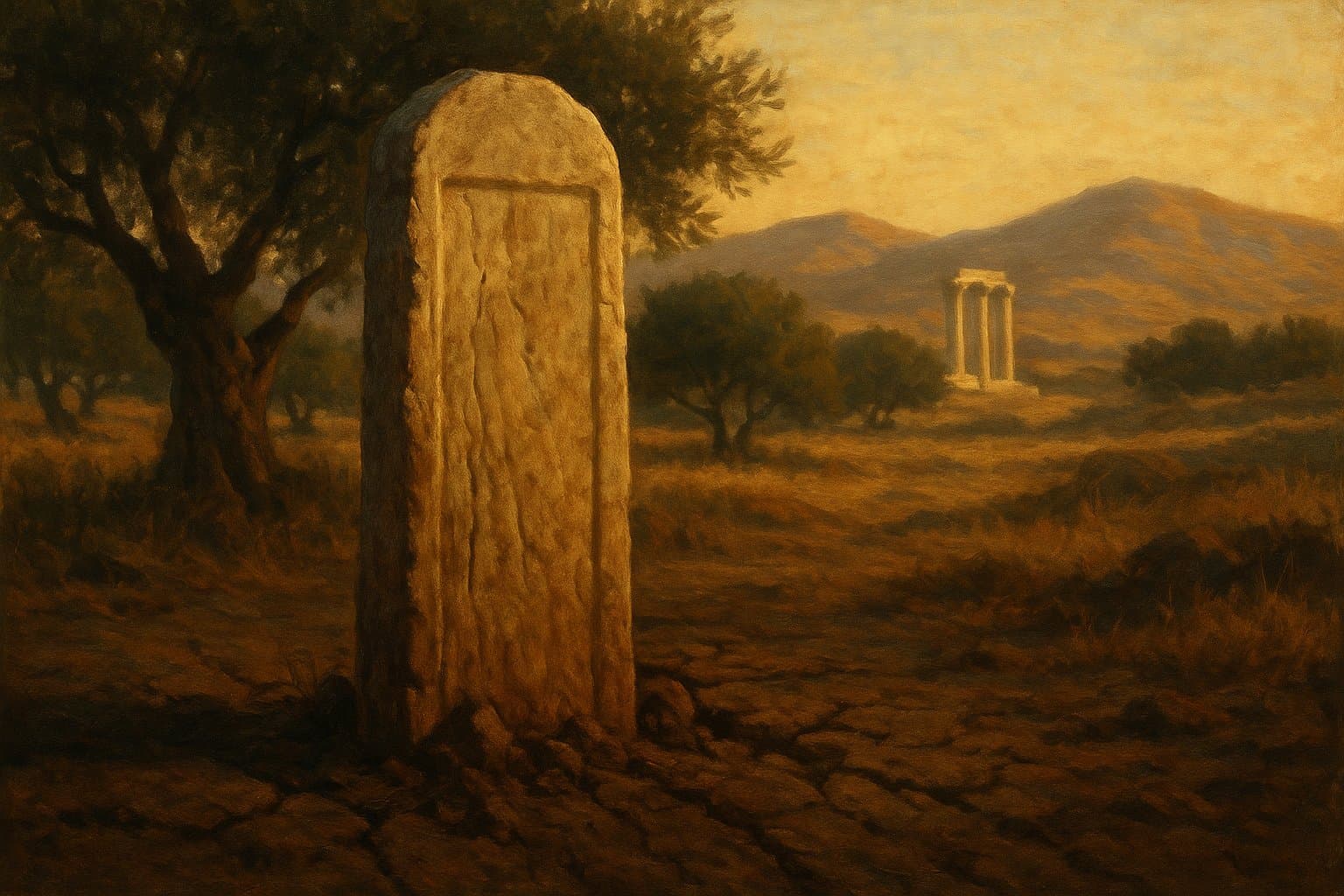
A mortgage is, for most people, the largest and longest debt of their lives: the loan that buys a house and chains you to the bank for twenty or thirty years. The word sounds modern, financial, almost bureaucratic. And yet it hides two of the darkest little images in the whole language of money. The English word means, quite literally, a “dead pledge”. And its deeper ancestor —the Greek idea that Spanish and French still call hipoteca and hypothèque— was a stone that the Greeks drove into a debtor’s land so that anyone walking past would know, at a glance, that the ground was no longer entirely free.
Mortgage: the dead pledge
“Mortgage” comes from Old French morgage, a compound of mort (“dead”) and gage (“pledge”): a dead pledge. The explanation most often quoted comes from the English jurist Sir Edward Coke, writing in 1628. The pledge is “dead”, he said, because of what happens at the deadline. If the borrower pays, the creditor’s claim on the land dies and the property is released; if the borrower fails to pay, the land “is taken from him for ever, and so dead to him”. Either way, something dies —which is a bleak way to name the loan on your home.
The contrast was with a “living pledge”, the vif gage, in which the lender took the income of the land (its crops, its rents) and used it to pay down the debt over time. In a dead pledge the land produced nothing for the lender while the loan ran; it just sat there as security, inert, until the day of reckoning. English kept this grim French metaphor. The French themselves, ironically, dropped mort gage and switched to hypothèque —which takes us back much further, to Greece.
Hypothec: to place something underneath
Behind hypothèque, Spanish hipoteca and the English legal term hypothec lies the Greek ὑποθήκη (hypothḗkē), built from hypo- (“under”) and thḗkē (“a case, a deposit, something placed”), from the verb tithénai, “to put”. Literally, then, it is “that which is placed underneath”: a foundation, a base, something set below to hold up something else. The economic leap was short. A hypothec is the asset placed “under” a debt as security, the base on which the promise to pay rests —the same family that gave us “thesis” and “theme”.
The horos: the stone that announced the debt
Here is where the stone comes in. In classical Attica, when a farm or a house was pledged as security for a loan, there were no land registries and no deeds filed away in a ministry. The debt was publicized in the most direct way imaginable: a stone marker called a horos (ὅρος, “boundary, mark”) was set up on the property, often inscribed to say that the ground was “placed under” a debt, along with the creditor’s name and the sum owed.
The horos made visible something that would otherwise have been invisible. Anyone crossing the field or approaching the house read the stone and understood: this land answers for a debt. It was, in effect, a land registry in the open air, carved in stone and driven into the soil. And here is the crucial point: unlike a pledge you handed over, the debtor went on living in the house and working the land. In use it was still his; only the stone remembered that, if he failed to pay, it would stop being so. The Greeks applied to debts the same fussiness with which they measured everything, right down to the tiny units that also named the scruple, the pebble in the sandal.
Solon and the stones pulled from the black earth
These stones play a starring role in one of the most famous episodes in the history of Athens. Around 594 BC the city was on the edge of civil war: many farmers had mortgaged their land and their own persons, and those who could not pay fell into debt-slavery. The lawgiver Solon was appointed to fix the disaster, and one of his first measures was the seisachtheia, the “shaking off of burdens”: he cancelled outstanding debts, banned loans that pledged the debtor’s own freedom, and freed those already enslaved.
The symbolic gesture of that reform was precisely to tear up the horoi. Aristotle, in the Constitution of the Athenians, quotes a poem by Solon himself in which he boasts of having removed “the boundary stones fixed in many places” from the “black earth, once enslaved and now free”. Pulling up the stone was the same as erasing the debt: without the horos, the plot belonged fully to the farmer again. Rarely has an economic reform had so concrete an image —digging stones out of the fields— to mean the liberation of an entire social class.
From the Greek pledge to the Roman hypotheca
It was the Romans who turned all this into a polished legal figure and borrowed the Greek name to mark it out. Roman law had the pignus, the pledge that required handing the object over to the creditor, and the hypotheca, a security in which the asset —usually real estate— was bound to the debt without changing hands. That was the great advantage: the debtor kept the house or the field and went on living off it, while the creditor held the right to seize it if payment failed. That is, in essence, the mortgage as we know it today —whichever grim metaphor your language happened to keep. Like the word “money” or the giant stone-money of the island of Yap, the history of finance is full of objects that said more than any contract.
References
- “Mortgage”, Online Etymology Dictionary: from Old French morgage, “dead pledge” (mort + gage), with Coke’s explanation that the pledge is dead whether the debtor pays or not. etymonline.com
- “Hypothec”, Wikipedia: from Greek hypothḗkē via Late Latin hypotheca; a non-possessory security over an asset, as opposed to the possessory pignus of Roman law. en.wikipedia.org
- “Horoi (mortgage stones)”, Encyclopædia Britannica: inscribed boundary stones set up on Attic houses and land to give public notice that the property was mortgaged and to whom. britannica.com
- “Debt in Ancient Athens and Solon’s Reforms”, Kosmos Society (Center for Hellenic Studies, Harvard): Solon’s seisachtheia, the cancellation of debts and the removal of the horoi in the poem quoted by Aristotle. kosmossociety.org
Enjoy the stories behind words? Continue with the origin of “money” and that of “scruple”, or browse the whole etymology series.
The books · born from this blog
Atahualpa con su abrigo de pelo de murciélago
y otras 49 historias verdaderas que parecen mentira
Available on Amazon
Tocar madera
Pequeña historia de las supersticiones que el mundo no ha podido soltar
Available on Amazon
100 futuros
Cien escenarios del mundo que viene con la inteligencia artificial
Available on AmazonYou may also like

The Origin of the Word “Quarantine”: 40 Days in Venice
Where does the word quarantine come from? From the 40 days that Venice and Ragusa forced ships to wait during the Black Death. Here is its story.
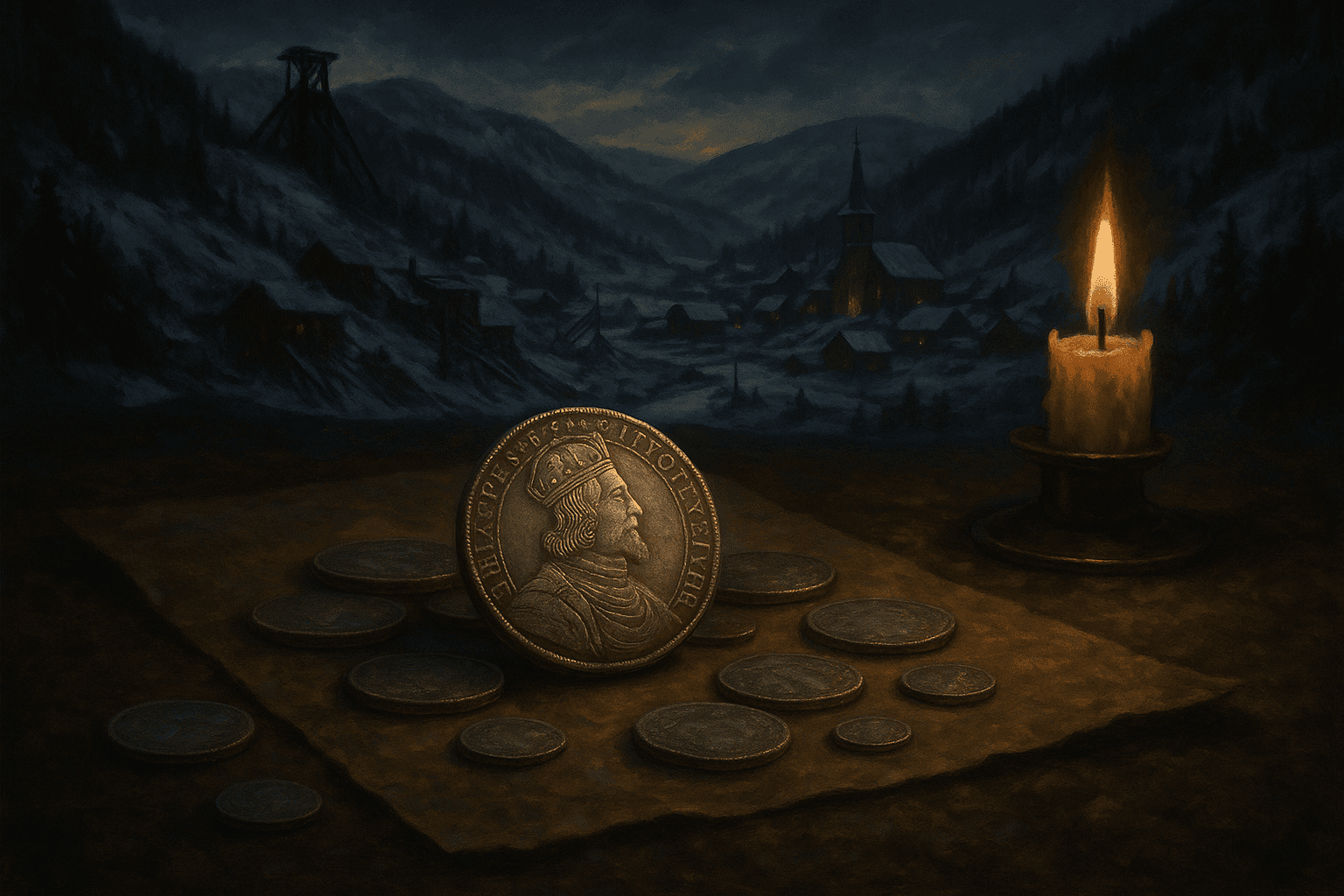
The Origin of the Word “Dollar”: a Bohemian Valley
Where does the word dollar come from? From a silver-mining valley in Bohemia and a 16th-century coin. The story of the thaler that conquered the world.
The Origin of the Word “Museum”: House of the Muses
Where does the word museum come from? From mouseion, the temple of the Greek Muses and the great center of learning in Alexandria, long before glass cases.