
The Typewriter and the War on Bad Handwriting
The typewriter was born to defeat illegible handwriting. The story of the machine that standardized the office and brought women into the workforce.
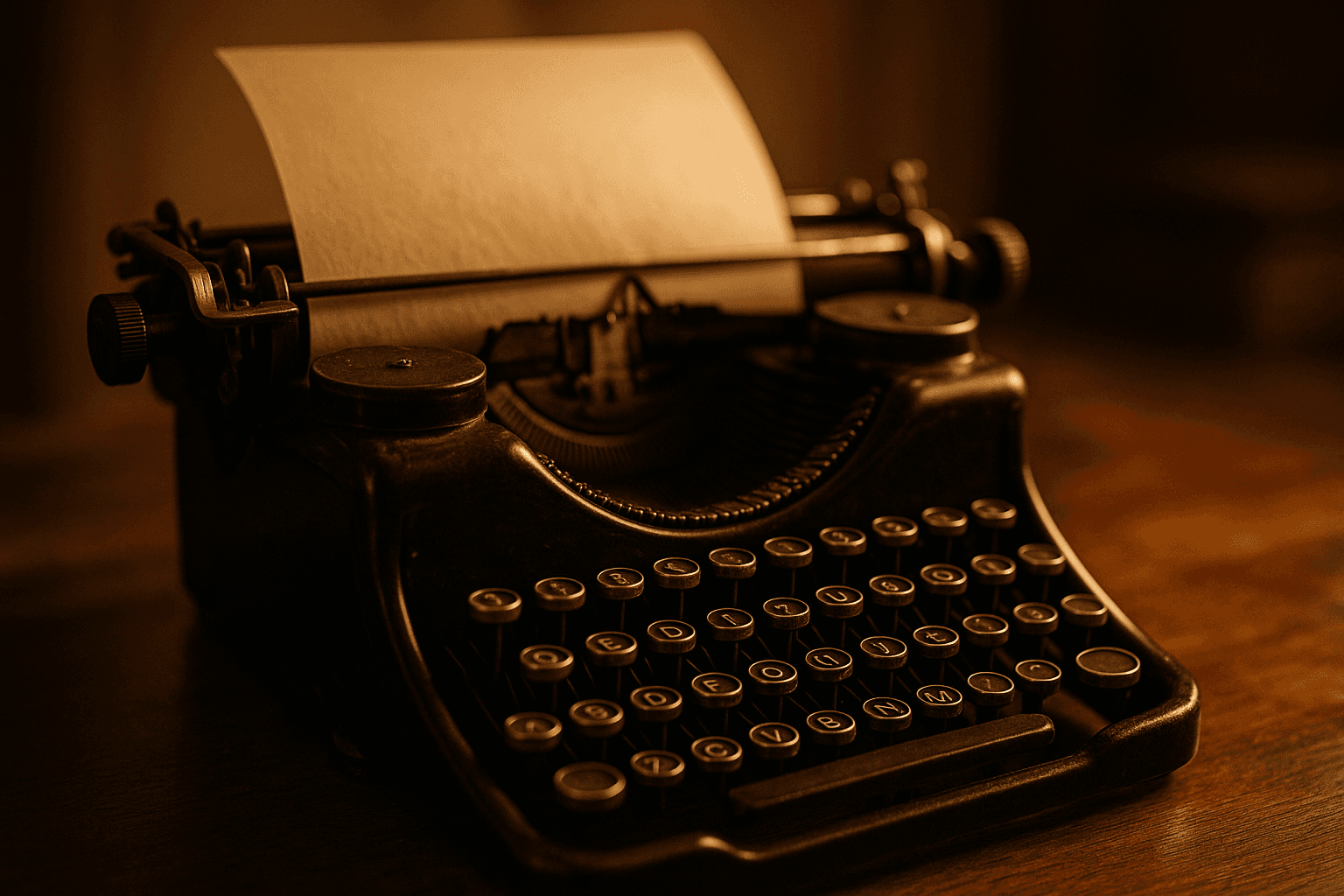
For centuries, every letter, contract, or ledger depended on a single flawed tool: the hand of whoever was writing. And hands fail. They tire, they tremble, they smear the ink, they invent flourishes nobody else can read. The typewriter didn't arrive merely to save time; it came to solve a problem as old as writing itself—making sure a person's letters could always be read the same way, no matter who put them on the page. Its history is, to a large extent, the story of a long war against bad handwriting.
When handwriting was a serious problem
It's hard to picture now, but illegible handwriting was a constant source of costly mistakes. A misdrawn figure in a ledger, a garbled surname on a contract, an undecipherable prescription: every crooked stroke could cost money or spark a lawsuit. In nineteenth-century offices, armies of copyists rewrote documents by hand, and even so the result hung on each clerk's steadiness and penmanship.
The promise of a machine that would print uniform letters, identical line after line, was enormous. It wasn't about writing faster—at first it wasn't even faster—but about making the text readable without effort and without ambiguity. Typesetters, who suffered authors' illegible manuscripts every day, were among the first to dream of it.
Turri, the blind countess, and the first machine
The idea is older than it seems. One of the first devices that actually worked was built around 1808 by the Italian Pellegrino Turri—not for an office, but out of affection. His friend, Countess Carolina Fantoni da Fivizzano, had gone blind and could no longer write letters on her own. Turri made her a machine that stamped letters onto paper, and to supply the ink he invented, along the way, an early form of carbon paper.
We don't know what that invention looked like, but we do have its results: some sixteen letters written by the countess are kept in a museum in Reggio Emilia and are the oldest typewritten texts in existence. The very first typewriter in history was born, oddly enough, for someone who couldn't see what she was writing.
The seventy-sixth inventor
Between that machine and the one that conquered the world lay dozens of failed attempts: contraptions that were huge, painfully slow, or harder to work than a pen. It's been said, half in jest, that Christopher Latham Sholes was "the seventy-sixth inventor" of the typewriter, because he arrived after a long line of predecessors who never landed on a practical model.
Sholes was a printer, newspaperman, and politician from Milwaukee. With Carlos Glidden and Samuel Soulé, he patented in 1868 a machine that worked well enough to be sold. It was in those prototypes that the famous keyboard we still use was born, a story that deserves its own chapter: why the QWERTY keyboard outlived all its rivals.
1873: Remington turns the invention into a product
A good idea isn't enough; you need a factory. In 1873, Sholes sold his rights for about $12,000 to E. Remington and Sons, a company that made firearms and sewing machines and was looking for new business after the American Civil War. The following year the Sholes and Glidden Type-Writer hit the market—the first commercial typewriter in history.
Remington's origins showed in the details. The machine sat on a treadle stand, like a sewing machine, and its earliest models came decorated with painted flowers, like a piece of parlor furniture. Selling the novelty was hard work: many people found it cold, even rude, to receive a typed letter, as if the sender hadn't bothered to write it in their own hand.
Uppercase only, and other growing pains
Those first machines had striking limitations. The Sholes and Glidden typed in capitals only, and worse: the mechanism struck the paper from below, so the writer couldn't see the text until the platen was rolled up. You typed, quite literally, blind.
The fix arrived in 1878 with the Remington No. 2, which added the shift key: pressing it moved the carriage so the type would strike with its upper or lower half, finally allowing both uppercase and lowercase. That gesture of pressing "shift" for a capital letter lives on, unchanged, in the keyboard you're reading this on.
The machine that changed the office
The real earthquake wasn't technical but social. The typewriter transformed offices and, with them, the labor market. Typing became a profession, and companies began hiring "operators" to run the machines. Before he died in 1890, Sholes himself proudly watched something he had never foreseen: his invention was opening office doors to the first generation of working women in many countries.
It also changed how books were written. Mark Twain was one of the first authors to buy a Remington, in 1874; he called it a "new-fangled writing machine" and soon complained it was "ruining his morals." Even so, Life on the Mississippi went down in history as one of the first manuscripts handed to a publisher in typed form—dictated to a typist, admittedly. The author's handwriting was no longer an obstacle between the idea and the printing press.
What we gained and what we lost
The typewriter won its war against bad handwriting in the most decisive way: almost everything we read today is made of identical, perfectly legible letters, direct heirs of those metal types. The price was losing something along the way—the personality of handwriting, which we now associate with the intimate and the old-fashioned—but in exchange, text became universal: anyone could read it without decoding it.
When computers arrived, they inherited nearly everything from the typewriter: the layout of the keys, the shift key, the very idea of "writing" by pressing buttons. From that flower-painted piece of furniture descends, in a straight line, the screen you're typing on today. If you enjoy this archaeology of everyday objects, keep going with the history of the computer mouse or the debate over which machine was the first personal computer.
References
- "Christopher Latham Sholes," Encyclopædia Britannica. britannica.com
- "Pellegrino Turri," Wikipedia. en.wikipedia.org
- "Sholes & Glidden Type Writer," ASME — Engineering History Landmarks. asme.org
- "Mark Twain Was the First Person to Use a Typewriter to Write a Novel," My Modern Met. mymodernmet.com
Love the hidden history of technology? Continue with why the QWERTY keyboard survived or explore the whole Science & Technology section.
Categories
The books · born from this blog
Atahualpa con su abrigo de pelo de murciélago
y otras 49 historias verdaderas que parecen mentira
Available on Amazon
Tocar madera
Pequeña historia de las supersticiones que el mundo no ha podido soltar
Available on Amazon
100 futuros
Cien escenarios del mundo que viene con la inteligencia artificial
Available on AmazonYou may also like
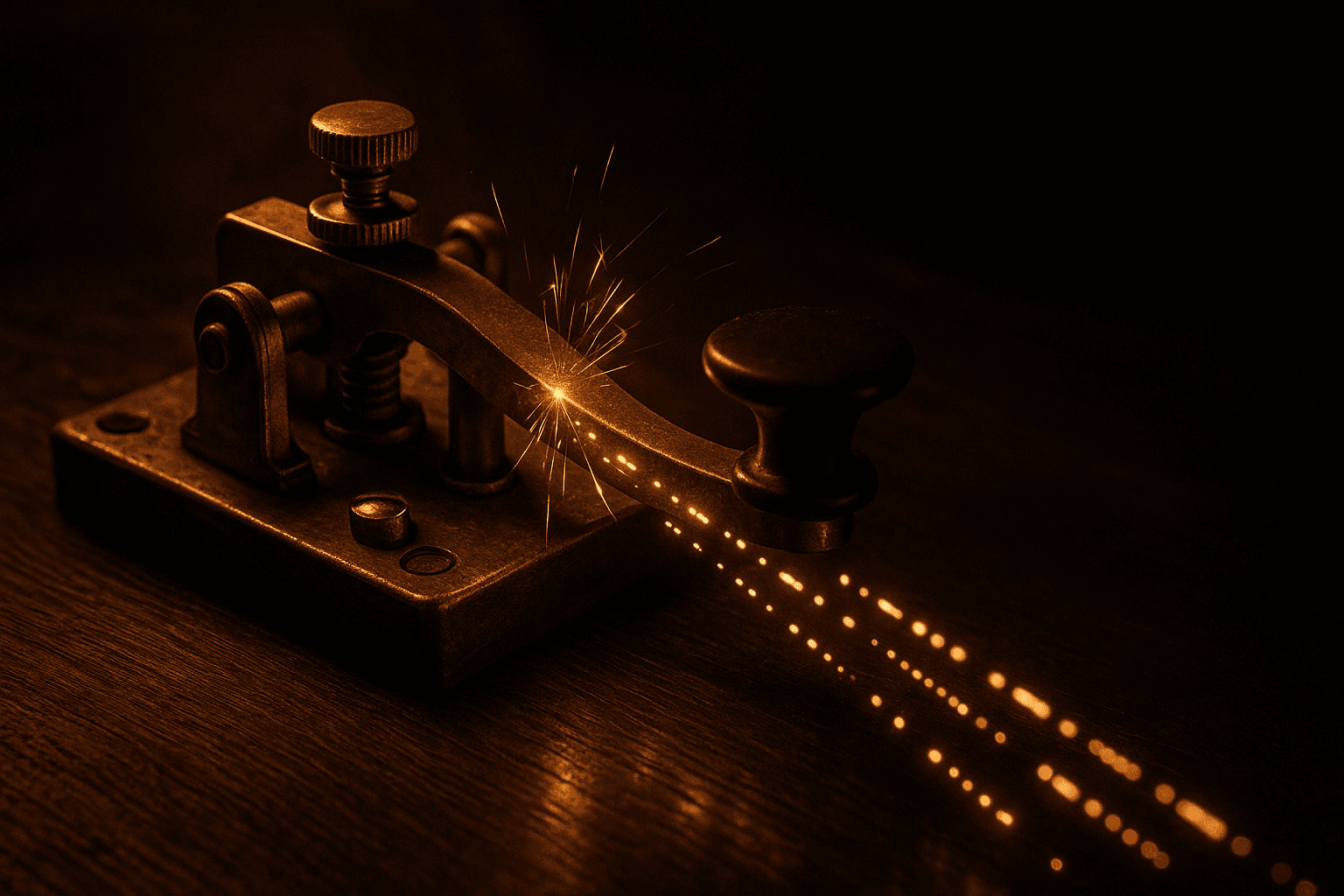
Morse Code: How It Works and Why It Saved Lives
Morse code turns letters into dots and dashes that travel down a wire or a flash of light. Here is how it works, where it came from and why it is still used.
The Telegraph: The Victorian Internet
The telegraph shrank weeks of mail into minutes of cable. How Morse, Cooke and a wire under the Atlantic built the Victorian internet and shrank the world.

The nocebo effect: when expecting harm creates it
The nocebo effect is the placebo's dark twin: believing a treatment will hurt can make it hurt. Its origin, real cases and what science says.