
The War of the Worlds Panic Never Happened
The night Orson Welles terrified America is a myth manufactured by the press. The real panic came eleven years later — in Quito, Ecuador.
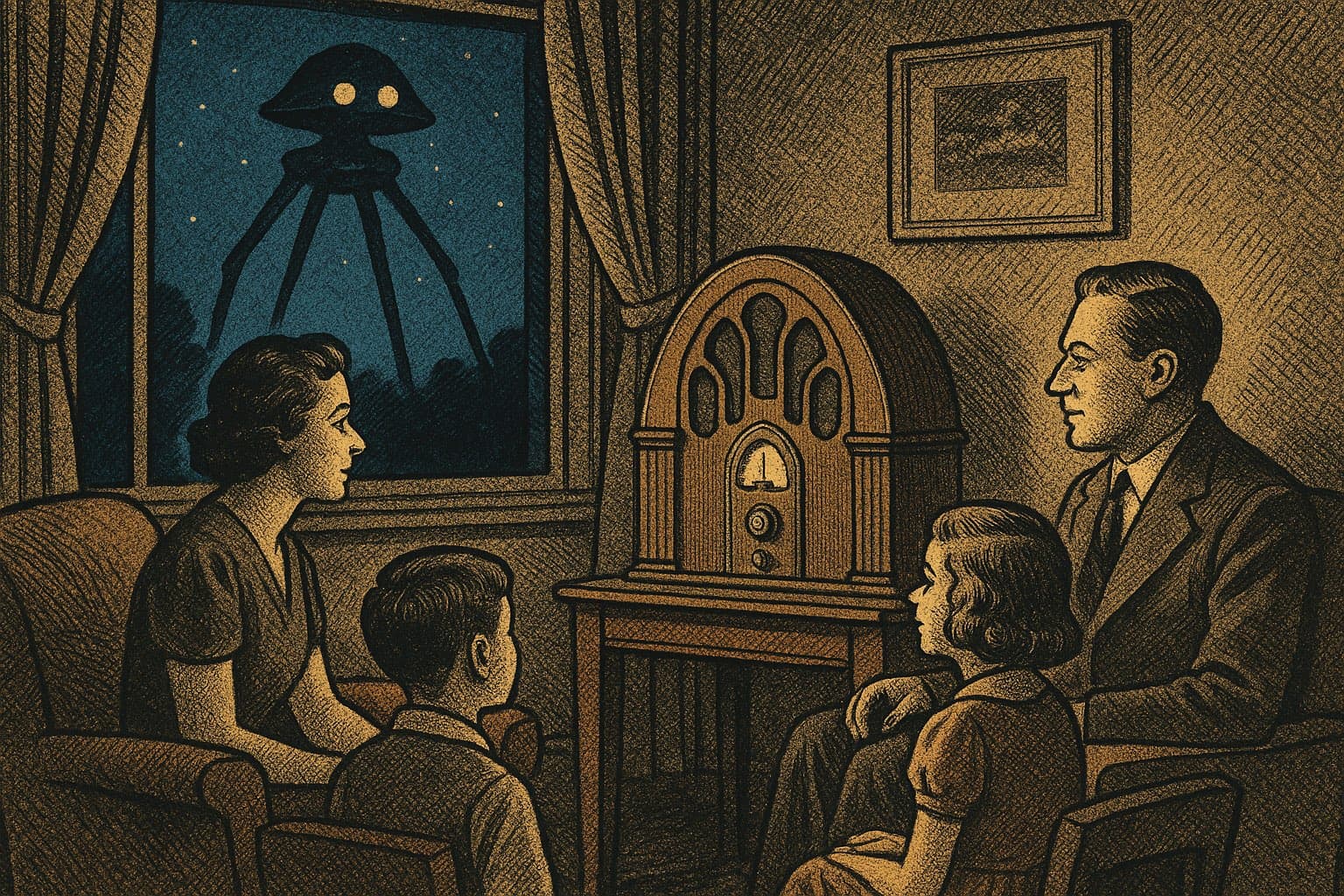
The scene is a classic of media history: on the night of October 30th, 1938, Orson Welles dramatizes The War of the Worlds on the radio as if it were a live newscast, millions of Americans believe Martians are invading New Jersey, the highways fill with fleeing cars, there are panic attacks, miscarriages, suicides. It is the eternal demonstration of the power of mass media, cited in a thousand communications classrooms. And it is, almost in its entirety, false. The panic of 1938 never happened. Though the story has a second part almost nobody tells — and that one did happen, with real deaths, much closer to my home.
The basic problem: almost nobody was listening
Let's start with the demolishing fact. That very night, telephone audience surveys recorded that barely 2% of households were tuned to Welles' program — a sponsorless cultural slot of the kind that didn't move the needle. The vast majority of the country was on the rival network listening to ventriloquist Edgar Bergen, the star of the moment. And of the handful who were listening to the Mercury Theatre, most knew perfectly well it was theater: the program was announced as fiction at the start, there were reminders, and the entire second half abandons the newscast format altogether.
And the consequences? Researchers who combed the archives found not one death, not one suicide, not one wave of hospitalizations attributable to the broadcast. Calls to police stations and radio stations did increase that night — people asking whether it was true, which is the exact opposite of panic: that is skepticism at work. The highways were normal. New Jersey did not empty out.
So where did the legend come from?
From the newspapers, once again. The next day, the print press —which had spent years losing readers and advertising to radio, its direct competitor— found the perfect gift: “Radio Listeners in Panic” on the front page, editorials about the new medium's irresponsibility, demands for regulation. The supposed mass panic was built from a handful of loose anecdotes, inflated and repeated in a chain. If this sounds familiar, it's because it is the same mechanism as the curse of Tutankhamun: a press with incentives to invent, and a story too good to fact-check. Two years later, a Princeton academic study gave it dubious numbers (“a million frightened,” extrapolated from late surveys with leading questions) and granted the myth eternal respectability.
The great beneficiary was Welles himself: “the man who terrified America” signed with Hollywood shortly afterward, and three years later premiered Citizen Kane. Over the years, the old fox happily fed the legend — nobody debunks the myth that made him famous.
The panic that did happen was in Quito
And now the part this story always leaves out. Eleven years later, on February 12th, 1949, Radio Quito —the station of Ecuador's El Comercio newspaper— broadcast its own adaptation of The War of the Worlds, produced by the announcer and artist Leonardo Páez, with Martians landing in Cotocollao, on the outskirts of the city. They did it too well: without sufficient warnings, with impeccable fake bulletins and imitations of authorities. And in Quito the panic was real: people in the streets, mass prayers, genuine alarm across half the city.
The tragedy came with the ending. When the station, seeing the chaos, interrupted the drama to clarify that it was fiction, the crowd's fear turned into fury. A mob marched on the building shared by Radio Quito and El Comercio and set it on fire with the staff inside. At least five people died —some sources put the figure higher— among radio and newspaper workers; several survived by jumping from the upper floors. Páez, who lost colleagues that night, ended up exiling himself to Venezuela. The irony is perfect and bitter: the American panic of 1938, the famous one, the textbook one, was a press invention; the Ecuadorian one of 1949, the real one, the one that left a building in ashes and families in mourning, was reduced to a footnote outside our borders.
A double moral, then. First: the media are not as all-powerful as they themselves like to tell it — the audience of 1938 was considerably more sensible than the legend claims. Second, from Quito and painful: under the wrong conditions, fiction really can set reality on fire. The difference between the two nights was not in the Martians, who were the same. It was in the details — and in who told the story afterward.
References
- Jefferson Pooley and Michael J. Socolow, "The Myth of the War of the Worlds Panic", Slate, October 28, 2013. slate.com
- A. Brad Schwartz, Broadcast Hysteria: Orson Welles's War of the Worlds and the Art of Fake News, Hill and Wang, New York, 2015. us.macmillan.com
- Hadley Cantril, The Invasion from Mars: A Study in the Psychology of Panic, Princeton University Press, 1940. archive.org
- "El libreto (ficticio) de la invasión marciana a Quito", El Telégrafo (Cartón Piedra), Quito, February 16, 2015. eltelegrafo.com.ec
The books · born from this blog
Atahualpa con su abrigo de pelo de murciélago
y otras 49 historias verdaderas que parecen mentira
Available on Amazon
Tocar madera
Pequeña historia de las supersticiones que el mundo no ha podido soltar
Available on Amazon
100 futuros
Cien escenarios del mundo que viene con la inteligencia artificial
Available on AmazonYou may also like

Tagua: the Vegetable Ivory That Buttoned Europe
Tagua, the seed of an Ecuadorian palm, mimicked ivory and buttoned the world's clothes for decades, until cheap plastic pushed it aside almost overnight.
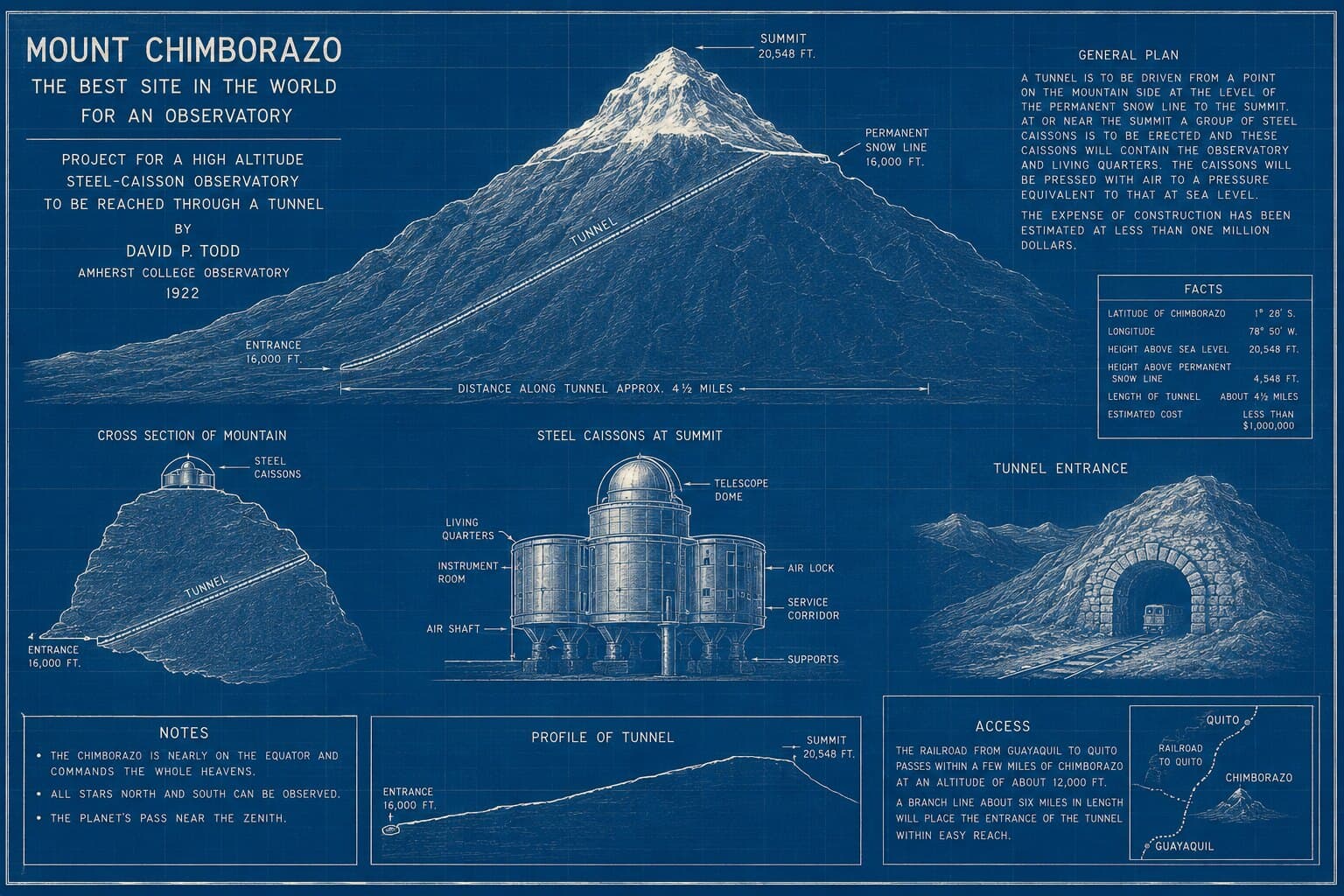
David Todd and his tunnel to the top of Chimborazo
In 1922 astronomer David P. Todd proposed boring a tunnel into Chimborazo all the way to the summit to build a pressurized steel observatory inside it.
Ecuador's Cacao Boom: When the Golden Bean Ruled
Between 1880 and 1920 Ecuador was the world's top cacao exporter. The «golden bean» built fortunes in Guayaquil until a silent plague brought it all down.