
Does the Word “Travel” Really Come From a Torture Device?
Viral etymology says “travel” (and Spanish “trabajo”) comes from the tripalium, a Roman torture device. Short answer: sort of. The long one is better.
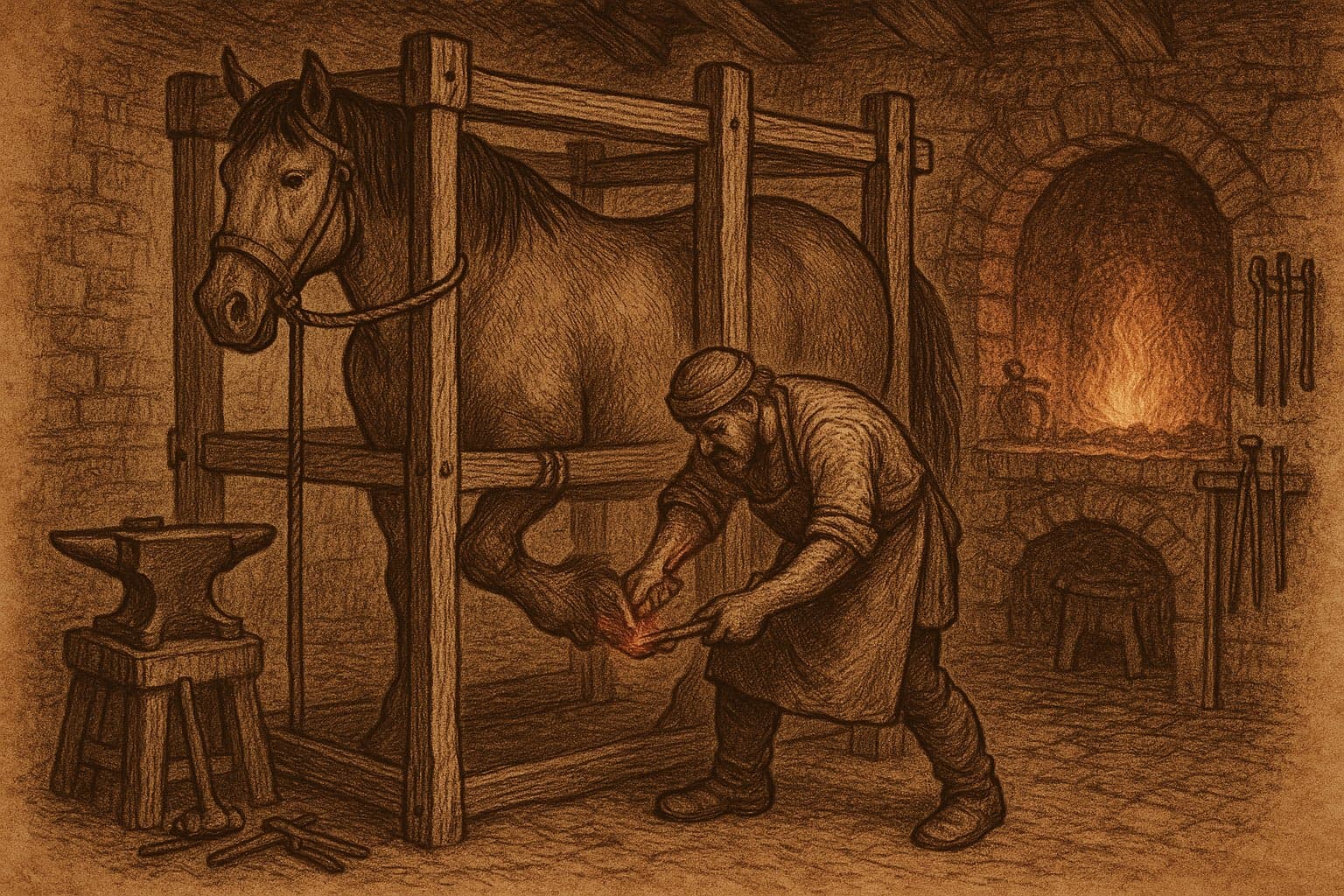
Every so often the same etymological gem resurfaces on social media, invariably on a Monday morning: the word travel —along with the Spanish trabajo, work— comes from the Latin tripalium, a torture instrument made of three stakes. An avalanche of “that explains everything” comments follows. Since this series has already dismantled several etymologies that seemed too good to be true, I went over this one carefully. And the verdict is more interesting than a plain true or false: the words do come from the tripalium... but the tripalium may not have been what they told you.
The part that is true
The etymological chain is solid and the reference dictionaries accept it: from the noun tripalium (“three stakes”) came the vulgar Latin verb tripaliare, meaning to torment or make suffer. From there descend, in direct line, the French travailler, the Spanish trabajar, the Portuguese trabalhar, the Italian travagliare — and, through Old French travail, the English travel. In the Middle Ages, traveling meant roads infested with bandits, verminous inns, broken axles and weeks of misery: a journey was, quite literally, an ordeal. English simply kept the receipt: every time you say “travel agency” you are saying, unknowingly, “agency of torments”. (English travail, meaning toil or painful labor, is the same word before the vacation industry got hold of it.)
In medieval Spanish, likewise, trabajo didn't mean a job: it meant suffering, hardship, painful effort — the “trabajos” of Hercules were not office positions. Only over the centuries did the word specialize into the activity that occupies us eight hours a day, which says something about how our ancestors perceived that activity.
The doubtful part: what exactly was a tripalium?
Here is where the meme wobbles. Documentary evidence for the tripalium is remarkably thin: the classic mention appears only in the 6th century, in the acts of a church council forbidding clergy to witness torments. Three stakes, a condemned man tied to them: a torture device, says the traditional reading. But a good number of modern philologists propose a much less gruesome picture: the tripalium would have been a three-post wooden frame for immobilizing horses and oxen — for shoeing or treating them without taking a kick. The most elegant clue in favor of this version hides in plain sight: in France, the wooden restraint where farriers still place nervous animals is called, to this day, a travail à ferrer. The “torture instrument” survives in the French countryside, and its victims are draft horses.
How do you get from there to “work” and “travel”? Both routes are plausible and probably converged: on one side, the suffering of the immobilized animal (or of the tortured man, if the grim sense also circulated); on the other, the sweaty struggle of the farrier wrestling an eight-hundred-kilo ox. In both cases the original meaning is the same: hardship. The office came much later; the complaining, it seems, was there from the start.
Verdict
Next time you see the meme, you can reply with a philologist's precision: travel and trabajo do come from tripaliare, that much is true; that the tripalium was a torture machine is possible but disputed, and it may well have been a shoeing frame — torture for the horse, toil for the smith, and a word for all of us. As happened with “gringo” and the “green go home” myth, etymologies that fit our mood perfectly always deserve a second look. Although in this case, let's admit it, even the corrected version proves the meme essentially right: the language decided fifteen hundred years ago that working, traveling and suffering were relatives. On a Monday morning, the etymology is the least of it.
Enjoy the stories behind words? Continue with the real myth behind the word “narcissist” and why “bizarro” doesn't mean what you think, or browse the whole etymology series.
The books · born from this blog
Atahualpa con su abrigo de pelo de murciélago
y otras 49 historias verdaderas que parecen mentira
Available on Amazon
Tocar madera
Pequeña historia de las supersticiones que el mundo no ha podido soltar
Available on Amazon
100 futuros
Cien escenarios del mundo que viene con la inteligencia artificial
Available on AmazonYou may also like

Origins of the word cocolón and no, it does not come from "cook too long"
Does the word «cocolón» really come from the English «cook too long»? A 1922 Ecuadorian etymology book debunks this popular urban legend.

Placebo: the Latin word that means «I shall please»
«Placebo» means «I shall please» in Latin and began as a medieval funeral chant. Here is how it jumped from the church to medicine and its famous effect.

The Origin of the Word “Quarantine”: 40 Days in Venice
Where does the word quarantine come from? From the 40 days that Venice and Ragusa forced ships to wait during the Black Death. Here is its story.