
The nocebo effect: when expecting harm creates it
The nocebo effect is the placebo's dark twin: believing a treatment will hurt can make it hurt. Its origin, real cases and what science says.
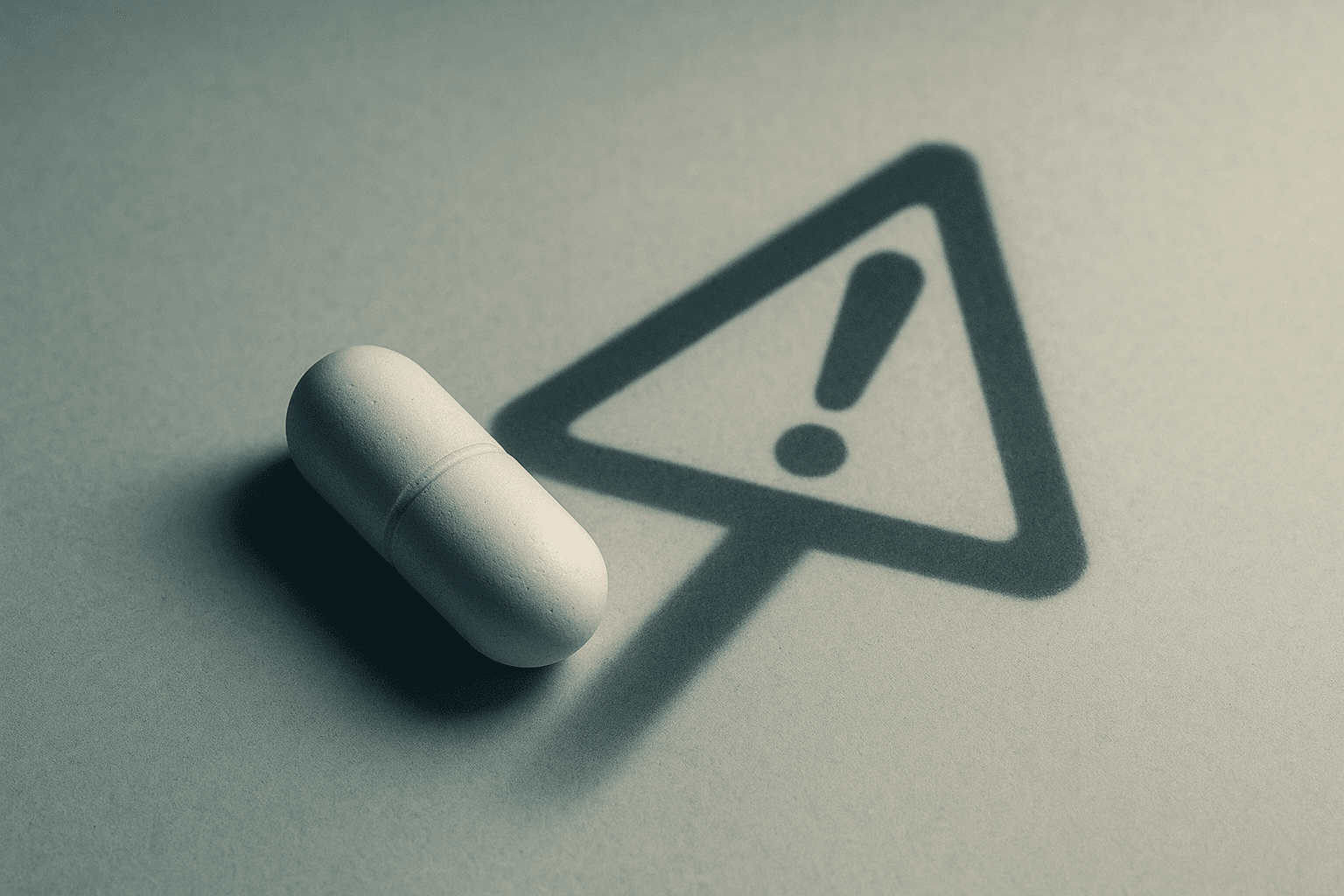
Almost everyone has heard of the placebo effect: a pill with no active ingredient that, simply because the patient trusts it, genuinely brings relief. Far less known is its shadowy reflection. When what the patient expects is not relief but harm, and that harm appears even though the remedy is harmless, we are dealing with the nocebo effect. It is the same machinery of mind and body running in reverse: the negative expectation that fulfills itself. And it is no laboratory curiosity, but something that happens every day in clinics, drug leaflets and clinical trials.
The placebo's dark twin
If «placebo» means «I shall please» in Latin, «nocebo» is its exact and deliberate opposite: it comes from the Latin verb nocēre, «to harm» —the same root behind «noxious» and «innocuous»—, and literally means «I shall harm». The word is far more modern than its sibling. It was coined in 1961 by the American physician Walter Kennedy, who needed a term for the phenomenon opposite to the placebo and built it by symmetry, swapping the promise to please for the promise to harm.
Kennedy made an important point from the start: nocebo describes a reaction of the patient, something born of their expectations, and not a property of the treatment. Confusing the two —believing that an inert pill «causes» a symptom— is precisely the mistake the concept was meant to help avoid.
The man who nearly died of placebo
The most cited case to show how far the nocebo can reach was published in the journal General Hospital Psychiatry in 2007. A 26-year-old man was taking part in a clinical trial for an experimental antidepressant. After an argument with his girlfriend, he swallowed the 29 capsules left in his bottle all at once, convinced he was ending his life with an overdose. He staggered into the emergency room shouting «help me, I took all my pills!» and collapsed.
The doctors found an alarming picture: rapid breathing, drowsiness, a heart racing at 110 beats per minute and blood pressure sunk to 80/40. They started intravenous fluids to keep him stable. But the tests showed no trace of any dangerous substance. When the trial staff were finally reached, the revelation came: the young man belonged to the control group. The 29 capsules were placebo, sugar without a single milligram of drug. As soon as he was told he had swallowed nothing capable of hurting him, his blood pressure and pulse returned to normal within about fifteen minutes, with no treatment at all. The fright —not the chemistry— had dropped his blood pressure.
When the side effect is on the label
The nocebo does not live only in extreme cases. Its most common and costly form is far quieter: the side effects a patient suffers simply because they expect them. Merely reading the list of adverse reactions on a leaflet raises the odds of experiencing them. In clinical trials, groups given a sugar pill frequently report headaches, nausea or fatigue; in one study of rosacea patients, up to a third of the placebo group complained of dry skin and lips, an effect the fake cream was incapable of producing.
The best-studied example is statins, the cholesterol-lowering drugs. Millions of people abandon them because of muscle pain. In 2020, the British SAMSON trial, published in the New England Journal of Medicine, tested 60 patients who had quit statins over their side effects. For months they unknowingly alternated bottles of statin, bottles of placebo and empty bottles. The result was striking: 90 % of the symptoms that appeared on the statin also appeared on the placebo. The pain was real, but the drug was not causing it. Once they understood this, half the participants were able to resume their medication.
Here medicine faces an uncomfortable dilemma, not unlike the one raised in its day by the arrival of anesthesia: informing a patient of possible adverse effects is an ethical duty, yet that same information can trigger the very symptoms it warns about. Saying «this may make you nauseous» is, in a sense, increasing the nausea. Doctors still debate how to be honest without sowing harm.
Words that make you ill
The idea that a belief can cause physical harm is an old one. In 1942 the physiologist Walter Cannon gathered, in a famous paper titled «Voodoo Death», accounts of people who, on learning they were cursed or having broken a taboo, died with no apparent organic cause. Cannon attributed it to an extreme reaction of the nervous system to absolute fear. Many of those accounts are hard to verify and are read with caution today, but they pointed at something modern science has confirmed: negative expectation has measurable bodily consequences.
Honesty is in order, the same we demand when discussing the placebo. The nocebo is real, especially in the realm of pain, fatigue and other subjective symptoms, but it is more modest and less dramatic than tales of curses suggest. It does not gravely sicken healthy people by suggestion, and it does not replace biology: the fever of an infection or the damage of a poison does not depend on what one believes, just as a vaccine protects whether the patient believes in it or not.
What the nocebo effect teaches is subtler and more useful: that the mind is part of the treatment, for better and for worse. The same expectation that can heal can also harm, and understanding it is not a reason to distrust medicine but to practice it with more care. Sometimes the sentence a doctor chooses matters as much as the molecule they prescribe.
References
- «The Nocebo Effect: History and Contemporary Applications», Mayo Clinic Press. mcpress.mayoclinic.org
- Reeves RR et al., «Nocebo effects with antidepressant clinical drug trial placebos», General Hospital Psychiatry (2007). pubmed.ncbi.nlm.nih.gov
- Wood FA et al., «N-of-1 Trial of a Statin, Placebo, or No Treatment to Assess Side Effects» (SAMSON), New England Journal of Medicine (2020). nejm.org
- «Nocebo effect: What it is and how to prevent it», Medical News Today. medicalnewstoday.com
Curious about the border between mind and medicine? Continue with the origin of the word «placebo» or explore the whole science section.
Categories
The books · born from this blog
Atahualpa con su abrigo de pelo de murciélago
y otras 49 historias verdaderas que parecen mentira
Available on Amazon
Tocar madera
Pequeña historia de las supersticiones que el mundo no ha podido soltar
Available on Amazon
100 futuros
Cien escenarios del mundo que viene con la inteligencia artificial
Available on AmazonYou may also like

The History of the Match: Fire in Your Pocket
The friction match was born by accident in 1826, poisoned thousands of factory women, and only later became the safe fire we carry in our pocket.

The History of the Floppy Disk and the Save Icon
The floppy disk held 80 KB in 1971 and survives today as the «save» icon many young people never touched. This is the full history of the floppy disk.
The first computer virus was called Brain
In 1986, two brothers in Lahore wrote Brain, the first PC virus. It destroyed nothing: it guarded their software and left their name, address and phone.