
The Airplane Before the Wrights: Who Almost Won
Before the Wright brothers flew in 1903, pioneers nearly got there first: Cayley, Lilienthal, Ader and Santos-Dumont. This is their untold story.
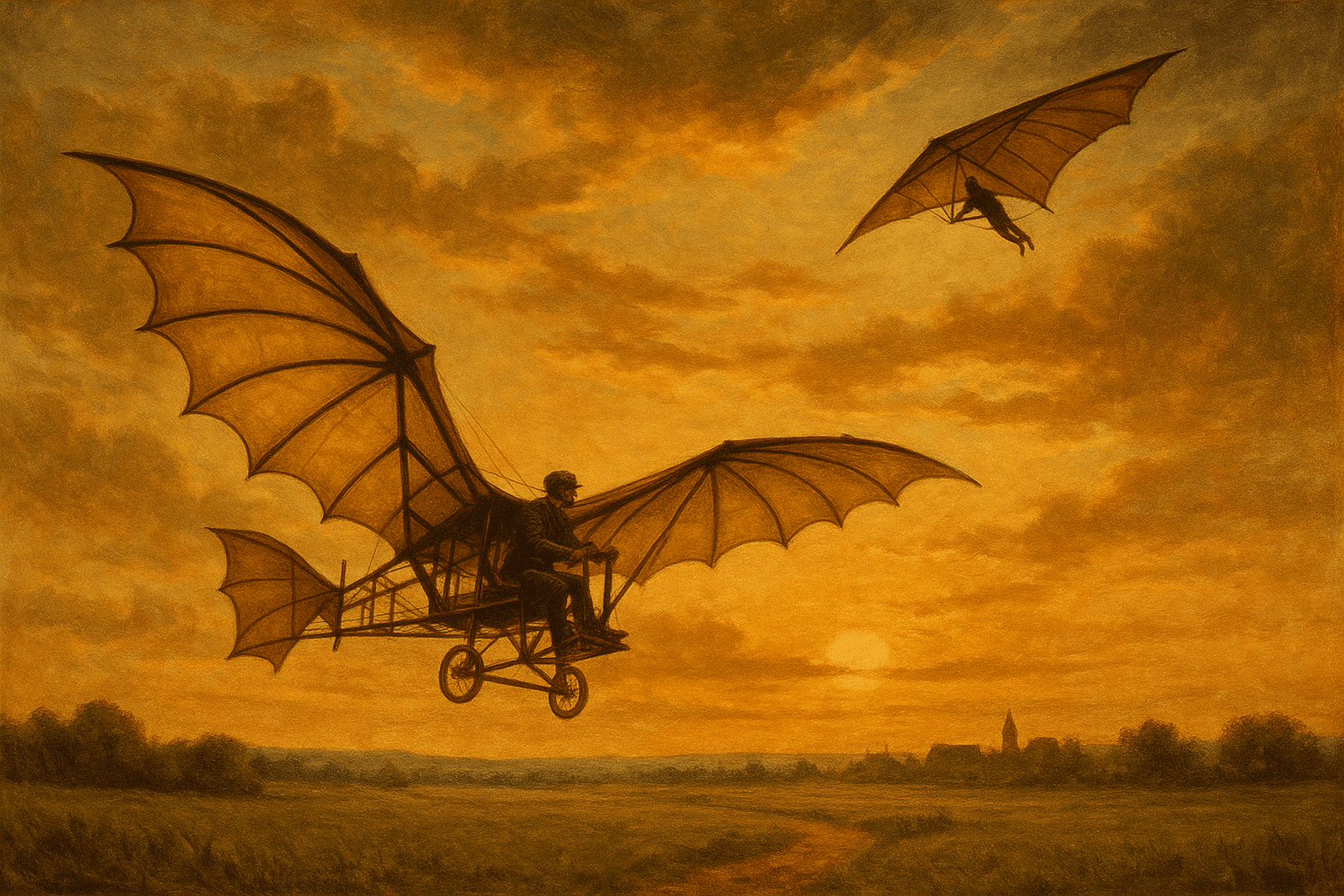
On December 17, 1903, on the dunes of Kitty Hawk, the Wright brothers flew a heavier-than-air machine for twelve seconds. That date is remembered as the birth of aviation. But the airplane before the Wright brothers already had almost a century of history behind it: mathematicians who designed the airplane without being able to build it, gliders that killed their pilots, and steam machines that lifted off the ground for a few seconds before failing. This is the story of the people who nearly got there first.
Sir George Cayley: the man who drew the airplane (1853)
Long before any engine could fly, an English baronet named Sir George Cayley solved the fundamental problem of flight on paper. In the early 1800s he identified the four forces acting on any aircraft —lift, weight, thrust and drag— and described the concept of the fixed wing with a stabilizing tail. That is, in essence, the blueprint of every airplane that has flown since.
Cayley did not stop at theory. In 1853, at Brompton Dale, he built a piloted glider —he called it a "governable parachute"— and ordered his coachman to climb aboard. The machine crossed the valley for about 200 metres with a man on board: the first flight of an adult in a heavier-than-air craft, half a century before Kitty Hawk. Legend says the coachman quit on landing: "I was hired to drive, not to fly." Cayley lacked only what everyone after him lacked too: an engine light and powerful enough.
Otto Lilienthal: two thousand flights and a fatal gust
The next great step was taken by a German engineer, Otto Lilienthal, known as "the flying man." Between 1891 and 1896 he made roughly 2,000 flights with at least 16 different glider designs, launching himself from hills he built himself near Berlin. Lilienthal was the first to prove, with data and photographs, that a human could stay aloft in a repeatable and controlled way.
His obsession with measuring the lift of wings produced tables that the Wrights would study closely. But on August 9, 1896, a sudden gust stalled his glider; Lilienthal fell from about 15 metres and broke his spine. He died the next day. His last words, by tradition, were: "Sacrifices must be made." News of his death reached Ohio, and years later Wilbur Wright would admit that this was when his interest in flight turned serious.
Clément Ader and the Éole: taking off is not flying (1890)
While the glider builders tried to understand the air, a French engineer bet on the engine. Clément Ader built the Éole, a monoplane with bat-like wings driven by an extremely light 20-horsepower steam engine. On October 9, 1890, on an estate near Armainvilliers, the Éole lifted off the ground under its own power and travelled about 50 metres at less than 25 centimetres of altitude.
It was, technically, the first take-off of a piloted machine under its own power. But Ader ran into a limit that defines what we call "flying": his machine had no way to steer. It rose off the ground, yes, but he could not control where it went, and steam turned out to be a dead end, too heavy for sustained flight. Just as it happened to the builders of the first submarine in history, the idea worked before the right power source existed to make it practical.
Samuel Langley: money, press and a public failure (1903)
In the United States, the Wrights' most serious rival had a name and a budget. Samuel Langley, secretary of the prestigious Smithsonian Institution, received government funds to build his Aerodrome, a piloted machine catapulted from a houseboat on the Potomac River.
His unmanned scale models had indeed flown years earlier. But the piloted version failed twice in 1903: on October 7 and December 8, the Aerodrome plunged into the river the moment it was catapulted, in front of the reporters summoned for the event. Nine days after that second failure, two almost unknown bicycle makers succeeded at Kitty Hawk. Langley died in 1906 having never flown, his reputation ruined by the very press that had once praised him.
Whitehead, Pearse and the claims impossible to prove
The history of aviation is full of "firsts" that are hard to verify. The German-born Gustave Whitehead, who emigrated to Connecticut, claimed to have flown in 1901, two years before the Wrights; in 2013 the state of Connecticut even recognized it by law. But not a single photograph of the flight exists, and the witness accounts contradict one another. Historian David McCullough was blunt: "There's no evidence for it whatsoever."
Something similar surrounds the New Zealander Richard Pearse, who supposedly got a monoplane off the ground under its own power in March 1903. In all these cases the same thing is missing: the clear documentary proof, with dates and witnesses, that the Wrights did have. Without a reliable record, a flight belongs more to legend than to history.
Santos-Dumont and the 14-bis: the first "official" flight (1906)
The most interesting case comes after 1903. The Brazilian Alberto Santos-Dumont, already famous for his airships over Paris, flew his biplane 14-bis in the French capital. On October 23, 1906, he covered about 60 metres, and on November 12, about 220, before more than a thousand spectators.
The key: it was the first flight certified by an aeronautical institution, the Aéro-Club de France, and it took off with no catapult or rail, using only its wheels and its engine. That is why in Brazil and much of Europe, schools taught for decades that the inventor of the airplane was Santos-Dumont. The controversy is less about the dates —which are fairly well documented— than about what counts as "flying": taking off on your own? in front of official witnesses? being able to steer the craft?
So why the Wrights?
Because they were the first to bring together all three conditions at once: engine-powered flight, sustained over time and —above all— controlled on all three axes by the pilot. Cayley designed the wing, Lilienthal mastered gliding, Ader achieved take-off and Santos-Dumont won over the public. The Wrights combined all those pieces, plus one decisive detail: a wing-warping system that let them bank and correct their heading, something Ader and Langley lacked.
As in the story of the first electric car or so many other inventions, the "sole inventor" is a comfortable myth. The airplane was not born on a December morning in 1903: it was the last link in a century-long chain of dreamers, many of whom paid with their lives for the privilege of coming close. Next time a plane crosses the sky —even when you learn why planes don't fly in straight lines— it is worth remembering those who almost got there first.
References
- Encyclopædia Britannica, "Ader Éole," "Clément Ader" and "Otto Lilienthal."
- Fédération Aéronautique Internationale (FAI), "9 October 1890: first take-off of Ader's Eole."
- Wikipedia, "Claims to the first airplane flight."
- Scientific American, "Scientific American Debunks Claim Gustave Whitehead Was First in Flight."
- Yorkshire Air Museum, "Cayley Glider."
Do you enjoy stories of inventions ahead of their time? Continue with the first submarine in history or explore the whole science of the past series.
Categories
The books · born from this blog
Atahualpa con su abrigo de pelo de murciélago
y otras 49 historias verdaderas que parecen mentira
Available on Amazon
Tocar madera
Pequeña historia de las supersticiones que el mundo no ha podido soltar
Available on Amazon
100 futuros
Cien escenarios del mundo que viene con la inteligencia artificial
Available on AmazonYou may also like
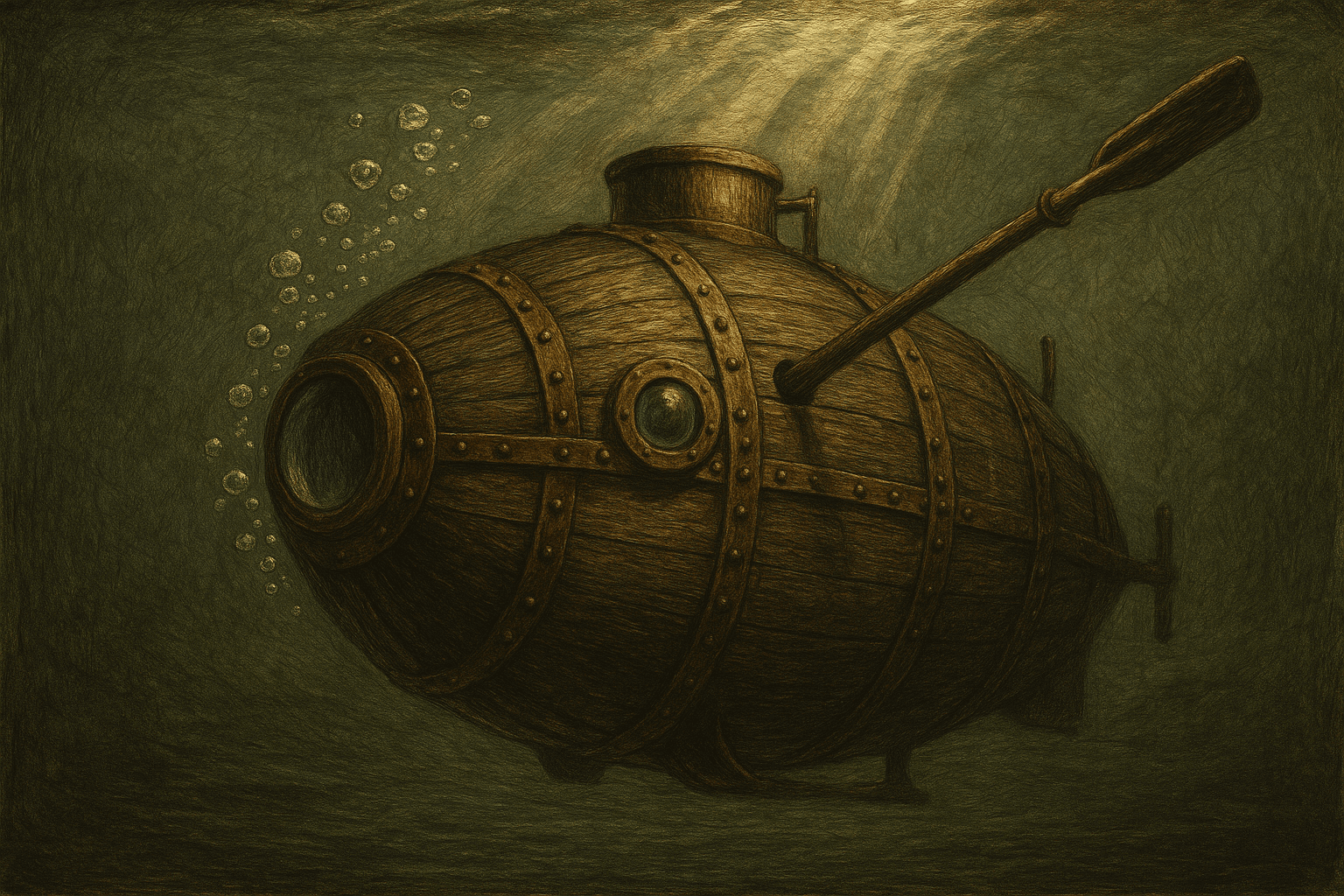
The First Submarine Was Built Centuries Before You Think
Before Isaac Peral's electric submarine came centuries of trying: Drebbel under the Thames, the Turtle of 1776 and the deadly Hunley of 1864.
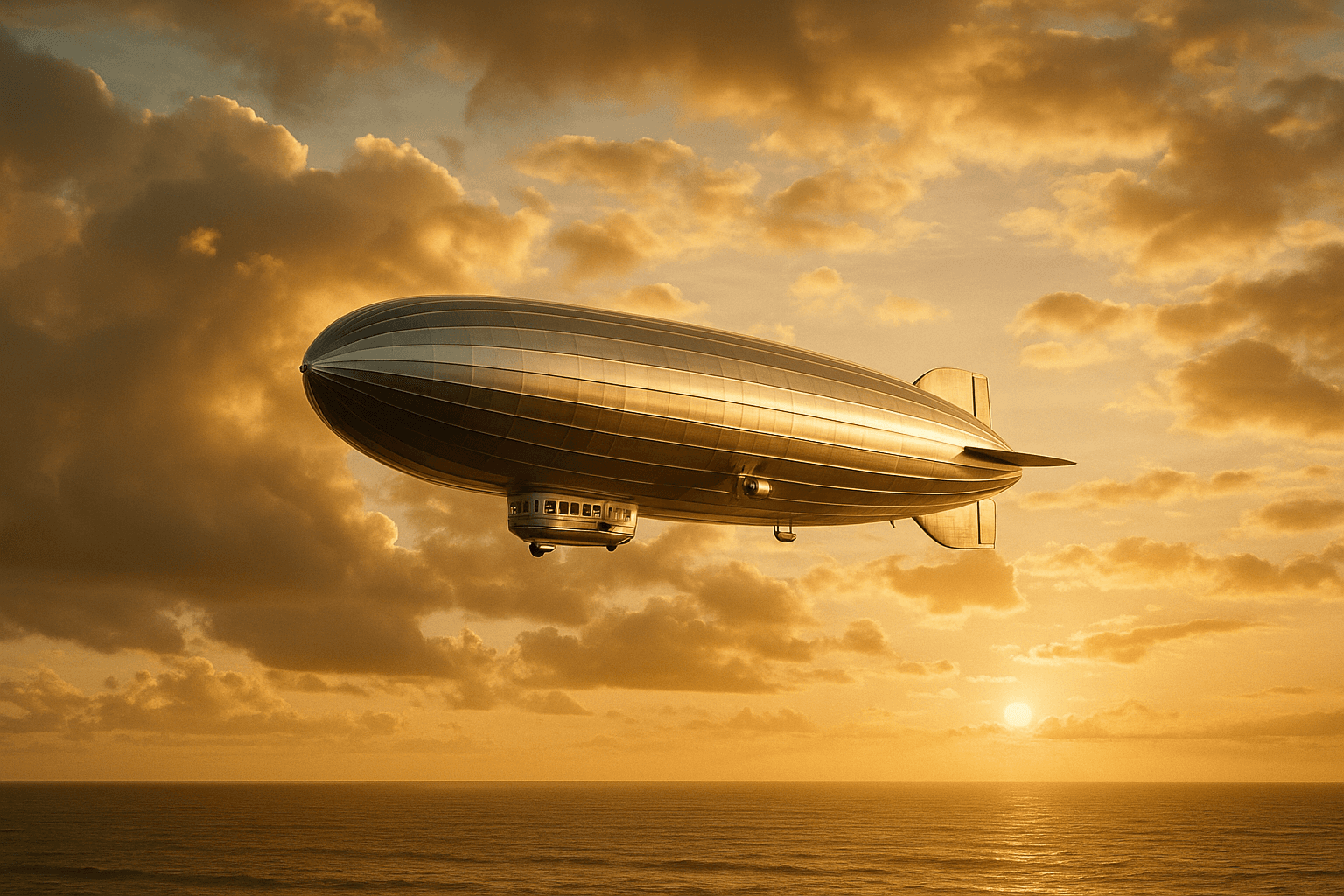
The Airship: The Elegant Future That Burned
The airship promised to cross oceans in silent luxury. From Giffard to the Hindenburg, the story of an elegant future that ended in flames.

The Bicycle: The Machine That Freed the City
In 1817 Karl Drais built a running machine with no pedals. A century later the bicycle had reshaped cities and helped set women free.