
The Origin of “OK”: The World's Most Famous Abbreviation
Where does “OK” come from? The world's most-used word was born in 1839 as a newspaper joke in Boston: an abbreviation of “oll korrect.”
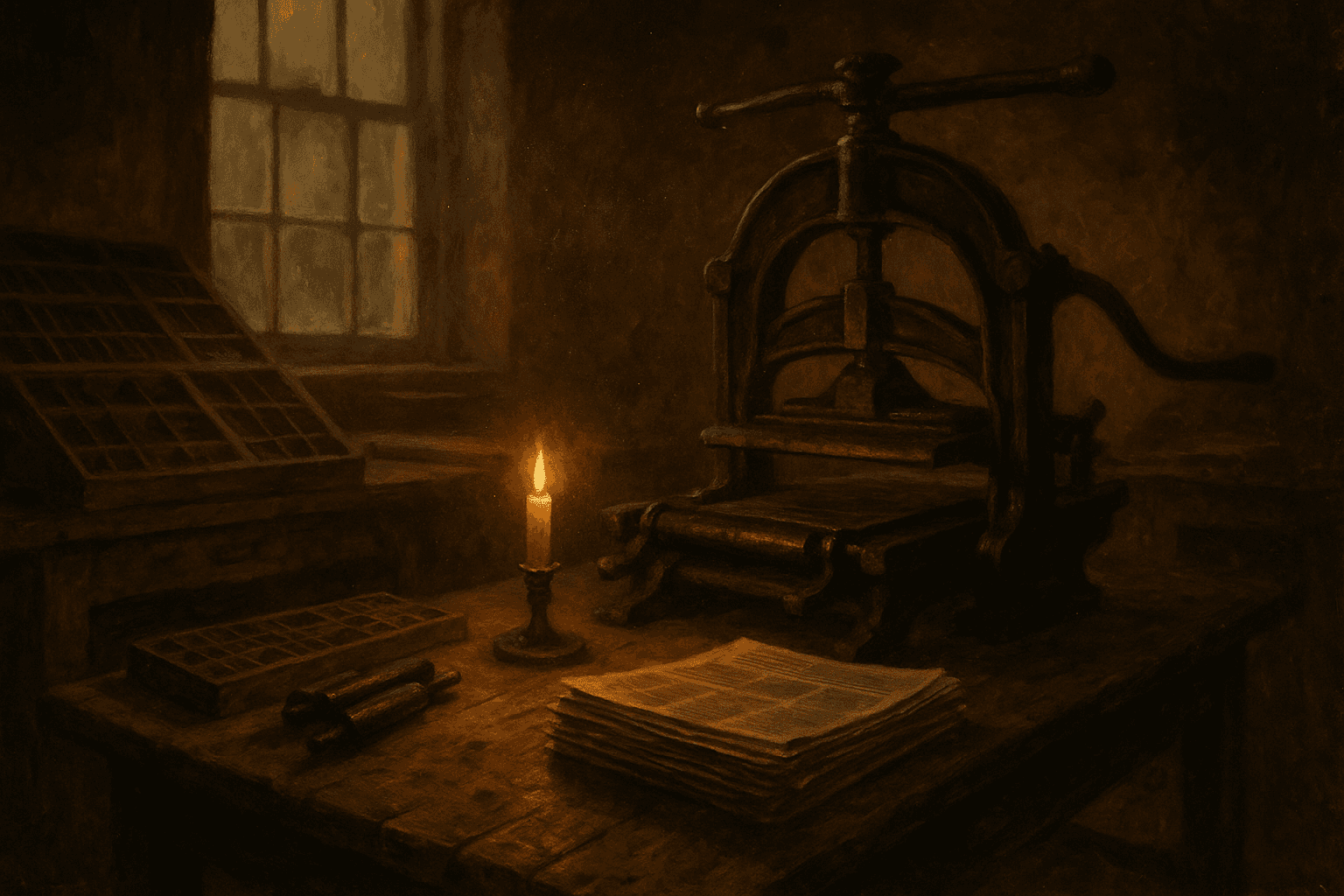
It is, with a strong case, the most-used word in the world. We say it in English, in Spanish, in Japanese and in Swahili; we type it in a message, answer it with a nod and tap it as a button a thousand times a day. And yet almost no one knows where OK comes from. Dozens of theories circulate —that it is an Indian word, or Greek, or African, or the name of some army biscuits— but the true story is at once sillier and more entertaining: OK was born on March 23, 1839, as a typographical joke in a Boston newspaper, the abbreviation of a phrase deliberately misspelled. That such a joke became the most universal term in human language is one of the greatest accidents in the history of speech.
A fad of misspelled abbreviations
To understand the joke you have to travel to the Boston of the late 1830s. Among the city's educated young men, a game of wit had become fashionable: take an everyday phrase, misspell it on purpose, and then abbreviate it to its initials. The more absurd the deformation, the funnier it was. That is how short-lived abbreviations were born, such as O.W. for “oll wright” (a jokey all right), K.Y. for “know yuse” (for no use), or N.S. for “nuff said” (enough said).
Within that craze for initials, someone decided to abbreviate all correct —but first deforming it into “oll korrect.” Out came the two letters: O.K. There was no ancient tongue behind it, no Indian chief and no exotic port. Just the absurd humor of a few journalists who found it funny to spell badly. It is the same prosaic, almost disappointing kind of origin we uncover when we trace the real history of the word “gringo”: the true explanation is almost never the pretty legend everyone repeats.
March 23, 1839: the joke that started it all
The first printed OK on record appeared in the Boston Morning Post on Saturday, March 23, 1839. Its editor, Charles Gordon Greene, was writing a mocking note at the expense of a rival paper, the Providence Journal, and in the middle of the jest he slipped in the abbreviation, helpfully spelling out its meaning in parentheses: o.k. — all correct. The knowing reader caught the double joke: the initials and the misspelling they concealed.
It could have remained a local gag lost in a column from 1839, like so many other abbreviations of that fad that nobody remembers today. That we know all this with an exact date we owe to a single man: the linguist Allen Walker Read, a professor at Columbia University, who in the 1960s spent years digging through old newspapers and published a series of articles in the journal American Speech (1963-1964) reconstructing, step by step, the birth and spread of the word. It was he who established the birth certificate of OK and who, along the way, dismantled the false etymologies one by one.
Old Kinderhook: the campaign that cemented the two letters
A newspaper joke runs out of steam fast. What saved OK from oblivion was politics. In 1840, President Martin Van Buren was seeking reelection. Van Buren had been born and raised in the town of Kinderhook, in New York State, and his supporters nicknamed him “Old Kinderhook.” Someone noticed that the nickname's initials were precisely O.K., the abbreviation already circulating out of Boston.
The find was too good to waste. Democrats founded “OK Clubs” across the country, support clubs whose name worked on two levels: it was the candidate's nickname and, at the same time, a wink at the trendy abbreviation meaning “all correct.” The word leapt from the humor column to banners, rallies and newspapers all over the United States. Van Buren lost that election to William Henry Harrison, but OK won: the campaign had burned it into the minds of millions, and it was never going to leave.
The false etymologies: Indians, Greeks, biscuits and ports
Precisely because its real origin is so modest, OK gathered flashier stories over time. For more than a century, explanations we now know to be false were taken as fact, and some still circulate:
The most persistent is the Choctaw one, a Native American language of the southeastern United States in which an affirmative particle usually transcribed okeh, “it is so,” exists. The theory grew so respectable that President Woodrow Wilson, convinced of it, wrote “okeh” when approving documents. But Read found no documented path leading from the Choctaw word to the Boston newspapers of 1839.
There are many more. That it came from the Greek ola kala (όλα καλά, “all good”), supposedly written by Greek teachers on their pupils' notebooks. That it derived from Orrin Kendall, a maker of army biscuits whose crates bore the initials O.K. That it was born from Aux Cayes, a Haitian port famous for its rum. That it was the surname of one Obadiah Kelly, a railroad clerk who marked checked freight with his initials. Or that it went back to a Native chief named Old Keokuk who signed treaties that way. All share the charm of a good anecdote and the same flaw: none survives a check of the dates.
From a joke to the universal word
What is astonishing about OK is how far it traveled from so little. From an 1839 typographical joke it moved on to the telegraph, where its brevity made it indispensable for confirming that a message had arrived “correct”; from there to industry, to aviation, to computing —the “OK” button on any screen is its direct heir— and finally to almost every language on the planet, often untranslated. Few words have traveled so far from so humble a start.
In the end, the story of OK is a reminder of how capricious language is: the noblest or oldest word does not always win, but the most useful one and the one lucky enough to hop aboard the right wagon at the right moment. As happens with the word “algorithm,” which traveled from Baghdad to ChatGPT, or with “sandwich,” born from the name of a gambling earl, behind the terms we assume are eternal there is usually a concrete, casual and often ridiculous scene. The next time you say “OK,” remember that you are repeating a joke made by Boston journalists nearly two centuries ago.
References
- “OK”, Online Etymology Dictionary: summarizes the origin in the “oll korrect” of the Boston Morning Post (1839) and the boost from Old Kinderhook in the 1840 campaign, following Allen Walker Read's research. etymonline.com
- “How ‘OK’ Became America's Favorite Word”, History.com: recounts Charles Gordon Greene's joke, the abbreviation fad and Van Buren's OK Clubs. history.com
- “How One Man Discovered the Obscure Origins of the Word ‘OK’”, Smithsonian Magazine: on Allen Walker Read and his American Speech papers (1963-1964) that pinned down the origin and ruled out the false theories. smithsonianmag.com
- “OK”, Wikipedia: gathers the proposed etymologies —Choctaw okeh, Greek ola kala, Orrin Kendall biscuits, Aux Cayes, Old Keokuk— and why the Boston Morning Post one is accepted. en.wikipedia.org
Enjoy the stories behind words? Continue with the real origin of “gringo” and that of “algorithm”, or browse the whole etymology series.
The books · born from this blog
Atahualpa con su abrigo de pelo de murciélago
y otras 49 historias verdaderas que parecen mentira
Available on Amazon
Tocar madera
Pequeña historia de las supersticiones que el mundo no ha podido soltar
Available on Amazon
100 futuros
Cien escenarios del mundo que viene con la inteligencia artificial
Available on AmazonYou may also like

The Origin of the Word “Quarantine”: 40 Days in Venice
Where does the word quarantine come from? From the 40 days that Venice and Ragusa forced ships to wait during the Black Death. Here is its story.
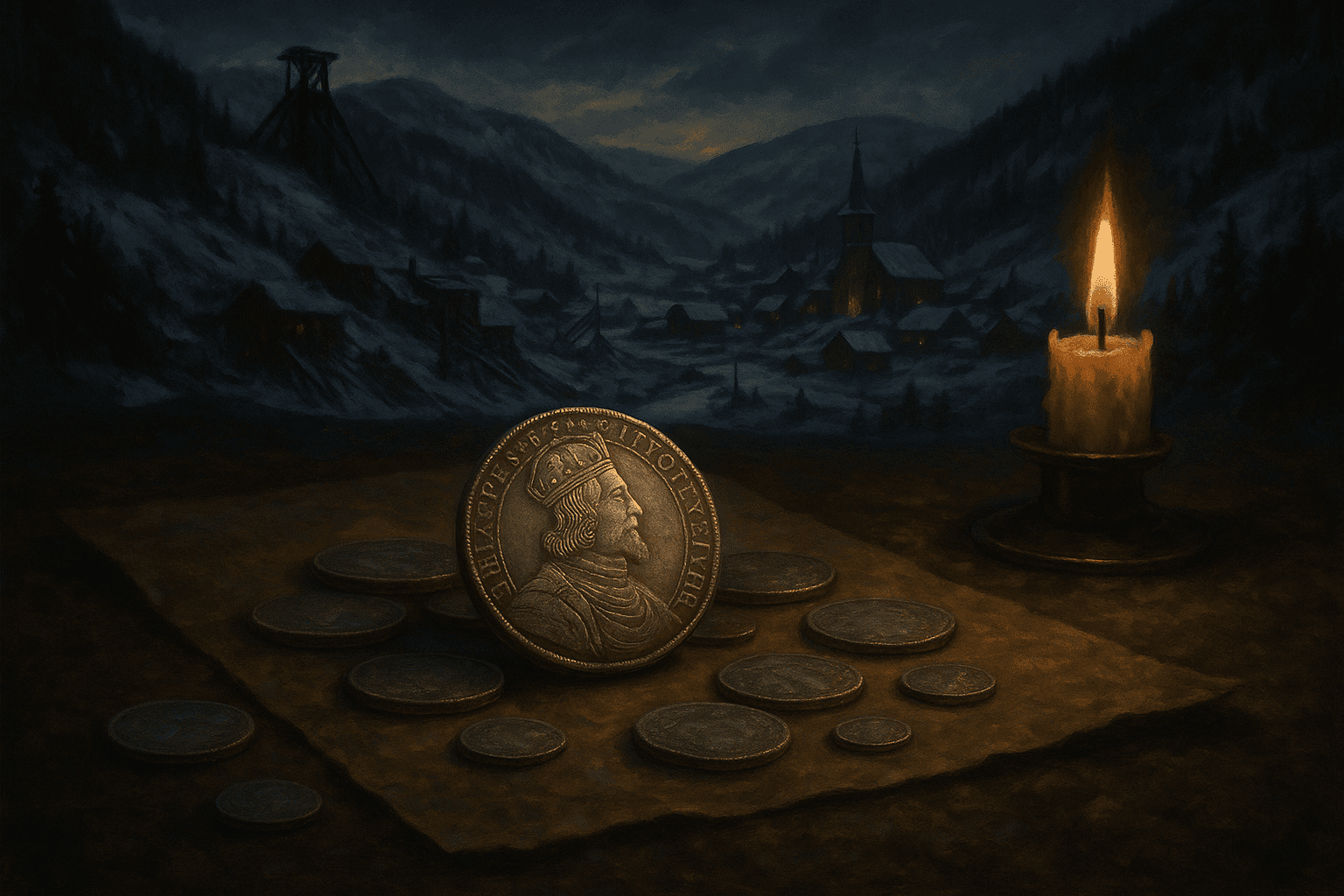
The Origin of the Word “Dollar”: a Bohemian Valley
Where does the word dollar come from? From a silver-mining valley in Bohemia and a 16th-century coin. The story of the thaler that conquered the world.

The Origin of the Word “Museum”: House of the Muses
Where does the word museum come from? From mouseion, the temple of the Greek Muses and the great center of learning in Alexandria, long before glass cases.