
The samurai who arrived in Acapulco
In 1614 a Japanese galleon brought a samurai ambassador to Acapulco; he crossed Mexico to Rome, and his crew still has descendants near Seville.
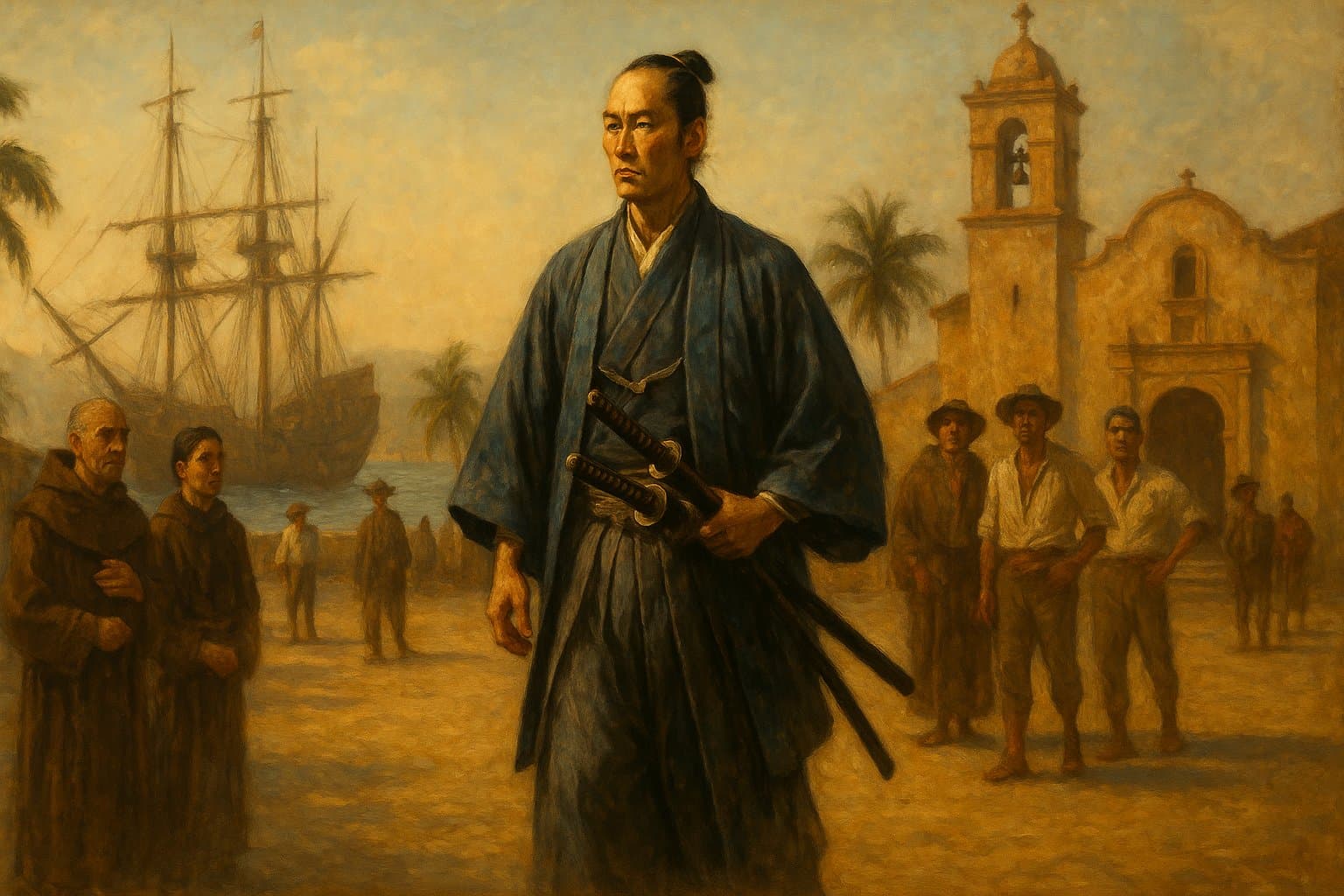
In January 1614, when Mexico was still called New Spain, a Japanese ship crossed the Pacific and appeared in the port of Acapulco. And it wasn’t just anyone aboard. It was a samurai.
His name was Hasekura Tsunenaga.
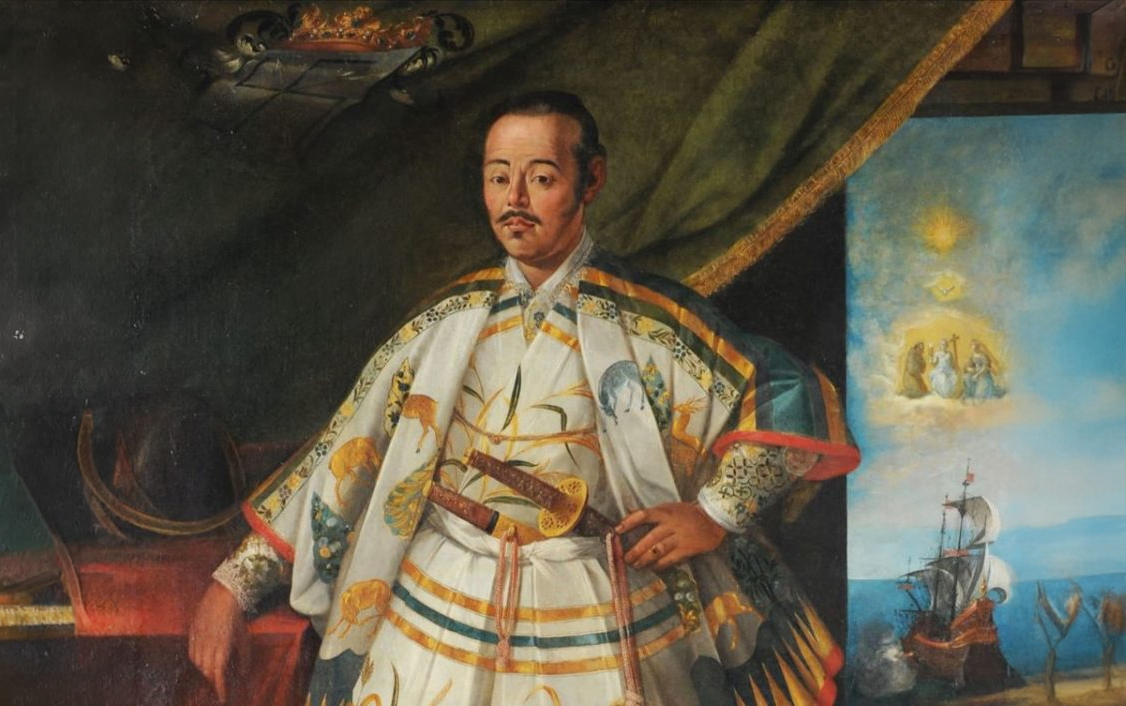
Acapulco in 1614 wasn’t the Acapulco of beach resorts or cliff divers — it was a hot colonial port, full of officials, merchants, dock workers, friars, soldiers, rumors, and goods coming in from Asia on the Manila Galleon route. And then, in the bay, the San Juan Bautista appeared: a galleon built in Japan.
About 180 people were on board. The mission had set sail from the port of Tsukinoura in October 1613 and reached Acapulco after more than three months crossing the Pacific. For the people of New Spain, this must have looked like an almost fantastic apparition: men from Japan, with strange clothes, strange manners, a strange language, and a samurai ambassador who hadn’t come to fight but to negotiate.
When we think of samurai we think of swords, duels, and Japanese films with wind in the bamboo. But Hasekura didn’t cross the ocean for a battle. He crossed it to open a trade route. He was, in other words, a diplomatic samurai.
The one-eyed dragon who sent him
Behind Hasekura there was another figure who deserves a mention of his own: Date Masamune, lord of Sendai, known as “the one-eyed dragon of the north” for having lost his right eye to smallpox as a child. He was one of the most powerful daimyo of early-17th-century Japan — ambitious, calculating, sympathetic to Christianity, and curious enough to want to speak as an equal with the king of Spain and the pope.
Masamune had the San Juan Bautista built in his own shipyards, chose Hasekura —a samurai-born vassal of his— as his ambassador, and dispatched him to the other side of the world with letters, gifts, and the hope of turning his northern fief into a commercial power linked with Acapulco, Seville, and Rome.
The mission is known today as the Keichō Embassy, after the Japanese imperial era in which it took place.
Japan wanted to trade with Mexico
The mission was after something very specific: opening direct trade between Japan and New Spain. There were also religious and technological interests, among them sending missionaries and gaining access to knowledge related to silver production.
This forces us to look at Mexico differently. Today we tend to think of the country simply as part of America. But in the 17th century, New Spain was also a gateway to Asia. Acapulco wasn’t a secondary port: it was one of the hinges of the world. Manila on one side, Veracruz on the other, and Mexico in between. Goods could come from Asia, enter through Acapulco, cross New Spain by land, and leave through Veracruz toward Europe.
That’s why Hasekura didn’t arrive in Acapulco by accident. He arrived because Acapulco was one of the great gateways into the Spanish imperial system in the Pacific.
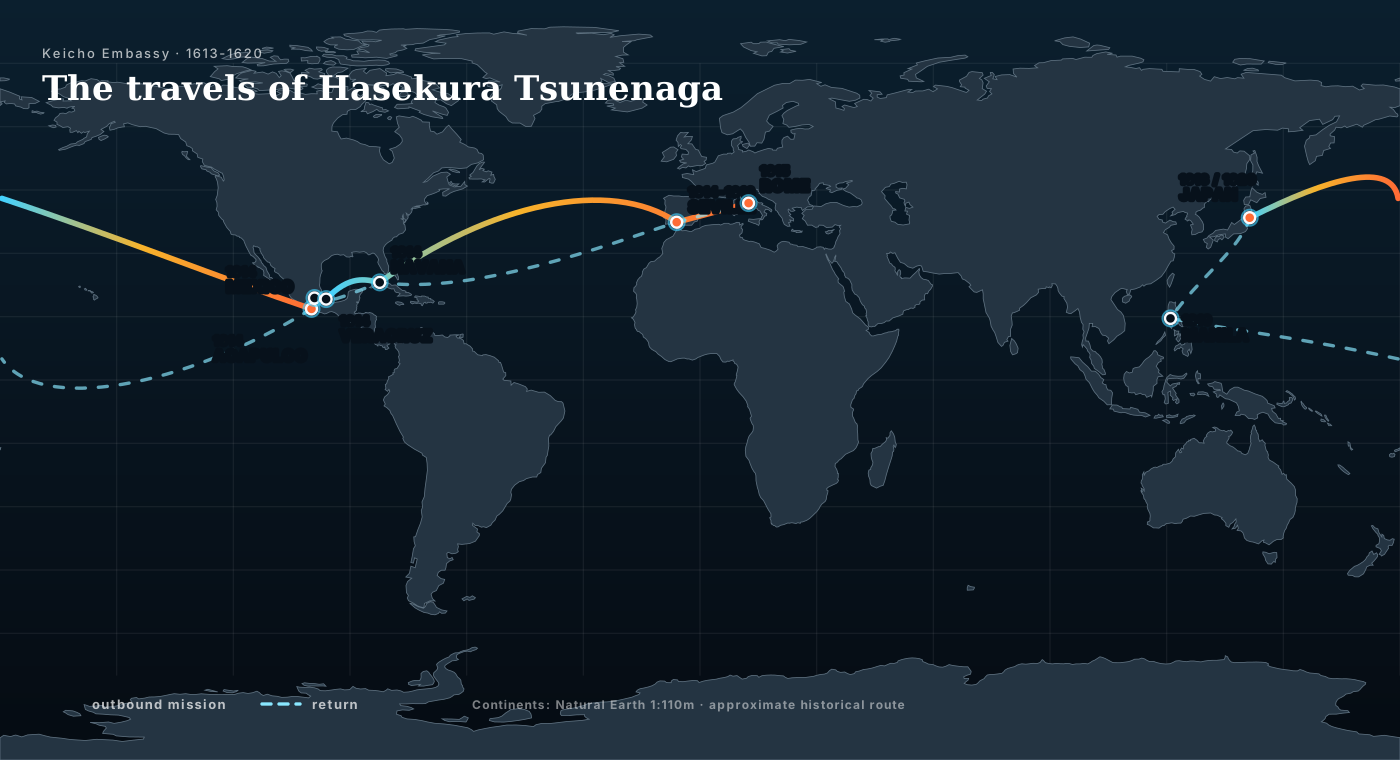
After disembarking, the mission didn’t stay on the coast. It traveled toward the interior of New Spain, passed through several cities —Cuernavaca among them— and reached the capital, today’s Mexico City, where Hasekura met with the viceroy and with religious authorities. Later he set out for Veracruz, by way of Puebla, to board a ship for Europe.
This part feels almost more powerful than the arrival itself, because it means that during a few months of 1614 a group of Japanese travelers rode or were carried along New Spanish roads. They passed through towns, convents, plazas, dusty roads and cities where they were surely watched as if they were characters from another planet. Official history mostly records treaties, royal names, dates, and shipments — but that other history, the faces of those who saw them go by, also existed, even if no one painted it.
From Mexico to Rome
Hasekura kept going. He sailed out of Veracruz, stopped in Havana, reached Spain, and was eventually received in Rome. His mission sought the backing of King Philip III and Pope Paul V to make the trade and religious plans he carried from Japan a reality.
There he obtained an extraordinary document: a certificate of Roman citizenship and nobility. The Latinized Christian name on it —Philippo Francisco Faxecura Rocuyemon— is, even today, one of the most unusual signatures preserved in the archives of the city of Rome.
The world changed while he traveled
The tragic thing about this story is that Hasekura left Japan at a moment when it still seemed possible to open that bridge with the Hispanic world. But while he was crossing oceans, courts, and cities, Japan was changing: Christianity began to be persecuted more harshly and the country moved toward a strict policy of isolation.
By the time the mission returned, the political conditions that had made the journey possible had evaporated. After seven years of travel, the Keichō Embassy came back without achieving its main goals because Japan had changed internally. Date Masamune, the one-eyed dragon, had to accept that his global bet had arrived too late.
Hasekura returned to Sendai in 1620 and died not long after — according to most accounts as a Christian, in a country where Christianity had already become a persecuted heresy.
The Japón of Coria del Río
But the story has an extraordinary footnote, and it’s on the other side of the Atlantic.
On the way back, while the mission waited in Seville for news that never came, a group of Japanese crew members stayed behind. They didn’t return to the ship. They settled in Coria del Río, a town on the banks of the Guadalquivir, and married local women. Their descendants are still there today: the census of Coria del Río and nearby towns lists close to seven hundred people whose surname is Japón (in some old registers, Jaapón or Xapón).
In other words: the Keichō Embassy failed as a political project, but it left genome. Date Masamune’s lost mission still walks the streets of an Andalusian town four hundred years later.
Globalization started even earlier
I like this story because it reminds us that globalization didn’t begin with the internet, or planes, or shipping containers. Already in 1614 people were crossing the planet with letters, gifts, interpreters, commercial ambitions, religious promises, and an enormous amount of uncertainty. The difference is that back then all of that happened on wooden ships, with incomplete maps and entire months at sea.
I don’t know whether Hasekura saw Mexico the way we see it today. Probably not. For him it was New Spain, a key piece of the Spanish empire, a necessary stop on a much larger mission.
But for us, four centuries later, the image is irresistible: a man who left Japan, reached Rome, and returned to his homeland with documents, memories, and the bitter feeling of having traveled too far only to come back to a different world.
Not bad at all for a story they almost never told us in school.
Sources
- Wikipedia — Hasekura Tsunenaga
- Wikipedia — Date Masamune
- Wikipedia — Coria del Río (Japón surname)
- UNESCO Memory of the World — Materials Related to the Keichō-era Mission to Europe (inscribed 2013).
- Colegio de San Ildefonso — Somos Pacífico: Hasekura Tsunenaga
- Revista de Historia — The Keichō Embassy (1613-1620)
Categories
The books · born from this blog
Atahualpa con su abrigo de pelo de murciélago
y otras 49 historias verdaderas que parecen mentira
Available on Amazon
Tocar madera
Pequeña historia de las supersticiones que el mundo no ha podido soltar
Available on Amazon
100 futuros
Cien escenarios del mundo que viene con la inteligencia artificial
Available on AmazonYou may also like
The history of the stethoscope and Laennec's modesty
In 1816 a French doctor felt too awkward to press his ear to a patient's chest, so he rolled up paper — and the stethoscope was born.

Placebo: the Latin word that means «I shall please»
«Placebo» means «I shall please» in Latin and began as a medieval funeral chant. Here is how it jumped from the church to medicine and its famous effect.
Scurvy: the disease that killed more sailors than storms
Scurvy killed more sailors than battles and shipwrecks combined. Its cure was discovered, forgotten, and rediscovered over and over for centuries.