
Why Does September Mean Seven If It's the Ninth Month?
September comes from septem, seven — yet it's the ninth month. Neither Julius Caesar nor Augustus is to blame: the story is older and stranger.
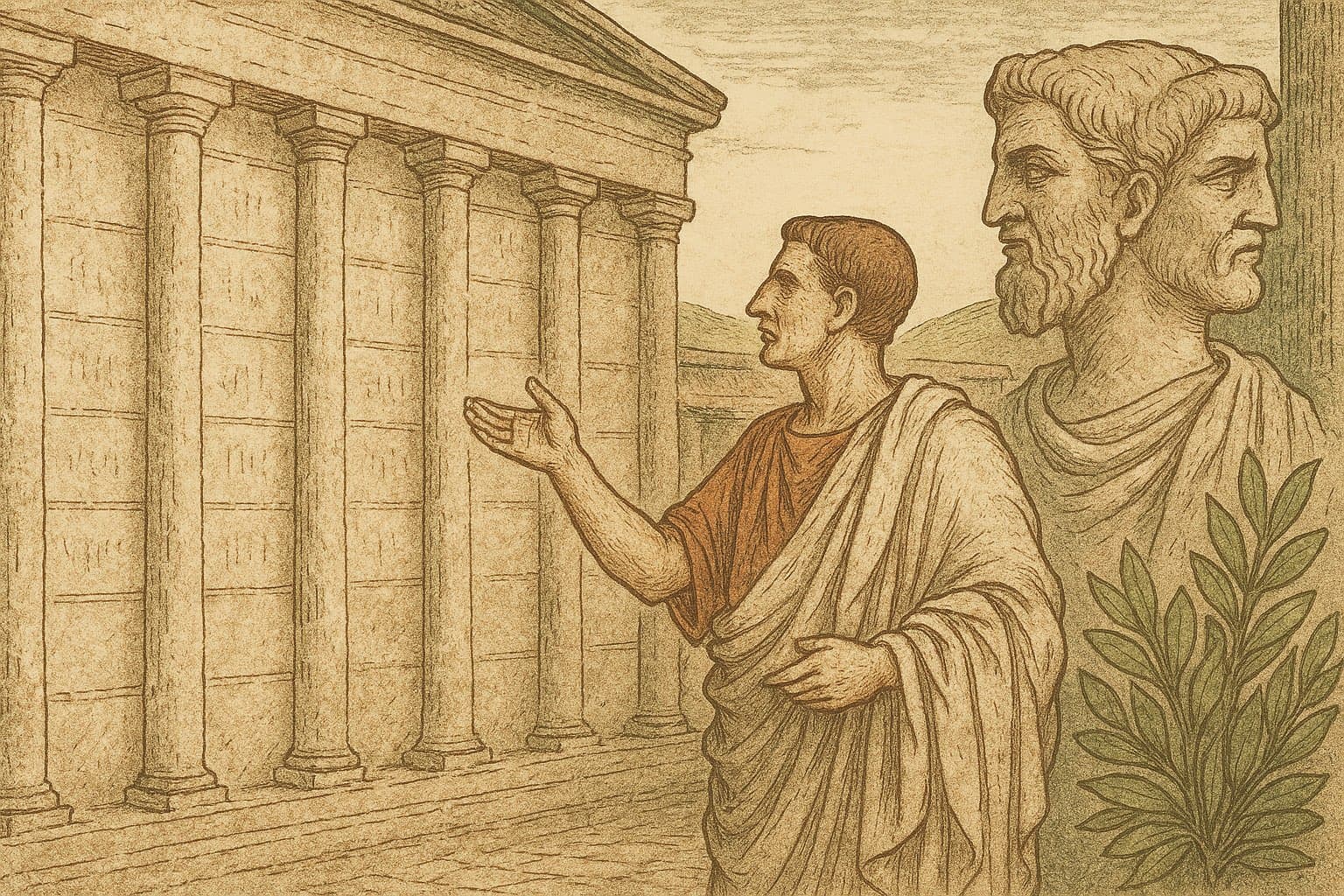
Hiding in plain sight in our calendar there is a two-thousand-year-old numbering error. September comes from the Latin septem, seven — yet it is the ninth month. October comes from octo, eight — and it is the tenth. November (novem, nine) is the eleventh, and December (decem, ten) is the twelfth. Four months in a row with their names shifted by two positions, and we all write them daily without blinking. What happened here?
The myth: blame Julius Caesar and Augustus
The explanation that circulates around the internet —and that fits perfectly at first glance— says the Romans inserted two new months in honor of their rulers: July for Julius Caesar and August for Augustus, and that by squeezing them in they pushed the remaining months two places forward. It sounds logical, it sounds like Romans being Romans... and it is false. July and August were not inserted: they were renamed. Those months already existed and were called, precisely, Quintilis (“the fifth”) and Sextilis (“the sixth”). After Caesar's death, the Senate rebaptized Quintilis as Iulius in his honor —it was the month of his birth—, and decades later did the same with Sextilis for Augustus. The label changed; the position did not. September's misnumbering is much older, and the real story is far more curious.
A ten-month calendar (and a winter with no name)
The early Roman calendar —tradition attributes it to Romulus himself— had only ten months and began in March, the month of Mars, when spring and the war season started together. Back then the math worked perfectly: counting from March, September was the seventh month, October the eighth, November the ninth and December the tenth. The first months carried the names of gods and festivals; from the fifth one onward, the Romans ran out of inspiration and simply numbered them like someone labeling boxes.
And what came after December? Nothing. Seriously: about sixty days of winter that belonged to no month at all. It was dead time for farming and for war, so the calendar simply switched off until the next new moon of spring. It was king Numa Pompilius, according to tradition, who around 700 BC gave that gap a name by creating two new months: January, for Janus, the two-faced god who looks at the past and the future —the official doorkeeper of beginnings—, and February, for the februa, the purification festivals that closed the year.
A war in Hispania moved New Year's Day
But note: even with January and February in existence, the year kept starting in March for centuries, and September remained the seventh month. The final push came through the most unexpected door: military bureaucracy. In Rome, the consuls —the highest authority— took office with the new year. And in 153 BC a Celtiberian rebellion broke out in Hispania that could not wait: the Senate needed the consul to reach the campaign in time, so it moved the inauguration up to January 1st. The administrative year relocated from March to January out of sheer military convenience, the months kept their old names... and September was condemned to be “the seven” in position nine for all eternity. A century later, Julius Caesar's reform —which fixed the calendar's astronomical chaos with the 365-day year and leap days— consecrated the order we know today, and from there it passed almost intact into the Gregorian calendar we still use.
The fossil we carry in our pockets
I like to think of the calendar as an archaeological site in daily use. Every time someone writes “September” they are quoting, unknowingly, an agricultural calendar from 8th-century-BC Rome; every “January” invokes a two-faced god; and the whole misnumbering exists because twenty-two centuries ago a consul was in a hurry to get to a war in Spain. Words, as we have seen before in this series, tend to keep memories better than we do: there they remain, quietly telling a story almost everyone has forgotten.
References
- Ovid, Fasti, Book I, lines 27-44. perseus.tufts.edu
- Plutarch, Life of Numa, 18-19. penelope.uchicago.edu
- Censorinus, De die natali liber, ch. XX. penelope.uchicago.edu
- Livy, Periochae, Book 47, 13-14. livius.org
Enjoy the stories behind words? Continue with why Maecenas was a man with a first and last name and why the Panama hat is called Panama if it was born in Ecuador, or browse the whole etymology series.
The books · born from this blog

Atahualpa con su abrigo de pelo de murciélago
y otras 49 historias verdaderas que parecen mentira
Available on Amazon
Tocar madera
Pequeña historia de las supersticiones que el mundo no ha podido soltar
Available on Amazon
100 futuros
Cien escenarios del mundo que viene con la inteligencia artificial
Available on AmazonYou may also like

Placebo: the Latin word that means «I shall please»
«Placebo» means «I shall please» in Latin and began as a medieval funeral chant. Here is how it jumped from the church to medicine and its famous effect.

The Origin of the Word “Quarantine”: 40 Days in Venice
Where does the word quarantine come from? From the 40 days that Venice and Ragusa forced ships to wait during the Black Death. Here is its story.

The Origin of the Word “Dollar”: a Bohemian Valley
Where does the word dollar come from? From a silver-mining valley in Bohemia and a 16th-century coin. The story of the thaler that conquered the world.