
Condor, puma and pampa: the Quechua we speak
Condor, puma and pampa come from Quechua, the language of the Incas. Here is how these and other Andean words reached Spanish, English and everyday speech.
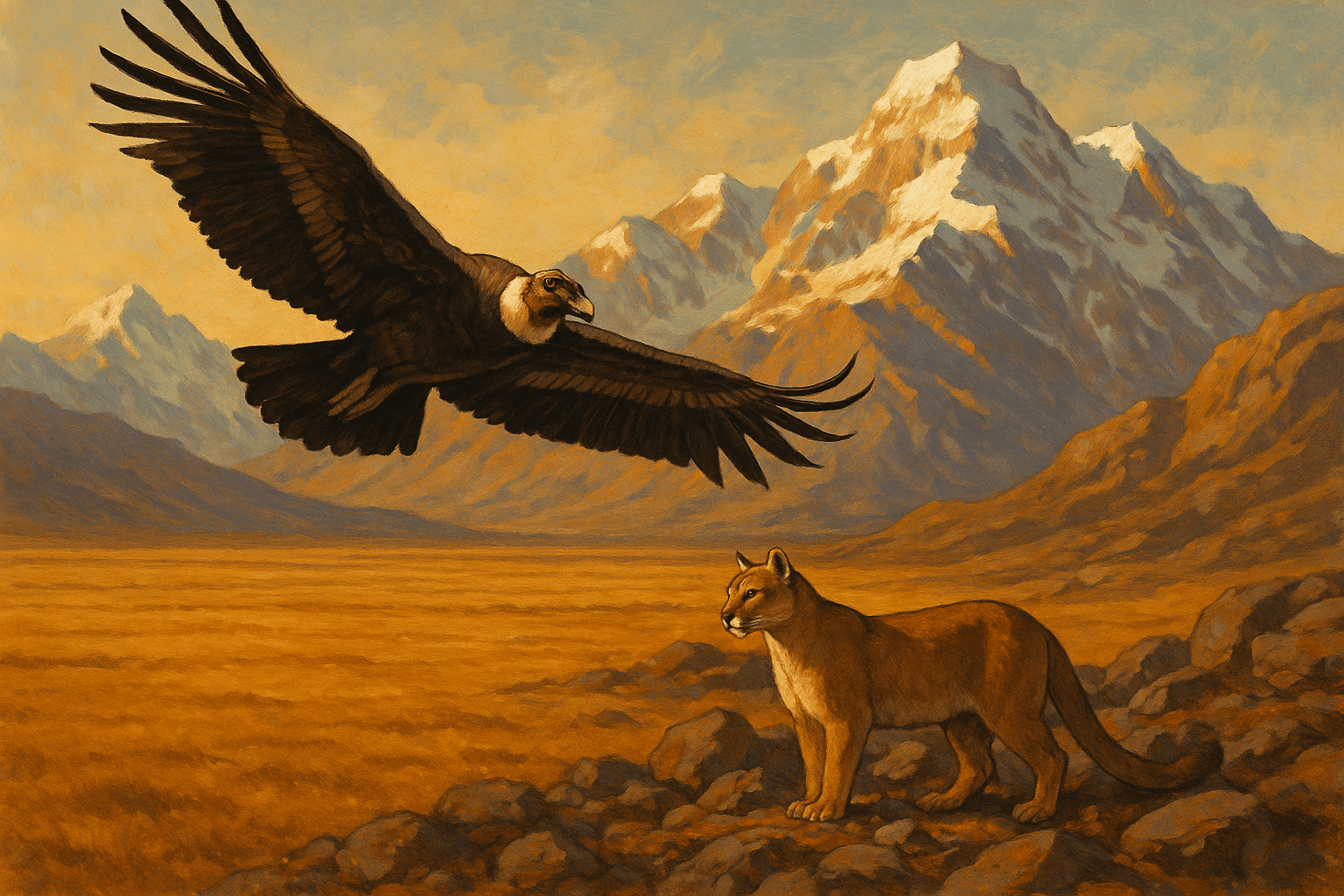
A condor glides over a pampa while a puma lurks among the rocks: three thoroughly English-sounding words that were not born in English at all. All three come from Quechua, the language of the Inca empire that the Spanish found in the Andes from 1532 on. Just as the first American words came from the Caribbean —like «canoe», «hurricane» and «hammock», of Taíno origin— and a wave of Nahuatl words such as «chocolate» and «tomato» rolled in from Mexico, a third batch of loanwords came down from the Andean highlands that we now use without suspecting where they came from.
Quechua, the language of Tawantinsuyu
Quechua —or Kichwa, as it is called in Ecuador— was not a single language but a family of varieties that became the lingua franca of Tawantinsuyu, the Inca empire stretching from southern Colombia to central Chile and Argentina. When Francisco Pizarro reached Peru, he ran into a vast state, with roads, accounting by means of quipus and a detailed vocabulary for a geography and a fauna Europe knew nothing about.
The Spanish did what they had done in the Caribbean and in Mexico: when they had no word of their own, they borrowed someone else's. The Royal Spanish Academy today recognizes around 75 words of Quechua origin in its dictionary, and most of them name precisely Andean plants, animals and features of the land. Many did not even stay in Spanish: they crossed into English, French and half the world, almost always through Spanish.
«Condor»: the kuntur of the Andes
The word condor comes from the Quechua kuntur, the native name of the bird that rules the Andean sky. The Andean condor is one of the largest flying birds on Earth —its wingspan tops three meters— and it held a central place in the Inca worldview: together with the puma and the snake it formed a symbolic triad representing, respectively, the world above, the world of the earth and the world below.
The loanword entered Spanish in the sixteenth century and from there jumped into English as condor as early as the seventeenth, barely changing. It is one of those words that traveled intact: the same sound that named the bird in the Andes is, give or take an accent, the one we use today in both Spanish and English.
«Puma»: the cat that never changed its name
The puma is perhaps the cleanest case of all: the word passed from Quechua puma into Spanish and from there into English without changing a single letter. Before that borrowing, Spanish had no proper name for this American cat, so it used various approximations —«American lion» among them— until the Andean word won out.
That is why the same animal now piles up a collection of names depending on the region: puma, mountain lion, cougar (which reached English by another route, from a Tupí language via French) or panther. But the word that has spread the widest —even lending its name to sportswear brands— is the Quechua one.
«Pampa»: the treeless plain
The word pampa means in Quechua «plain» or «flat, treeless ground». In River Plate Spanish it came to name the huge lowlands of Argentina and Uruguay —the Pampa with a capital P, land of gauchos— but the root shows up all over the Andean world in place names: Pampas, Pampamarca, and the very Peruvian toponym of the Nazca lines, drawn on a pampa.
Like kuntur and puma, pampa also crossed into English, where pampas specifically means those South American grasslands and even names an ornamental plant, pampas grass. A word that began by describing Andean soil ended up naming gardens across half the world.
A pantry —and a zoo— in Quechua
Condor, puma and pampa are only the showcase. From Quechua also come the llama (llama) and its relatives the alpaca, the vicuña and the guanaco; coca (kuka), the leaf of ancient Andean use; quinoa (kinwa); guano (wanu, bird droppings), which in the nineteenth century was Peru's great export commodity; and even charqui, the sun-dried meat that gave English the word jerky. Quechua too are everyday words like choclo (corn on the cob), papa —the root behind the endless confusion between «potato», «papa» and «batata»— or carpa (tent).
Every time someone watches a condor, crosses the pampa or fears a puma, they repeat —without knowing it— words that echoed along the roads of Tawantinsuyu more than five hundred years ago. As happens with Andean words like «guagua», much of what we say carries hidden an Indigenous root that survived, intact, the language that created it.
References
- «Condor — Etymology, Origin & Meaning», Online Etymology Dictionary. etymonline.com
- «Puma — Etymology, Origin & Meaning», Online Etymology Dictionary. etymonline.com
- «Appendix: English terms of Native South American origin», Wiktionary. wiktionary.org
- «Everyday Quechua: Coke, jerky, & DNA», Mashed Radish. mashedradish.com
Enjoy the stories behind words? Continue with the first Taíno words in Spanish or explore the whole etymology series.
Categories
The books · born from this blog
Atahualpa con su abrigo de pelo de murciélago
y otras 49 historias verdaderas que parecen mentira
Available on Amazon
Tocar madera
Pequeña historia de las supersticiones que el mundo no ha podido soltar
Available on Amazon
100 futuros
Cien escenarios del mundo que viene con la inteligencia artificial
Available on AmazonYou may also like
The Origin of “Ñapa”: From Quechua to Lagniappe
Where does the word ñapa come from? From Quechua yapa, “something added.” The story of the market freebie that traveled to Louisiana and became lagniappe.
Cancha: from Inca enclosure to soccer field
«Cancha» comes from the Quechua kancha, the walled enclosure of the Incas. Here is how it went from temples and corrals to naming soccer fields across half the world.
Potato, papa and batata: the great tuber mix-up
«Papa» comes from Andean Quechua and «batata» from Caribbean Taíno: two unrelated tubers that Europe blended into one word, potato.