
Potato, papa and batata: the great tuber mix-up
«Papa» comes from Andean Quechua and «batata» from Caribbean Taíno: two unrelated tubers that Europe blended into one word, potato.
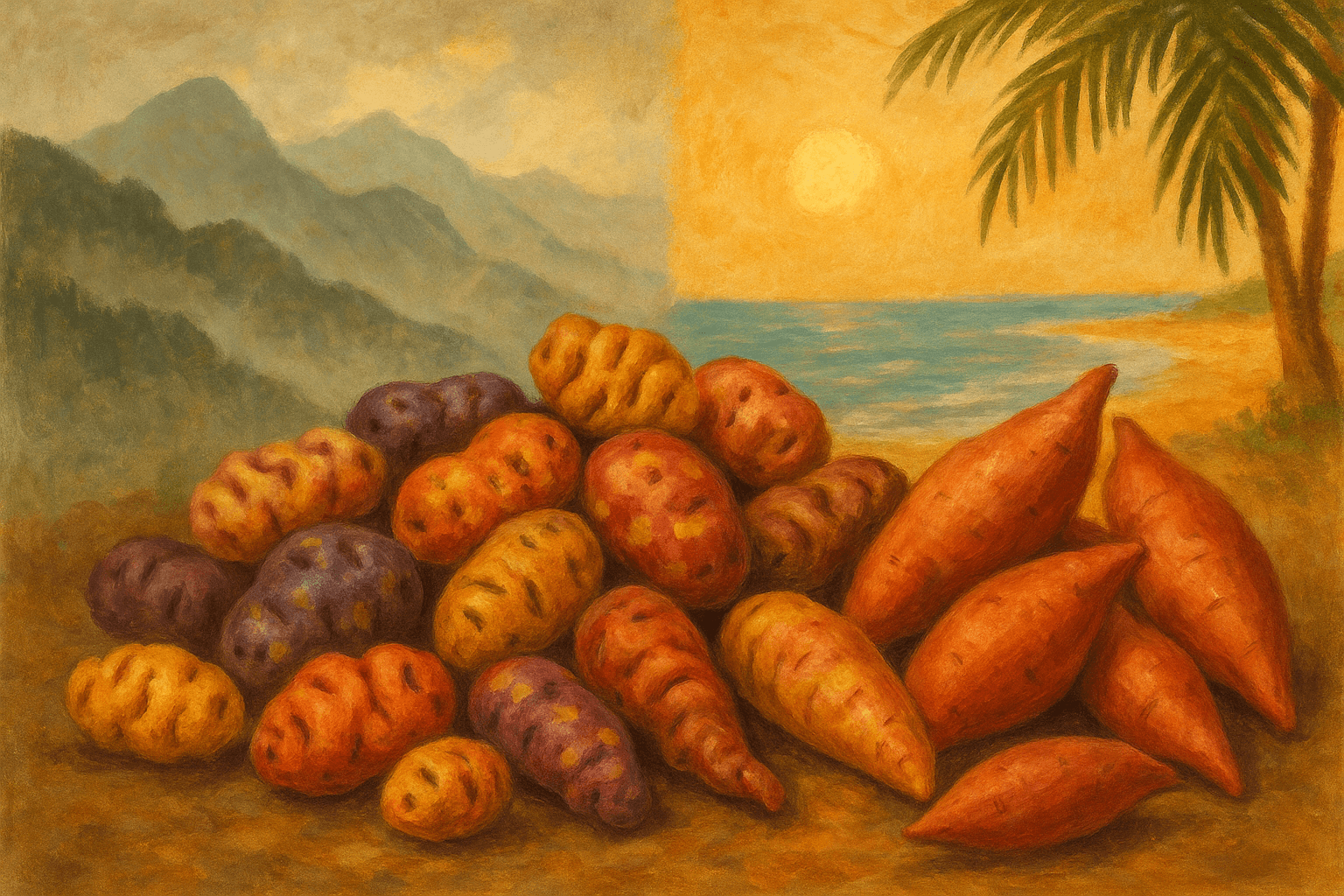
The English word potato looks perfectly simple, but it is the fossil of a five-hundred-year-old mistake. It was born from the blending of two Indigenous American words —one Andean, one Caribbean— for two plants that are not even botanical relatives. It is the same kind of tangle we see with «tomato» and «avocado», from Nahuatl, except here the confusion got frozen inside the word itself.
«Papa»: the word that came down from the Andes
The word papa comes from Quechua, the language of the Inca empire and much of the Andes. There, the tuber we now call the potato had been farmed for thousands of years in the cold highlands where maize will not grow, and it was a staple of Andean civilization. When the Spanish reached Peru in the 16th century, they adopted the local word almost unchanged: papa. It is the same route taken by other Andean words we now use without thinking, like «guagua», the Quechua word for a small child.
That is why across much of Latin America the tuber is still called papa: it is, strictly speaking, the name truest to the plant's origin. The potato we eat —Solanum tuberosum— is Peruvian, Andean and Quechua in both name and birthplace.
«Batata»: the one that reached Europe first
The trouble is that a very different plant won the race to Europe. The batata —the sweet potato, Ipomoea batatas— is not a potato at all: it belongs to an entirely separate botanical family. Its name comes from Taíno, the language of the Caribbean peoples Columbus met in 1492, the same one that gave us «hurricane», «hammock» and «canoe».
The sweet potato crossed the Atlantic early —it is thought to have circulated in Spain within the first decades of the 16th century— while the Andean potato took far longer to arrive and be appreciated, only entering European kitchens in earnest in the 18th century. During that gap, Europeans handled a sweet Caribbean plant called batata and, later, a starchy Andean one called papa. And they mixed them up.
«Papa» + «batata» makes «patata»
According to the great etymologist Joan Corominas, the Spanish word patata was born from exactly that muddle: it is a blend of papa (Quechua) and batata (Taíno). The Spanish ear, which had learned «batata» first and «papa» afterward, ended up fusing the two into a hybrid form —patata— that came to name mostly the Andean potato, even while it carried an echo of the Caribbean sweet potato inside it.
A more colorful legend also circulates: that the Church discouraged calling a vegetable «papa» out of respect for the Pope (also papa in Spanish), pushing the word «patata» instead. It is a charming anecdote, but the serious explanation is the linguistic crossing of the two Indigenous words; the pontiff angle is later folklore.
The same tangle jumped into English
The confusion did not stay in Spanish. English took the word potato from Spanish, and its first written record, from 1565, did not refer to the potato we picture today but to the sweet potato: it appears in an account of a John Hawkins voyage to the Caribbean. Only around the 1590s did the name potato stretch to cover the white Andean potato as well, simply because both were edible tubers. That is why English now patches over it: it calls the batata a sweet potato, as if the sweet one had come first.
Other languages preferred to invent a new name rather than inherit the muddle. French christened the potato pomme de terre, literally «apple of the earth», and several Central European languages copied that «earth apple» idea. Curiously, the final «-o» of English tomato is thought to have stuck by contagion from potato: two American words that ended up rhyming by accident.
A word with two continents inside
So every time someone debates potato versus papa, they are unknowingly reliving a five-century-old misunderstanding. Papa keeps the pure voice of the Andes; batata, that of the Caribbean; and potato/patata is the hybrid Europe manufactured by confusing two different plants under one name. As with so many first American words in Spanish, etymology tells us not only where a food comes from: it also records the stumbles of the people who named it.
References
- «potato», Wordorigins.org. wordorigins.org
- «potato», Online Etymology Dictionary. etymonline.com
- «La historia de la palabra "patata"», National Geographic España. nationalgeographic.com.es
- «Potato, batata», Mashed Radish. mashedradish.com
Enjoy the stories behind words? Continue with the Nahuatl we eat every day or explore the whole etymology series.
Categories
The books · born from this blog
Atahualpa con su abrigo de pelo de murciélago
y otras 49 historias verdaderas que parecen mentira
Available on Amazon
Tocar madera
Pequeña historia de las supersticiones que el mundo no ha podido soltar
Available on Amazon
100 futuros
Cien escenarios del mundo que viene con la inteligencia artificial
Available on AmazonYou may also like
The Origin of “Ñapa”: From Quechua to Lagniappe
Where does the word ñapa come from? From Quechua yapa, “something added.” The story of the market freebie that traveled to Louisiana and became lagniappe.
Cancha: from Inca enclosure to soccer field
«Cancha» comes from the Quechua kancha, the walled enclosure of the Incas. Here is how it went from temples and corrals to naming soccer fields across half the world.
Condor, puma and pampa: the Quechua we speak
Condor, puma and pampa come from Quechua, the language of the Incas. Here is how these and other Andean words reached Spanish, English and everyday speech.