
Chocolate, tomato, avocado: the Nahuatl we eat every day
Chocolate, tomato and avocado were born in Nahuatl, the language of the Aztecs. Here is how the words we eat every day reached your table and English.
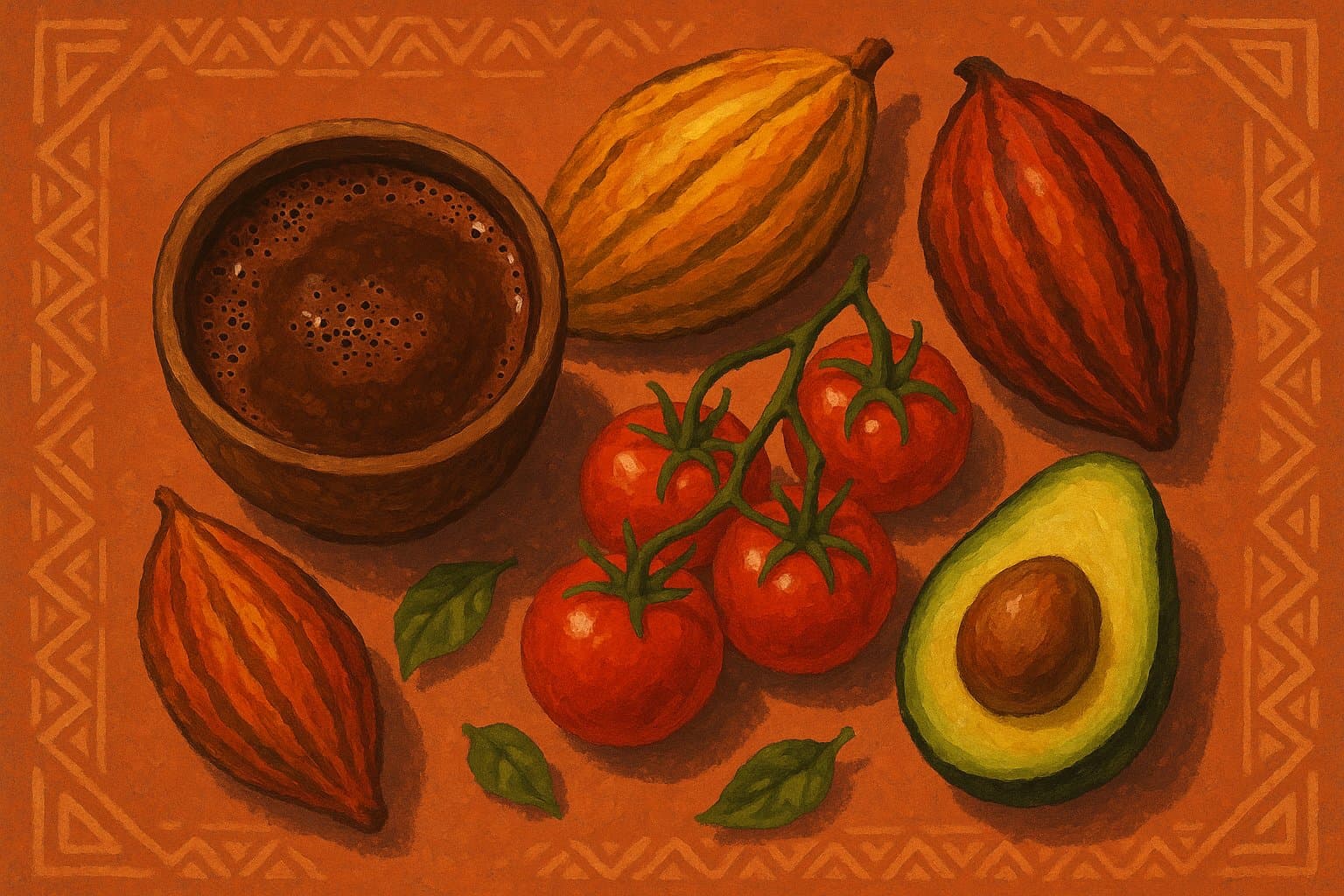
If you mash an avocado into guacamole, spread tomato on your bread and finish the meal with a chocolate, you have just spoken three words that all came from the same place: Nahuatl, the language the Aztecs spoke when the Spanish reached Mexico in 1519. While the first American words in Spanish came from the Caribbean —like «canoe», «hurricane» and «hammock», of Taíno origin—, a second wave rolled in from central Mexico naming, above all, things to eat. And those words did not stay in Spanish: they crossed into English, French and half the world almost unchanged.
Nahuatl, the language of the Aztec empire
Nahuatl belongs to the Uto-Aztecan family and was the lingua franca of the Mexica (Aztec) empire and much of Mesoamerica. When Hernán Cortés landed, he did not stumble onto a handful of villages but onto a civilization of vast markets, calendars and a rich vocabulary for plants, animals and dishes Europe had never seen. The Spanish did what they had done in the Caribbean: when they had no word of their own, they borrowed someone else's.
Around 200 to 300 words of Nahuatl origin are thought to have entered Spanish, many of them now indispensable. There is a clue for spotting them: in Spanish almost all end in «-te», because Nahuatl ended countless words in «-tl», a sound Spanish did not have and softened into «-te». Chocolate, tomate, aguacate, elote, mecate, ocelote, coyote… all share that fingerprint. It is the same need-driven borrowing we see when the word «chocolate» itself travels from Nahuatl to the whole world.
«Chocolate»: the bitter water of the gods
The word chocolate comes from the Nahuatl xocolātl, usually translated as «bitter water» (from xococ, bitter or sour, and atl, water). For the Mexica, cacao was not the sweet solid we know: it was a thick, bitter, frothy drink, sometimes laced with chili, whipped until it foamed and reserved for nobles and warriors. Cacao was so valuable that its beans were used as currency, which ties into the story of how different peoples invented money.
Interestingly, the etymology of xocolātl is disputed: some linguists note that the word is not recorded as such in the oldest sources and propose other origins for its first syllable. What no one disputes is the word's fate: from Spanish chocolate it passed into English and French as chocolate/chocolat, and from an Aztec ceremonial drink it became the most universal treat on the planet.
«Tomato»: the fruit that swells
The tomato takes its name from the Nahuatl tomatl, which can be read as «the fruit that swells» (related to tomahua, to grow fat or swell). But here lies a delicious tangle: in Nahuatl, tomatl actually named the green husk tomatillo —the one that goes into Mexican salsa verde today—, while the big red tomato that fills our salads was called xitomatl, source of the Mexican word «jitomate».
Europeans, who did not clearly tell the two apart, shortened everything to tomate. From there it jumped into English around 1600 as tomate, and over time became tomato, with a final «-o» many credit to the pull of potato. One American plant, two Nahuatl names blurred into one, and a fruit that today underpins Italian cooking: few words sum up the back-and-forth between continents better.
«Avocado»: the fruit shaped like… well
The word avocado comes from the Nahuatl ahuacatl. Its main meaning was always «the fruit of the avocado tree», but the same word also carried a colloquial sense: «testicle», from the fruit's resemblance as it hangs from the branch. That is the root of the much-repeated claim that avocado «means testicle». It is an exaggeration: it was a secondary, jokey sense, the fruit itself always came first.
On entering Spanish, ahuacatl was reshaped by folk etymology: it sounded like avocado, an old word for «advocate/lawyer», and in some regions that is how it was said. English inherited exactly that form and today says avocado; for a while it also called the fruit alligator pear. And ahuacatl plus molli («sauce», the same root as Mexican «mole») gives ahuacamolli: literally «avocado sauce», that is, our guacamole.
A whole pantry in Nahuatl
Chocolate, tomato and avocado are only the display window. Nahuatl also gave us chili (chilli), the tamale (tamalli), elote (corn on the cob), chicle (tzictli, chewing gum), the coyote, the ocelot and even cuate (twin, buddy). Every time someone orders hot chocolate or spreads guacamole on toast with tomato, they repeat —without knowing it— words that rang through the markets of Tenochtitlan more than five hundred years ago. As with the first Taíno words or Andean voices like «guagua», much of what we eat and say hides an Indigenous root that outlived the language that made it.
References
- «10 Words from Nahuatl, the Language of the Aztecs», Merriam-Webster. merriam-webster.com
- «tomatl» and «xitomatl», Nahuatl Dictionary — Wired Humanities Projects. nahuatl.wired-humanities.org
- «avocado / guacamole», Wordorigins.org. wordorigins.org
- «Does the Word "Guacamole" Mean "Testicle Sauce"?», Snopes. snopes.com
Enjoy the stories behind words? Continue with the origin of «chocolate» or explore the whole etymology series.
Categories
The books · born from this blog
Atahualpa con su abrigo de pelo de murciélago
y otras 49 historias verdaderas que parecen mentira
Available on Amazon
Tocar madera
Pequeña historia de las supersticiones que el mundo no ha podido soltar
Available on Amazon
100 futuros
Cien escenarios del mundo que viene con la inteligencia artificial
Available on AmazonYou may also like
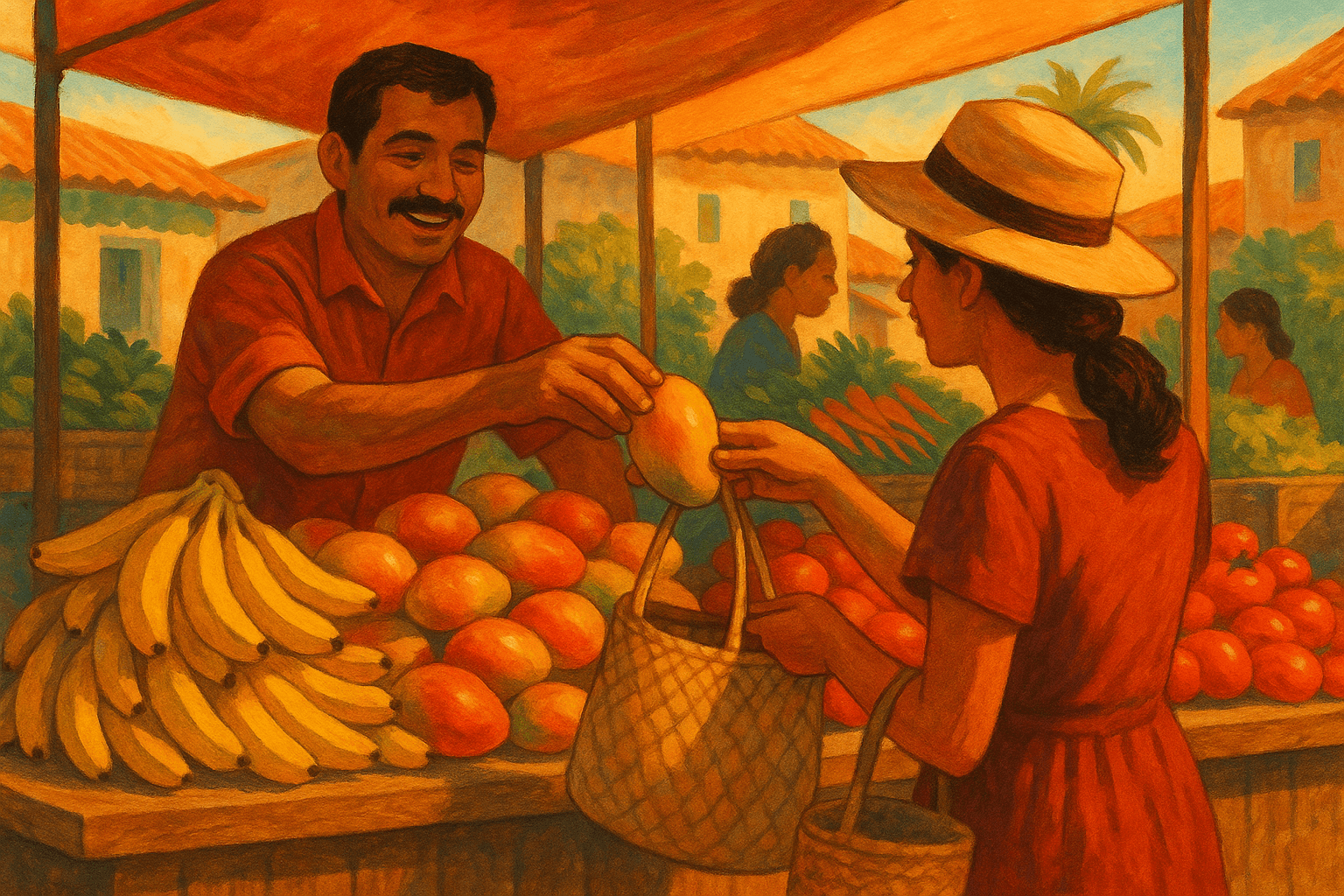
The Origin of “Ñapa”: From Quechua to Lagniappe
Where does the word ñapa come from? From Quechua yapa, “something added.” The story of the market freebie that traveled to Louisiana and became lagniappe.

Cancha: from Inca enclosure to soccer field
«Cancha» comes from the Quechua kancha, the walled enclosure of the Incas. Here is how it went from temples and corrals to naming soccer fields across half the world.

Condor, puma and pampa: the Quechua we speak
Condor, puma and pampa come from Quechua, the language of the Incas. Here is how these and other Andean words reached Spanish, English and everyday speech.