
The history of the stethoscope and Laennec's modesty
In 1816 a French doctor felt too awkward to press his ear to a patient's chest, so he rolled up paper — and the stethoscope was born.
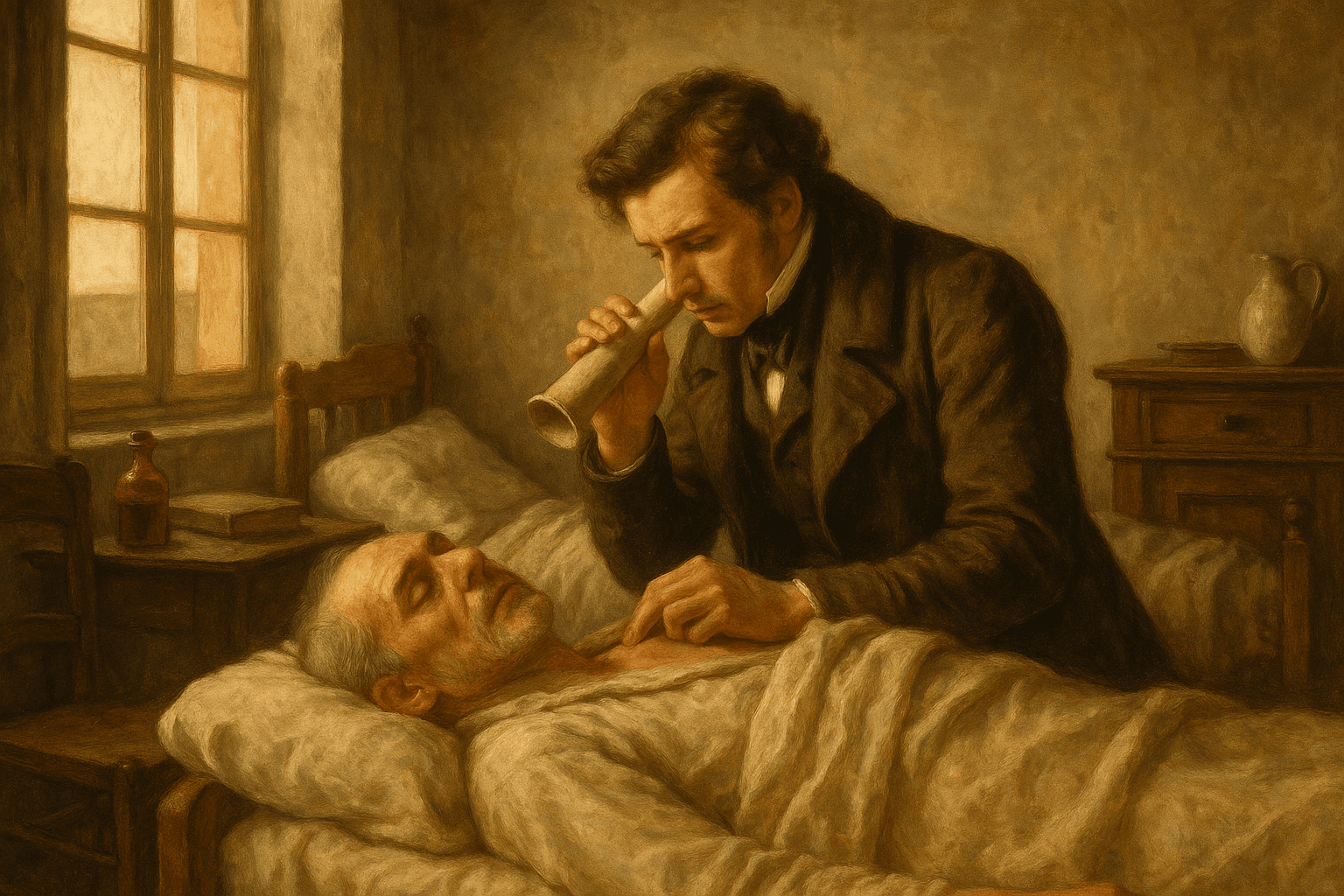
The stethoscope is today the universal symbol of the physician: the tube hanging from a neck in any clinic or television drama. Yet few people know it was born of an awkward moment. In 1816, a young Paris doctor did not dare press his ear against a female patient's chest and, to escape the embarrassment, he rolled up a few sheets of paper. From that uncomfortable gesture came one of the most important instruments in the history of medicine.
Listening to the body before the stethoscope
For centuries, the only way to hear what was happening inside the chest was immediate auscultation: the doctor pressed an ear directly onto the patient's skin. The method worked, but it had obvious drawbacks. It was uncomfortable, unhygienic and, above all, socially delicate when the patient was a woman. On heavier patients, moreover, barely anything could be heard.
The other tool of the era was percussion: gently tapping the chest with the fingers and deducing from the sound whether there was air, fluid or solid tissue underneath, rather like knocking on a barrel to tell if it is full. Both techniques were valuable, but they left the doctor almost blind to the heart and lungs. Internal medicine was still, in large part, an exercise in guesswork not unlike the uncertain remedies of other ages, such as those that surrounded scurvy, the disease that defeated sailors.
A roll of paper at the Necker hospital
The hero of this story is René-Théophile-Hyacinthe Laennec, a physician at the Necker hospital in Paris. One day in 1816 a young woman came to him with symptoms of a possible heart condition. Laennec needed to listen to her chest, but resting his head on it seemed inappropriate given the patient's age and sex. To make matters worse, she was a woman of full figure, so percussion was of little use either.
Then he remembered a childhood trick: children who scratched a pin at one end of a wooden beam and heard the sound clearly by pressing an ear to the other end. Sound travels through solids. Laennec took some sheets of paper, rolled them tightly into a cylinder, placed one end on the patient's chest and the other against his own ear. The result astonished him: he could hear the heartbeat clearer and louder than ever, without touching the body with his face.
From paper to a wooden cylinder
Laennec understood at once that he had stumbled onto something big, and he spent the next three years refining it. He replaced the paper with a hollow wooden cylinder —he tried cedar and ebony— about 30 centimeters long, with a narrow central channel to carry the sound. With his new instrument he could distinguish for the first time, and in detail, the normal and pathological sounds of the heart and lungs, describing sounds still studied in medical schools today.
In 1819 he gathered his findings in a monumental treatise, De l'Auscultation Médiate ("On Mediate Auscultation"), so called because an intermediate instrument now stood between the ear and the patient. The book included one of the first examples of the device and changed diagnosis forever. As so often in science, a technical advance abruptly transformed an entire discipline, just as it did when a gas turned pain into silence in the story of anesthesia.
A Greek word for a new invention
At first Laennec was reluctant to name his invention; he preferred to call it simply le cylindre, "the cylinder", and thought so basic an instrument needed no name. But if it had to be called something, he proposed stethoscope, from the Greek stethos ("chest") and skopein ("to examine", "to look at"): literally, "the chest examiner". The word prevailed and eventually pushed aside his colleagues' alternatives, much as other inventions dragged a vocabulary of their own along with them, like the surprisingly ancient history of rhinoplasty.
There is an ending as ironic as it is moving. Laennec devoted much of his career to using his cylinder to study lung diseases, above all tuberculosis. In 1826 he died at the age of 45 of tuberculosis itself, the very illness he had listened to so often through his instrument. His wooden cylinder later evolved into the flexible, twin-earpiece models we use today, but the principle remains his own: to listen inside the body without invading it. An entire symbol of modern medicine was born, in the end, from one man's modesty at not wanting to press his ear where he felt he should not.
References
- "René Laënnec", Encyclopædia Britannica. britannica.com
- "René Théophile Hyacinthe Laënnec and the stethoscope", Hektoen International. hekint.org
- "A Curious Inspiration for the First Stethoscope", PBS NewsHour. pbs.org
- "Stethoscope", Wikipedia. en.wikipedia.org
Curious about the stories behind medicine? Continue with rhinoplasty, plastic surgery older than you think or explore the full history section.
Categories
The books · born from this blog

Atahualpa con su abrigo de pelo de murciélago
y otras 49 historias verdaderas que parecen mentira
Available on Amazon
Tocar madera
Pequeña historia de las supersticiones que el mundo no ha podido soltar
Available on Amazon
100 futuros
Cien escenarios del mundo que viene con la inteligencia artificial
Available on AmazonYou may also like

Scurvy: the disease that killed more sailors than storms
Scurvy killed more sailors than battles and shipwrecks combined. Its cure was discovered, forgotten, and rediscovered over and over for centuries.
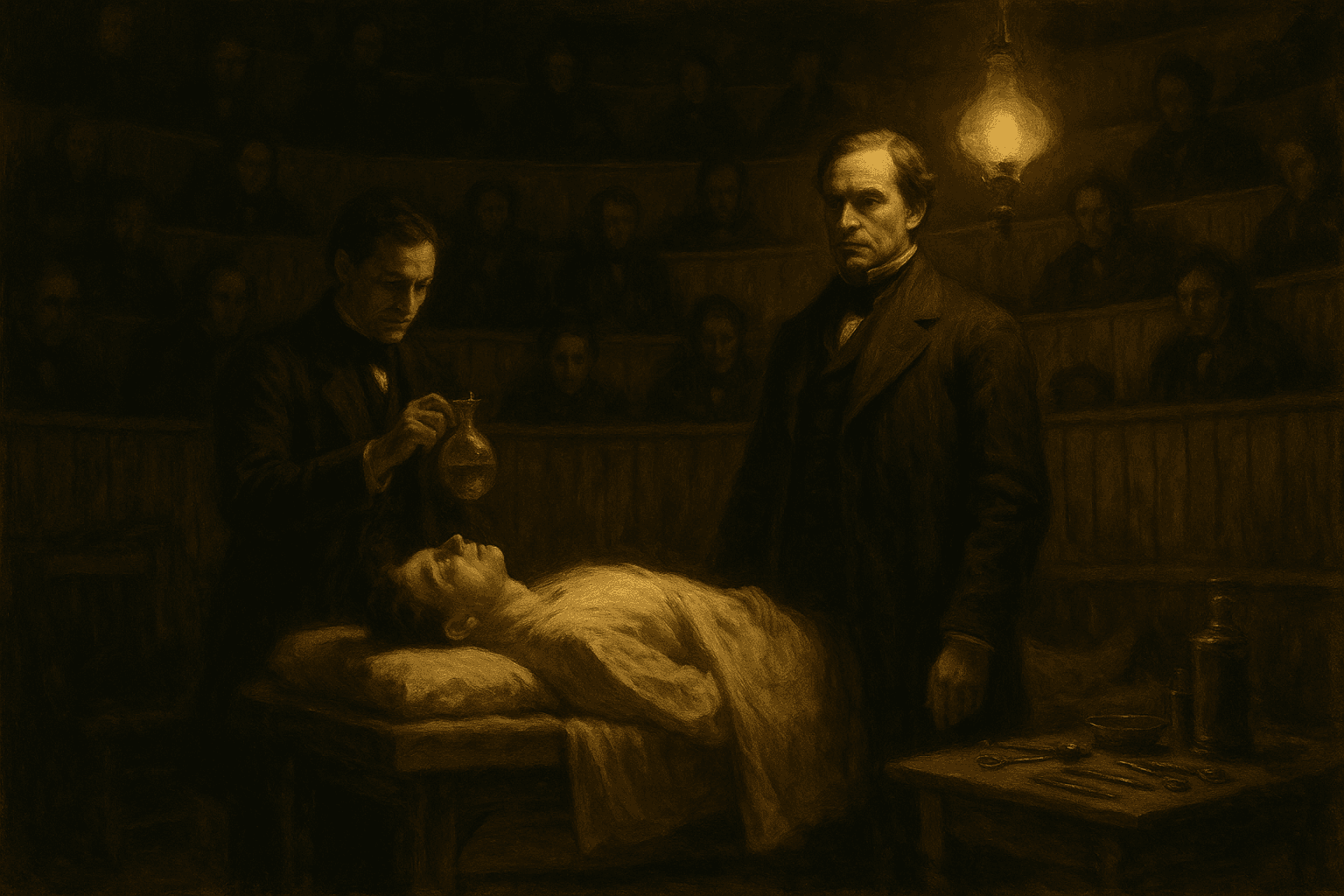
Anesthesia: when surgery was pure torture
Before 1846, surgery meant sheer agony and surgeons who amputated a leg in 30 seconds. This is how anesthesia was born and transformed medicine.

Smallpox: the disease that changed empires
Smallpox killed some 300 million people in the 20th century, helped topple empires, and became the first human disease ever fully eradicated.