
The First Personal Computer Wasn't the One You Think
Almost everyone credits the 1975 Altair as the first personal computer, but several came earlier: from Olivetti in 1965 to the Kenbak-1 in 1971.
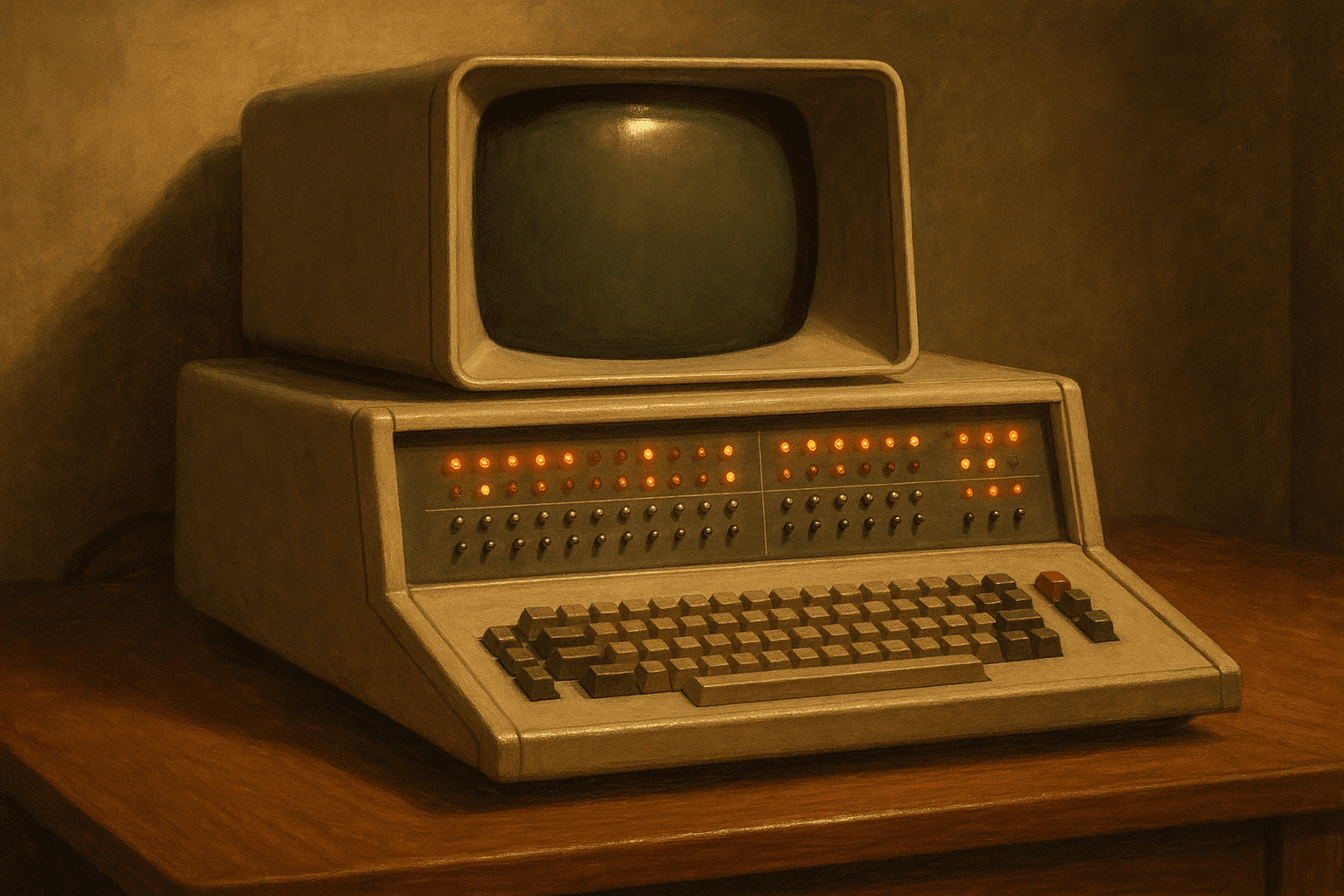
Ask anyone what the first personal computer was and they will probably say "the Apple" or, if they know a little more, "the Altair 8800, back in 1975." The second answer sounds well informed, and almost everyone accepts it. The trouble is that it's wrong, or at least incomplete. By the time the Altair landed on the cover of Popular Electronics, several machines had already earned the title fair and square. The story of the first personal computer has no single winner: it has several, and it depends entirely on what we mean by "personal."
The problem is the definition
Before crowning anyone, we have to agree on the rules. What turns a machine into a "personal computer"? If we require it to fit on a desk and be used by a single person, one set of candidates wins. If we require it to be generally programmable, others win. And if we insist it must contain a microprocessor—the chip that packs the whole computing unit onto a single sliver of silicon—then we instantly disqualify earlier machines that were just as revolutionary for their time.
That's the catch: most people say "Altair 8800" because it was the first to sell by the thousands and become famous, not because it was the first to exist. Being the most popular is not the same as being the first, just as with so many inventions we credit to the wrong person, like what happened with the famous "bug" of Grace Hopper.
1965: the Italian machine that reached the Moon
Ten years before the Altair, the Italian company Olivetti unveiled the Programma 101 in New York, the work of engineer Pier Giorgio Perotto. It was about the size of a large typewriter, it fit on a desk, a single person could operate it without a lab coat, and—this is the decisive part—it could be programmed: it stored instructions on magnetic cards and repeated complex calculations at will. It was no mere calculator.
The P101 was sold between 1965 and 1971, and not in token numbers: some 44,000 units, most of them in the United States. NASA bought several and used them for Apollo-program calculations; they are said to have helped prepare the Apollo 11 Moon landing in 1969. For many historians, that elegant Italian box is, by any fair measure, the first desktop computer in history. And yet almost no one remembers it.
1971: the Kenbak-1, the official "first"
If one machine holds the title in an almost institutional way, it's the Kenbak-1. American engineer John Blankenbaker designed it in his garage in 1971, four years before the Altair. It wasn't a build-it-yourself kit: it arrived assembled and working, ready to plug in, for $750. You programmed it with switches and read the results off little lights, it had a mere 256 bytes of memory, and—curiously—it had no microprocessor: it was built from discrete integrated circuits, because the microchip didn't yet exist as a commercial product.
In 1986, a panel of experts convened by the Computer Museum in Boston reviewed the history and declared the Kenbak-1 the world's first personal computer. California's Computer History Museum still holds that view today. The bitter detail: only about 40 units were ever sold. It was an absolute first and an absolute commercial failure, almost at the same time.
1973: the French machine that did have a microchip
Purists will rightly point out that neither the Olivetti nor the Kenbak were "really" personal computers, because they lacked the modern heart: the microprocessor. That gap is filled by an almost forgotten French machine, the Micral N, built by the company R2E and launched in January 1973. Inside it ran an Intel 8008, and it is generally considered the first commercial personal computer—not a kit—built around a microprocessor. In other words, the first one that technically resembles what we call a computer today, and it hit the market two years before the Altair.
The Micral sold mainly to companies and institutes in France and never crossed the Atlantic in force. So when the American industry wrote its own history, this European pioneer was left as a footnote.
So why does everyone say "Altair"?
MITS's Altair 8800 arrived in 1974 and exploded in January 1975 with its famous Popular Electronics cover. It wasn't first at almost anything, but it was the first to light a revolution: it sold by the tens of thousands, created a community of obsessed hobbyists, and spawned an entire industry. Its programming language, Altair BASIC, was also the very first product of a tiny new company called Microsoft. Its creator, Ed Roberts, is even credited with popularizing the term "personal computer."
There's the key: the Altair didn't win by being first, but by being the one that changed the world. Collective memory doesn't reward whoever arrives first, but whoever leaves a mark so large it erases those who came before. It's the same mechanism by which we celebrate certain computing pioneers and forget others just as important, as when we rediscover that Ada Lovelace wrote the first program nearly a century before any machine could run it.
The honest answer
So which was the first personal computer? The honest answer is uncomfortable: there isn't one. If being a programmable desktop machine counts, it was the Olivetti Programma 101 of 1965. If official recognition counts, it was the Kenbak-1 of 1971. If having a microprocessor counts, it was the Micral N of 1973. And if lighting the revolution that put a machine in every home counts, it was the Altair 8800 of 1975. All are true; none is "the" truth.
Perhaps that's the best lesson in the history of technology: great leaps almost never have a single father or a clean date. They simmer away in garages, labs, and factories across several countries at once, and only much later do we decide, a little arbitrarily, who gets the medal. If this archaeology of machines fascinates you, take a look at the clubs that rescue old computers today: that's where these forgotten firsts are still alive.
References
- "What Was The First PC?", Computer History Museum. computerhistory.org
- "Kenbak-1", Wikipedia. en.wikipedia.org
- "Programma 101", Wikipedia. en.wikipedia.org
- "Micral", Wikipedia. en.wikipedia.org
- "Altair 8800", Wikipedia. en.wikipedia.org
Enjoy the hidden history of technology? Continue with Grace Hopper and the origin of the "bug" or explore the whole Science & Tech section.
Categories
The books · born from this blog

Atahualpa con su abrigo de pelo de murciélago
y otras 49 historias verdaderas que parecen mentira
Available on Amazon
Tocar madera
Pequeña historia de las supersticiones que el mundo no ha podido soltar
Available on Amazon
100 futuros
Cien escenarios del mundo que viene con la inteligencia artificial
Available on AmazonYou may also like
The first computer virus was called Brain
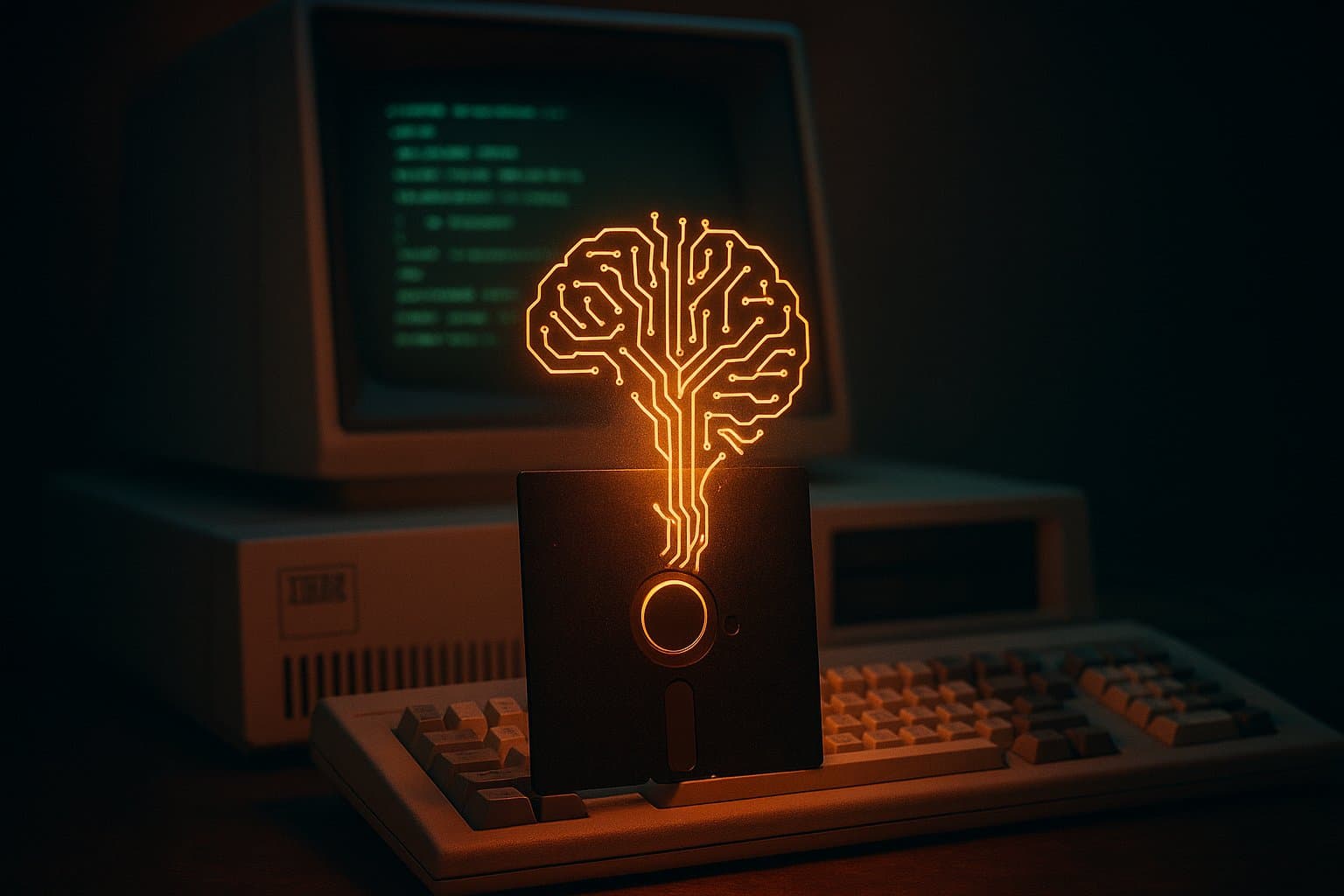
In 1986, two brothers in Lahore wrote Brain, the first PC virus. It destroyed nothing: it guarded their software and left their name, address and phone.
The First Message Ever Sent Over the Internet Was 'LO'
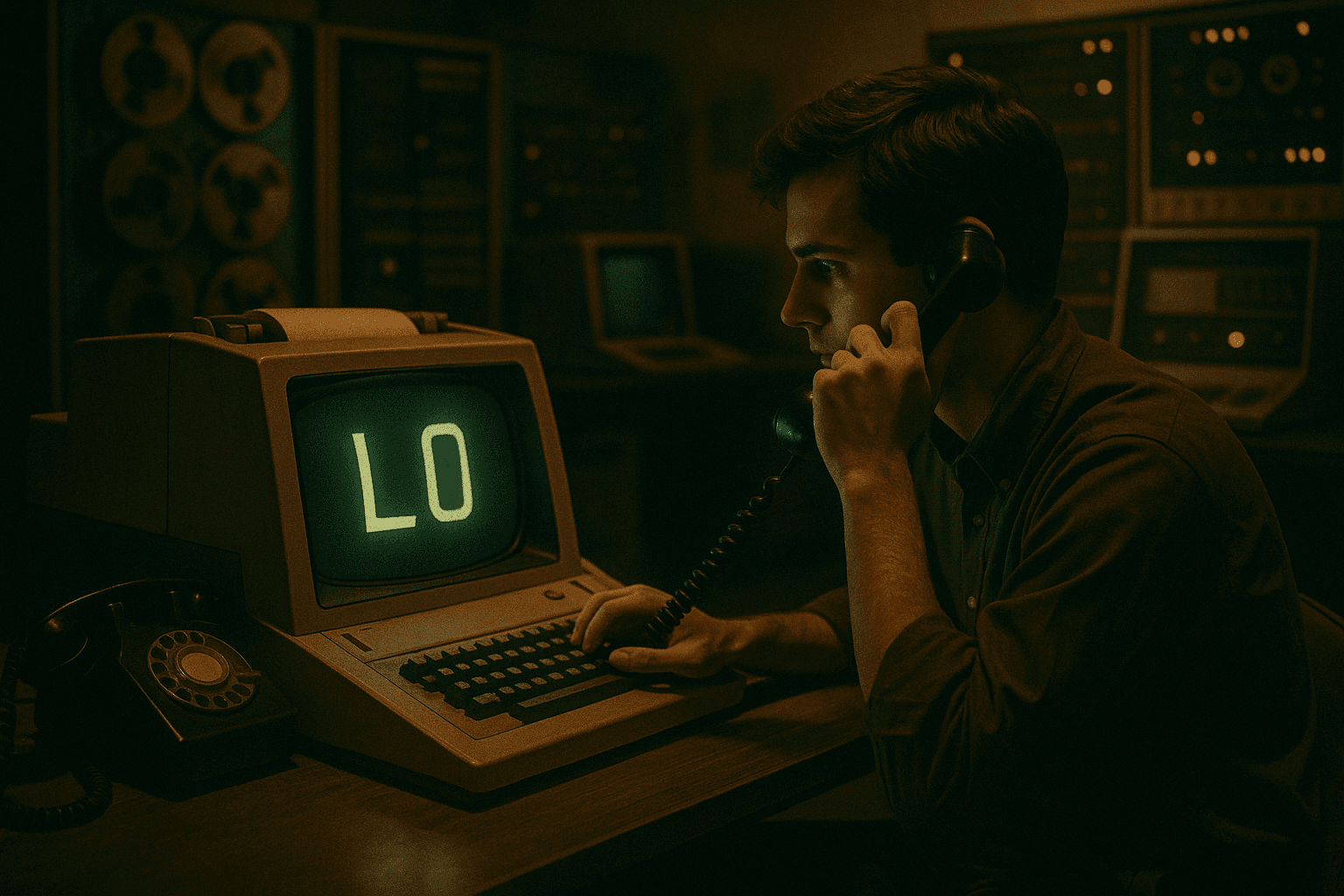
On October 29, 1969, the first message in internet history was meant to be 'login', but the network crashed after just two letters: 'LO'.
How the First Cameras Worked: Dark Room to Kodak
From Ibn al-Haytham's camera obscura to Niépce's first photo and the 1888 Kodak: how the earliest photographic cameras actually worked and evolved.