
Dog Days: the Sky-Dog That Brings the Heat
Where do the 'dog days' come from? From Latin canicula, 'little dog': the name of Sirius, the Dog Star the Romans blamed for summer's fiercest heat.
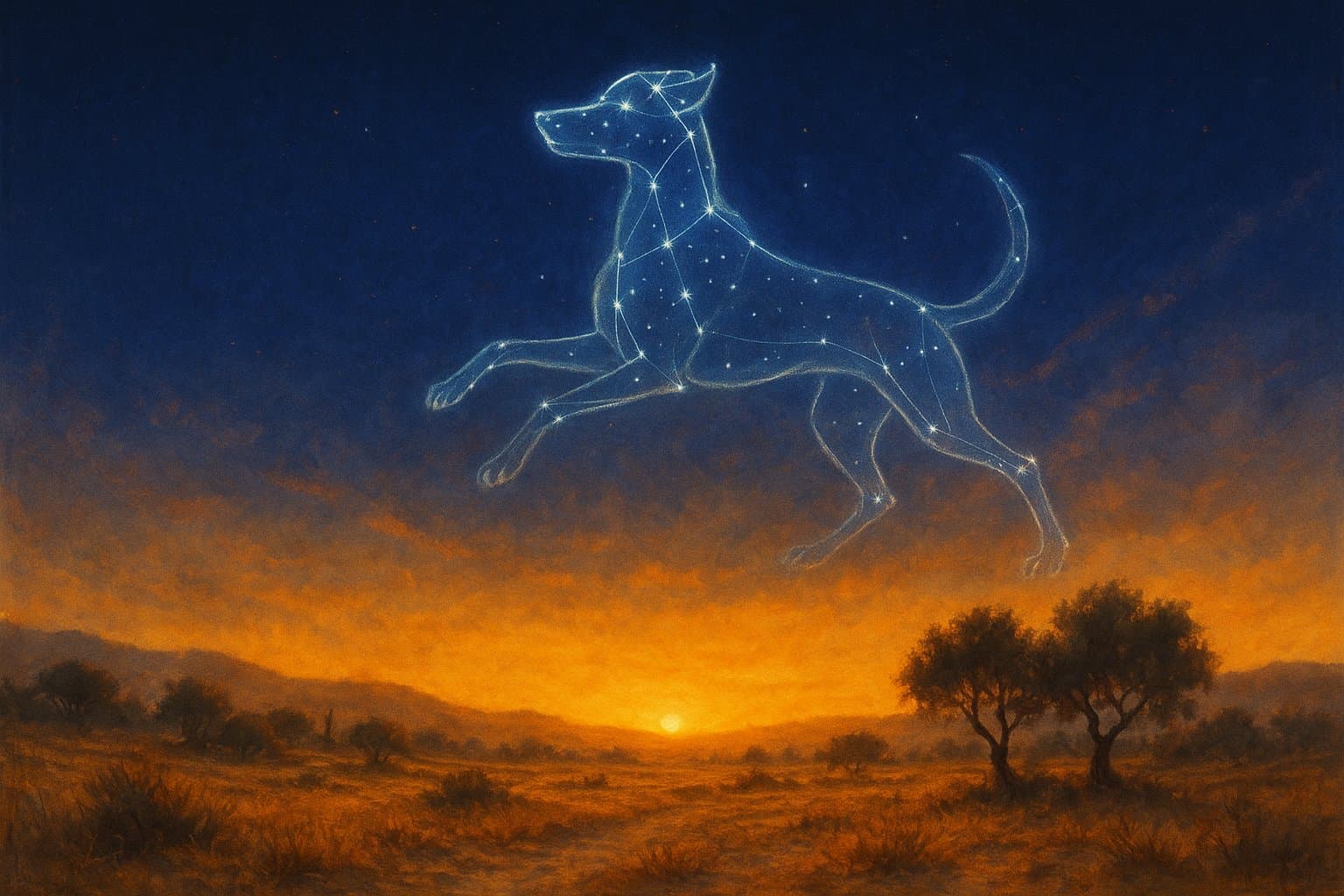
We call the most stifling stretch of summer the dog days —that spell when the air turns heavy and even walking feels like an effort. The phrase sounds like a folksy shrug about the heat, and yet it hides a real animal. It is a direct translation of the Latin dies caniculares, the «days of the little dog», from canicula, the diminutive of canis, «dog». And that little dog was not a metaphor for a hot, miserable afternoon: it was a star. Specifically Sirius, the brightest star in the entire night sky, which the Greeks and Romans saw as a celestial hound whose appearance kindled the worst days of the year.
A dog in the sky: Sirius and the Greater Dog
Sirius shines in the constellation Canis Major, the «Greater Dog», the large hound that follows the hunter Orion across the star charts. Being the most luminous star in that pack, the ancients simply nicknamed it «the Dog Star», and its affectionate diminutive —canicula, the little dog— ended up naming the season it announced.
The star's Greek name, Seirios, meant something like «scorching» or «glowing», a perfect fit for its role. For the peoples of the Mediterranean, that pinprick of light was no harmless ornament: it was an actor with influence over the Earth. The Egyptians, far earlier, had watched it with obsession and called it Sopdet (Sothis to the Greeks): its reappearance in the dawn sky coincided with the flooding of the Nile and marked the start of their year. From the Nile to the Tiber, the same star served as a seasonal clock.
The dies caniculares: when the star «added» its heat to the sun
The astronomical detail that explains everything is the heliacal rising: the day when a star, after weeks lost in the sun's glare, reappears on the horizon just before dawn. In antiquity, the heliacal rising of Sirius happened around late July, and it coincided with the hottest point of the northern summer. The correlation was so precise that it was hard not to read it as cause.
So the belief was born: if the heat peaked exactly when the Dog Star returned, it had to be because Sirius was adding its fire to the sun's. The Romans named that period the dies caniculares, the «days of the little dog», running roughly from late July to late August. They were held to be unhealthy, unlucky days, blamed for fevers, droughts, bad-tempered animals, and even foul human moods. Some sources say that, to appease the star's rage, a brown dog was sacrificed at the start of the season. From there, calqued straight from the Latin, come the English «dog days» for the year's most sluggish stretch.
It was not the only Latin word in which an everyday phenomenon was explained by invoking the gods or the stars. As happened with the story of «enthusiasm», which began by meaning «to have a god inside», the ancients preferred to look for the cause of what they felt outside themselves, in the heavens rather than in the weather.
From the Roman calendar to everyday speech
From canicula a whole vocabulary descended. English kept the adjective «canicular» for anything belonging to those days —«canicular heat», the «canicular days»— while the Romance languages inherited the noun itself: Spanish canícula, French canicule, Italian canicola, all naming the peak of summer heat.
Curiously, in crossing the Atlantic the Spanish word sharpened its meaning. Across much of Mexico and Central America, canícula does not name the heat in general but a very specific phase: a dry, hot pause that interrupts the rainy season around midyear, when the sky clears and the rains halt for weeks. That «little summer» inside the tropical wet season is still called canícula, even though the star that named it has long dropped out of the conversation. Extreme weather, for that matter, was not always just a summer nuisance: history holds episodes when the climate went wrong the other way, as in the year without a summer of 1816, when a volcanic eruption stole the warmth from half the planet.
A star that no longer marks the same day
Here is the irony almost no one mentions: the dog days, as the Romans fixed them, no longer match the reality of the sky. The Earth wobbles slowly on its axis —a motion called precession— and that shifts, century by century, the date on which Sirius makes its heliacal rising. Over the millennia, the little dog's celestial «birthday» has drifted through the calendar, so it no longer necessarily falls on the hottest days. Tradition kept the dates; the cosmos moved on.
And there is more: Sirius, of course, heats nothing. It sits more than eight light-years away, and its light adds not one perceptible fraction of a degree to the Earth. Summer's heat is due solely to the tilt of the planet's axis relative to the sun, not to any distant star. The ancients mistook a coincidence in the calendar for a cause-and-effect relationship —a reasoning error as human as reading meaning into the speech of foreigners who said «bar bar». Even so, two thousand years later we still call these days the dog days, without knowing that every time we grumble about the heat we are invoking a little dog of light, barking from the depths of the sky.
References
- “Dog days”, Wikipedia: the Roman dies caniculares, the heliacal rising of Sirius around late July, and the belief that the star intensified the sun's heat. en.wikipedia.org
- “Dog days”, Wiktionary: a calque of Latin dies caniculares (“puppy days”), itself a calque of the Ancient Greek phrase, in reference to the star Sirius. en.wiktionary.org
- “Sirius and the Dog Days of Summer”, timeanddate.com: why Sirius is called the Dog Star and how precession has shifted the date of its heliacal rising. timeanddate.com
- “The Ancient Greek Origins of the ‘Dog Days of Summer’”, History.com: Greeks and Romans blamed Sirius for the fevers and mugginess of summer, with sacrifices to appease the star. history.com
Enjoy the stories behind words? Continue with the origin of “enthusiasm” and that of “barbarian”, or browse the whole etymology series.
The books · born from this blog

Atahualpa con su abrigo de pelo de murciélago
y otras 49 historias verdaderas que parecen mentira
Available on Amazon
Tocar madera
Pequeña historia de las supersticiones que el mundo no ha podido soltar
Available on Amazon
100 futuros
Cien escenarios del mundo que viene con la inteligencia artificial
Available on AmazonYou may also like
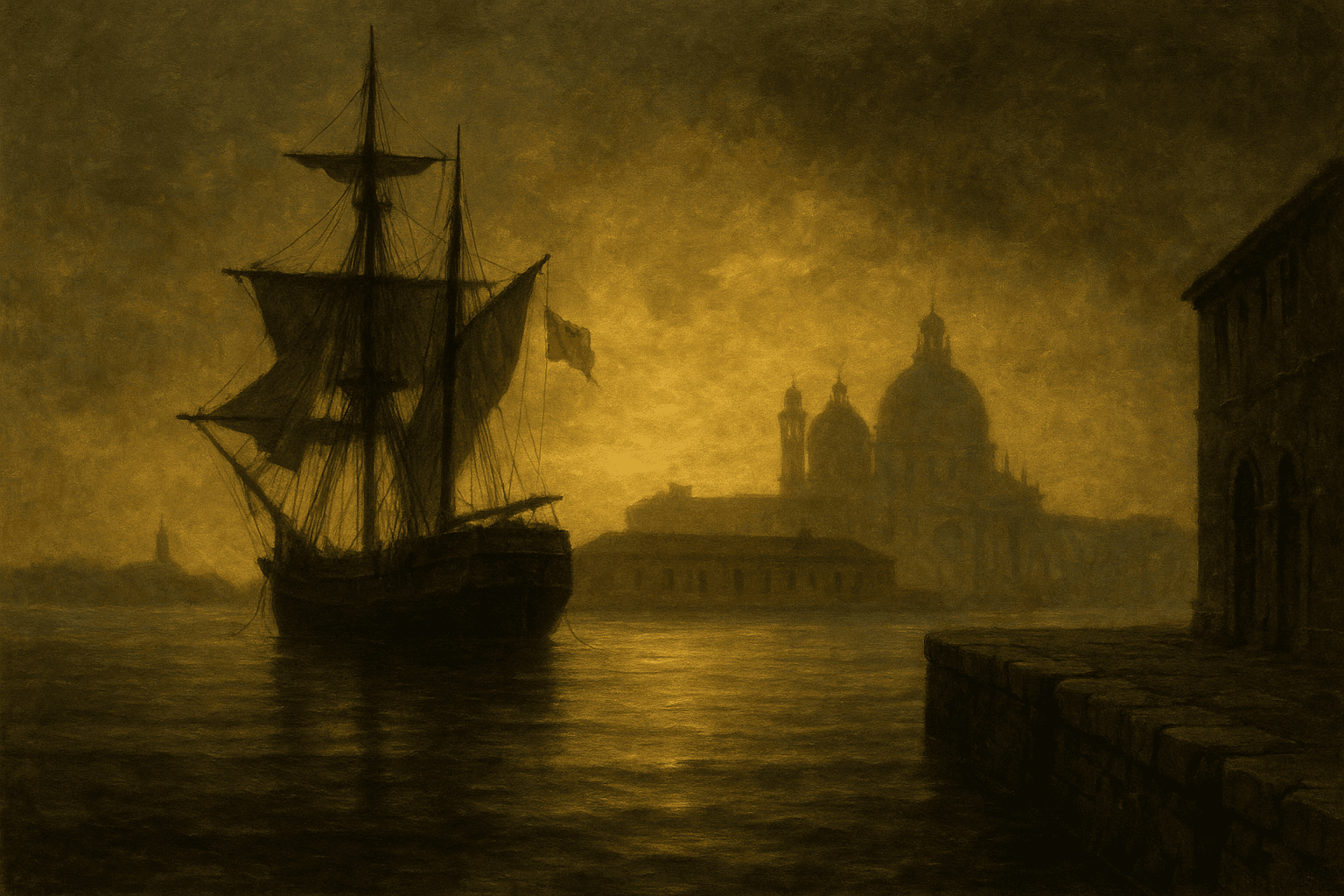
The Origin of the Word “Quarantine”: 40 Days in Venice
Where does the word quarantine come from? From the 40 days that Venice and Ragusa forced ships to wait during the Black Death. Here is its story.

Placebo: the Latin word that means «I shall please»
«Placebo» means «I shall please» in Latin and began as a medieval funeral chant. Here is how it jumped from the church to medicine and its famous effect.
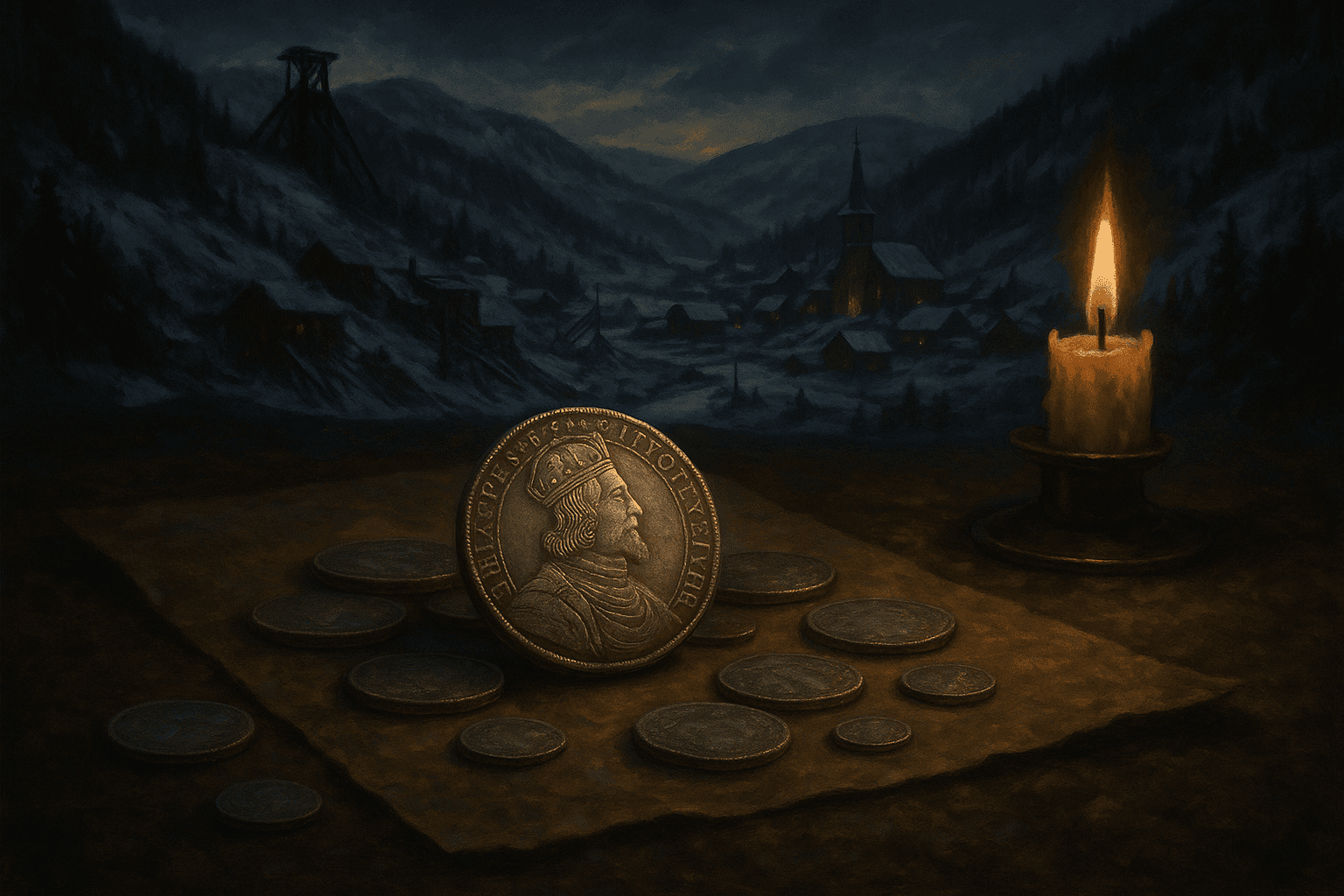
The Origin of the Word “Dollar”: a Bohemian Valley
Where does the word dollar come from? From a silver-mining valley in Bohemia and a 16th-century coin. The story of the thaler that conquered the world.