
Assassin: the mountain sect and the hashish myth
«Assassin» comes from the Arabic hashshashin, «hashish users»: the nickname of a medieval sect led by Hasan-i Sabbah from the fortress of Alamut.
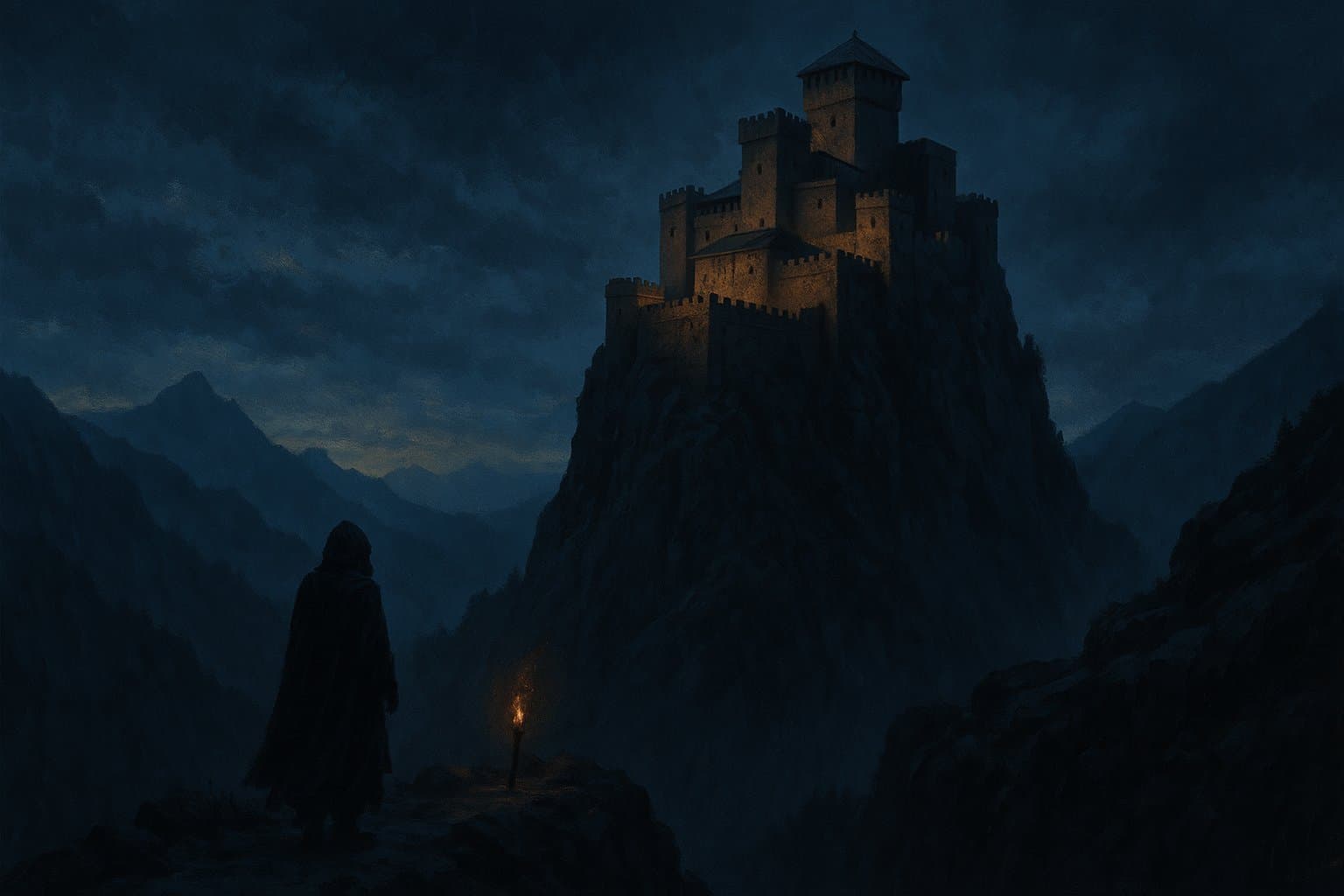
When we call someone an assassin today, we are using, without realizing it, a medieval nickname loaded with hashish, Persian mountains, and wartime propaganda. The word was not born describing the act of killing, but pointing at one very specific group: a sect that terrorized kings and crusaders from nearly impregnable castles. Behind the term lies real history and, above all, a legend that the West spent centuries inflating.
The sect of the mountain
Around 1090, a Persian religious leader named Hasan-i Sabbah seized the fortress of Alamut, perched in the mountains of what is now northern Iran. From there he founded the state of the Nizaris, a branch of Shia Ismaili Islam, and built a network of castles stretching across Persia and Syria. Surrounded by far more powerful enemies —the Seljuk Empire, the Abbasids— the Nizaris turned to a weapon that did not depend on large armies: selective political assassination.
Their agents, the fidā'īs («those who sacrifice themselves»), would infiltrate an enemy's court for months and then eliminate him in public, often in broad daylight and with no attempt to escape. The goal was not only to kill but to sow terror: any ruler could have an assassin waiting at his side without knowing it. Their victims included viziers, caliphs, and crusaders, and their fame spread across the whole Mediterranean.
Where the word really came from
Their Muslim rivals did not call them by their name. They pinned on them the derogatory label ḥašišiyya or ḥaššāšīn, something like «the hashish users» or «low-class rabble». The crusaders and European travelers who reached Syria heard that nickname, mistook it for the group's real name, and carried it home. From Arabic it passed into the Romance languages: into Italian and French as assassin, and from there into English. In time, the name of the sect became the common word for anyone who kills for hire or for political motives.
It is the same kind of leap we saw when an Irish captain's surname became the word «boycott»: a proper name or a nickname that ends up naming a whole category. And, as with other etymologies, the Arabic root connects to the same era and the same world that gave us the word «algorithm».
The legend of the garden of paradise
This is where history turns into a novel. The most famous account was popularized by the Venetian Marco Polo in the thirteenth century. According to him, Hasan-i Sabbah —whom Europeans called «the Old Man of the Mountain»— kept a secret garden full of palaces, streams of wine and honey, exotic fruits, and beautiful maidens. Young recruits were drugged with hashish and, while asleep, carried into this paradise for a few hours. When they woke back in the fortress, they were promised that they would return to paradise only if they died carrying out the master's orders. That, said the legend, explained their fanatical devotion.
It is a magnificent story. It is also, almost certainly, false.
When etymology is propaganda
Modern historians are deeply skeptical of the whole hashish narrative. The scholar Farhad Daftary, in The Assassin Legends, argues that Europeans themselves fabricated and circulated these stories, blending rumor, crusader misinformation, and a total ignorance of the Ismaili world. There is no reliable evidence that the Nizaris took hashish before going into battle; the label ḥaššāšīn was simply an insult from their enemies, not a literal description.
In fact, according to texts found at Alamut itself, Hasan-i Sabbah's followers called themselves asāsiyyūn, «those faithful to the foundation» (the base of the faith). Some scholars believe that travelers like Marco Polo confused that word with hashish and tied the wrong knot. Whatever the exact root, the result is paradoxical: we call a murderer an «assassin» because of a medieval insult that was probably not even true.
As with the disputed origin of the word «gringo», several explanations coexist here alongside a healthy dose of myth. What is certain is the history: a real sect, real fortresses, and very real killings that carved their name into half a dozen languages. The next time you hear the word, remember that it began as the mocking nickname of some mountain warriors whom their enemies accused of smoking too much.
References
- «Order of Assassins», Wikipedia. en.wikipedia.org
- «The Assassins», World History Encyclopedia. worldhistory.org
- Farhad Daftary, The Assassin Legends: Myths of the Isma'ilis, The Institute of Ismaili Studies. iis.ac.uk
- «Order of Assassins», New World Encyclopedia. newworldencyclopedia.org
Do you enjoy the stories behind words? Continue with the origin of «boycott» or explore the whole etymology series.
Categories
The books · born from this blog
Atahualpa con su abrigo de pelo de murciélago
y otras 49 historias verdaderas que parecen mentira
Available on Amazon
Tocar madera
Pequeña historia de las supersticiones que el mundo no ha podido soltar
Available on Amazon
100 futuros
Cien escenarios del mundo que viene con la inteligencia artificial
Available on AmazonYou may also like

The origin of the word sabotage: the clog myth
«Sabotage» does not come from throwing clogs into machines: that is the legend. The real word was born from the clatter of wooden shoes.
The Origin of “Ñapa”: From Quechua to Lagniappe
Where does the word ñapa come from? From Quechua yapa, “something added.” The story of the market freebie that traveled to Louisiana and became lagniappe.
Cancha: from Inca enclosure to soccer field
«Cancha» comes from the Quechua kancha, the walled enclosure of the Incas. Here is how it went from temples and corrals to naming soccer fields across half the world.