
The Origin of the Word “Cretin”: From Christian to Insult
Where does the word cretin come from? From Latin christianus: it named the goitre sufferers of the Alps, a reminder that they were still people.
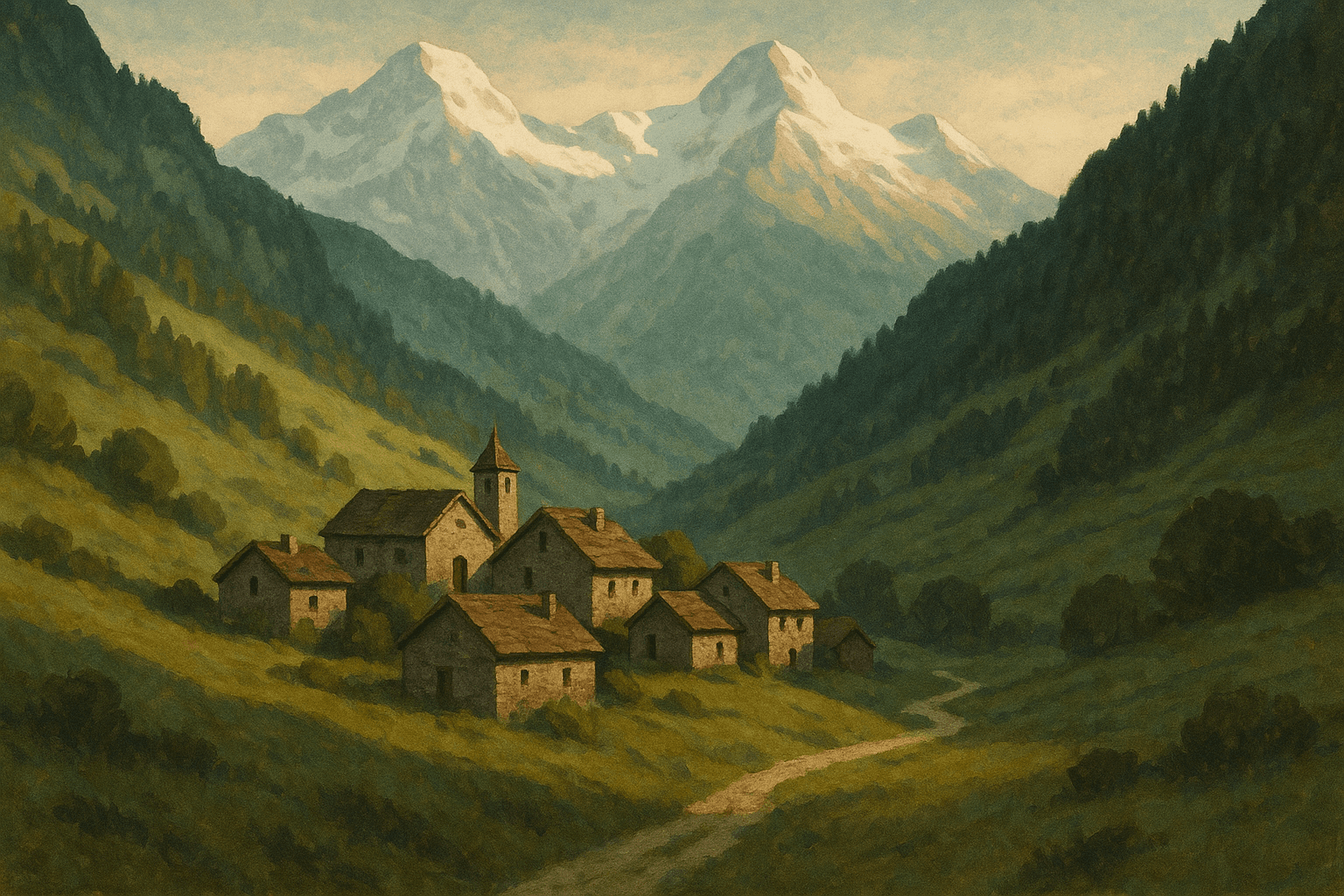
Today cretin is a textbook insult: a synonym for idiot, fool, someone with the lights off. Yet few words have travelled such a cruel road. Before it was an offence, “cretin” was almost the opposite: a compassionate way of naming a group of sick people in the Alpine valleys. And the most surprising thing is where that compassion came from. The origin of “cretin” lies, in all likelihood, in the word Christian. Calling those people “Christians” was a way of remembering that, in spite of everything, they were still human beings, creatures of God like anyone else.
An illness hidden in the valleys
To understand the word you first have to understand the disease. In certain enclosed Alpine valleys —above all in parts of Switzerland, Savoy and northern Italy— it was common, until little more than a century ago, to find whole villages with an unusually high share of people who were short in stature, who had goitre (an enormous swelling of the neck) and who suffered severe intellectual disability. This was not a curse or a punishment, though for centuries it was read that way: it was, quite simply, a lack of iodine.
The water and food of those isolated valleys, far from the sea and grown on soils poor in the mineral, provided almost no iodine. Without iodine the thyroid gland cannot make its hormones, and in an infant —or already in the womb— that deficiency stunts the development of the brain and the body. The result was endemic cretinism, a condition now prevented by something as trivial as iodised salt, but which back then marked entire communities generation after generation.
“Christian” as a synonym for “person”
Here is where the etymology comes in. The word “cretin” reached English, and almost every other language, from the French crétin, recorded around 1779. And French crétin was not invented in Paris but in the Alpine dialects: specifically in the speech of the Swiss canton of Valais, where the form crestin or creitin existed. That word was nothing more than a popular evolution of chrétien, that is, “Christian”, which in turn comes from the Latin christianus.
Why call a sick person a “Christian”? Because for centuries “Christian” worked as a synonym for “human being”, “any person at all”, often with a shade of “poor soul”, “poor creature”. Applying that word to the sufferers of the valleys had a precise intention: to stress that those people, however deformed their body and mind, were still human, not brutes. It was a label of dignity, not of mockery. Something similar happened with the word “barbarian”, which began by describing foreigners before it filled up with contempt.
From pity to insult
The cruel turn came later. As crétin became the medical and popular term for those affected by cretinism, the word soaked up all the negative connotations tied to the disease: slowness, dullness, incapacity. And from there to using it as a generic insult against anyone you wanted to call stupid, the step was short. By the nineteenth century “cretin” already worked in French, English and other languages as a synonym for imbecile, wholly detached from its medical and compassionate origin.
It is a pattern that recurs throughout the history of language: terms born as neutral diagnoses end up as slurs, and have to be replaced by new ones that will, in time, meet the same fate. Modern medicine dropped the word “cretinism” decades ago precisely because of its pejorative weight, and today we speak of congenital hypothyroidism or congenital iodine deficiency syndrome. The insult, by contrast, survives with all its energy.
The happy ending: a pinch of salt
The most remarkable thing about this story is that the disease which gave the insult its name has all but vanished, and it did so thanks to an astonishingly simple public-health measure. In the early twentieth century it was understood that adding iodine to table salt was enough to prevent both goitre and cretinism. Switzerland —the very cradle of crétin— was among the first countries to iodise its salt, in the 1920s, and within a few decades the valleys that had given the word its name stopped producing new cases.
So “cretin” hides, beneath its coat of insult, one of the brightest stories in medicine: a devastating disability, endemic for centuries, almost entirely erased by a handful of iodine in the salt. As in the story of the word “vaccine”, language keeps the memory of diseases we have learned to defeat. And as with so many everyday words, what we now blurt out without a thought holds within it a past far more human than its meaning would suggest.
References
- “Cretin”, Online Etymology Dictionary: from French crétin (1779), from Alpine dialect crestin, identified with Vulgar Latin christianus “a Christian”, used generically for “anyone” with a sense of “poor fellow”. etymonline.com
- “Original meaning of ‘cretin’: ‘Christian’, ‘human being’”, Word Histories: reconstructs the shift from Swiss crestin/creitin to chrétien and explains the sense of “human being” as opposed to the brutes. wordhistories.net
- “cretin”, Wiktionary: borrowed from French crétin, from Franco-Provençal crétin “Christian, human being”, from Latin christiānum. en.wiktionary.org
- “Cretins and Cretinism”, Journal of Clinical Research in Pediatric Endocrinology (NCBI): medical history of endemic cretinism caused by iodine deficiency in the Alps and its prevention through salt iodisation. ncbi.nlm.nih.gov
Enjoy the stories behind words? Continue with the origin of “barbarian” and that of “scruple”, or browse the whole etymology series.
The books · born from this blog
Atahualpa con su abrigo de pelo de murciélago
y otras 49 historias verdaderas que parecen mentira
Available on Amazon
Tocar madera
Pequeña historia de las supersticiones que el mundo no ha podido soltar
Available on Amazon
100 futuros
Cien escenarios del mundo que viene con la inteligencia artificial
Available on AmazonYou may also like

The Origin of the Word “Quarantine”: 40 Days in Venice
Where does the word quarantine come from? From the 40 days that Venice and Ragusa forced ships to wait during the Black Death. Here is its story.

The Origin of the Word “Dollar”: a Bohemian Valley
Where does the word dollar come from? From a silver-mining valley in Bohemia and a 16th-century coin. The story of the thaler that conquered the world.

The Origin of the Word “Museum”: House of the Muses
Where does the word museum come from? From mouseion, the temple of the Greek Muses and the great center of learning in Alexandria, long before glass cases.